


























Views
Downloads
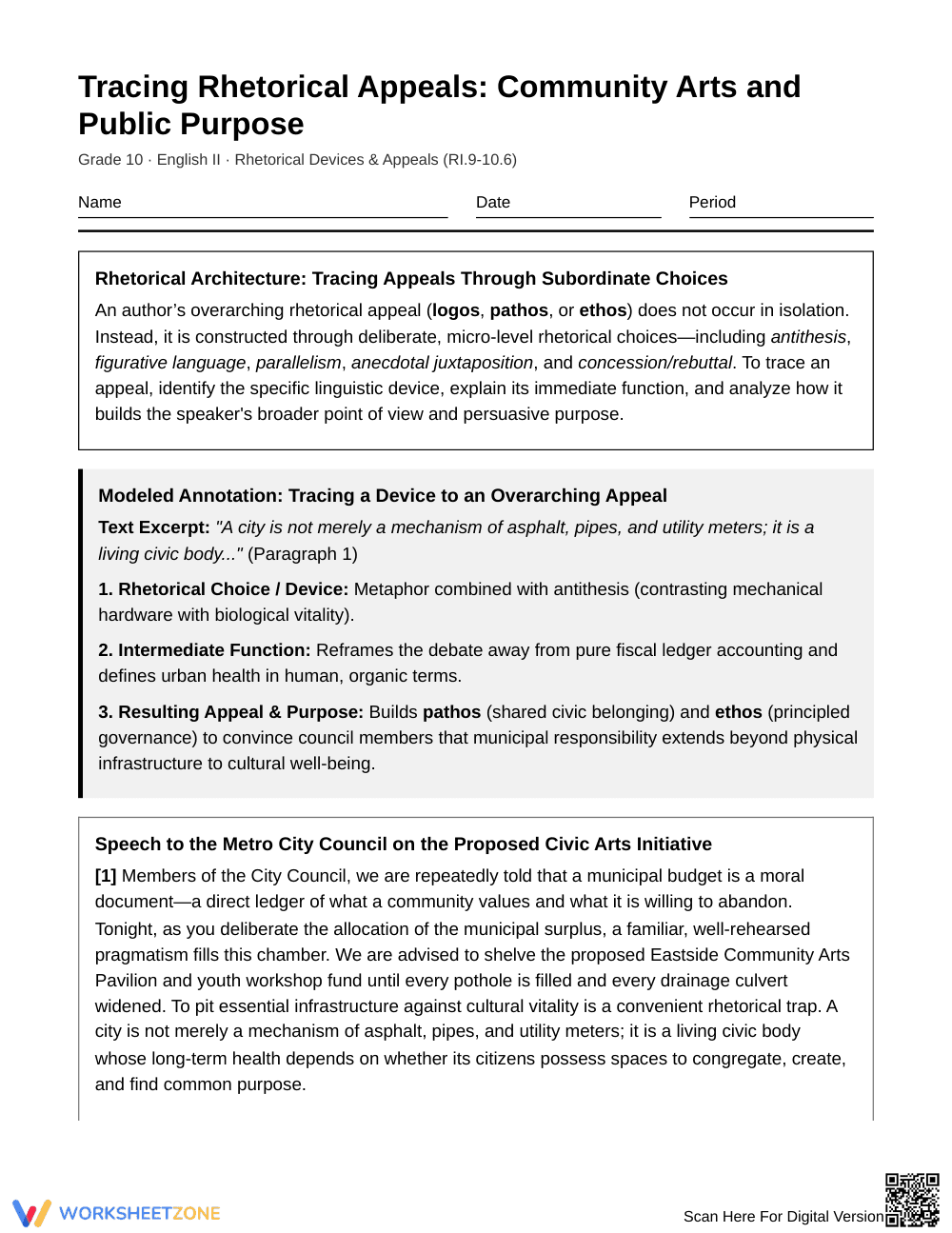

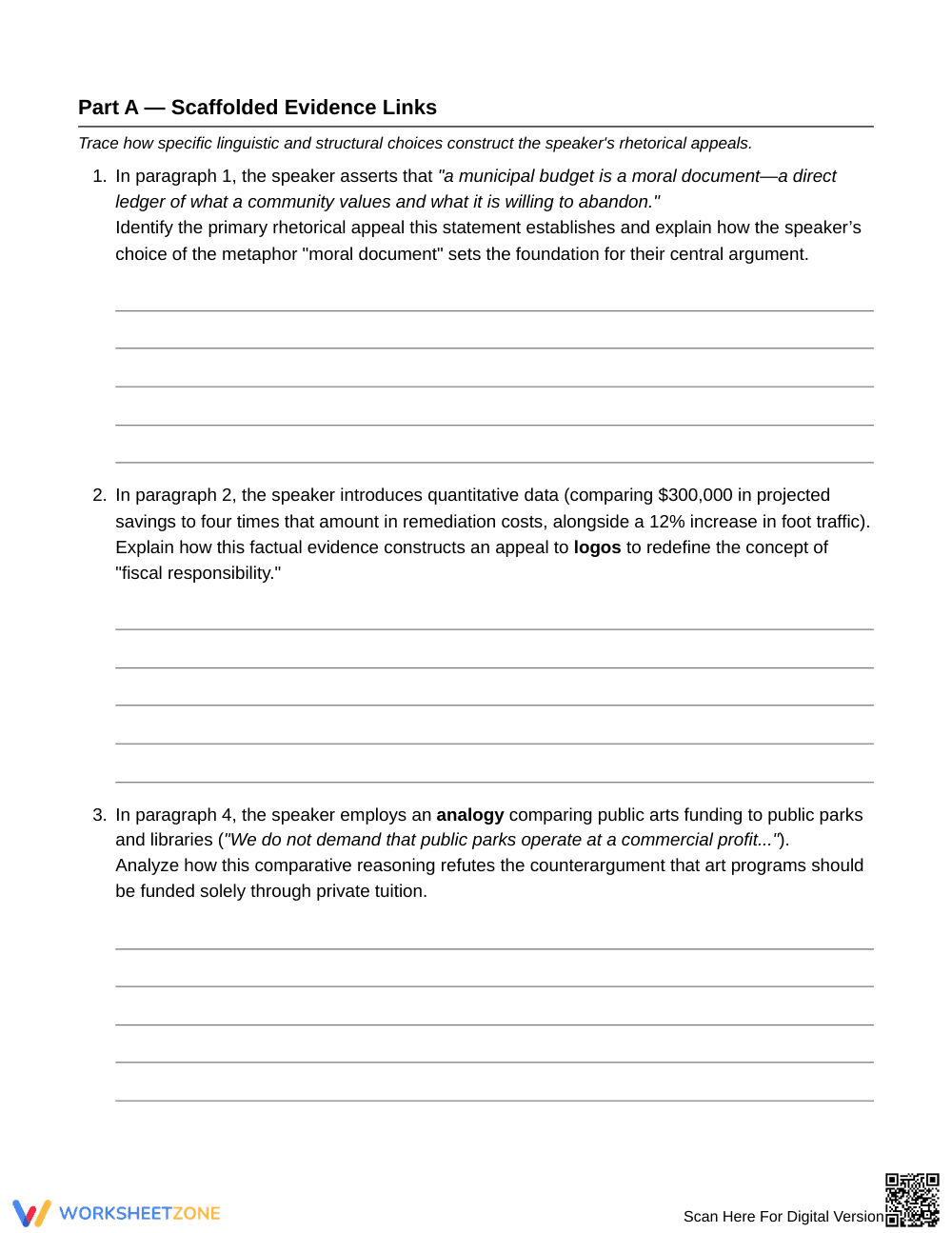


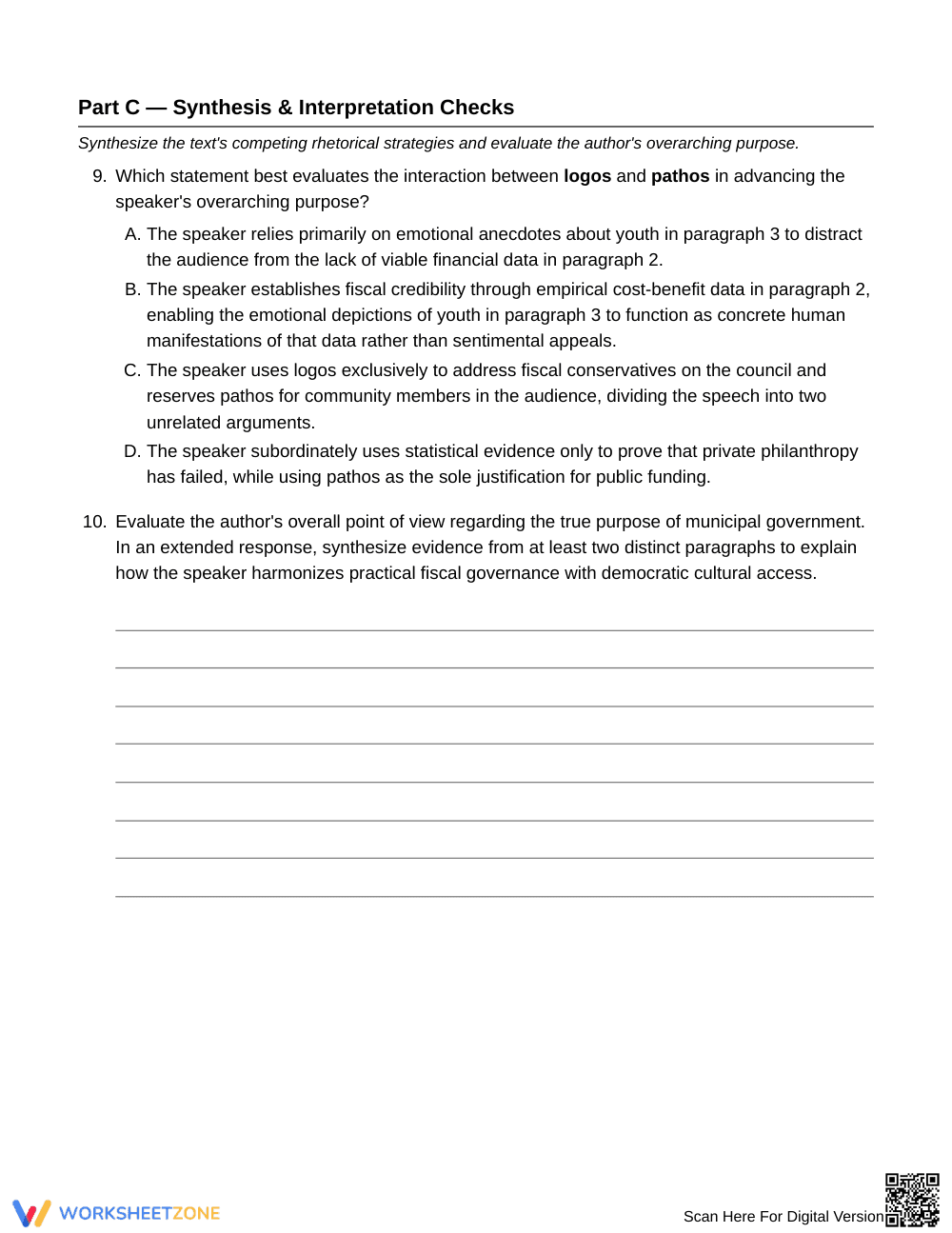

Aligned Rhetorical Appeals Worksheet | Grade 10 English II
Paste this activity's link or code into your existing LMS (Google Classroom, Canvas, Teams, Schoology, Moodle, etc.).
Students can open and work on the activity right away, with no student login required.
You'll still be able to track student progress and results from your teacher account.
This Grade 10 English II worksheet teaches students how to trace rhetorical appeals by analyzing specific linguistic choices within a persuasive speech. High school readers examine how techniques like metaphor, antithesis, and analogy construct appeals to logos, pathos, and ethos to advance an author's point of view.
At a Glance
- Grade: 10 · Subject: English II
- Standard:
RI.9-10.6— Determine an author's point of view and analyze how rhetoric advances that purpose- Skill Focus: Trace an Appeal Through Supporting Choices
- Format: 6 pages · 10 problems · Answer key included · PDF
- Best For: Rhetorical analysis units and text-based close reading
- Time: 45–60 minutes
This resource features a persuasive municipal speech, a modeled annotation box, and 10 analytical tasks divided across three progressive tiers. The 6-page printable PDF includes structured text-dependent prompts, a multiple-choice synthesis item, an extended written response question, and an exhaustive 4-page answer key with model student responses.
Skill Progression
- Guided practice (Part A, 3 tasks): Students examine targeted speech excerpts, identifying how metaphors, financial data, and civic analogies build foundational appeals.
- Supported practice (Part B, 5 tasks): Students evaluate advanced rhetorical strategies, including sensory juxtaposition, antithesis, concession, binary framing, and first-person plural pronouns.
- Independent practice (Part C, 2 tasks): Students synthesize interacting appeals and draft an extended response evaluating the author's overarching purpose.
This gradual-release structure guides learners from scaffolded identification to rigorous independent rhetorical synthesis.
Standards Alignment
This worksheet aligns directly with `RI.9-10.6`: Determine an author's point of view or purpose and analyze how rhetoric advances that purpose. Students also address `RI.9-10.1` by citing thorough textual evidence to support analytical claims. Both standard codes can be copied directly into lesson plans, IEP goals, or district curriculum mapping tools.
How to Use It
Use this worksheet during direct instruction on rhetorical appeals or as a mid-unit formative assessment. Monitor student progress by checking how accurately learners bridge individual devices to macro appeals in Part B. The 10 problems take approximately 45 to 60 minutes of class time.
Who It's For
Ideal for Grade 10 English II students practicing non-fiction close reading, with scaffolds supporting English learners and developing writers. Pair this printable with a direct instruction lesson on rhetorical devices or an anchor chart on logos, ethos, and pathos.
According to research by Fisher & Frey (2014) on close reading and text-dependent questioning, secondary students develop sophisticated analytical literacy when instructional tasks systematically scaffold micro-level craft observations into broader structural arguments. This Grade 10 English II worksheet directly operationalizes Common Core standard RI.9-10.6 by training learners to trace rhetorical appeals through supporting linguistic choices. Rather than treating ethos, pathos, and logos as isolated labels, the 10 structured tasks require students to evaluate how specific stylistic devices—including antithesis, civic analogies, sensory juxtaposition, and inclusive pronouns—function interdependently to advance an author’s core purpose. Supported by modeled annotation and graduated analytical rigor across 6 pages, the instructional sequence bridges explicit textual evidence with high-level rhetorical synthesis. This evidence-based approach ensures high school readers acquire the critical reasoning skills necessary to dissect complex informational texts, evaluate civic arguments, and articulate text-grounded analytical claims independently.


