


























Views
Downloads

Essential Adverb Types Worksheet | Grade 4 Grammar
Paste this activity's link or code into your existing LMS (Google Classroom, Canvas, Teams, Schoology, Moodle, etc.).
Students can open and work on the activity right away, with no student login required.
You'll still be able to track student progress and results from your teacher account.
Mastering adverbs is a critical step for Grade 4 students as they transition to more descriptive and precise writing styles. This worksheet focuses on identifying the specific functional types of adverbs, including manner, place, frequency, time, and purpose. By determining what question each adverb answers, students develop the analytical skills necessary for advanced syntax.
At a Glance
- Grade: 4 · Subject: Grammar
- Standard:
CCSS.ELA-LITERACY.L.4.1— Use standard English grammar and usage when writing or speaking about parts of speech.- Skill Focus: Adverb Classification (Types)
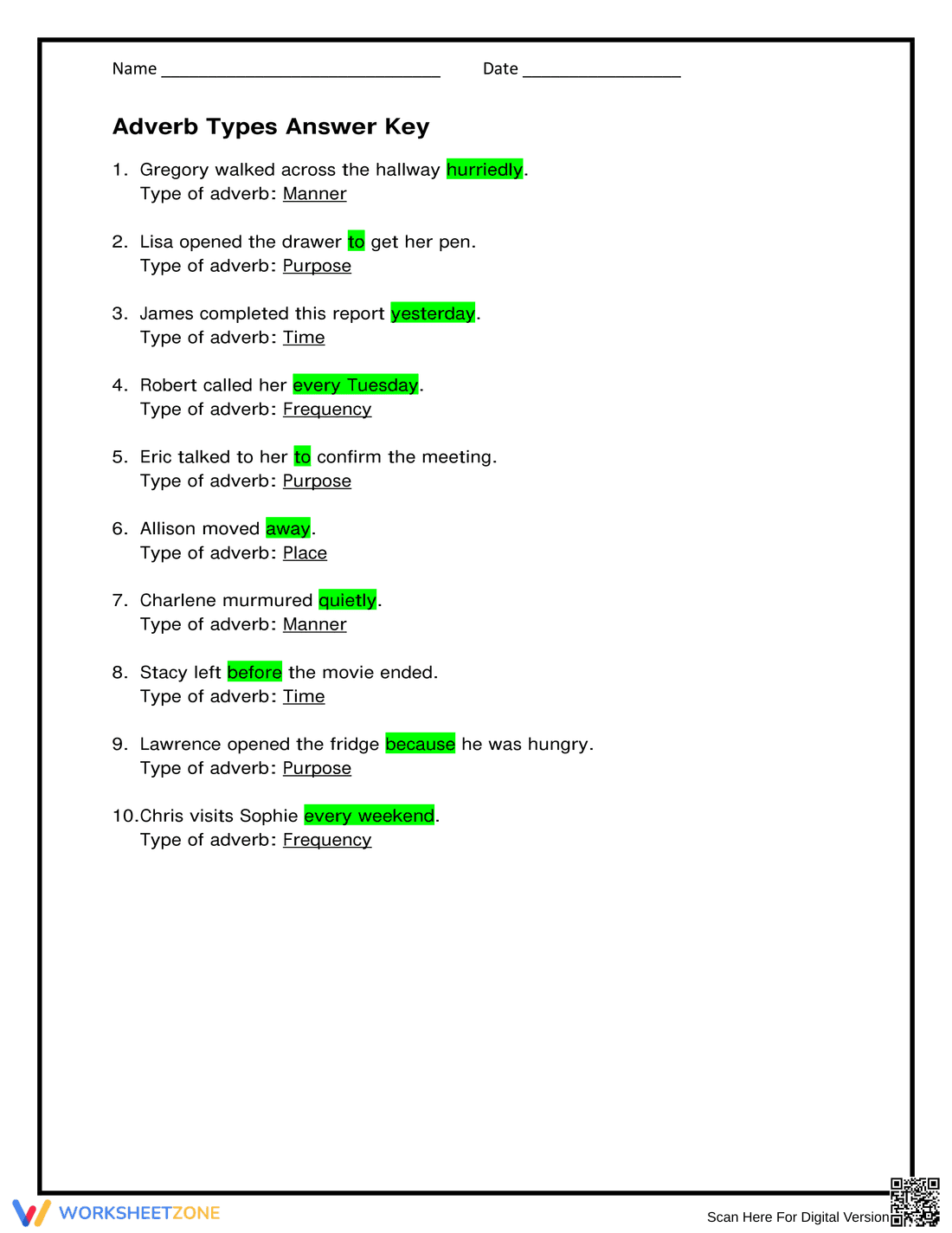
- Format: 1 page · 10 problems · Answer key included · PDF
- Best For: Independent grammar practice and formative assessment
- Time: 15–20 minutes
What's Inside
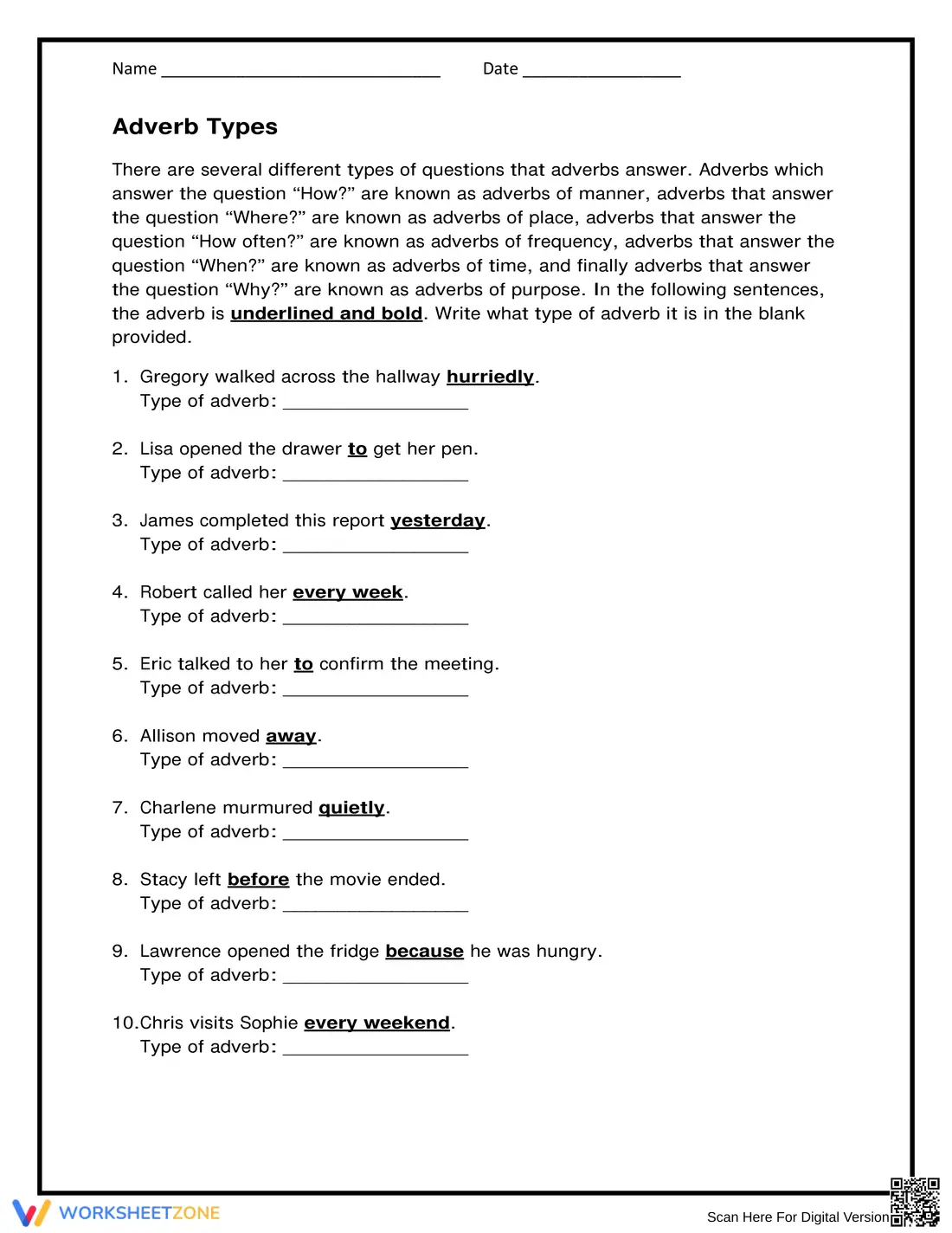
The resource consists of a single-page PDF containing 10 carefully crafted sentences. Each sentence features a bolded and underlined adverb or adverbial phrase. Students analyze the context to determine whether the word describes "how," "where," "how often," "when," or "why." A clear instructional header defines these categories, providing immediate student support.
Zero-Prep Workflow
The design prioritizes instructional efficiency with a three-step implementation. First, print the single-page document (30 seconds). Second, distribute it for a morning warm-up or transition activity (1 minute). Third, review the answers using the provided key for immediate feedback (3 minutes). This streamlined process requires less than two minutes of total teacher preparation time.
Standards Alignment
This activity is directly aligned to CCSS.ELA-LITERACY.L.4.1, which requires students to demonstrate command of standard English grammar. Specifically, identifying functional types of adverbs supports the mastery of descriptive language and complex sentence structures. This standard code can be copied directly into lesson plans, IEP goals, or district curriculum mapping tools for documentation.
How to Use It
Use this worksheet as a formative assessment after a lesson on parts of speech. Have students work independently, then swap papers to check against the answer key. Alternatively, use it as a "Ticket out the Door" where students must correctly identify three adverb types. Observe if students struggle with adverbs of purpose, which often involve infinitive phrases.
Who It's For
This resource is designed for Grade 4 students, though it is effective for Grade 3 enrichment or Grade 5 review. It is particularly useful for English Language Learners who need explicit practice identifying the "why" and "when" of English sentences. The worksheet pairs naturally with mentor text passages where students can search for real-world adverb examples.
Effective grammar instruction requires students to move beyond simple identification to an understanding of functional syntax. According to RAND AIRS 2024, explicit practice in categorizing word functions directly correlates with improved student performance in structured writing assessments. By focusing on the specific questions adverbs answer—such as "how often" or "why"—this worksheet helps students internalize the mechanics of description. This cognitive approach to grammar ensures that students do not just memorize definitions but understand how words enhance the meaning of actions. Research from Fisher & Frey (2014) supports this approach, where structured practice sheets provide the necessary bridge between guided instruction and independent application. Educators can rely on this resource as a validated tool for building linguistic precision. This resource ensures that students meet the rigorous demands of intermediate elementary education.


