


























Views
Downloads
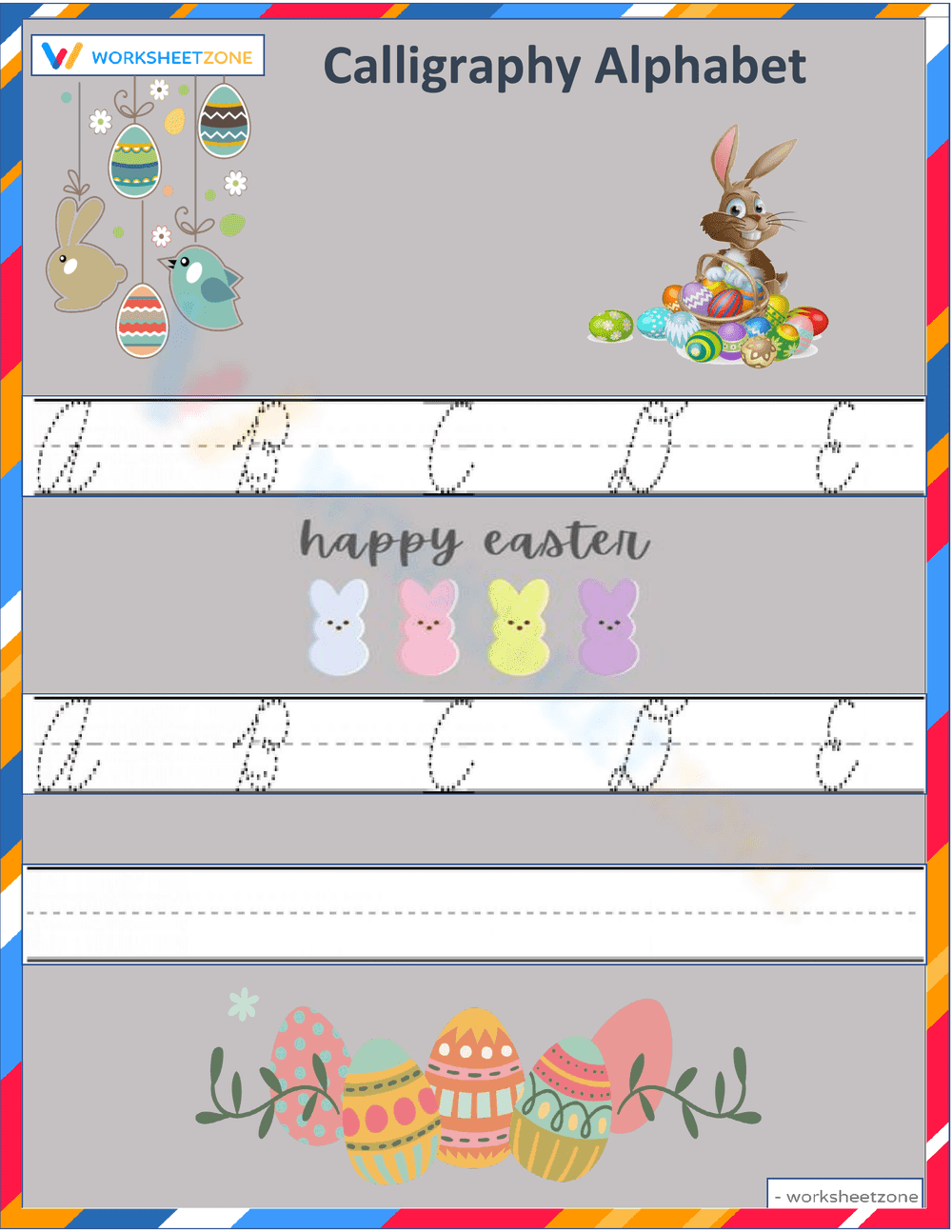

Easter Calligraphy Practice | Essential Grade 3-4 Worksheet
Paste this activity's link or code into your existing LMS (Google Classroom, Canvas, Teams, Schoology, Moodle, etc.).
Students can open and work on the activity right away, with no student login required.
You'll still be able to track student progress and results from your teacher account.
This Grade 3 and 4 Easter calligraphy worksheet provides students with focused practice on the first five letters of the alphabet. By combining seasonal holiday themes with technical handwriting instruction, students improve their cursive legibility and fine motor control. This resource ensures that letter formation becomes fluid and consistent through structured tracing and independent application.
At a Glance
- Grade: 3-4 · Subject: Handwriting
- Standard:
CCSS.ELA-LITERACY.L.3.1.J— Write legibly in cursive using appropriate strokes and connections- Skill Focus: Letters A-E Calligraphy
- Format: 1 page · 11 tasks · Model letters included · PDF
- Best For: Seasonal handwriting practice and morning work
- Time: 10–15 minutes
What's Inside: One high-quality PDF page featuring uppercase and lowercase letter models for A through E. The layout includes two rows of dotted-line tracing guides and a final blank line for students to demonstrate mastery without scaffolds. Festive Easter bunny and egg illustrations provide visual engagement without distracting from the primary handwriting task.
Zero-Prep Workflow: 1. Print: Select the single-page PDF and print enough copies for your class (30 seconds). 2. Distribute: Hand out the sheets during your handwriting block or as a seasonal morning starter (1 minute). 3. Review: Walk the room to check for proper grip and stroke order, providing immediate feedback on letter slant and spacing (5 minutes).
Standards Alignment: Primary standard: `CCSS.ELA-LITERACY.L.3.1.J`. This standard requires students to write legibly in cursive, focusing on the specific strokes and connections required for fluid script. This worksheet supports this by isolating the first five letters to ensure foundational accuracy. This standard code can be copied directly into lesson plans or IEP goals.
How to Use It: Use this as a formative assessment tool during the first week of a cursive unit to gauge student baseline dexterity. Alternatively, place it in a seasonal literacy center during the week before spring break. Completion typically takes 10–15 minutes, making it an ideal activity that keeps students productive during transitions.
Who It's For: This resource is designed for third and fourth-grade students transitioning from manuscript to cursive or those needing remedial handwriting support. It pairs naturally with a cursive anchor chart or a direct instruction lesson on letter slanting. The festive theme makes it particularly effective for students who struggle with engagement during repetitive motor-skill tasks.
Handwriting remains a critical component of literacy development, as noted in the Fisher & Frey (2014) research on the gradual release of responsibility. This worksheet utilizes the "I Do, We Do, You Do" model by providing clear letter models followed by tracing and independent lines. According to the RAND AIRS 2024 report, consistent fine motor practice in the middle elementary years correlates with improved composition speed and cognitive load management during complex writing tasks. By focusing on CCSS.ELA-LITERACY.L.3.1.J, this resource addresses the specific need for cursive legibility, which is often overlooked in digital-heavy curricula. The structured repetition of letters A-E allows for the development of muscle memory, ensuring that students can eventually produce fluid script without conscious effort. This targeted approach to handwriting instruction provides the necessary scaffolding for Grade 3 and 4 students to achieve mastery in seasonal contexts.


