


























Views
Downloads

Writing the Letter I Worksheet | Essential Grade K-1 Phonics
Paste this activity's link or code into your existing LMS (Google Classroom, Canvas, Teams, Schoology, Moodle, etc.).
Students can open and work on the activity right away, with no student login required.
You'll still be able to track student progress and results from your teacher account.
This comprehensive Grade K-2 phonics resource provides structured practice for mastering the letter I. Students engage in multi-sensory learning by tracing uppercase and lowercase forms, identifying beginning sounds through visual cues, and reinforcing recognition with a letter hunt. It ensures students develop the fine motor control and phonemic awareness necessary for early literacy success.
At a Glance
At a Glance
- Grade: Kindergarten · Subject: ELA
- Standard:
CCSS.ELA-LITERACY.L.K.1.A— Print many upper- and lowercase letters accurately- Skill Focus: Letter I Formation & Recognition
- Format: 3 pages · 40+ tasks · Answer key included · PDF
- Best For: Independent literacy centers or morning work
- Time: 15–20 minutes
What's Inside
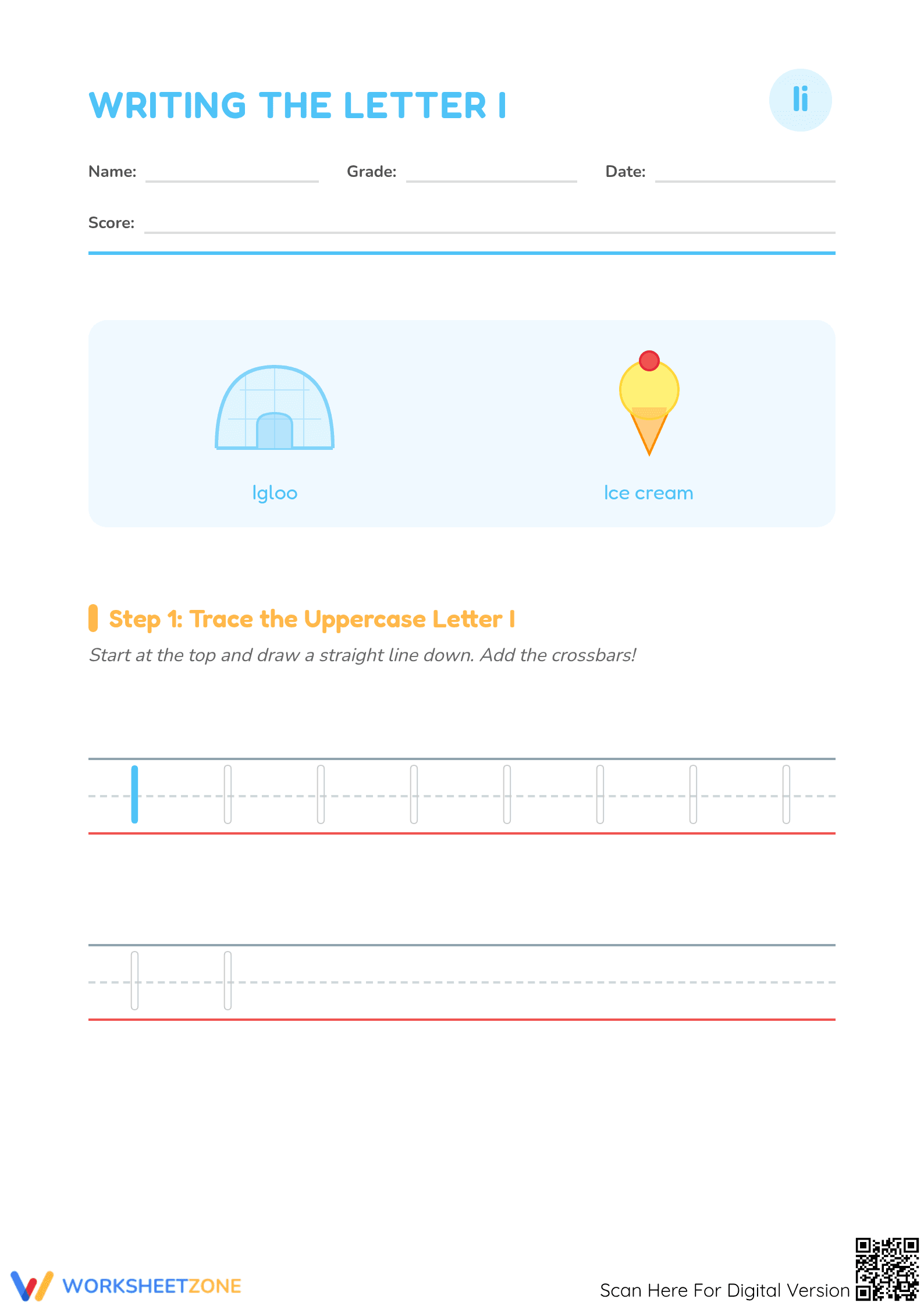
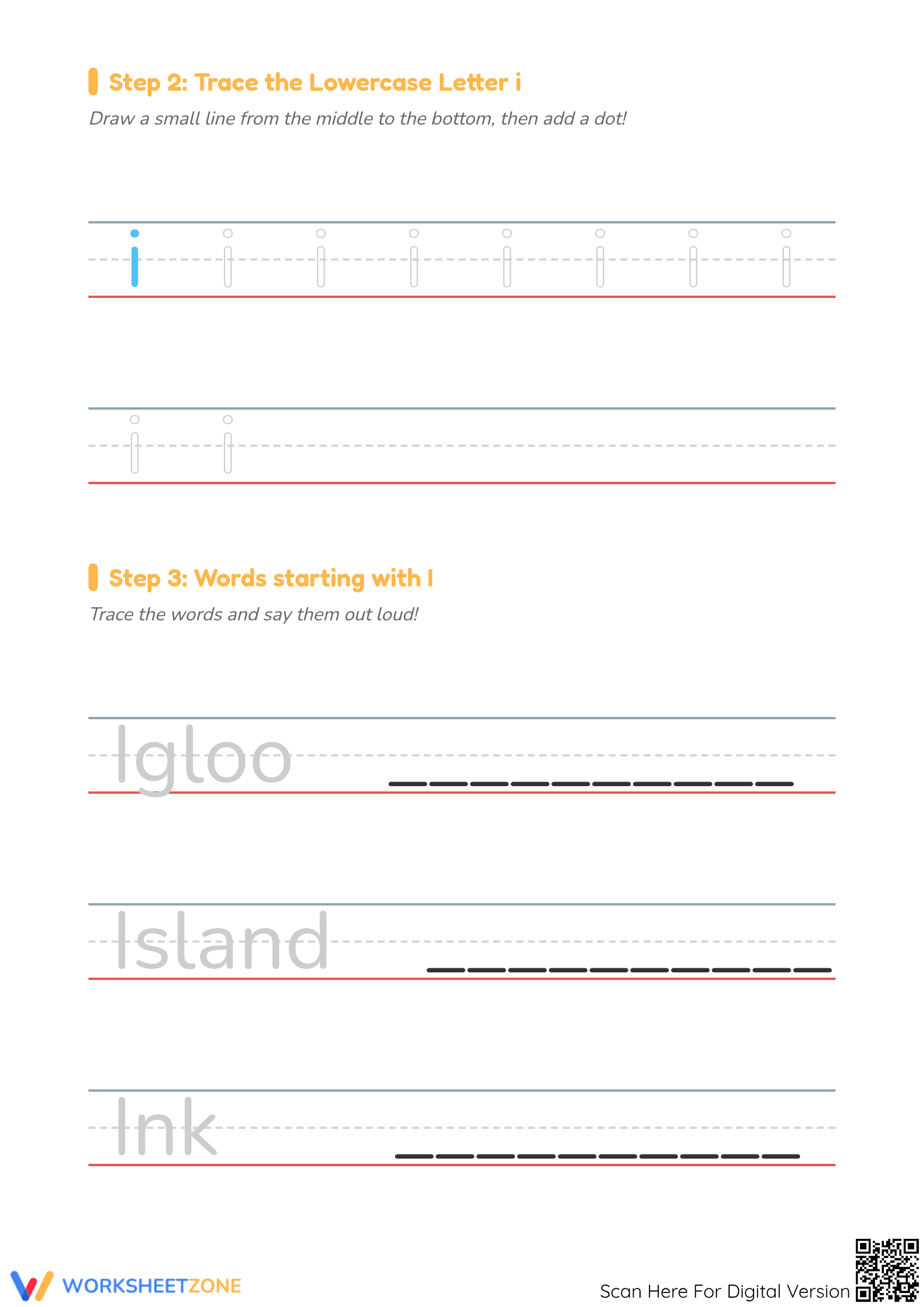
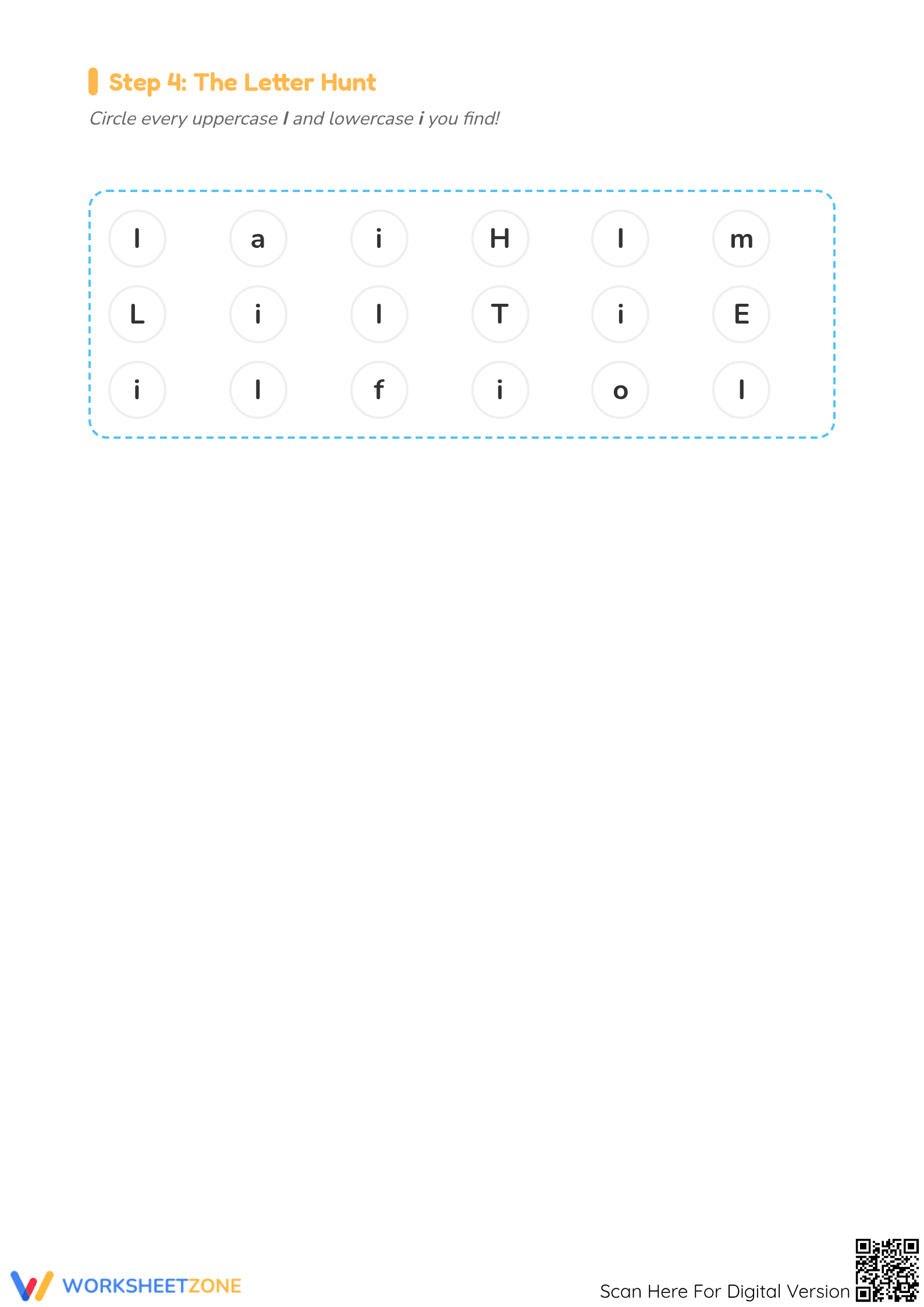
The packet contains three distinct pages designed for sequential learning. Page one focuses on uppercase "I" with directional cues. Page two introduces lowercase "i" and three vocabulary words (Igloo, Island, Ink) for tracing and independent writing. Page three features a "Letter Hunt" grid where students must discriminate between "I/i" and other similar-looking characters to build visual processing skills.
Zero-Prep Workflow
This resource is designed for immediate classroom implementation. Step 1: Print the three-page PDF (30 seconds). Step 2: Distribute to students during your phonics block or as a quiet-time activity (1 minute). Step 3: Review the "Letter Hunt" results as a whole group to check for common reversals or confusion (2 minutes). Total teacher preparation time is under two minutes, making it an ideal emergency sub plan.
Standards Alignment
Primary standard `CCSS.ELA-LITERACY.L.K.1.A` requires students to print many upper- and lowercase letters. This worksheet provides the repetitive, scaffolded practice needed to meet this benchmark. Additionally, it supports `CCSS.ELA-LITERACY.RF.K.1.D` by requiring students to recognize and name all upper- and lowercase letters of the alphabet. Both standard codes can be copied directly into lesson plans, IEP goals, or district curriculum mapping tools.
How to Use It
Use this during the "You Do" phase of a gradual release lesson on the letter I. After demonstrating the "top-down" stroke on the whiteboard, assign the tracing pages for independent practice. Alternatively, use the Letter Hunt page as a quick formative assessment exit ticket to identify students who struggle with letter discrimination before moving on to the letter J. Expected completion time is 15 to 20 minutes.
Who It's For
This is tailored for Kindergarten students but serves as an excellent intervention for Grade 1 or 2 students needing RTI support. It is also highly effective for English Language Learners (ELLs) who benefit from the clear pictorial representations of "Igloo" and "Ice cream" to anchor the phoneme to a concrete object. It pairs naturally with any alphabet anchor chart.
According to research by Fisher & Frey (2014) on the gradual release of responsibility, structured tracing and independent letter recognition tasks are vital for developing orthographic mapping in early readers. This worksheet utilizes these principles by moving students from guided tracing to independent letter identification. By focusing on both the grapheme (the written letter) and the phoneme (the initial sound in "Ink" or "Island"), the resource aligns with evidence-based practices for foundational literacy. The inclusion of 40+ specific interactions ensures that students receive the high-frequency exposure required to move letter formation from working memory to long-term procedural memory. Educators can confidently integrate this tool into a Science of Reading-aligned curriculum, knowing it addresses the specific requirements of CCSS.ELA-LITERACY.L.K.1.A through systematic, repetitive practice that builds student confidence and handwriting legibility.


