


























Views
Downloads

Beginning Sounds Worksheet | Essential Preschool ELA
Paste this activity's link or code into your existing LMS (Google Classroom, Canvas, Teams, Schoology, Moodle, etc.).
Students can open and work on the activity right away, with no student login required.
You'll still be able to track student progress and results from your teacher account.
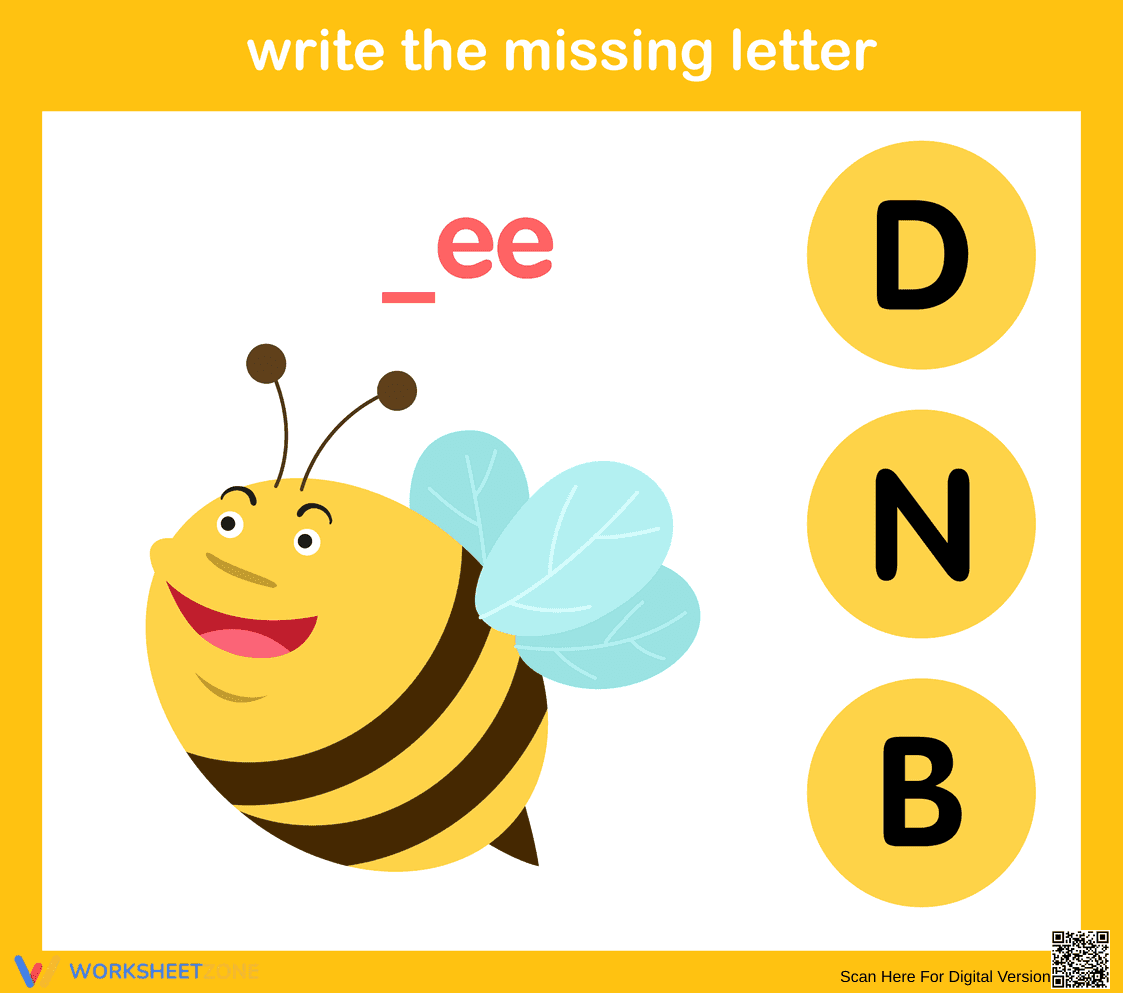
This Preschool beginning sounds worksheet helps early learners master initial consonant identification through visual cues. By connecting the image of a bee to the missing letter 'B', students develop phonemic awareness and letter-sound correspondence. This activity provides a foundational step toward reading readiness and confident pronunciation in early childhood education settings.
At a Glance
- Grade: Preschool · Subject: ELA
- Standard:
CCSS.ELA-LITERACY.RF.K.2.D— Isolate and pronounce the initial sounds in three-phoneme words- Skill Focus: Initial Consonant Identification
- Format: 1 page · 1 task · Answer key included · PDF
- Best For: Early phonics centers and morning work
- Time: 5–10 minutes
Inside this resource, you will find a high-quality, single-page PDF featuring a vibrant illustration of a bee. The worksheet presents a multiple-choice format where students must select the correct starting letter from three options: D, N, or B. This clear, uncluttered layout is specifically designed for young children who are just beginning to recognize how letters represent specific spoken sounds.
Skill Progression
- Guided practice: The teacher models the sound of the 'bee' and points to the letter choices.
- Supported practice: Students use the visual illustration to narrow down the phonetic possibilities.
- Independent practice: The learner circles or writes the correct letter 'B' to complete the word.
This resource follows a gradual-release model to ensure students feel successful while building their phonological skills.
Standards Alignment
This worksheet aligns with `CCSS.ELA-LITERACY.RF.K.2.D`, which requires students to isolate and pronounce the initial, medial vowel, and final sounds in three-phoneme words. While designed for Preschool, it targets the foundational skills necessary for Kindergarten mastery. Both standard codes can be copied directly into lesson plans, IEP goals, or district curriculum mapping tools.
How to Use It
Use this worksheet during small-group literacy rotations to check for individual sound recognition. It also works well as a quick formative assessment after a whole-class lesson on the letter 'B'. Observe if students can articulate the /b/ sound before marking their choice. Expected completion time is approximately 5 to 10 minutes depending on the child's familiarity with the alphabet.
Who It's For
This resource is ideal for preschool students, English Language Learners (ELLs) needing basic vocabulary support, and students with IEP goals focused on phonemic awareness. Pair this worksheet with a physical alphabet manipulative or a picture book about insects to reinforce the learning through multiple modalities and sensory experiences.
According to the RAND AIRS 2024 report, early intervention in phonemic awareness is a critical predictor of long-term reading success. This worksheet targets the specific skill of initial sound isolation, which is a prerequisite for decoding more complex text structures. Research from Fisher & Frey (2014) emphasizes that visual scaffolds, such as the bee illustration used here, help young learners bridge the gap between abstract sounds and concrete letter forms. By focusing on a single, clear task, the worksheet reduces cognitive load, allowing the student to concentrate entirely on the phonological relationship between the /b/ sound and the letter 'B'. This targeted approach ensures that students develop the necessary one-to-one correspondence skills required by CCSS.ELA-LITERACY.RF.K.2.D. Providing these structured opportunities for practice helps build the neural pathways essential for fluent reading and effective communication in later elementary grades.


