


























Views
Downloads
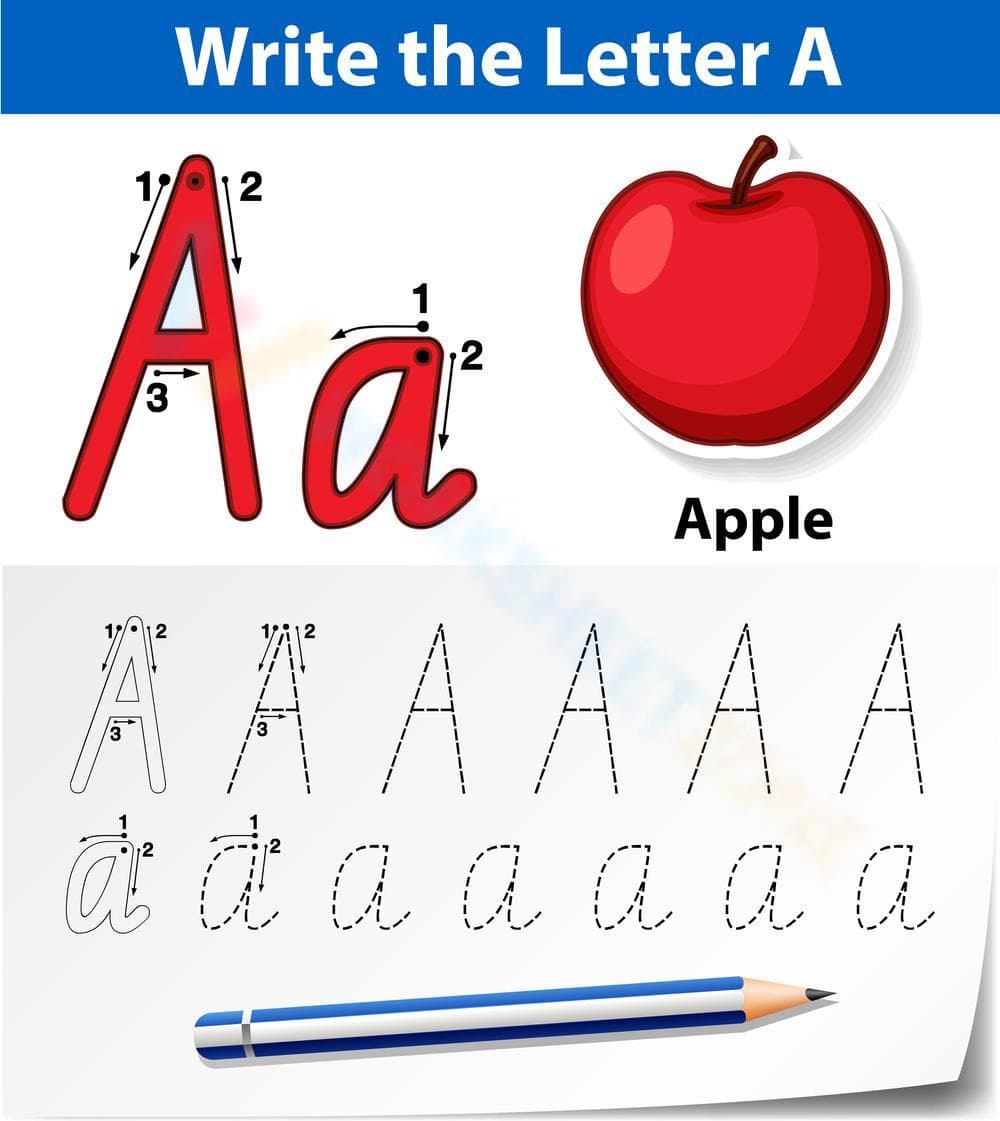

Letter A Tracing Worksheet | Essential Grade 1 Ready
Paste this activity's link or code into your existing LMS (Google Classroom, Canvas, Teams, Schoology, Moodle, etc.).
Students can open and work on the activity right away, with no student login required.
You'll still be able to track student progress and results from your teacher account.
This Grade 1 handwriting worksheet provides a focused environment for students to master the formation of the letter A. By combining visual cues with repetitive tracing, learners develop the muscle memory required for legible penmanship. Students will practice both uppercase and lowercase forms, ensuring they understand the structural differences between the two characters in a clear, distraction-free format.
At a Glance
- Grade: 1 · Subject: Handwriting
- Standard:
CCSS.ELA-LITERACY.L.1.1.A— Print all upper- and lowercase letters correctly and legibly- Skill Focus: Letter A formation
- Format: 1 page · 13 problems · No answer key needed · PDF
- Best For: Morning work or literacy centers
- Time: 5–10 minutes
The worksheet features a large visual anchor with an apple illustration and numbered stroke guides for both uppercase 'A' and lowercase 'a'. Below the guides, students find two rows of dashed-line letters. There are 6 uppercase and 7 lowercase tracing opportunities, totaling 13 specific tasks designed to reinforce proper starting points and directional flow for each stroke.
This resource is designed for a zero-prep workflow. 1. Print: Select the PDF and print in seconds. 2. Distribute: Hand out to students as they enter the classroom or transition to literacy blocks. 3. Review: Walk the room to provide immediate corrective feedback on grip and stroke order. Total teacher preparation time is under 2 minutes, making it an ideal sub-plan addition.
This activity aligns with CCSS.ELA-LITERACY.L.1.1.A, which requires students to print all upper- and lowercase letters. It specifically targets the foundational motor skills needed for early writing. This standard code can be copied directly into lesson plans, IEP goals, or district curriculum mapping tools to document progress in foundational literacy and fine motor development.
Use this worksheet during the initial phase of a handwriting lesson to model stroke order on a projector. Alternatively, assign it as a formative assessment during independent centers to identify students struggling with top-to-bottom stroke direction. Expect students to complete the tracing in approximately 5 to 10 minutes depending on their fine motor maturity.
This resource is perfect for first-grade students who need to refine their penmanship or kindergarteners ready for advanced tracing. It pairs naturally with alphabet anchor charts or phonics lessons focusing on the short /a/ sound. The clear visual guides provide necessary support for English Language Learners and students receiving occupational therapy services.
Research by Fisher & Frey (2014) emphasizes the importance of guided practice in the gradual release of responsibility model, particularly for foundational skills like letter formation. This worksheet applies those principles by providing explicit stroke-order numbering (1, 2, 3) to prevent the development of inefficient writing habits. According to the RAND AIRS 2024 report, consistent, short-burst practice of fine motor tasks significantly improves long-term legibility and writing fluency in early elementary learners. By focusing specifically on the letter A, this resource allows for the high-repetition practice necessary for motor automaticity. The inclusion of the CCSS.ELA-LITERACY.L.1.1.A standard ensures that this practice is not merely filler but a direct contribution to the mastery of the English Language Arts curriculum. Educators can use this tool to bridge the gap between letter recognition and production, a critical milestone in the NAEP literacy framework.


