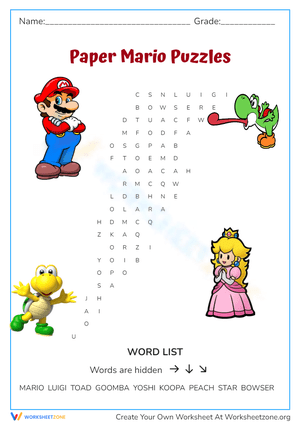
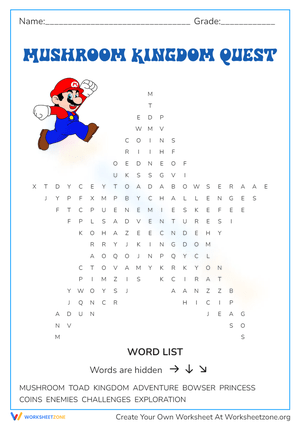
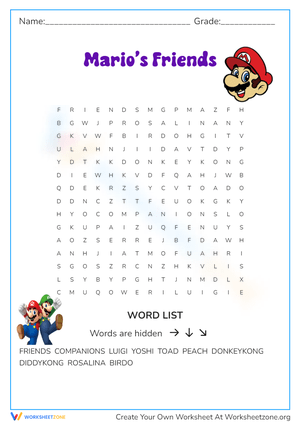
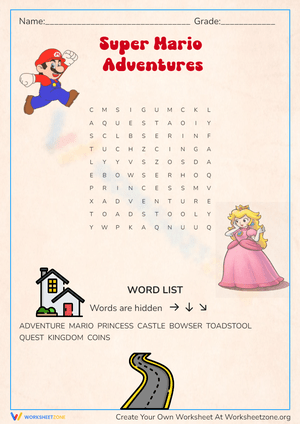
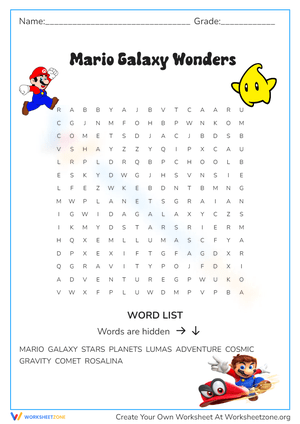
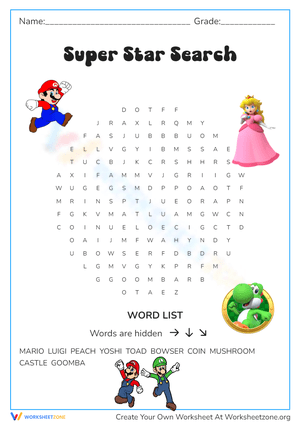
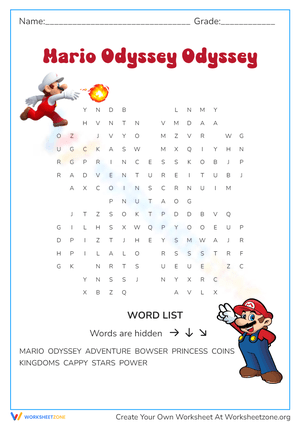
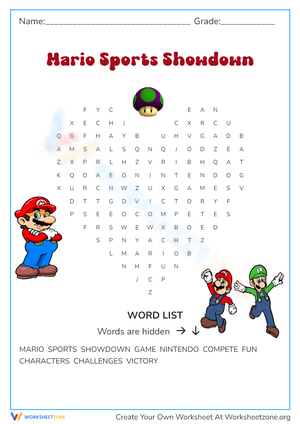
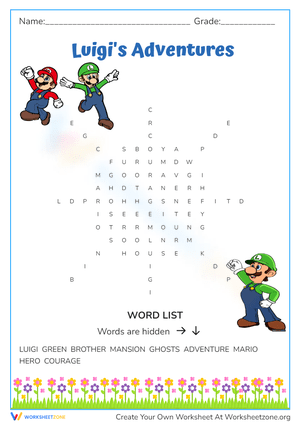
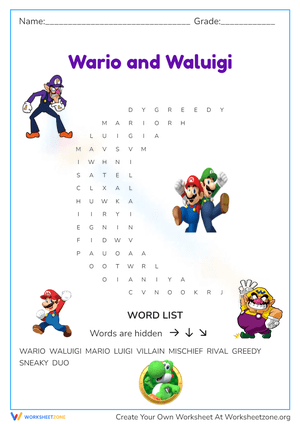
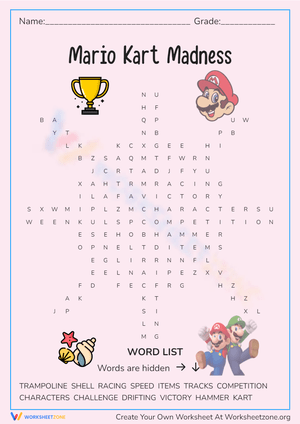
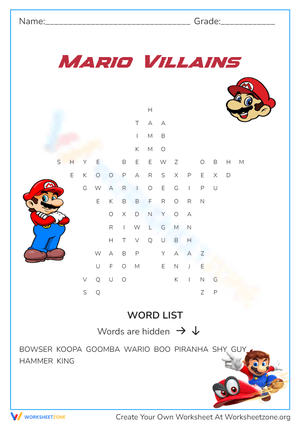
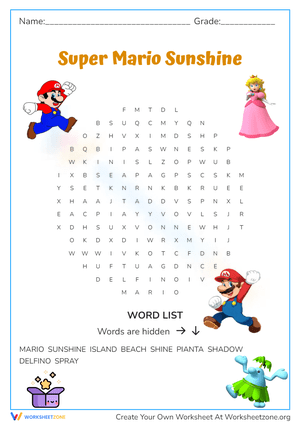
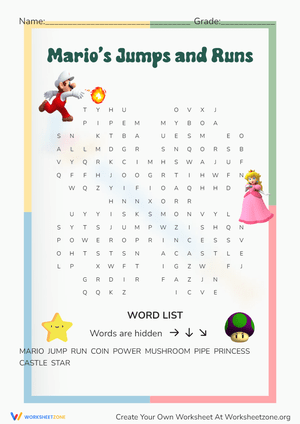
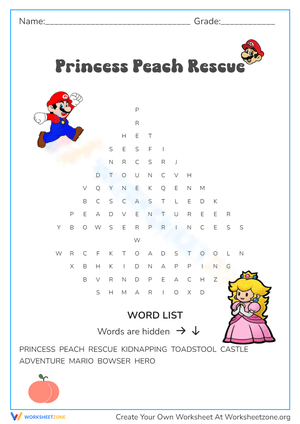
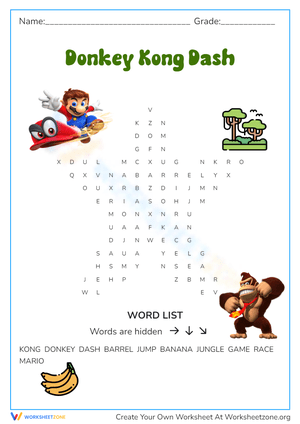
Mario word search puzzles have a way of transforming an ordinary classroom moment into something students genuinely look forward to. Picture a room full of restless learners suddenly leaning over their desks, tracing letters with focused eyes as they hunt for words like Luigi, Koopa, and Mushroom hidden inside a grid. That shift from distraction to deep concentration is exactly what makes themed puzzle activities so valuable for teachers seeking reliable engagement tools.
When students work through a Mario word search grid, they practice much more than simple word recognition. Each scan across rows and columns strengthens left-to-right tracking, a foundational skill for reading fluency. Letter discrimination improves as children distinguish between similar-looking characters in a crowded grid. Spelling reinforcement happens naturally because students must match each letter in sequence to confirm a find. These overlapping benefits make puzzle-based activities a practical addition to any language arts or vocabulary lesson plan.
Teachers often use these themed grids as warm-up exercises at the start of a period, early finisher tasks for students who complete assignments ahead of schedule, or calm-down activities after recess. The Mario theme provides built-in motivation because students already recognize the characters and settings from their own experiences. Homeschooling parents find similar success when slipping a puzzle page between structured reading and math sessions. For a hands-on companion activity, Super Mario coloring pages pair well with puzzle work and give younger learners a creative break.
Vocabulary retention is another area where these puzzles deliver results. Repeated visual exposure to character names and thematic terms helps students internalize spelling patterns without the pressure of a formal test. English language learners benefit from this low-stakes format because they can work at their own pace while absorbing letter combinations tied to familiar, high-interest content. Parents reviewing completed grids at home can spark short conversations about the words their child found, turning a simple activity into a shared learning moment.
Educators who want to build custom grids tailored to specific vocabulary lists or reading levels can find guidance on how to make a word search worksheet at Worksheetzone. Whether printed for a full classroom set or used during a quiet afternoon at home, Mario word search puzzles remain a dependable resource for blending entertainment with genuine skill development.
Frequently Asked Questions
Question 1: What skills do Mario word search puzzles develop?
These puzzles strengthen pattern recognition, spelling accuracy, and visual tracking as students scan grids for hidden terms. Children also build sustained concentration and left-to-right reading habits through repeated practice. The familiar Mario characters keep motivation high, making it easier for teachers and parents to encourage consistent skill-building sessions at home or in the classroom.
Question 2: Which grade levels benefit most from these activities?
Elementary students in grades one through five typically gain the most from themed puzzle grids, though older learners enjoy them as review tools. Younger children focus on letter recognition and basic spelling, while upper-grade students reinforce vocabulary. The Mario theme appeals broadly, so engagement stays strong regardless of whether puzzles are used in primary or intermediate classrooms.
Question 3: How can teachers fit these puzzles into a lesson plan?
Teachers can assign these grids as morning warm-ups, transition activities between subjects, or independent tasks for early finishers. They work well during vocabulary review weeks or themed learning units centered on gaming and popular culture. Because students complete puzzles independently, the teacher gains time to circulate, check progress, or provide one-on-one support to struggling readers.
Question 4: Are these puzzles suitable for homeschool settings?
Homeschool routines benefit from structured yet relaxed literacy activities that require minimal supervision. Parents can use puzzles as a break between heavier subjects like math and reading comprehension. The grids reinforce spelling and visual tracking skills while giving children independence during study time, making Mario word search puzzles a reliable homeschool resource.












 Interactive Worksheet Maker
 Quiz Maker
 Word Search Maker
 Crossword Puzzle Maker
 Word Scramble Generator
 Sentence Scramble Generator
 Handwriting Worksheet Generator
 Name Tracing Generator
 Fill In The Blank Generator




 BACK TOSCHOOL