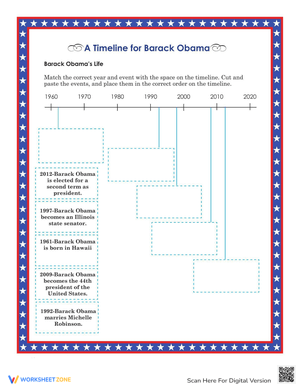
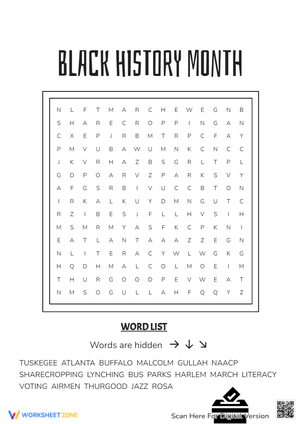
These black history month printable worksheets give teachers structured, ready-to-use activities across biography reading, chronological sequencing, vocabulary development, and guided research — the kind of materials that work equally well as a daily bell ringer or the anchor for a station-rotation block. The set spans K–8 with distinct materials at each grade band, so there is no retrofitting a middle school primary source analysis for third graders or vice versa. Every format asks students to do more than recall a fact: comprehension questions push toward causation, vocabulary exercises require reading in context rather than mechanical matching, and timeline tasks demand written explanation alongside sequencing.
What's Inside Each Worksheet
Each worksheet targets a distinct skill, which lets teachers select based on what students need rather than assigning the entire collection at once. The formats across the set include:
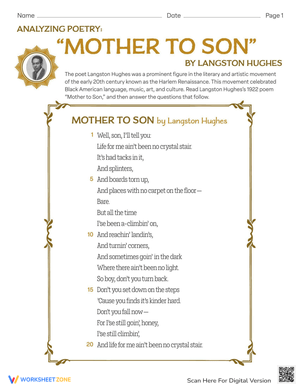
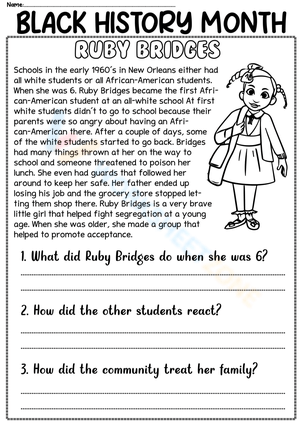
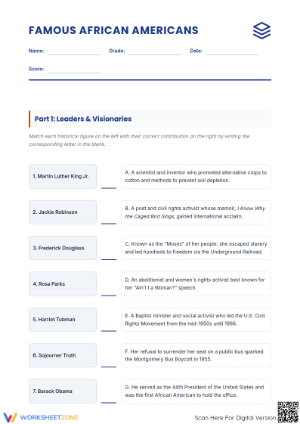
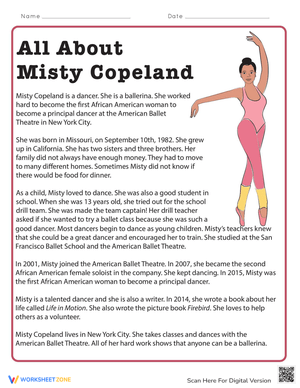
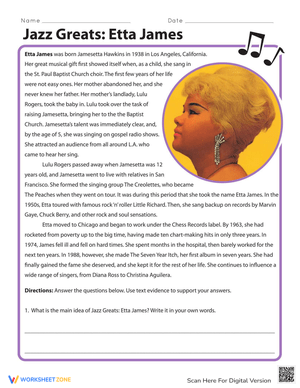
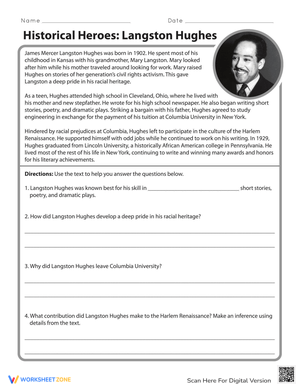
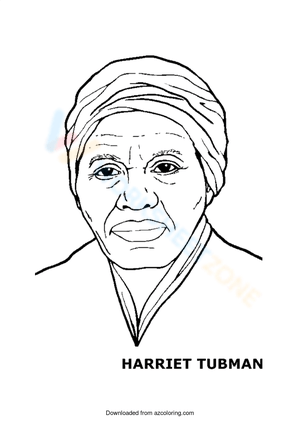
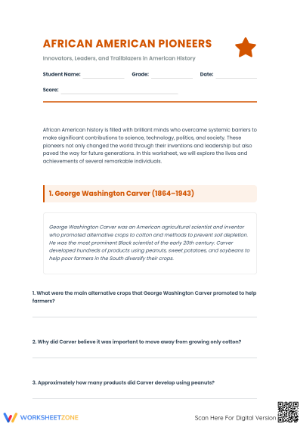
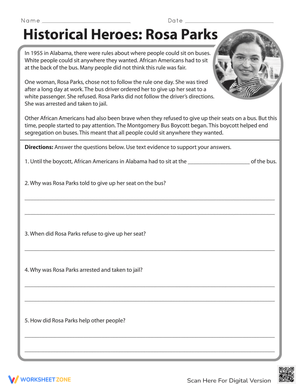
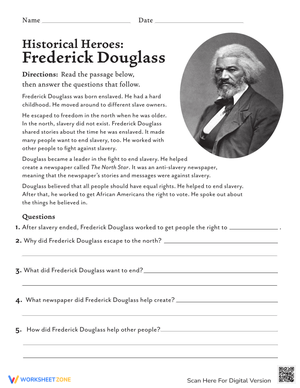
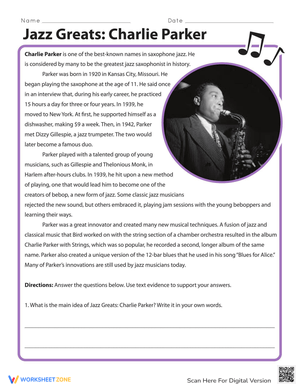
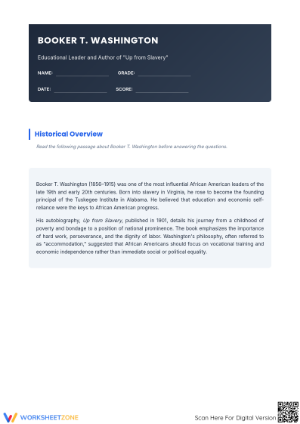
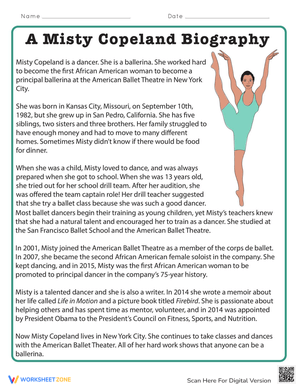
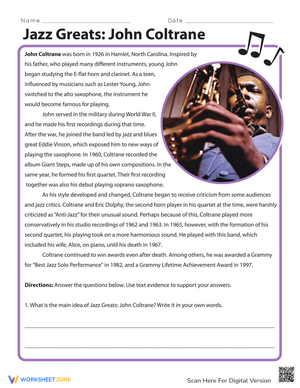
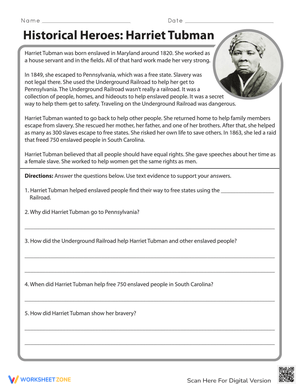
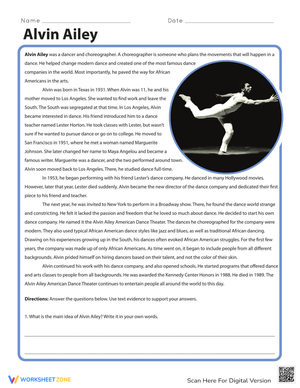
- Biography reading passages with multi-part comprehension questions — figures covered range from the widely taught (Harriet Tubman, Jackie Robinson, Ruby Bridges) to contributors in science and literature who rarely appear in standard curricula, including Charles Drew and Gwendolyn Brooks.
- Timeline sequencing with causal explanation — students place 6–10 events in order, then write a sentence explaining why one event caused or influenced the next, pushing beyond rote placement into actual historical reasoning.
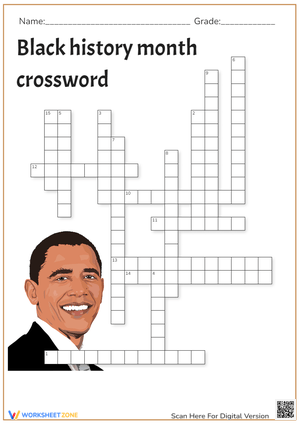
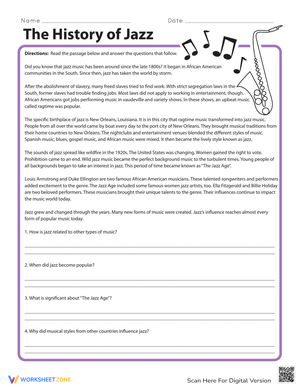
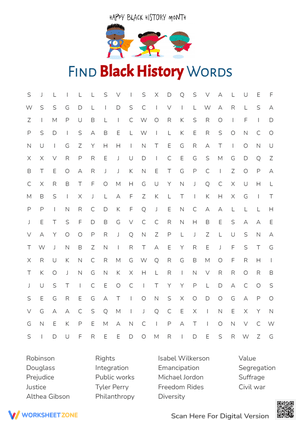
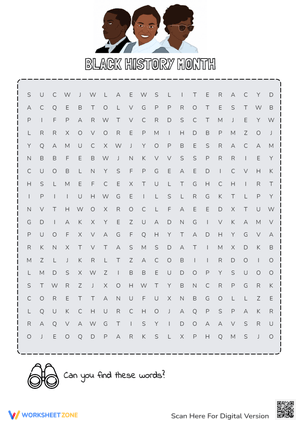
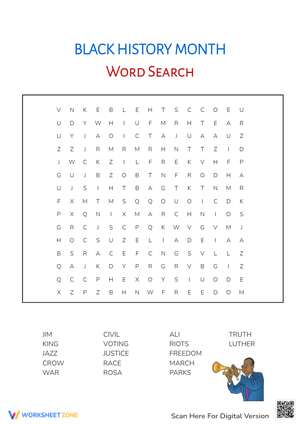
- Vocabulary exercises built on context clues — terms like abolition, segregation, civil disobedience, and disenfranchisement appear in passages that require students to infer meaning from surrounding text, not just match a word to a provided definition.
- Research graphic organizers — structured note-taking pages walk students through locating, evaluating, and summarizing information on a figure or event of their choice, with prompts that prevent the most common research shortcut: copying without synthesis.
- Open-ended writing prompts — questions like "Why do you think Carter G. Woodson believed documenting Black history was urgent?" require students to build an argument from evidence rather than retrieve a memorized answer.
Frequent Student Errors Worth Watching For
The most persistent error at the elementary level is conflation — students who confidently confuse Rosa Parks and Ruby Bridges because both were Black women who defied segregation, and both stories are often taught in the same week. A biography worksheet that asks students to name the specific setting (Montgomery's city buses in 1955 versus William Frantz Elementary School in New Orleans in 1960) surfaces that confusion in a low-stakes format before it shows up on an assessment or a classroom discussion.
On timeline worksheets, a second pattern appears consistently: students correctly sequence events but treat all of them as equally distant past. A third grader typically has the same cognitive relationship to 1865 as to 1965 — both are just "back then." The stronger worksheets address this by asking students to calculate approximate years between events or identify which events fall within living memory, anchoring the chronology in something concrete rather than abstract.
Vocabulary exercises surface a third issue: students match segregation to its textbook definition with no functional understanding of what segregation looked like in daily life. Worksheets that follow the definition with a brief case description or a primary source image close that gap more effectively than repeated definition review.
Recommended Lesson-Planning Strategies for These Worksheets
The most workable structure in a typical February schedule is a daily bell ringer: a biography passage with comprehension questions on Monday, a timeline activity mid-week, a vocabulary exercise to close out Friday. That rhythm distributes the content without sacrificing instructional time and generates a week's worth of formative data with almost no additional prep. Teachers who run station rotations can set up four simultaneous stations — biography reading, timeline sequencing, vocabulary work, and the research organizer — cycling students through in 10-minute rounds while the teacher pulls small groups.
The planning move worth considering is distribution across the entire year rather than a February sprint. A worksheet on Mae Jemison drops naturally into a spring science unit on space exploration; a passage on Langston Hughes belongs in a March or April poetry unit; a worksheet on Matthew Henson works inside an exploration or geography thread. The Association for the Study of African American Life and History (ASALH) publishes an official annual theme each February, and threading that theme across subjects through the school year builds a stronger case — for students and families — that Black history is American history. That argument is exactly why treating black history month printable worksheets as year-round materials serves students better than filing the set away on March 1st.
Standard Alignment
Biography reading passages align with CCSS.ELA-LITERACY.RI.3.3 (describing relationships between historical events and steps in a technical process) and CCSS.ELA-LITERACY.RI.5.6 (analyzing how an author uses evidence to support particular points). Timeline and primary source activities align with CCSS.ELA-LITERACY.RH.6-8.5, which asks students to analyze how a text's structure contributes to the author's purposes — a standard that appears on state assessments across most grade 6–8 frameworks. In social studies terms, the content maps to the National Council for the Social Studies (NCSS) thematic standards for Individual Development and Identity and Power, Authority, and Governance, both of which appear explicitly in state scope-and-sequence documents at grades 4, 5, and 8, the three testing years where this content is most frequently assessed.
Adjusting the Worksheets for a Range of Learners
For students reading below grade level, the biography passages work well as shared reading — the teacher reads aloud while students follow along, then students complete the comprehension questions independently. Reducing the number of required questions (three instead of six) gives struggling readers a manageable entry point without changing the core task or pulling them into a different worksheet entirely. For advanced students, the research graphic organizers become launching pads: rather than completing a provided template, these students design their own investigation framework, select a figure who doesn't appear in the core set, and prepare a short presentation for the class.
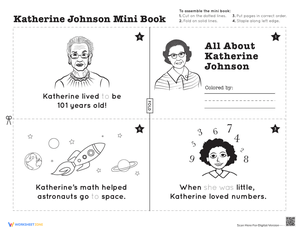
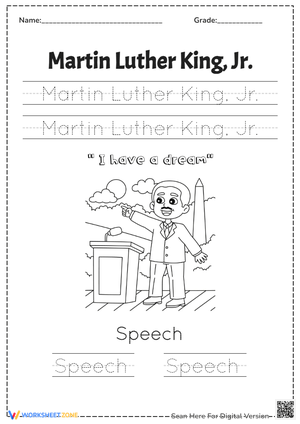
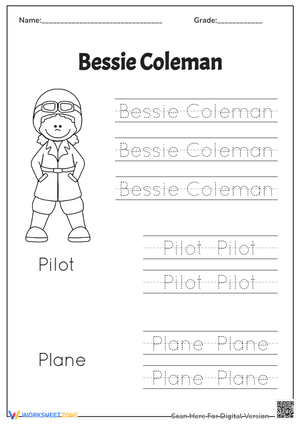
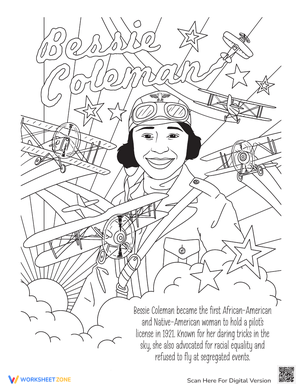
Teachers using black history month printable worksheets with kindergartners and first graders will find that the coloring and tracing pages work best as a pre-reading activity rather than a closing task. Students examine the illustration, make a prediction about the person depicted, and listen to a read-aloud — then return to the page afterward to confirm or revise what they thought. That sequence builds prediction and listening comprehension without demanding independent reading stamina that students at this stage haven't yet developed.
Frequently Asked Questions
Can these worksheets be used across subject areas, or are they limited to social studies blocks?
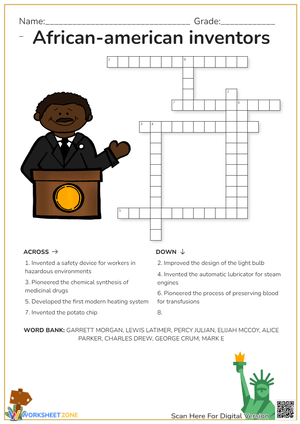
They work across subjects. ELA teachers use the biography passages as nonfiction reading practice that generates concrete formative data on close-reading skills. Science teachers pair worksheets on Mae Jemison or Percy Julian with relevant content units. Art teachers find passages on figures like Romare Bearden useful for discussion before studio work. The vocabulary worksheets support academic language development across any content area because the terms — disenfranchisement, civil disobedience, abolition — appear in texts well beyond history class.
How many figures does the set cover, and how were they selected?
The biography worksheets span multiple fields — civil rights, science, literature, athletics, and politics — and include both widely taught figures and contributors who rarely appear in standard textbook units. That range matters practically: students who have encountered Harriet Tubman and Rosa Parks since second grade need new material by fifth or sixth grade to stay engaged. Covering lesser-known figures also pushes back against the implicit curriculum message that Black contributions cluster around a single era or movement.
Do these materials work for middle school, or do they skew toward elementary grades?
Both levels are served. Elementary worksheets concentrate on biography comprehension, basic timeline work, and foundational vocabulary. Middle school materials shift toward primary source analysis, open-ended argumentation, and research tasks aligned with the more demanding CCSS informational reading standards for grades 6–8. Teachers working in grades 5–6 often pull from both tiers depending on the range of their students. These black history month printable worksheets are organized by grade band, so identifying the right level takes seconds rather than requiring a full read-through of every page in the collection.












 Interactive Worksheet Maker
 Quiz Maker
 Word Search Maker
 Crossword Puzzle Maker
 Word Scramble Generator
 Sentence Scramble Generator
 Handwriting Worksheet Generator
 Name Tracing Generator
 Fill In The Blank Generator