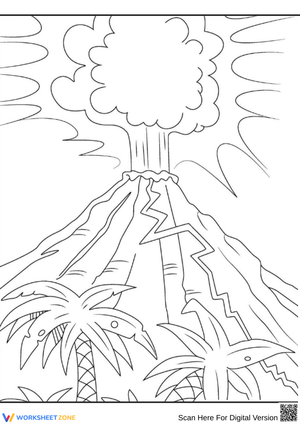
If you are planning a plate tectonics unit for grades 4 through 8, you already know that volcanoes are one of the most engaging entry points into earth science. Volcano worksheets give you a concrete way to move students from vague mental pictures of eruptions toward precise vocabulary, labeled diagrams, and evidence-based explanations. For a page built around the keyword volcano worksheets, the goal is simple: help you find resources that connect directly to what students are expected to know at each grade band, rather than generic coloring pages.
Volcano worksheets work well because they sit at the intersection of several skills you are already teaching: reading diagrams, building content vocabulary, and reasoning about cause and effect in natural systems. A well-designed worksheet does not just ask students to color a cross-section. It asks them to explain why magma rises, why eruptions differ in violence, and why certain regions of the country experience volcanic activity while others do not.
Aligning Volcano Worksheets with NGSS Plate Tectonics Standards
At the elementary level, NGSS 4-ESS2-2 and the related ESS2.B disciplinary core idea ask fourth graders to recognize that volcanoes, earthquakes, and mountain ranges occur in patterns that can be tied to plate boundaries. Volcano worksheets that pair a world map with volcano locations give students a low-stakes way to practice this pattern recognition before they are asked to explain the underlying mechanism.
Middle school raises the rigor considerably. MS-ESS2-2 and MS-ESS2-3 require students to construct explanations and analyze data showing how geoscience processes, including volcanic activity, have reshaped Earth's surface over long stretches of time. A worksheet sequence that works well here starts with a labeling task, moves to a short data set on eruption frequency, and ends with a written explanation prompt, because that progression mirrors the three-dimensional learning NGSS expects rather than testing vocabulary recall alone.
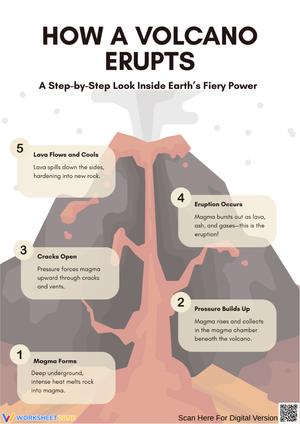
Middle school standards also emphasize that processes like volcanic eruptions are usually gradual but punctuated by catastrophic events. Volcano worksheets that include a timeline or sequencing task help students internalize this pattern instead of assuming every eruption looks like the dramatic footage they may have seen in a video.
Building Vocabulary Through Diagram and Cross-Section Worksheets
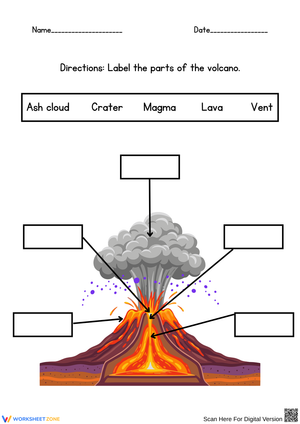
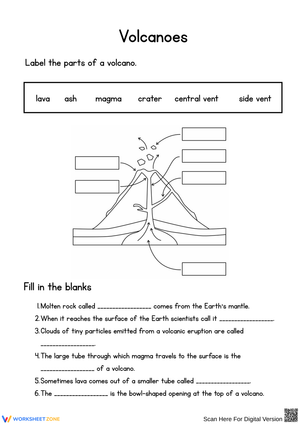
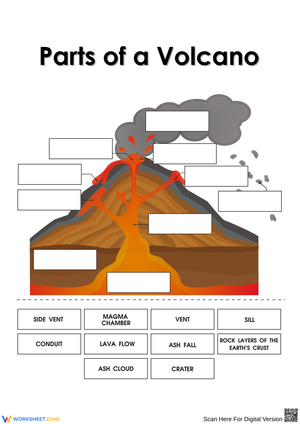
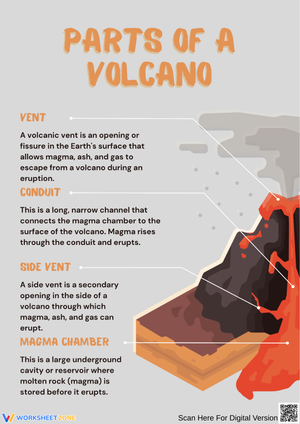
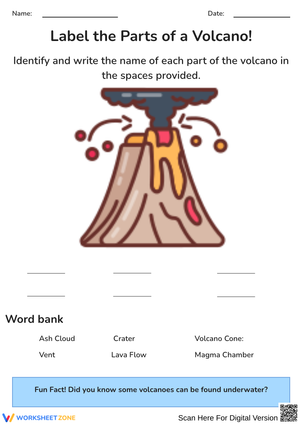
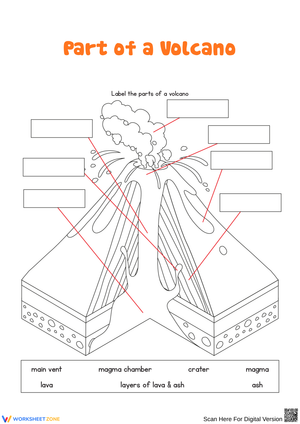
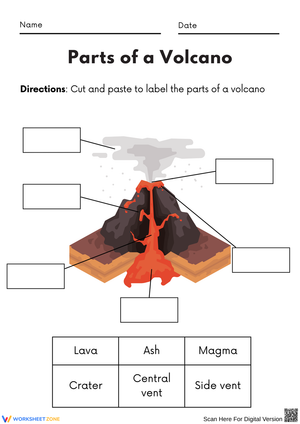
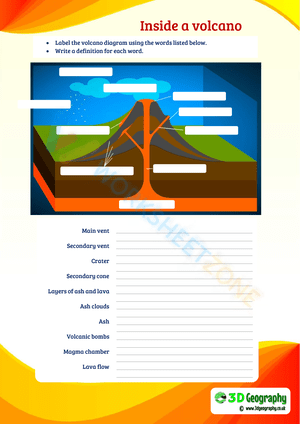
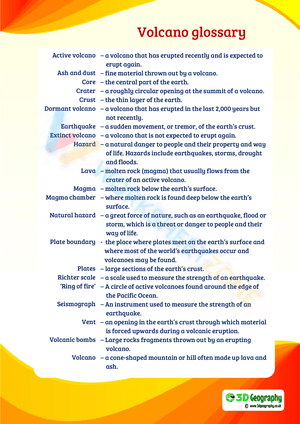
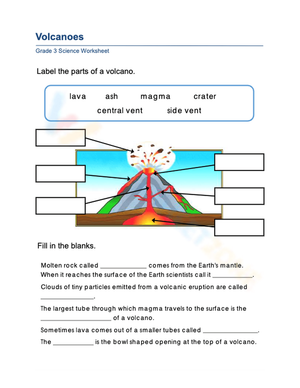
One of the most reliable uses of volcano worksheets is vocabulary development through labeled cross-sections. Terms like magma, lava, vent, crater, and magma chamber are easy to memorize in isolation but much stickier when students place them correctly on a diagram they have to reason through. A strong worksheet set will ask students to distinguish magma from lava based on location rather than definition alone, since that distinction trips up even confident readers.
For students who need more scaffolding, look for volcano worksheets that include a word bank alongside the diagram, then remove the word bank for a second attempt later in the unit. This lets you use the same worksheet format for both an initial teaching pass and a later formative check without creating two separate resources.
Differentiating Volcano Worksheets Across Grade Bands
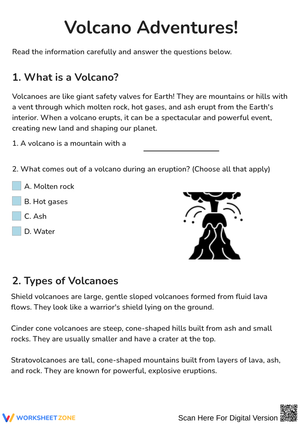
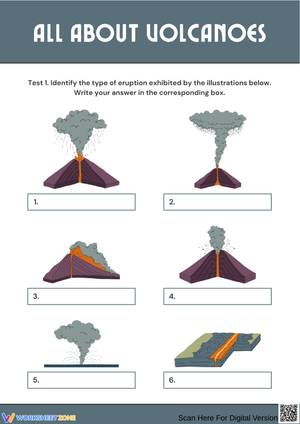
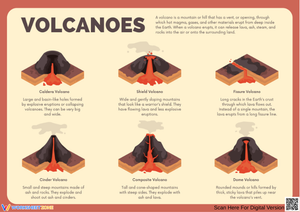
Elementary teachers generally need volcano worksheets built around observation and pattern recognition: matching volcano types to images, plotting locations on a map, or completing a simple labeled diagram with a word bank provided. Keep sentence stems short and rely on visuals to carry most of the cognitive load.
Middle school teachers should look for worksheets that move beyond labeling into explanation and data analysis. A worksheet that presents a short data table on eruption frequency by region, then asks students to draw a conclusion in writing, does more to prepare students for NGSS performance expectations than a purely visual task. If you teach a split classroom with mixed readiness, consider assigning the same diagram-labeling worksheet to everyone, then offering a written extension prompt only to students ready for the analysis-level task.
Classroom Implementation
Volcano worksheets work best when they are sequenced rather than assigned as a single standalone activity. Start with a short pre-unit worksheet that surfaces what students already believe about volcanoes, since misconceptions about magma, pressure, and eruption triggers are common and worth catching early. Follow with a labeled diagram worksheet during direct instruction, then a data or map-based worksheet once students have the vocabulary to interpret it.
For formative assessment, a volcano worksheet can serve as a quick check before a unit test on plate tectonics. Because the worksheet format is low-stakes and familiar, students are more willing to reveal genuine confusion than they might be on a graded quiz, which gives you a clearer picture of who needs reteaching before the summative assessment.
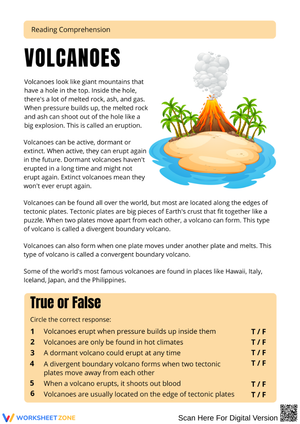
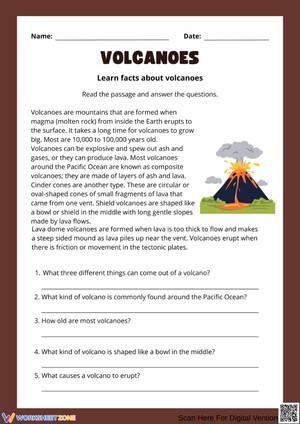
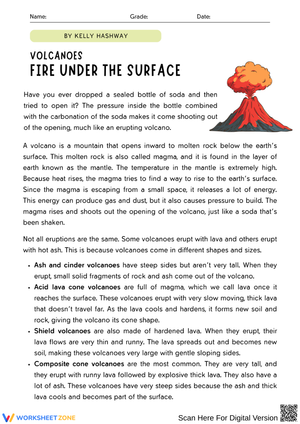
If your school emphasizes cross-curricular planning, volcano worksheets also fit naturally into reading comprehension or short research-writing tasks. A brief nonfiction passage on a specific eruption, followed by a worksheet that asks students to cite evidence for a claim, lets you reinforce literacy standards without losing instructional time from the science block.
Frequently Asked Questions
1. What grade level are volcano worksheets best suited for?
Volcano worksheets fit most naturally in grades 3 through 8, with elementary versions focused on observation and labeling and middle school versions focused on explanation and data analysis tied to NGSS plate tectonics standards.
2. How do volcano worksheets align with NGSS earth science standards?
Elementary worksheets support NGSS 4-ESS2-2 and ESS2.B by helping students recognize patterns between volcanoes, earthquakes, and plate boundaries, while middle school worksheets support MS-ESS2-2 and MS-ESS2-3 by requiring explanations and data analysis of geoscience processes over time.
3. What should a volcano worksheet include for middle school students?
A middle school volcano worksheet should combine a labeled diagram, a short data set such as eruption frequency by region, and a written explanation prompt so students practice constructing evidence-based claims rather than only recalling vocabulary.
4. How can teachers use volcano worksheets alongside real US volcano data?
Teachers can introduce the US Geological Survey figure of about 170 potentially active volcanoes concentrated in Alaska, Hawaii, and the Cascade Range, then have students map or discuss these locations as part of a labeling or hazard-based worksheet activity.
5. Can volcano worksheets be used for both instruction and assessment?
Yes, the same worksheet format can serve as an instructional tool during direct teaching and as a low-stakes formative assessment before a unit test, especially when a word bank is removed for the second use to raise the difficulty.












 Interactive Worksheet Maker
 Quiz Maker
 Word Search Maker
 Crossword Puzzle Maker
 Word Scramble Generator
 Sentence Scramble Generator
 Handwriting Worksheet Generator
 Name Tracing Generator
 Fill In The Blank Generator