


























Views
Downloads

Anatomy and Physiology Cell Worksheet | Essential Grade 9-10
Paste this activity's link or code into your existing LMS (Google Classroom, Canvas, Teams, Schoology, Moodle, etc.).
Students can open and work on the activity right away, with no student login required.
You'll still be able to track student progress and results from your teacher account.
This comprehensive Anatomy and Physiology worksheet provides a rigorous review of cell structure and function for high school students. By defining organelles and explaining physiological processes, students build a foundational understanding of human biology. This resource ensures learners can identify key cellular components and their specific roles within the body's complex systems.
At a Glance
- Grade: 9-10 · Subject: Science / Anatomy
- Standard:
HS-LS1-2— Illustrate hierarchical organization and interacting systems within multicellular organisms- Skill Focus: Cell Structure and Function
- Format: 4 pages · 48 problems · Answer key included · PDF
- Best For: Unit review or sub plans
- Time: 45–60 minutes
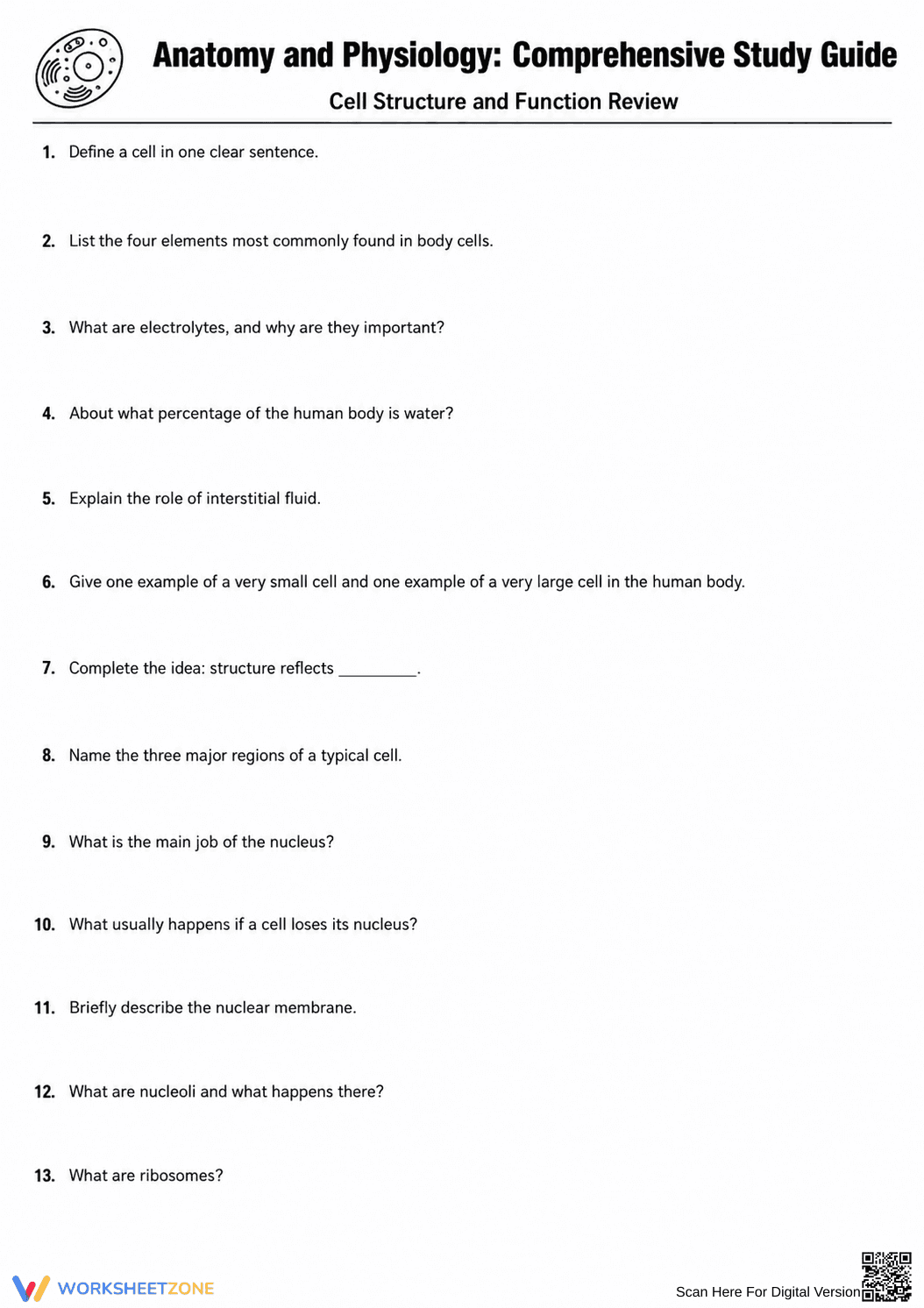
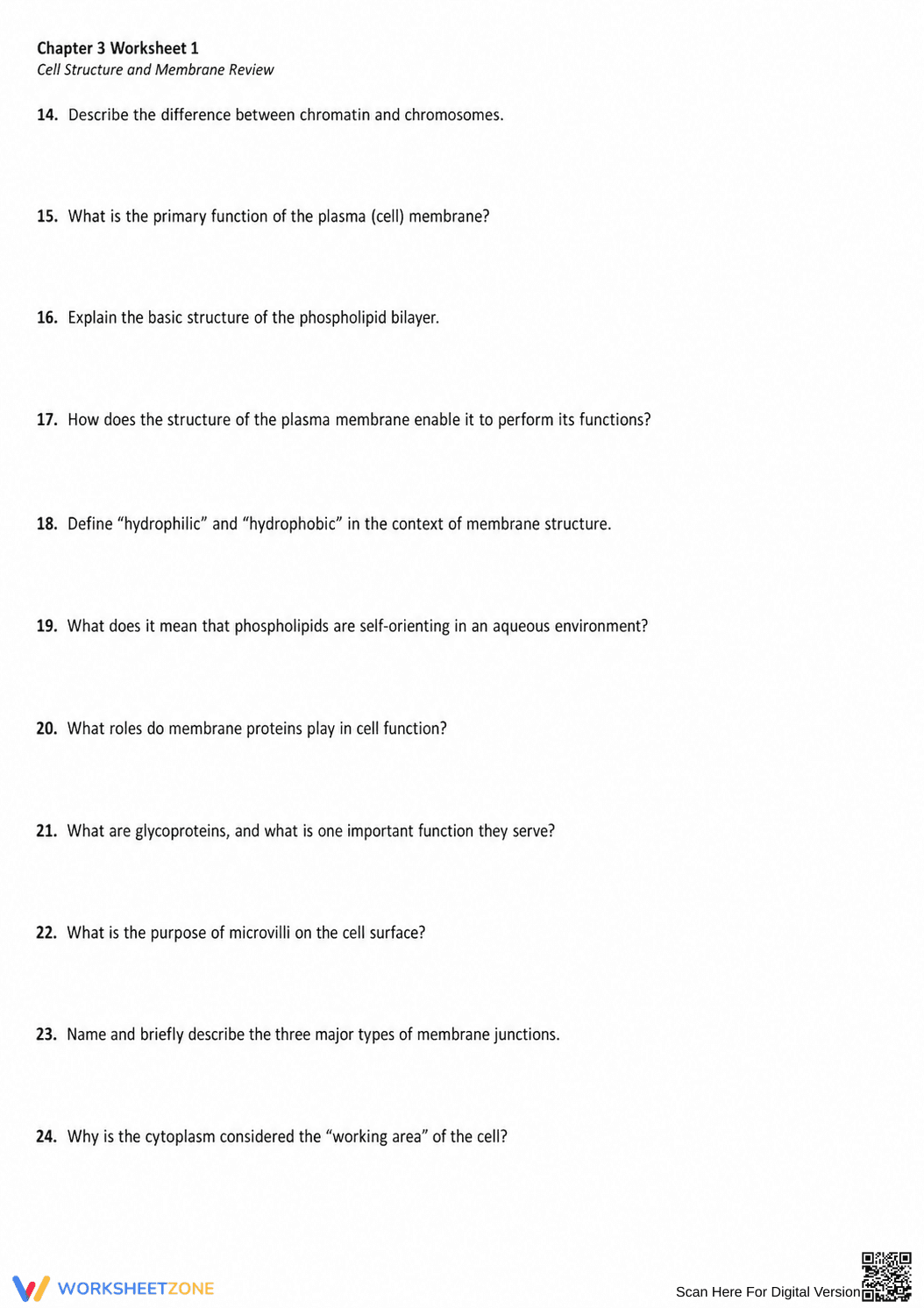
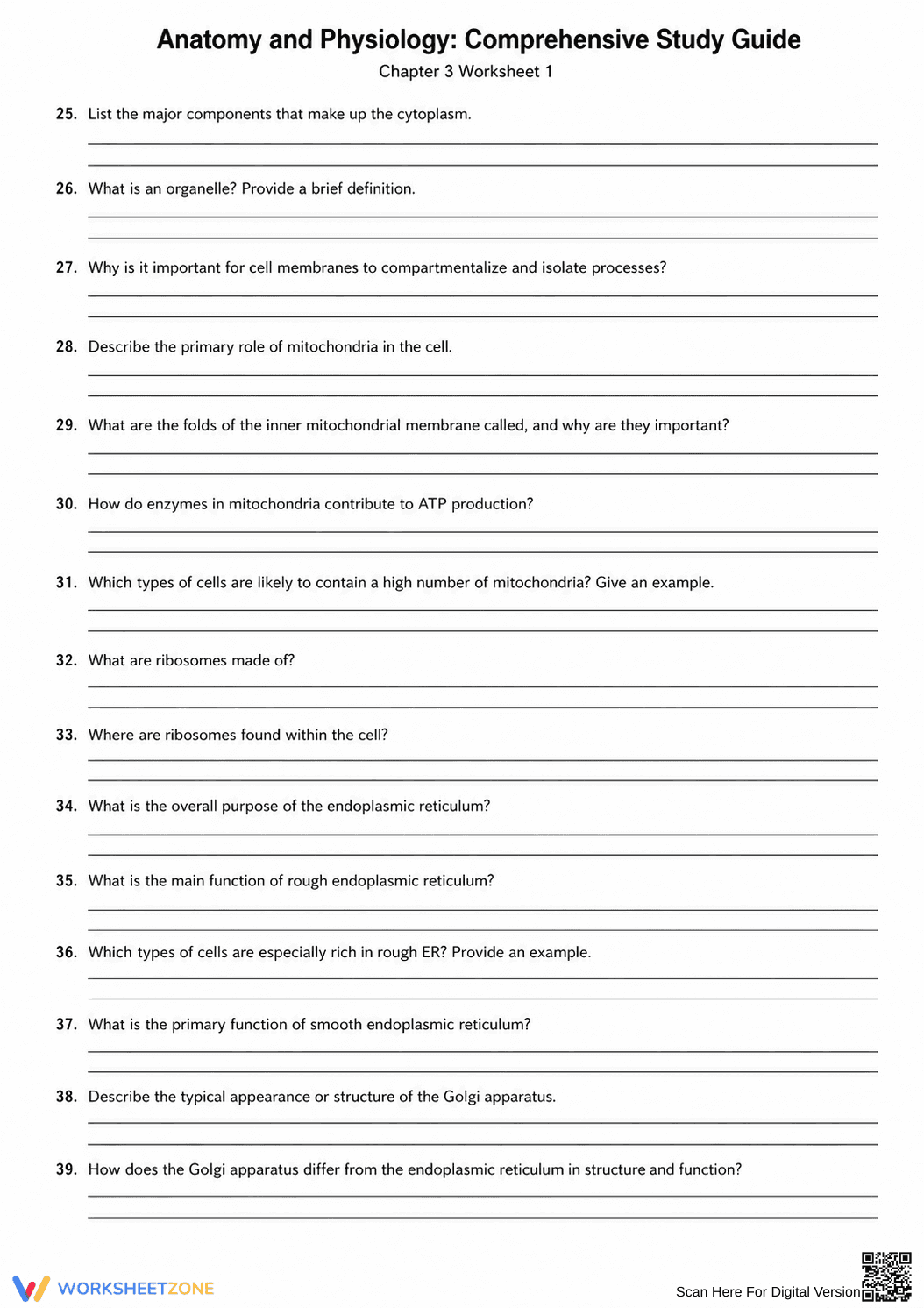
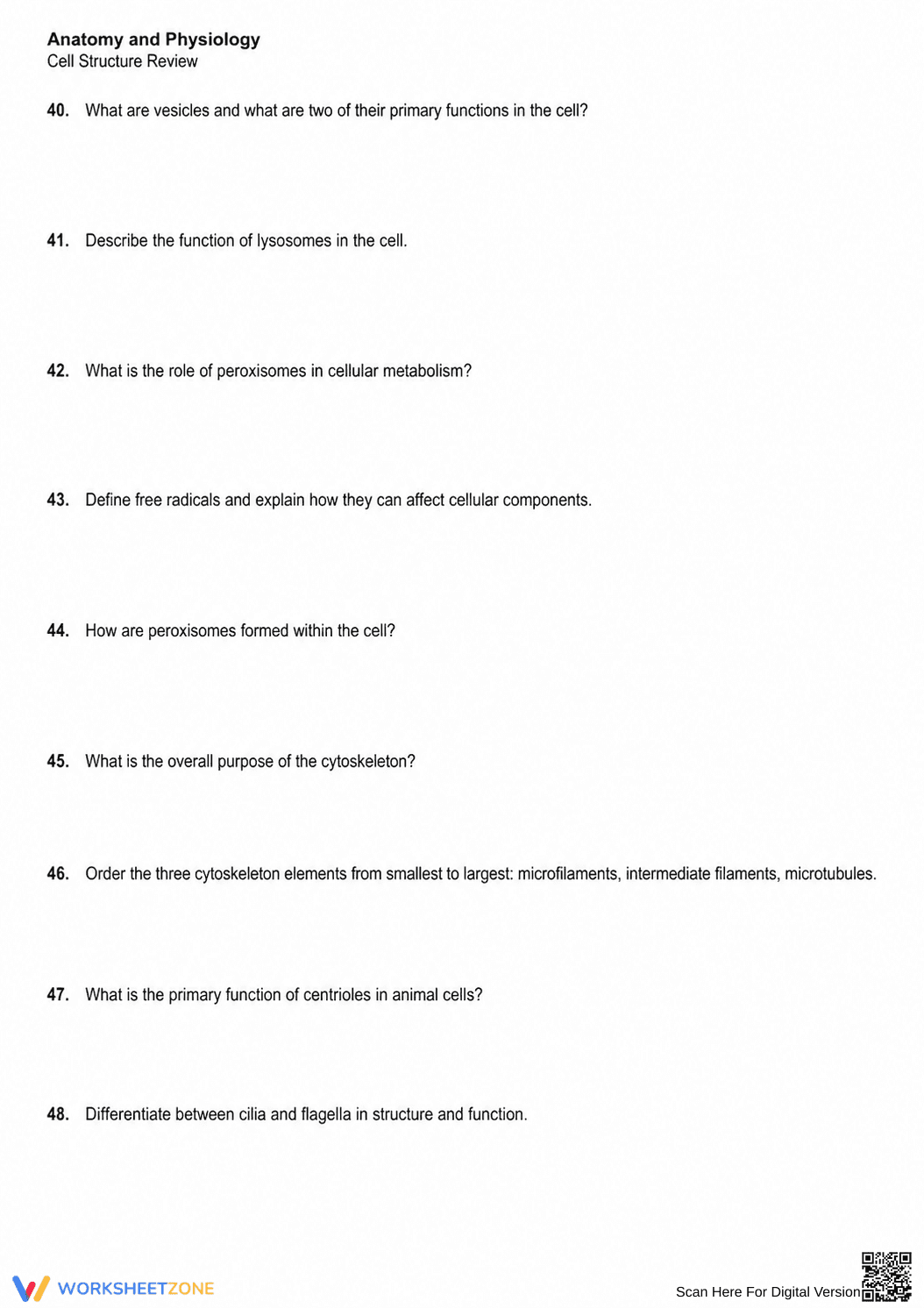
Inside this 4-page PDF, you will find 48 targeted short-answer questions. The content spans from basic cell definitions to complex membrane dynamics, including phospholipids, mitochondria ATP production, and the cytoskeleton. The layout provides ample writing space for each response, and a complete answer key is provided to streamline the grading process for busy educators.
This resource is designed for a zero-prep classroom environment. First, print the 4-page packet (30 seconds). Next, distribute the worksheets to students for independent or partner work (1 minute). Finally, review the answers using the provided key to provide immediate feedback (10 minutes). This workflow requires less than 2 minutes of teacher preparation time.
This worksheet aligns with HS-LS1-2: "Develop and use a model to illustrate the hierarchical organization of interacting systems that provide specific functions within multicellular organisms." It also supports MS-LS1-1 by focusing on the cell as the basic unit of life. Both standard codes can be copied directly into lesson plans, IEP goals, or district curriculum mapping tools.
Use this worksheet as a summative review at the end of a cellular biology unit or as a structured study guide before a major exam. It also serves as an excellent formative assessment tool; observe student responses to questions 15-23 to gauge their understanding of membrane permeability. Expect completion within one standard class period.
This resource is ideal for Grade 9-10 Biology students and introductory Anatomy and Physiology courses. It provides necessary scaffolding for general education students while offering the depth required for honors-level learners. Pair this worksheet with a labeled cell diagram or a microscopic observation lab to reinforce visual and tactile learning.
The mastery of cellular biology is a prerequisite for advanced medical and biological studies. This worksheet targets the HS-LS1-2 standard, requiring students to articulate the relationship between structure and function at the microscopic level. According to Fisher & Frey (2014), the use of structured review guides facilitates the gradual release of responsibility, moving students from guided instruction to independent mastery. By engaging with 48 specific prompts regarding organelles and membrane transport, students solidify their mental models of biological systems. Research from the RAND AIRS 2024 report suggests that high-quality, standards-aligned curriculum materials significantly improve student performance on standardized science assessments. This resource provides the rigorous practice necessary to bridge the gap between basic identification and complex physiological analysis. It is a reliable tool for ensuring that every student meets the essential benchmarks for high school life science literacy.


