These properties of multiplication worksheets give third-grade teachers a structured way to move students past fact memorization toward genuine number sense — the kind that holds up when problems get harder in fourth and fifth grade. Each worksheet targets a specific property in isolation before mixing them, so students build the mental vocabulary they need to explain their reasoning, not just produce answers.
The Specific Skills Targeted
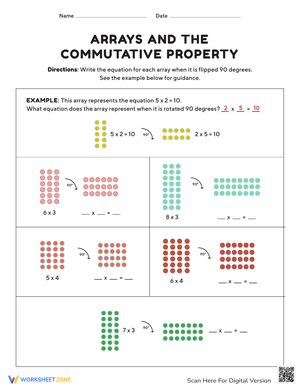
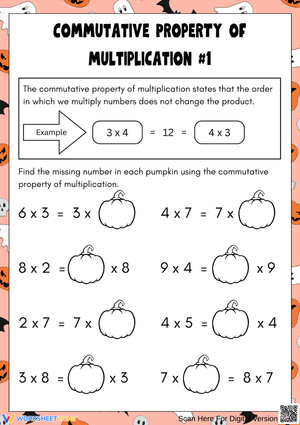
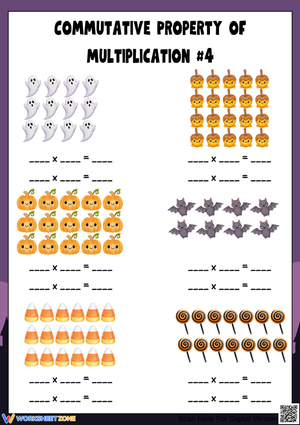
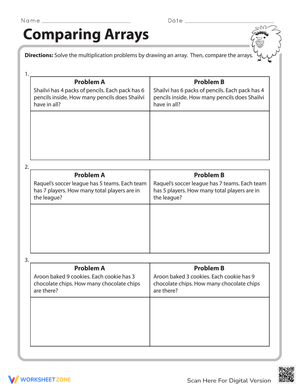
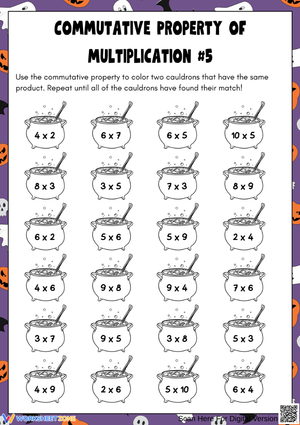
The set addresses four properties: commutative, associative, distributive, and the identity and zero properties. Commutative worksheets present rotated arrays side by side — students annotate both with factor labels, confirm the products match, and then write the corresponding equation pair. That annotation step matters because students often accept that 4 × 6 = 6 × 4 as a rule to memorize without grasping why it's true; marking rows versus columns on the same physical grid makes the geometry visible.
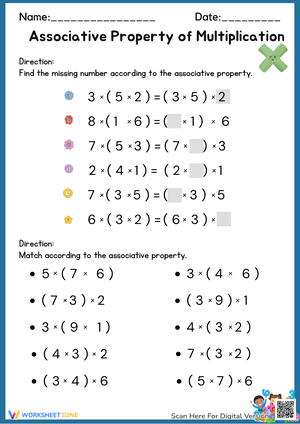
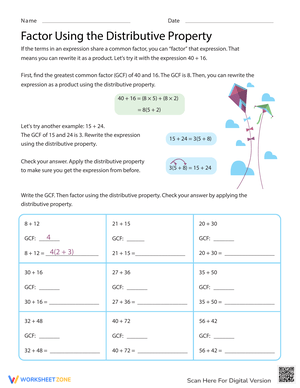
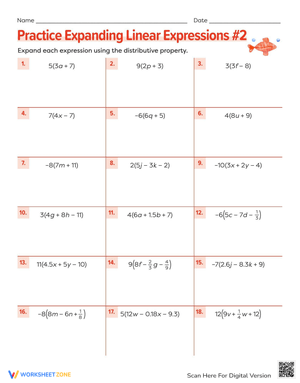
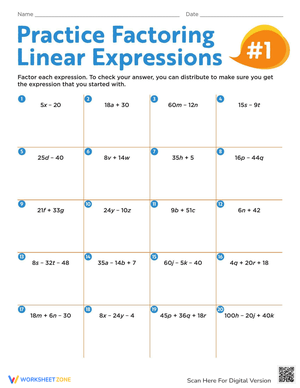
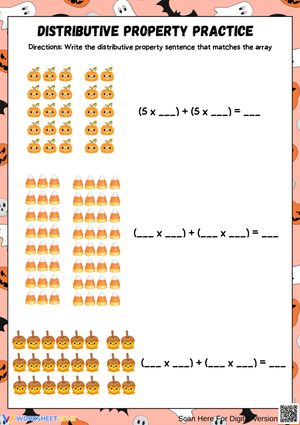
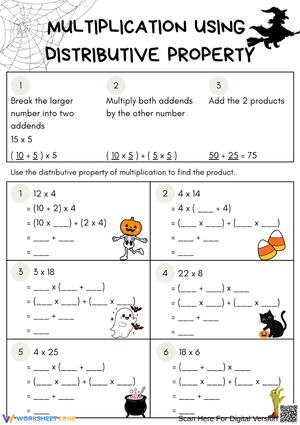
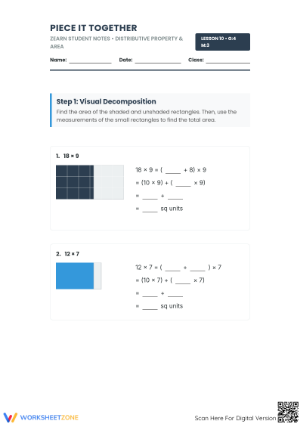
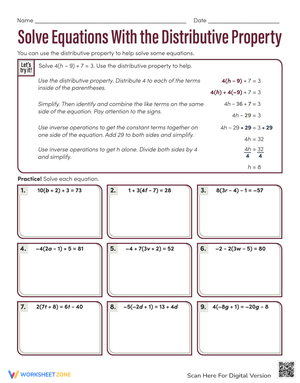
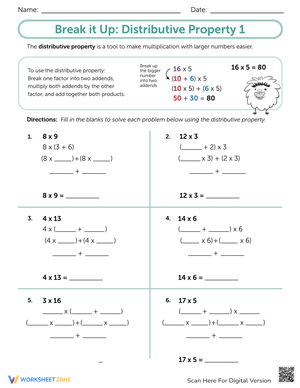
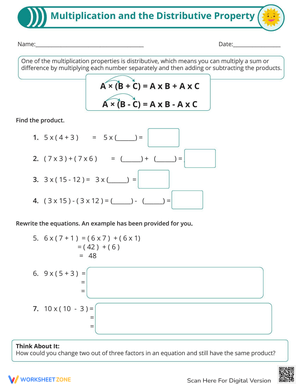
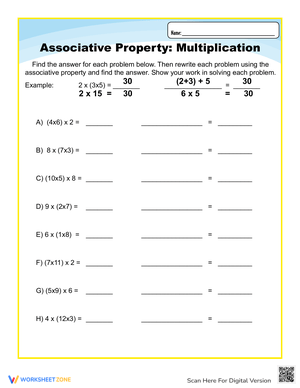
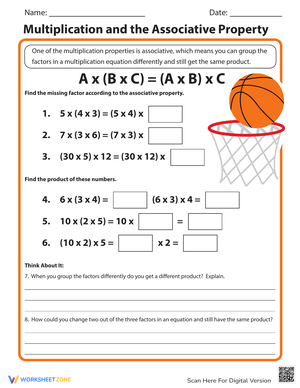
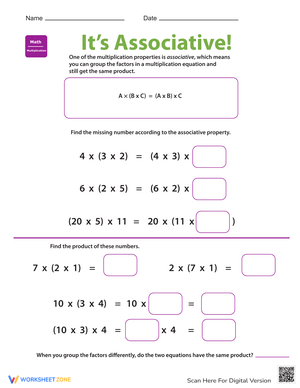
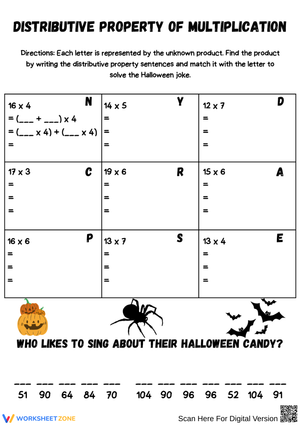
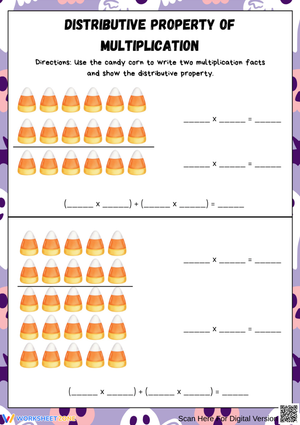
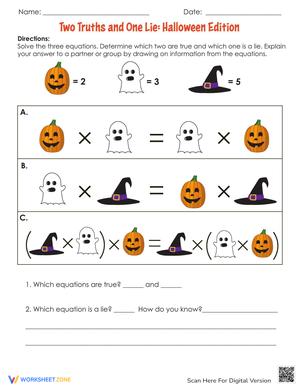
Associative worksheets use heavy parentheses to guide grouping decisions across three-factor expressions. Students rewrite expressions with the grouping shifted and verify the product stays constant — useful practice for the mental math strategy of finding a "friendly" pair first (multiplying 5 × 4 before bringing in a third factor of 3 is faster than going left to right). Distributive property worksheets include grid-based area models where students partition a rectangle, label each section, and write the expanded equation before computing. Identity and zero property worksheets use fill-in-the-blank formats deliberately, because the errors students make there are predictable: some apply zero-property logic to addition or confuse identity with commutativity.
Common Student Errors Worth Watching For
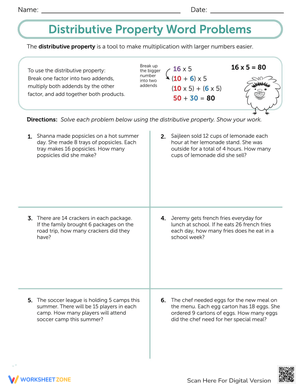
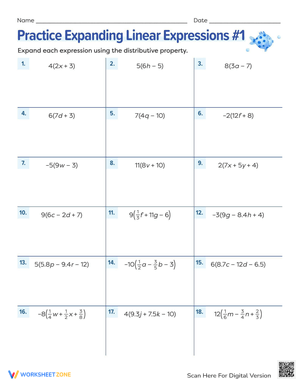
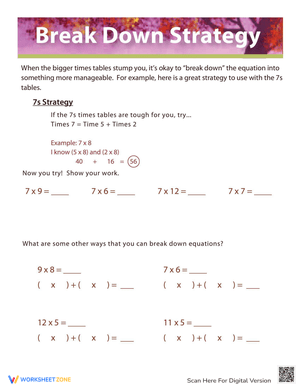
The distributive property produces the most consistent errors, and they follow a recognizable pattern. When students decompose 7 × 8 into 7 × 5 + 7 × 3, many will compute the two partial products correctly but then add them to the original 56 they had already half-calculated in their heads — ending up with an answer well above the correct 35 + 21 = 56. They aren't making arithmetic mistakes; they're double-counting because they haven't fully replaced the original expression with the expanded one. The area model worksheets address this directly by requiring students to cross out the original factor pair before writing the decomposed version.
With the identity and zero properties, a different error appears in actual student work: students who have solidly internalized that any number plus zero stays the same will sometimes write that any number times zero also stays the same — that n × 0 = n. They are pattern-matching across operations rather than reasoning about what multiplication means. Worksheets that place identity and zero examples in the same column, labeled separately, give students the comparison they need to hold the two rules apart.
Building These Worksheets Into Your Lesson Plans
Most teachers introduce one property per day during the initial unit and use the corresponding worksheet as guided practice immediately after the direct instruction segment — while the model is still on the board. That sequencing matters for cognitive load: students who complete the worksheet the same period they saw the worked example perform the annotation tasks with noticeably more accuracy than those who receive the worksheet the next morning as a warm-up.
Once all four properties have been taught, the mixed-review worksheets work well in the last eight minutes before lunch or end of day — brief enough to finish, substantial enough to require retrieval rather than copying. Math center rotations are a natural fit for the property-sorting task, where students match equations to property names; pairs work through it faster, which frees the teacher to run a small group. For review before a unit assessment, the fill-in-the-blank identity and zero worksheets are effective as a five-minute Monday warm-up because they surface the addition-versus-multiplication confusion early in the week when there's still time to re-teach.
Standard Alignment
These worksheets align with CCSS.MATH.CONTENT.3.OA.B.5, which requires third graders to apply properties of operations as strategies to multiply and divide. The standard sits in the Operations and Algebraic Thinking domain deliberately — at this grade, the properties aren't trivia; they are computation strategies. A student who uses the distributive property to break apart 8 × 7 into (8 × 5) + (8 × 2) is doing exactly what 3.OA.B.5 describes. The worksheets also build readiness for 3.OA.C.7 (fluency with products within 100) because students who internalize commutativity cut the number of multiplication facts they need to memorize roughly in half.
Adjusting the Worksheets for a Range of Learners
Students who need additional scaffolding benefit from keeping the area model visible while working on the equation-only sections — taping a labeled grid to the corner of the desk gives them a reference without doing the thinking for them. For the associative worksheets specifically, reducing three-factor expressions to factors within 1–5 before moving to larger numbers prevents arithmetic errors from obscuring the grouping concept.
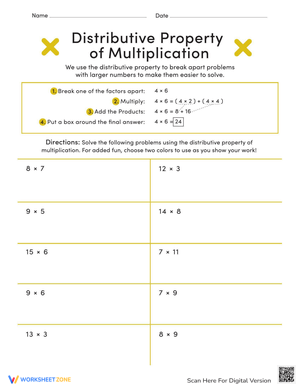
Students working ahead can be pushed toward multi-step problems that require choosing which property makes the computation most efficient rather than simply identifying which property is present. Asking a student to solve 6 × 14 using the distributive property and then explain in a sentence why they decomposed the 14 the way they did — rather than some other way — reveals whether they understand the strategy or are just following a procedure. Those written-explanation prompts require no additional materials; they're extension tasks built into blank lines already on the worksheet.
Frequently Asked Questions
How do you help third graders keep the commutative and associative properties separate once both have been introduced?
The confusion usually shows up when students see parentheses and assume "associative" or see two-factor expressions and assume "commutative." The distinction worth drilling is the action, not the label: commutative means you changed the order of factors; associative means you changed which two factors were grouped. Worksheets that require students to write one sentence explaining what changed — order or grouping — catch this confusion earlier than any multiple-choice format.
Is the distributive property really a third-grade expectation, or is this preview material?
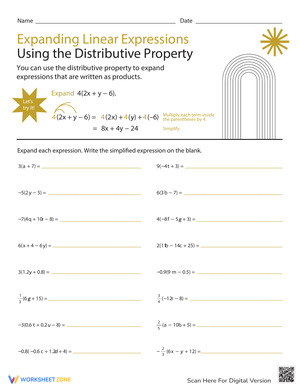
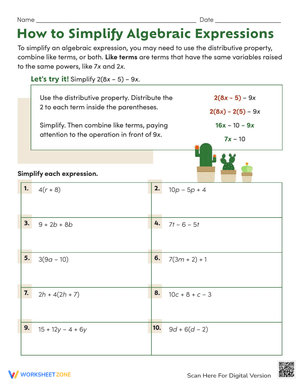
It is a legitimate third-grade expectation under 3.OA.B.5, framed as a strategy for multiplication rather than as formal algebraic notation. Students don't see a(b + c) = ab + ac in third grade — they see 7 × 8 decomposed into 7 × 5 + 7 × 3 on a grid. The formal expression comes in later grades, but the conceptual foundation is built here. Teachers who skip it because it "seems like algebra" leave students without the partial-products strategy they'll need for two-digit multiplication in fourth grade.
Can these worksheets be used across more than one grade level?
The commutative and identity/zero worksheets are accessible in late second grade when students are building early multiplication understanding. The distributive property worksheets are more appropriate for third grade and early fourth grade. Fourth graders encountering multi-digit multiplication for the first time sometimes revisit the area model worksheets as a bridge to the partial-products algorithm — the format holds up for that use without modification.













 Interactive Worksheet Maker
 Quiz Maker
 Word Search Maker
 Crossword Puzzle Maker
 Word Scramble Generator
 Sentence Scramble Generator
 Handwriting Worksheet Generator
 Name Tracing Generator
 Fill In The Blank Generator