


























Views
Downloads

Area of Circles Worksheet | Grade 7 Math Printable
Paste this activity's link or code into your existing LMS (Google Classroom, Canvas, Teams, Schoology, Moodle, etc.).
Students can open and work on the activity right away, with no student login required.
You'll still be able to track student progress and results from your teacher account.
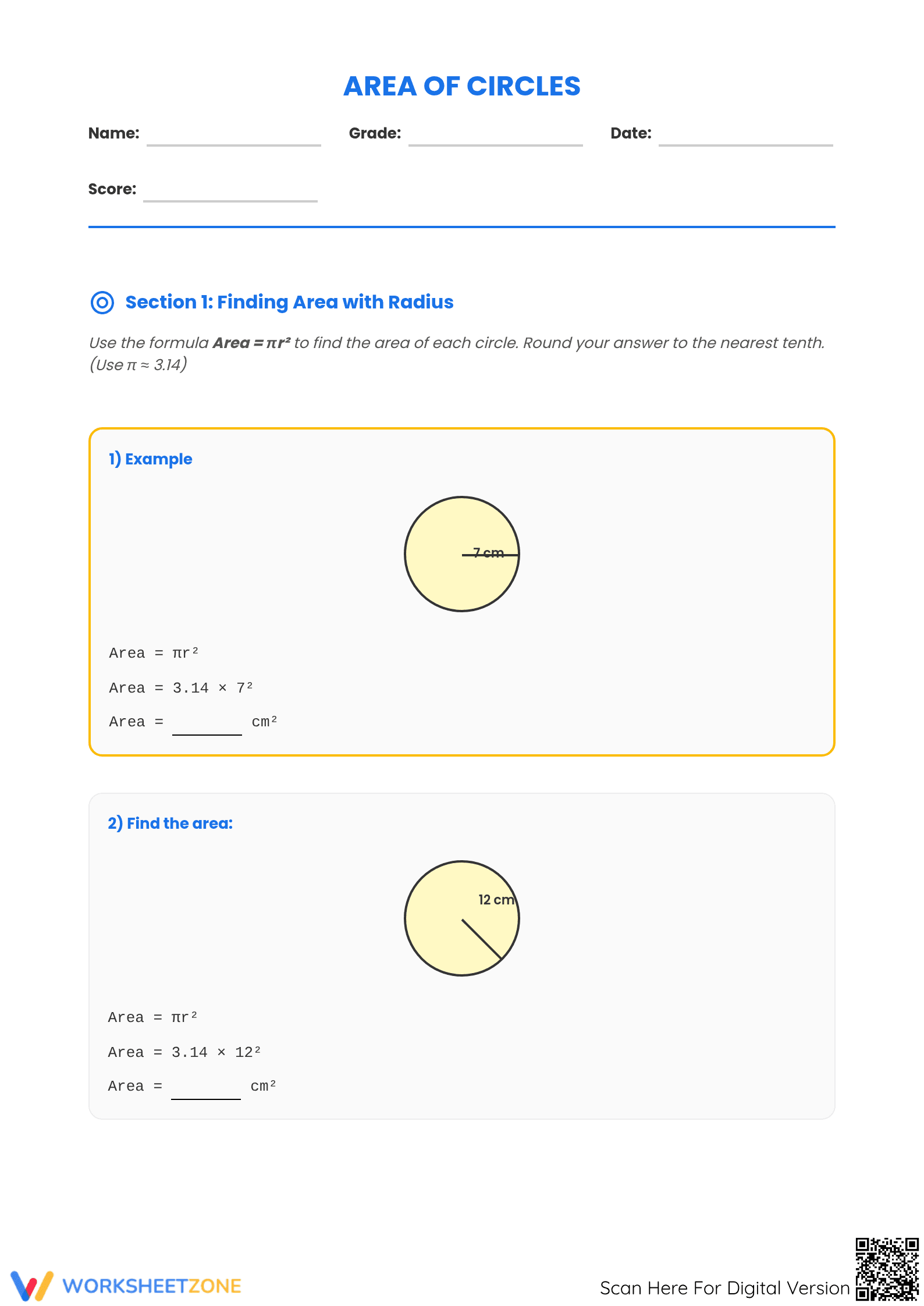
This printable area of circles worksheet provides middle school students with targeted practice calculating area using both radius and diameter measurements. By working through these structured exercises, seventh and eighth graders will build foundational geometry skills and learn to apply mathematical formulas to real-world scenarios.
At a Glance
- Grade: 7 · Subject: Math
- Standard:
CCSS.MATH.CONTENT.7.G.B.4— Calculate the area of a circle- Skill Focus: Area of Circles
- Format: 4 pages · 10 problems · Answer key included · PDF
- Best For: Independent practice
- Time: 20–30 minutes
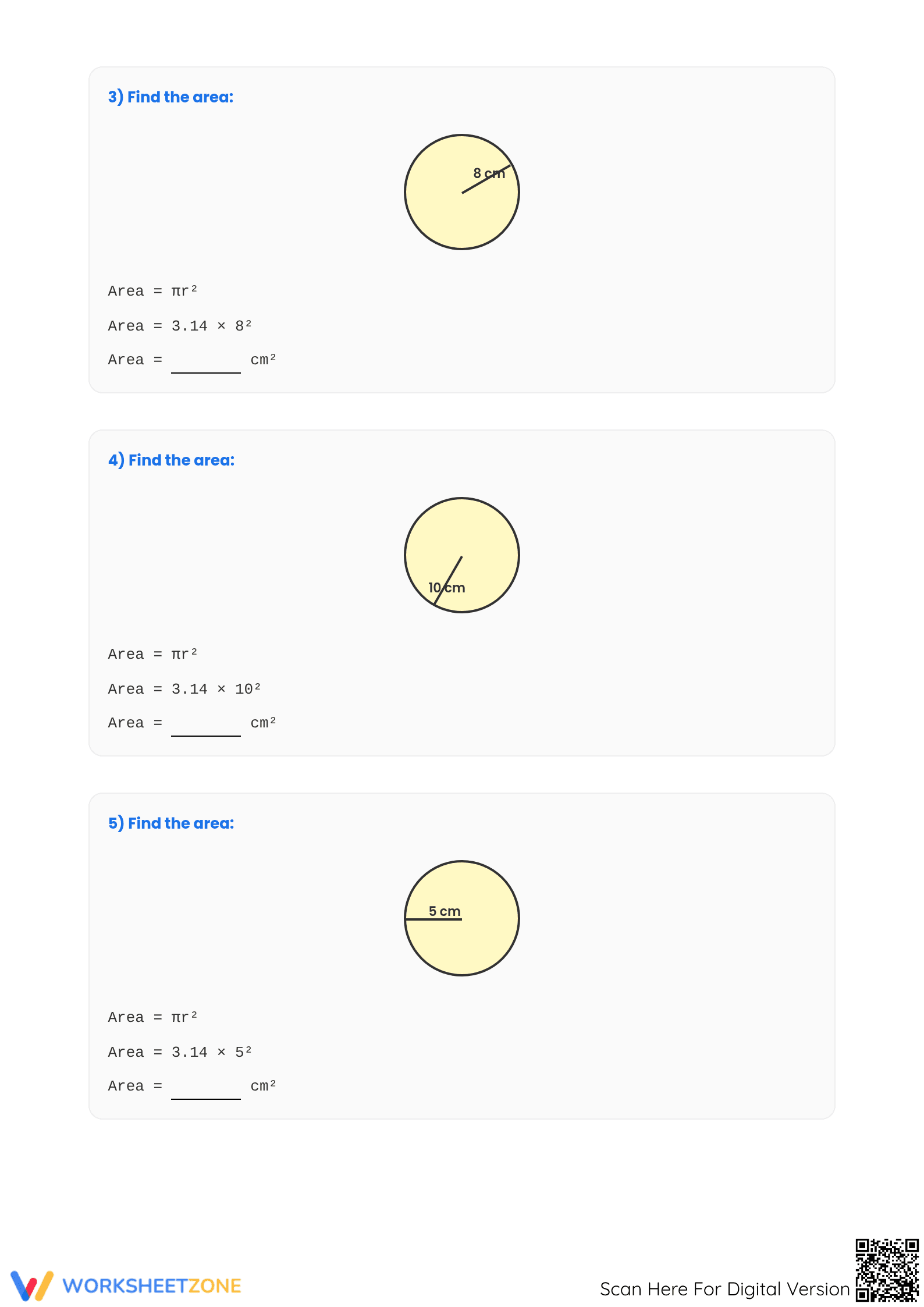
This four-page resource features 10 carefully sequenced problems designed to build student confidence. The layout includes a clearly worked example demonstrating the proper use of the pi formula (using 3.14). Students will find fill-in-the-blank calculation steps that guide them through squaring the radius and multiplying to find the final area. A complete four-page answer key is provided for quick grading.
Skill Progression
- Guided practice: The first section introduces the core concept with a fully worked example, followed by five straightforward problems where students calculate area using a given radius.
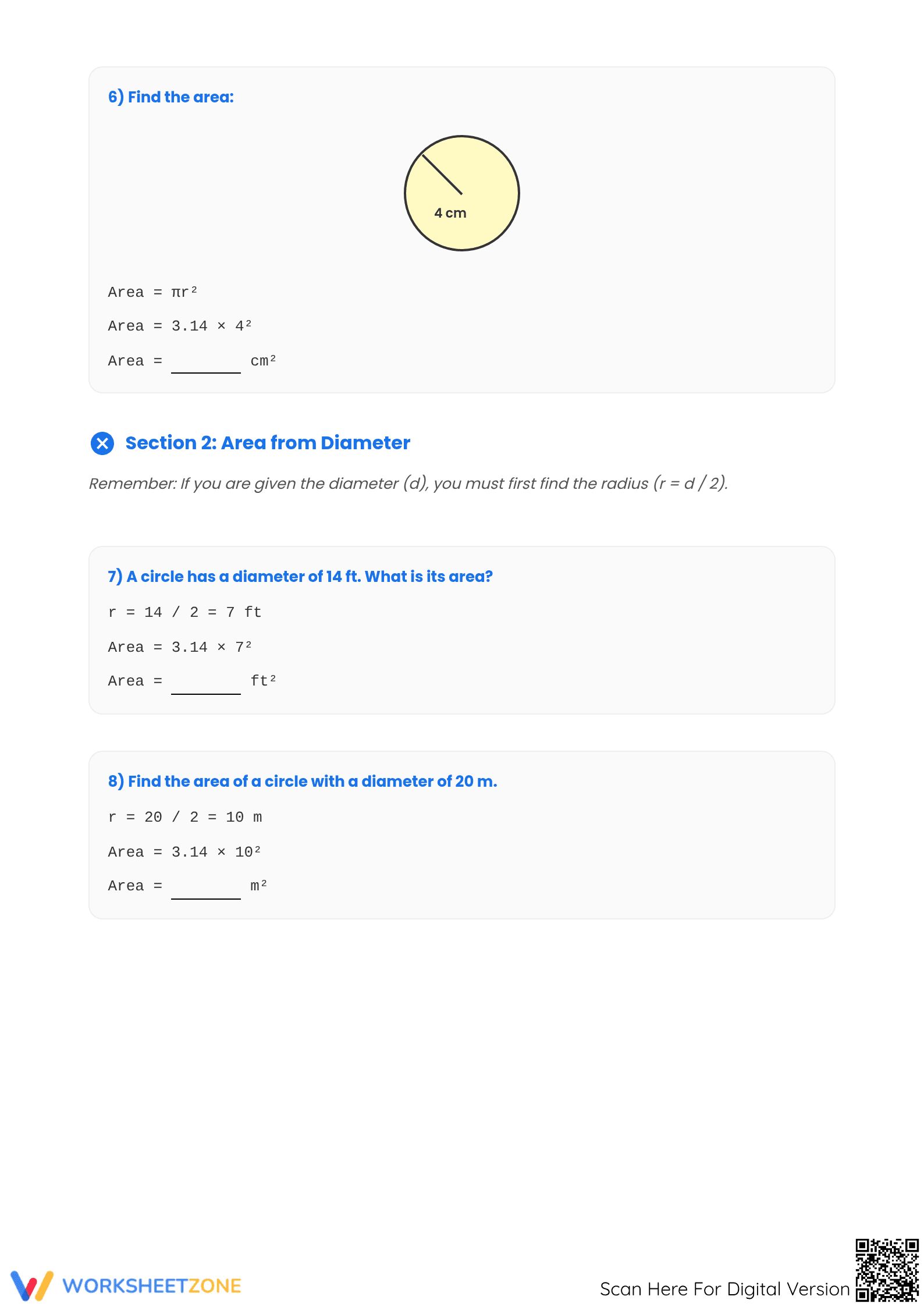
- Supported practice: The second section increases the cognitive load by providing the diameter. Students must first divide the diameter by two to find the radius before applying the area formula across two targeted problems.
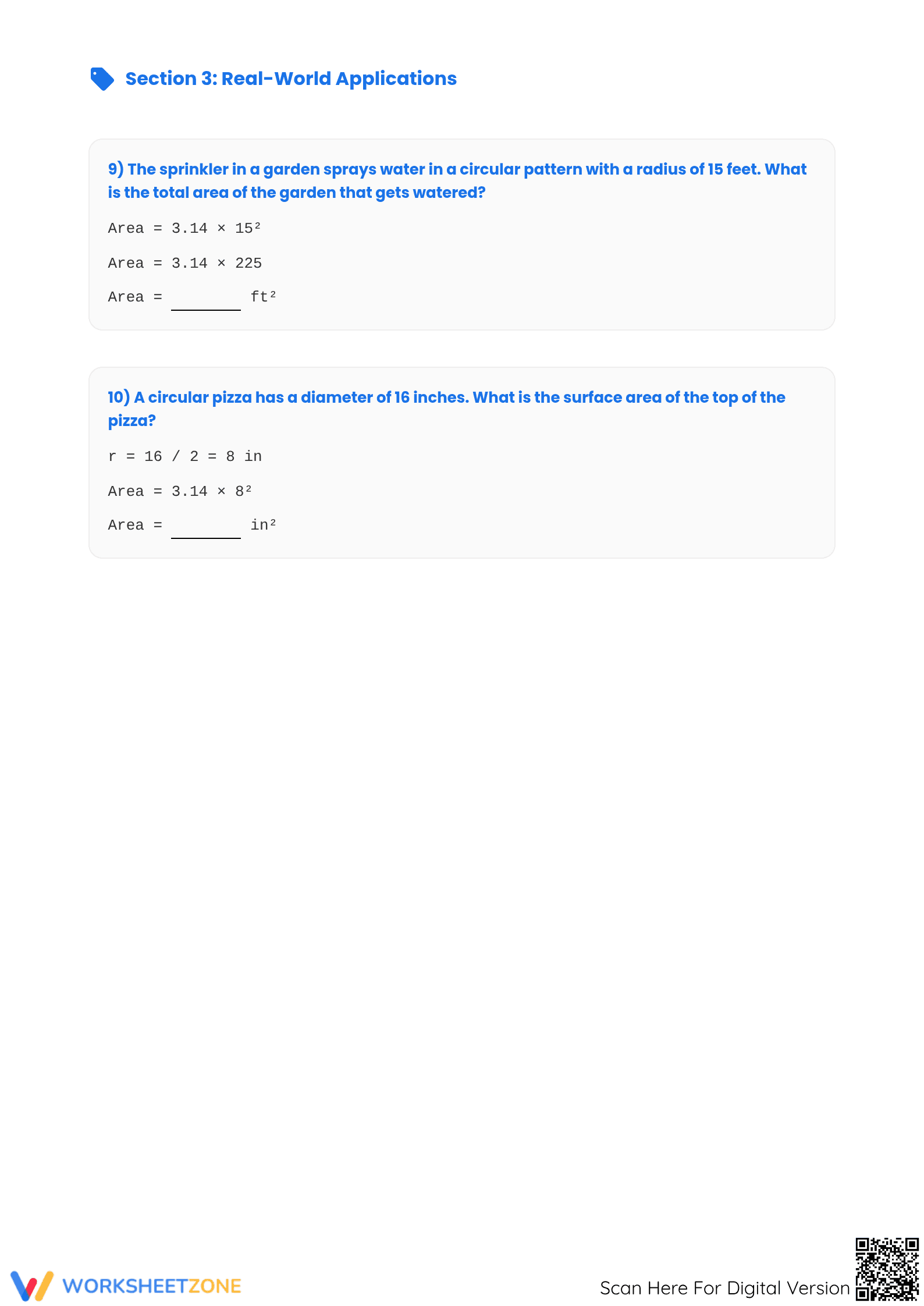
- Independent practice: The final section challenges students with two real-world word problems, such as calculating the area of a garden sprinkler's reach and the surface area of a pizza.
This gradual-release approach ensures students master the basic mechanics before applying their knowledge to more complex, multi-step scenarios.
Standards Alignment
This resource is directly aligned to CCSS.MATH.CONTENT.7.G.B.4: Know the formulas for the area and circumference of a circle and use them to solve problems. It specifically targets the area calculation component, ensuring students understand how the radius relates to the total area. Both standard codes can be copied directly into lesson plans, IEP goals, or district curriculum mapping tools.
How to Use It
This worksheet is highly versatile and fits perfectly into a standard geometry unit. Use it as independent practice immediately following direct instruction on circle formulas. Alternatively, assign it as homework to reinforce classroom learning. As a formative assessment tip, monitor students during the transition to Section 2 to ensure they halve the diameter before squaring the radius. Most students will complete this assignment in 20 to 30 minutes.
Who It's For
This resource is designed primarily for seventh and eighth-grade math students learning foundational geometry concepts. The built-in scaffolds, such as the step-by-step calculation lines, make it highly accessible for students who struggle with multi-step equations or need visual organization. It pairs excellently with a visual anchor chart displaying the differences between radius, diameter, circumference, and area.
Mastering geometric formulas requires structured repetition and clear visual models to ensure long-term retention. This resource aligns directly with CCSS.MATH.CONTENT.7.G.B.4, helping students calculate the area of a circle with accuracy and confidence. According to a recent ScienceDirect TpT Analysis, math worksheets that utilize a gradual release of responsibility—moving from explicit worked examples to applied word problems—significantly improve student mastery of complex formulas. By breaking down the specific steps of squaring the radius and multiplying by pi, this worksheet reduces cognitive overload and allows learners to focus entirely on the underlying mathematical relationships. Providing immediate application through real-world scenarios, such as measuring a pizza or a garden, further solidifies student understanding. This structured approach ensures they can successfully transfer these critical geometry skills to standardized assessments and practical, everyday problem-solving situations.


