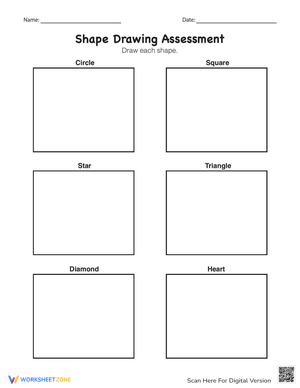
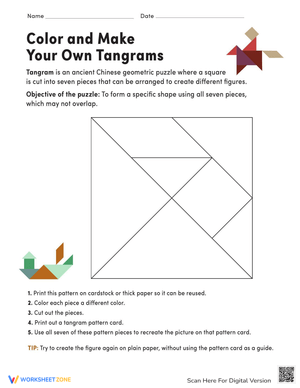
Flat shapes printable worksheets for kindergarten give early geometry lessons a concrete anchor — each worksheet in the set targets one or two tasks, so students who are still learning to follow multi-step directions can work independently while teachers run small groups or observe. Together, the resources move students from simple shape recognition toward the attribute-level thinking that kindergarten standards require by year's end.
The Skills Each Worksheet Builds
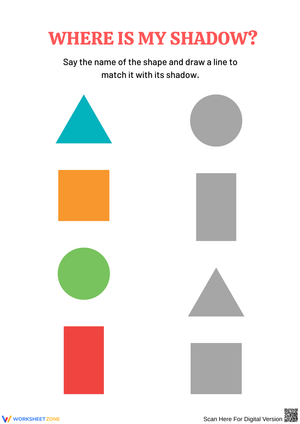
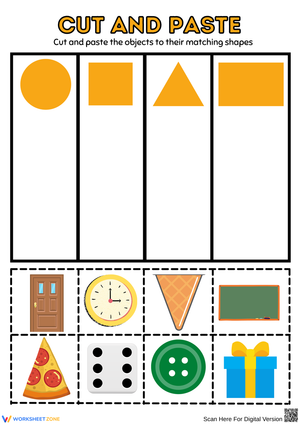
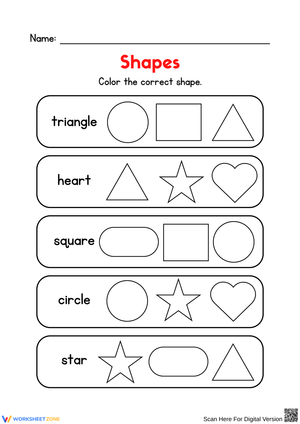
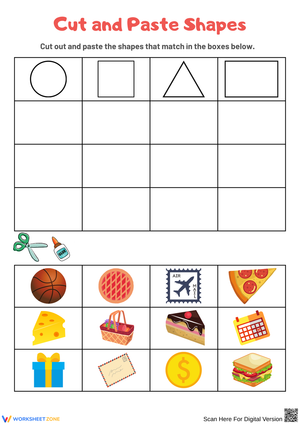
The set covers five 2D shapes — circle, square, triangle, rectangle, and hexagon — across multiple task types rather than a single format. Encountering the same shape names in different contexts across multiple worksheets is what builds durable recognition in young learners; one round of tracing is not enough. Skills distributed across the set include:
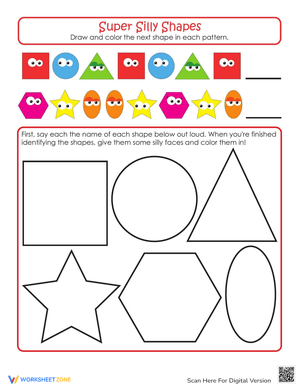
- Tracing: Students follow the outline of each shape to reinforce its form and boundary, with the side benefit of pencil control practice.
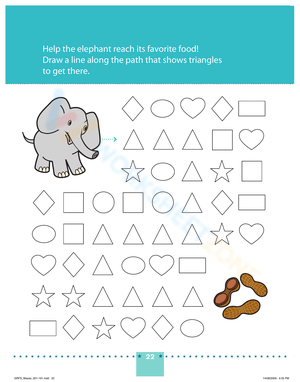
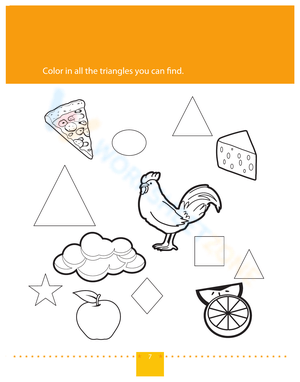
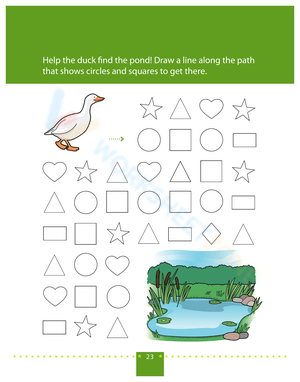
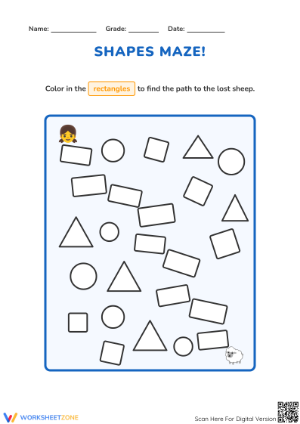
- Identifying and marking: Students scan a mixed group of shapes and circle or cross out the one that matches a named target.
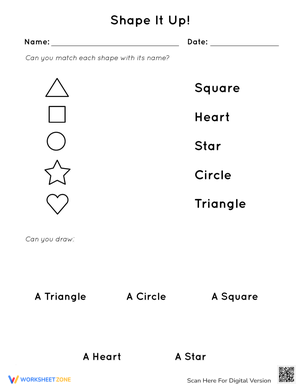
- Matching to real objects: Students draw lines connecting a shape to a familiar item — a door for a rectangle, a clock face for a circle — which grounds the abstract in something they already know.
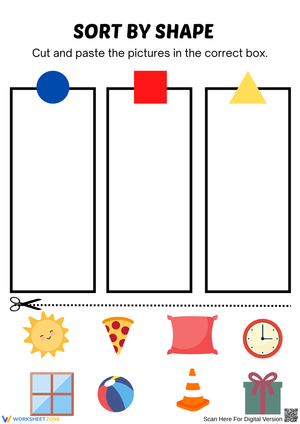
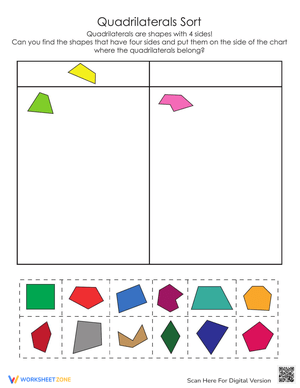
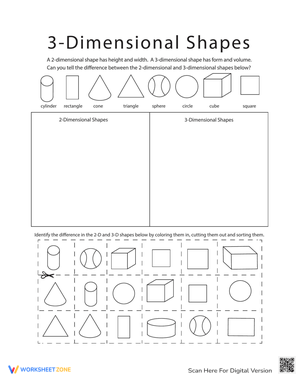
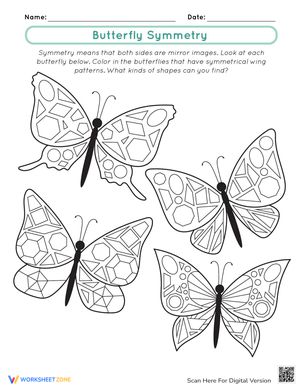
- Sorting by attribute: Students group shapes by type or by a simple property, such as "has corners" versus "no corners."
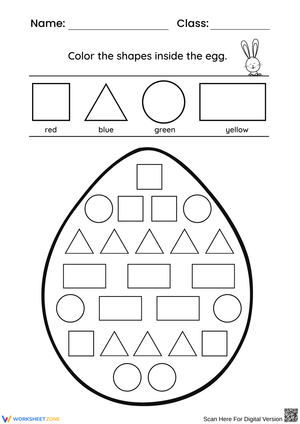
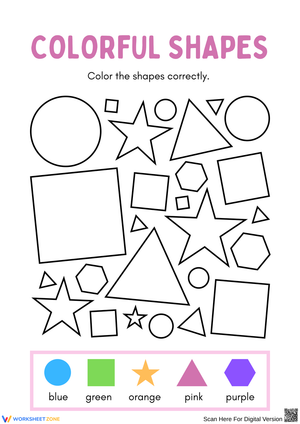
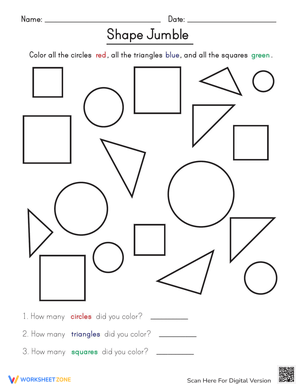
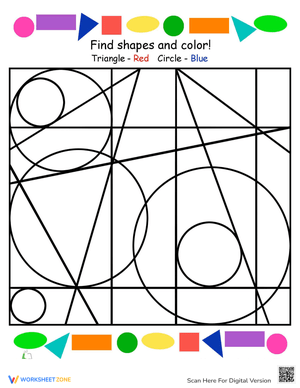
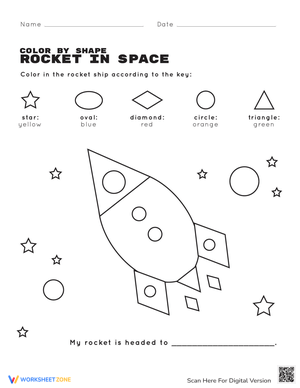
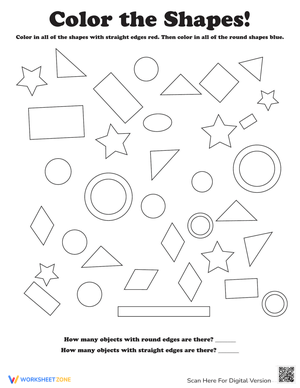
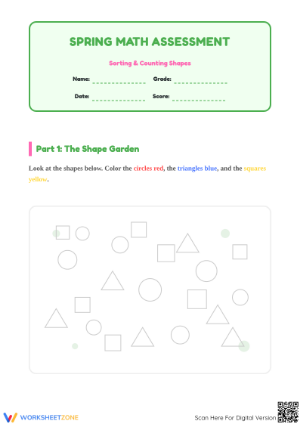
- Coloring by name: Students use a color key to fill in each shape type, which forces them to read the shape name rather than work from visual memory alone.
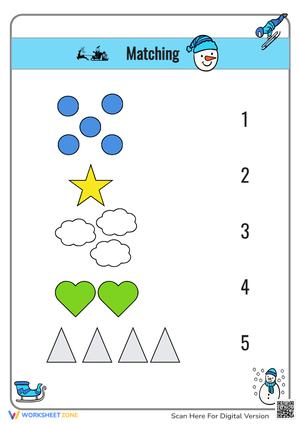
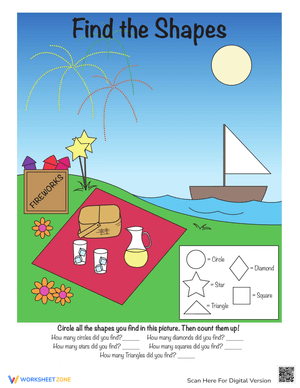
- Counting shapes in a scene: Students tally how many circles, squares, or triangles appear in a picture, connecting shape recognition to early number sense.
Directions on each worksheet stay short enough for emerging readers to manage without stopping mid-task to ask for help — a real advantage during center rotations when the teacher is occupied with another group.
Common Misconceptions to Watch For and Correct
The most predictable error in early shape work is orientation dependency. A student who correctly names a triangle sitting flat on its base will often hesitate — or call it the wrong shape entirely — when that same triangle is rotated to point sideways or left. This happens because young children's early recognition locks onto a canonical image, typically the one displayed on the classroom anchor chart. Worksheets that include shapes in multiple orientations surface that gap before it becomes habitual, and they give teachers a low-stakes way to see who is only pattern-matching to a familiar version rather than genuinely recognizing the shape.
Squares and rectangles are the second consistent trouble spot. The mathematically correct explanation — that a square is a special case of rectangle — is too abstract for most five-year-olds and tends to deepen the confusion rather than resolve it. The more productive move is asking students to count sides and then compare their lengths using finger-spans. A student who traces a square's four sides and says "they all feel the same" is building the right mental model before they can articulate it in formal terms. Plan to revisit this distinction across several worksheets throughout the unit; a single explanation rarely settles it.
Smart Ways to Work These Worksheets Into Your Week
The strongest placement for these kindergarten geometry worksheets is immediately after direct instruction, when shape names are still active in students' working memory. A sequence that works: brief whole-group lesson with physical pattern blocks, transition to a matching or tracing worksheet, close with a two-minute shape hunt around the room. That three-part structure keeps the session moving and gives students a paper record of their thinking without turning the printable into the entire lesson.
Flat shapes printable worksheets for kindergarten also fit naturally inside math center rotations. A simple setup — one worksheet, a small tray of foam shape tiles, and crayons — lets students match the physical tile to the printed shape before coloring, giving themselves a self-check that requires no teacher attention. During small-group sessions, use one worksheet as a live naming check: point to each shape in turn, ask students to name it aloud, and note who hesitates. It is almost always hexagon that surfaces last, and catching that before the end-of-unit assessment gives you time to address it.
- Monday warm-up: A shape-identification worksheet after morning meeting settles students into math thinking before the lesson begins.
- Center rotation anchor: Pair each worksheet with foam tiles so students have a physical reference alongside the printed task.
- Small-group check: Use one worksheet to see who can name all five shapes without glancing at the classroom chart.
- Exit activity: Ask students to circle a named shape before lining up — thirty seconds of formative data with no additional materials.
- End-of-unit review: A mixed-skill worksheet that draws on tracing, matching, and counting gives a fast read on whether students are ready to move into solid shapes.
Standard Alignment
These worksheets address CCSS.MATH.CONTENT.K.G.A.2, which requires students to correctly name shapes regardless of orientation or overall size. In classroom terms, this is the benchmark most kindergarten teachers check at mid-year, and the most common failure mode — naming a shape correctly in its familiar position but missing it when rotated — is exactly what multi-orientation practice targets. The set also connects to K.G.A.1 through real-world matching tasks that ask students to locate shapes in everyday objects, and to K.G.B.4 through sorting tasks that compare shapes by their attributes. K.G.B.4 is typically introduced in the second half of the school year, so the sorting worksheets in this set work best as late-unit or end-of-unit material rather than as an opening activity.
Differentiating the Set Across a Range of Learners
For students still working on foundational recognition, the tracing and coloring worksheets are the right entry point. If the full worksheet with mixed shapes creates too much visual complexity, cover the lower rows with a blank sheet of paper and work through one row at a time. Students who freeze when the full worksheet is visible do noticeably better when the visual field narrows — a low-effort adjustment that makes a real difference without requiring separate materials.
Flat shapes printable worksheets for kindergarten stretch easily for students who already know the five core shapes. Ask those students to sort by number of sides, identify which shapes have right angles, or write shape names from memory rather than selecting from a word bank. A quick verbal extension before coloring — "tell me one way a square and a rectangle are the same, and one way they're different" — costs nothing in prep and moves students toward the comparison thinking that first-grade geometry will require, without changing the worksheet itself.
English learners benefit from a small reference card showing each shape name alongside a picture of that shape. Having that card at their workspace lets students cross-check independently rather than waiting to ask, which keeps them moving through the task at roughly the same pace as their peers.
Frequently Asked Questions
Which five shapes are covered across the set?
The worksheets focus on circle, square, triangle, rectangle, and hexagon — the shapes named explicitly in kindergarten geometry standards and most consistently featured in early K math programs. Rhombus and oval appear in some supplementary materials, but these five are the right foundation before adding shapes students encounter less frequently.
Do these worksheets work without shape manipulatives?
The flat shapes printable worksheets for kindergarten are most effective when students have already handled physical tiles, pattern blocks, or foam shapes before working with a printed task. The worksheets are where efficient repetition happens, but they build on that concrete experience rather than replace it. Starting cold — shapes on paper before shapes in hand — tends to slow recognition development rather than accelerate it.
How do I know when students are ready to move from 2D to 3D shapes?
A reliable signal is whether students can name all five flat shapes without looking at a reference card and identify each shape in at least two different orientations. When most of the class reaches that point, introducing solid shapes actually sharpens 2D understanding — students who must explain what makes a circle flat tend to consolidate that concept faster than students who never drew the comparison.
How do I support students with fine motor delays on tracing tasks?
Allow those students to point to the correct shape, place a counter on it, or trace in the air rather than on the worksheet. The math target — recognizing and naming the shape — stays constant; the written output is what creates the barrier. On coloring tasks, a dot or stamp in the center of the shape is a reasonable substitute for filling the entire area.













 Interactive Worksheet Maker
 Quiz Maker
 Word Search Maker
 Crossword Puzzle Maker
 Word Scramble Generator
 Sentence Scramble Generator
 Handwriting Worksheet Generator
 Name Tracing Generator
 Fill In The Blank Generator