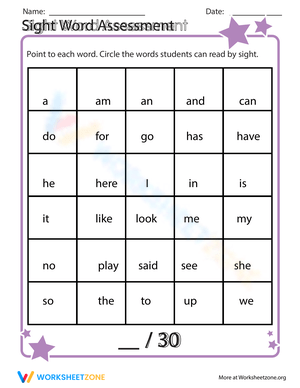
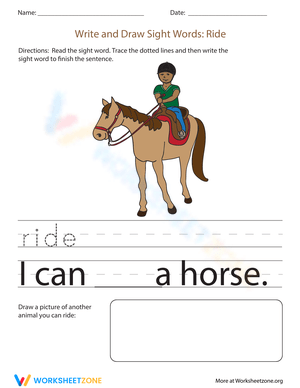
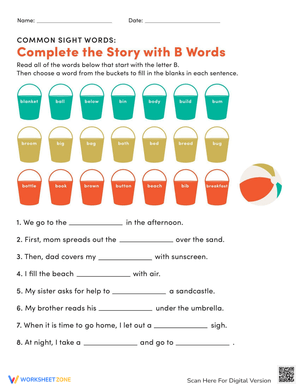
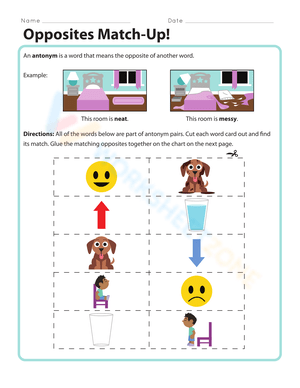
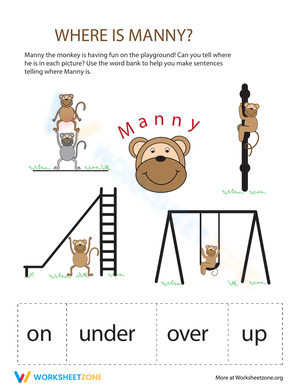
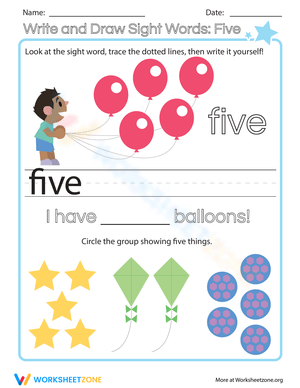
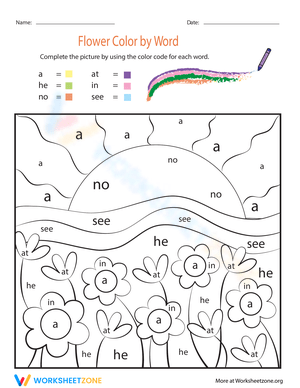
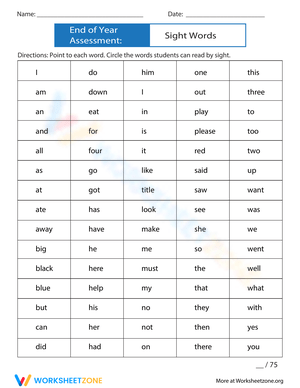
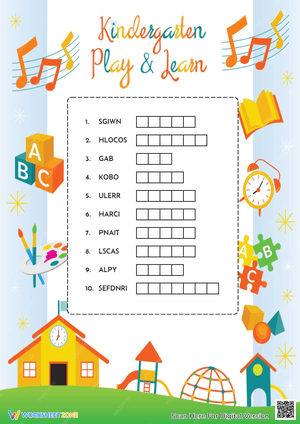
These kindergarten high frequency words pdf worksheets give teachers a printable set built around the Dolch Pre-Primer and Primer word lists — the words that account for nearly half of all text early readers encounter. Each worksheet moves students through sound mapping, letter formation, and sentence-level reading, building from phoneme segmentation to automatic word recognition. The progress monitoring checklists included make mastery visible without requiring separate assessment materials.
What's Covered Across the Set
The activities target discrete, sequenced skills rather than surface-level exposure. Across the set, students work through:
- Sound-box mapping, where students tap and record each phoneme before writing the word
- Tracing sequences that build letter formation alongside visual familiarity
- Independent writing from memory, separated from the model word
- Cut-and-paste construction using scrambled letters
- Heart Word activities with a visual cue marking only the irregular letter pattern — not the whole word
- Decodable sentence reading with the target word embedded in context
- Progress monitoring checklists tied to the Dolch Pre-Primer and Primer lists
The sequence matters. Students don't write until they've segmented; they don't read in sentences until they've practiced the word in isolation. That ordering reduces the chance that a student is completing an activity without actually processing the word's structure.
How the Sound-Mapping Format Works
The shift in how we teach these words comes down to orthographic mapping — the cognitive process of binding phoneme sequences to grapheme sequences so that words enter long-term memory as permanent entries rather than temporary visual shapes. When a kindergartner treats "the" or "said" as a picture to recognize, that word disappears over a long weekend. When the student taps /s/ /ε/ /d/ and records each sound in a box, the word has somewhere stable to live in memory.
The Heart Word design follows from this directly. Rather than drawing a heart over the entire word "said," the heart appears only above the vowel digraph "ai" — the one piece that doesn't follow expected phonics rules. Students learn to say: I know what /s/ and /d/ look like; I just need to hold onto that middle part. That framing keeps irregular words from feeling arbitrary and keeps students engaged in the phonics logic they're already building. Most kindergartners who struggle with Heart Words are struggling specifically because they were asked to memorize the whole word rather than distinguish which part of it is unusual.
How to Build These Worksheets Into Your Week
A Monday-through-Friday rotation keeps practice varied without demanding new planning each day. Sound mapping works well on Monday. A cut-and-paste or scrambled-letter activity runs Tuesday. Wednesday brings sentence reading with the same target word in context. Thursday focuses on independent writing from dictation — no model visible. Friday runs a brief progress check using the checklists. This rotation gives students the five to seven exposures that word-learning research consistently points to before automatic retrieval takes hold, without repeating the same format so often that students disengage.
Small-group time is the right setting for introducing a new word. Model the full mapping sequence before students work independently — tap the sounds, record them in boxes, trace, write, cover and write again. Once students have seen that cycle with you, the same worksheet transfers cleanly to an independent literacy station. Slide it into a dry-erase sleeve and students can repeat the tracing and mapping steps with whiteboard markers across the week without running off additional copies. Morning work is another natural slot: a five-minute word routine as students settle in costs almost no instructional time and sets a consistent academic tone before the whole-group lesson begins.
For students who need more reinforcement at home, these kindergarten high frequency words pdf worksheets travel easily with a brief parent note explaining the tap-and-map sequence. When families understand the phoneme-first approach, at-home practice reinforces classroom instruction rather than undercutting it with the older whole-word memorization habit.
Mistakes Students Make That These Worksheets Help You Catch
The most reliable signal that a student is copying rather than processing: they write the word correctly on the tracing line, then spell it differently the moment they write from memory two lines below. The hand is following letter shapes, but the phonemic connection isn't forming. Ask that student to cover the model word completely, tap out the sounds before picking up the pencil, and then write. That one redirection exposes whether the student has the phonemes or doesn't.
"Said" produces more errors on end-of-year assessments than almost any other Pre-Primer word. Students consistently write "sed" or "saed" because neither maps cleanly to their phonics knowledge. The Heart Word format addresses this, but expect to revisit the word across several weeks. A student who spells it correctly in October will often regress in January without reinforcement. The progress monitoring checklist is worth running again specifically for this word around mid-year.
There's also a transfer gap that shows up in running text. A student who reads "said" instantly on a word card goes blank when it appears mid-sentence in a decodable reader. Automatic retrieval in isolation hasn't yet extended to reading in context. The sentence-reading activity on each worksheet targets exactly this gap — but if students are rushing through it as a final step, slow them down and make it the focal point for a few sessions.
Standard Alignment
These worksheets address CCSS.ELA-LITERACY.RF.K.3c — Read common high-frequency words by sight. Kindergarten is the developmental window where this standard is most urgent: by first grade, word recognition is expected to support comprehension, and every word a student still has to decode laboriously is cognitive load pulled away from meaning-making. Building automatic recognition now frees up that mental bandwidth when text complexity increases. The sound-mapping and sentence-reading activities address RF.K.3c directly across each worksheet in the set.
Two additional standards are supported. CCSS.ELA-LITERACY.RF.K.2 (phonological awareness) is built into the phoneme segmentation step that opens each mapping activity. CCSS.ELA-LITERACY.L.K.2d — spelling simple words phonetically — is addressed through the independent writing and letter-construction activities, where students produce the word rather than only recognize it.
Differentiating the Set for a Range of Learners
Students who haven't yet secured phoneme segmentation need the sound-box mapping done alongside a teacher or instructional aide rather than independently. Attempting to record phonemes before they can reliably segment three-sound words produces frustration without learning. For these students, start with tracing and cut-and-paste only, then bring in the mapping step once segmentation is stable — usually after a few weeks of focused phonological awareness work.
For students moving quickly through the Pre-Primer list, the Primer-level words in the set extend the challenge naturally, and the sentence activities can shift toward two-sentence strips or student-generated sentences. These students are often ready to use target words in their own writing. The progress monitoring checklist helps distinguish which words they recognize only in isolation versus which ones they can deploy generatively in a sentence they compose themselves.
English learners face a specific challenge with function words like "the," "a," and "an" — semantically thin words that are hard to anchor to a picture or gesture. The sentence-reading activity helps by pairing the abstract function word with concrete nouns the student already knows. "The dog ran" grounds "the" in a meaningful phrase rather than leaving it floating in isolation. For these students, a quick preview of the sentence vocabulary before they read keeps the word-recognition task from competing with unfamiliar nouns at the same time.
Frequently Asked Questions
What's the difference between high-frequency words and sight words?
High-frequency words are defined by how often they appear in printed text — "the," "and," and "said" rank high simply because they're everywhere in early readers. Sight words refer to any word a reader retrieves automatically without decoding it first. The goal of kindergarten high frequency words pdf worksheets is to move the most common words from the high-frequency list into a student's sight-word bank — meaning they're recognized instantly and without effort.
How many words should a kindergartner know by the end of the year?
Most programs target 40–50 words by June, covering the full Dolch Pre-Primer list and a solid portion of the Primer list. District benchmarks vary, but 40 words is a reasonable floor for students entering first grade with independent reading readiness. Students who reach 50 typically come into early Primer-level texts without significant word-recognition drag slowing their comprehension.
How do I handle words that can't be decoded with standard phonics rules?
Use the Heart Word approach: map the sounds the student already knows, then mark only the irregular portion with a heart symbol. In "said," students can correctly map /s/ and /d/ — only the vowel digraph "ai" gets the heart. This keeps students from treating the whole word as undecodable and preserves the phonics logic they're working hard to build. Revisit these words more frequently than decodable high-frequency words; irregular patterns fade faster without consistent reinforcement across the year.
Can these worksheets work for students reading above grade level?
Yes. Even strong readers benefit from the sound-mapping format on words they already recognize visually, because mapping confirms phoneme-grapheme knowledge rather than relying on shape recognition alone. Long-term retrieval is more stable when it's grounded in phonemic connections rather than visual memory. For advanced students, shift the emphasis toward the sentence activities and encourage them to write original sentences using the target word. These kindergarten high frequency words pdf worksheets extend naturally for early readers when the activity focus moves from recognition to generative use in their own writing.












 Interactive Worksheet Maker
 Quiz Maker
 Word Search Maker
 Crossword Puzzle Maker
 Word Scramble Generator
 Sentence Scramble Generator
 Handwriting Worksheet Generator
 Name Tracing Generator
 Fill In The Blank Generator