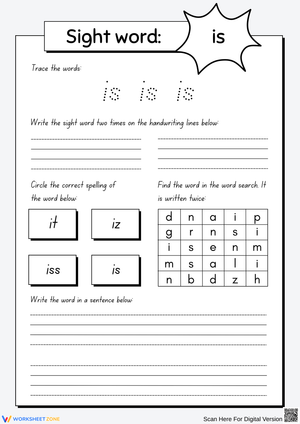
Building Early Literacy with Sight Words For Kindergarten Worksheets
Welcome to your go-to resource for early literacy development. When teaching young learners to read, establishing a strong foundation in high-frequency word recognition is essential. Our collection of sight words for Kindergarten worksheets provides teachers with ready-to-use materials designed to support early reading fluency. These printables combine visual recognition with tactile activities, ensuring that young students can practice identifying, tracing, and writing words that appear frequently in early texts. By integrating these resources into your daily instruction, you help students build the confidence they need to become independent readers. Consistent practice with these targeted materials helps bridge the gap between recognizing letters and reading full sentences.
The Importance of High-Frequency Word Recognition
Sight words are high-frequency words that students must recognize instantly without relying on phonetic decoding. Because many of these words do not follow standard spelling rules, repeated exposure and practice are necessary for mastery. Knowing these specific lists allows young readers to read early texts with greater ease and comprehension. When kindergarten students can identify these words automatically, they free up cognitive energy to focus on decoding more complex words and understanding the meaning of the text. Using targeted printables ensures that students receive the consistent, repetitive practice required to move these words from short-term memory into long-term automatic recognition. This automaticity is a fundamental building block for all future reading success.
Core Components of Effective Sight Word Practice
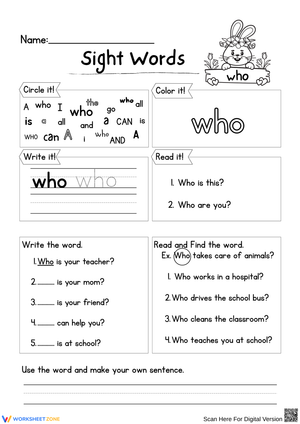
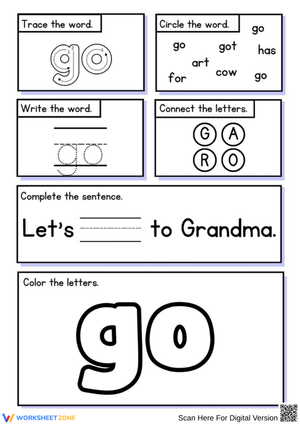
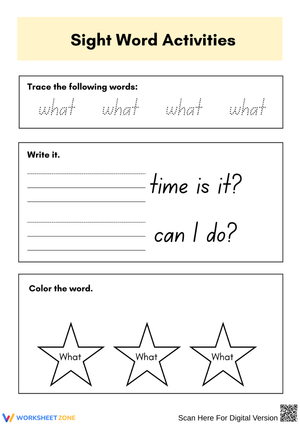
Effective sight word instruction relies on multi-sensory engagement. Our sight words printable worksheets for Kindergarten feature a variety of activity types to keep young learners engaged while reinforcing word recognition.
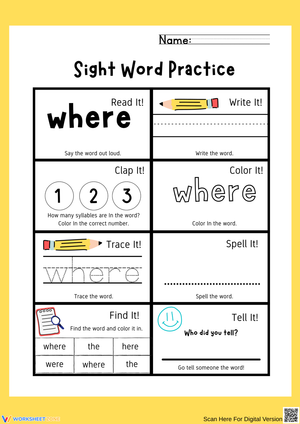
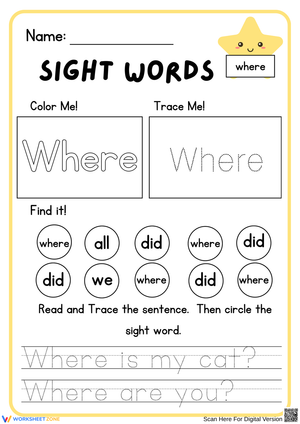
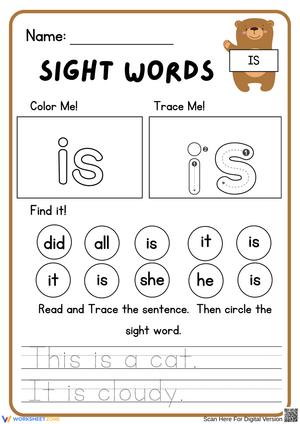
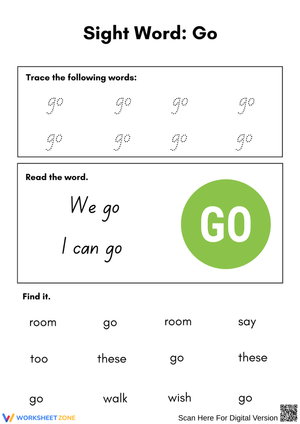
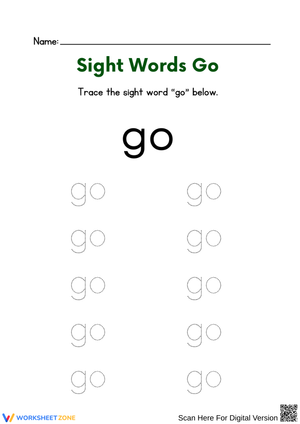
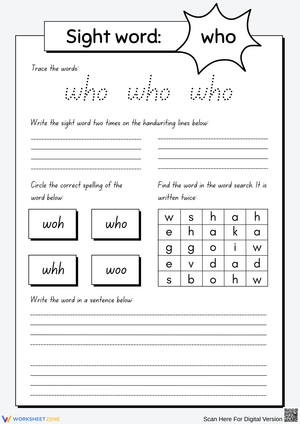
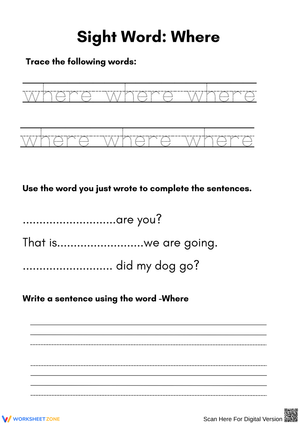
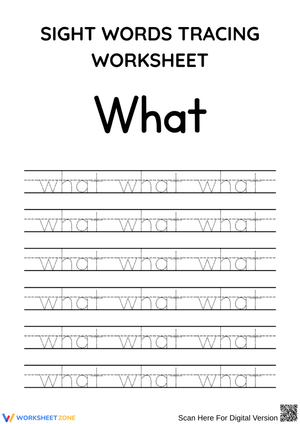
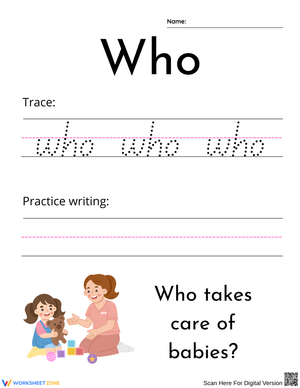
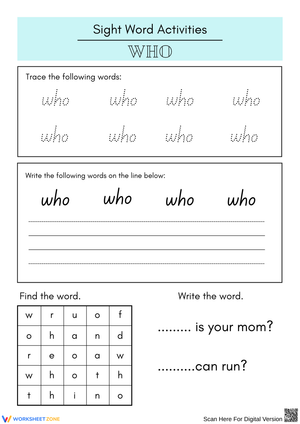
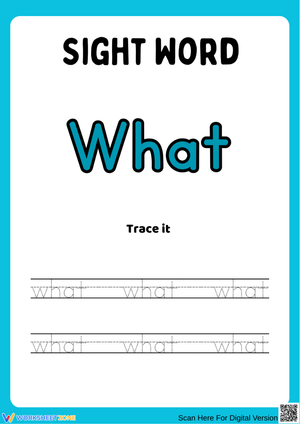
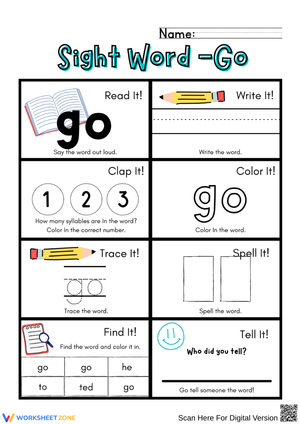
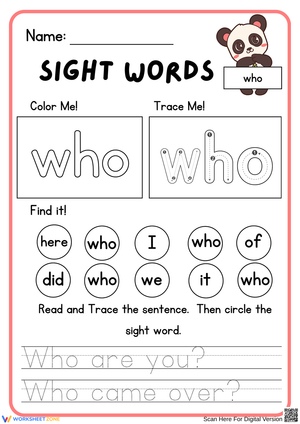
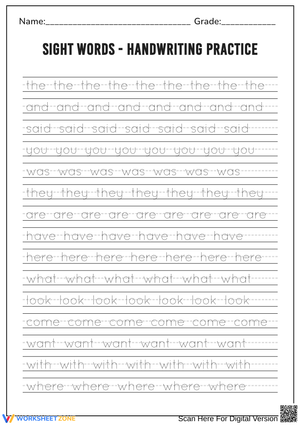
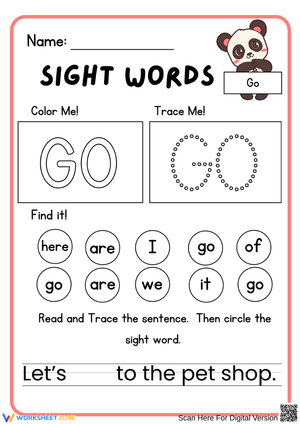
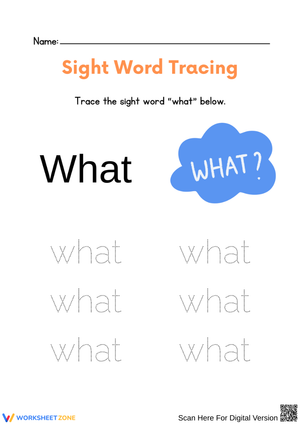
- Read, Trace, Write Layouts: These worksheets support both fine motor development and literacy skills. Students first read the target word, trace it following directional arrows, and then write it independently. This tactile approach helps cement the word's spelling and shape in the student's memory.
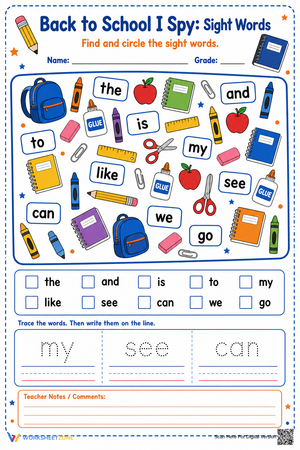
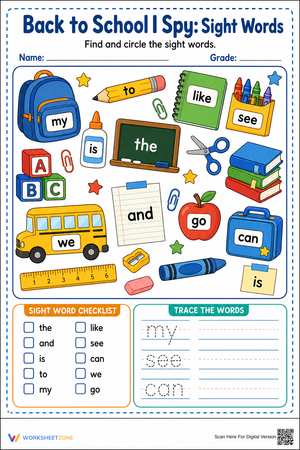
- Search and Find Activities: Visual scanning is a vital skill for early readers. Word search printables require students to locate specific high-frequency words among a grid of letters or within a picture. This activity improves visual discrimination and rapid word identification.
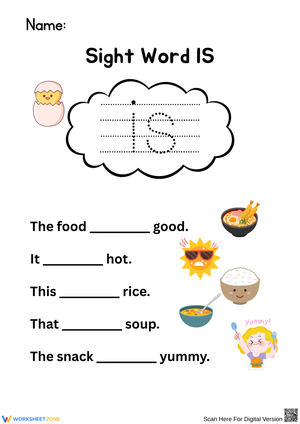
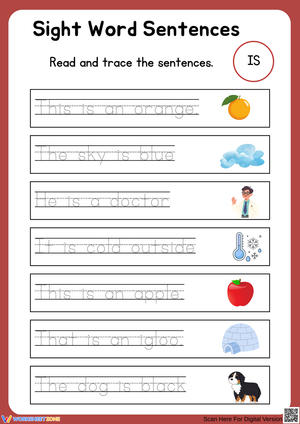
- Sentence Building: Placing high-frequency words in a meaningful context is highly effective for comprehension. Worksheets that ask students to cut, paste, or write words to complete simple sentences demonstrate how sight words function in everyday language.
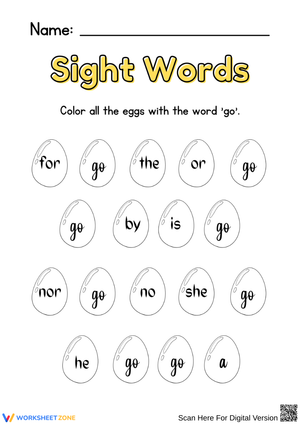
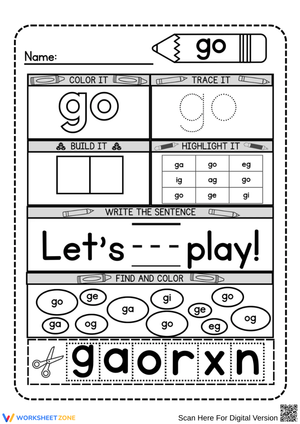
- Coloring and Articulation: Combining word recognition with coloring activities provides a low-pressure, enjoyable way for students to interact with text. As they color specific words based on a key, they repeatedly look at the word's structure.
Classroom Implementation
When introducing new high-frequency words, limit the focus to three to five new words per week to prevent cognitive overload. Introduce the words using a multi-sensory approach on Monday, such as sky-writing or building the words with playdough. On Tuesday and Wednesday, transition to sight words worksheets during independent literacy centers. To maximize the utility of these printables, place them inside clear dry-erase sleeves. This allows students to complete the tracing and writing activities using whiteboard markers, wiping them clean for the next group. This method not only saves paper but also encourages students to practice repeatedly without the fear of making permanent mistakes. On Thursday and Friday, use sentence-building worksheets to assess whether students can recognize the words in context rather than just in isolation. You can also send specific tracing sheets home in weekly communication folders to encourage family involvement in reading practice.
Aligning with Kindergarten ELA Standards
These resources are designed to support specific early literacy goals. The Common Core State Standards: ELA-Literacy.RF.K.3.C requires Kindergarten students to read common high-frequency words by sight. By utilizing structured printables, teachers can provide documented evidence of student progress toward this standard. Furthermore, resources like Reading Rockets: Sight Words emphasize that automatic word recognition is a foundational pillar of reading fluency. The worksheets provide the exact type of repeated, contextual practice recommended by literacy experts to achieve this automaticity. Ensuring that daily center work aligns with these rigorous standards gives teachers peace of mind. It guarantees that the time students spend on independent tasks is directly contributing to their overall reading proficiency and end-of-year evaluations.
Frequently Asked Questions
1. Which sight word list should I prioritize for Kindergarten students?
For Kindergarten instruction, educators typically prioritize the Dolch Pre-Primer and Primer lists. These lists contain the most frequently encountered words in early children's literature. Starting with the Pre-Primer list ensures students build confidence with foundational words before moving on to the slightly more advanced Primer list.
2. How do these printable worksheets align with Common Core ELA standards?
These printables directly support the Common Core State Standards: ELA-Literacy.RF.K.3.C, which mandates that Kindergarten students must read common high-frequency words by sight. The worksheets provide the targeted practice necessary for students to achieve automatic recognition of these required words.
3. What are effective ways to use sight word PDFs in independent literacy centers?
To use these PDFs effectively in centers, laminate them or place them in dry-erase pockets for repeated use with whiteboard markers. You can also pair the worksheets with tactile materials like magnetic letters or stamps, allowing students to build the word before tracing and writing it on the printable.
4. How many sight words are typically expected for mastery in Kindergarten?
While expectations can vary by district, most Kindergarten programs aim for mastery of 20 to 50 high-frequency words by the end of the academic year. Consistent daily practice using varied activities helps ensure students meet or exceed these foundational literacy benchmarks.












 Interactive Worksheet Maker
 Quiz Maker
 Word Search Maker
 Crossword Puzzle Maker
 Word Scramble Generator
 Sentence Scramble Generator
 Handwriting Worksheet Generator
 Name Tracing Generator
 Fill In The Blank Generator