Karyotype worksheets for 9th grade give biology teachers a way to move chromosome analysis out of the textbook and into students' hands — sorting real chromosome images, identifying homologous pairs, and diagnosing chromosomal conditions the same way a clinical lab would. The set includes cut-and-paste simulations, pre-assembled identification exercises, and case study formats that place students in the role of a genetic counselor reviewing a patient file. These resources surface misconceptions quickly, which is exactly when they do the most teaching.
The Specific Skills Targeted
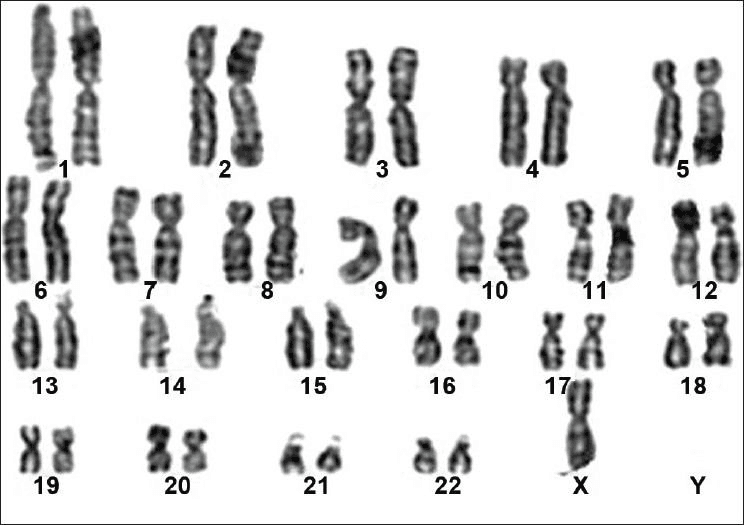
The core task across the set is chromosome pairing. Students match homologous chromosomes using three criteria: overall length, centromere position (medial, submedial, or acrocentric), and banding pattern. Banding is where most 9th graders slow down — two chromosomes can share nearly identical size and centromere placement while having different G-band arrangements, and only close attention to the staining pattern resolves the match. Each cut-and-paste worksheet gives students a scrambled chromosomal spread and asks them to reconstruct it into a complete karyogram with all 23 pairs arranged in the standard Denver Classification sequence.
Several worksheets in the set require students to analyze a completed karyotype for numerical abnormalities. Students count chromosomes at each numbered position, identify any trisomy or monosomy, and name the associated condition. Trisomy 21 (Down syndrome), Trisomy 23 variants including Klinefelter syndrome (47,XXY) and Triple X (47,XXX), and Monosomy X (Turner syndrome) all appear across the exercises. Students also determine the biological sex of each karyotype subject by reading the sex chromosome pair — a task that forces them to apply the XX/XY distinction rather than retrieve it from memory as an isolated fact.
Standard Alignment
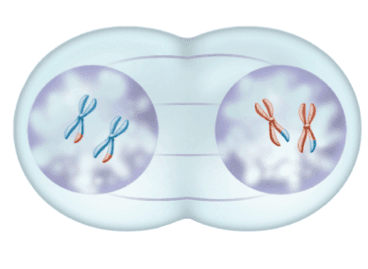
These worksheets address NGSS HS-LS3-1, which asks students to clarify the relationship between DNA, chromosomes, and heritable traits passed from parents to offspring, and HS-LS3-2, which requires students to make and defend evidence-based claims about how meiosis, DNA replication errors, and environmental factors produce inheritable variation. In classroom terms, HS-LS3-1 drives the basic pairing and counting work — students build a normal karyotype and articulate what a healthy chromosomal complement looks like. HS-LS3-2 comes in when the analysis shifts to abnormal spreads. The karyotype worksheets for 9th grade in this set ask students not just to identify a trisomy but to trace it back to a nondisjunction event in meiosis I or meiosis II, which is the kind of causal reasoning HS-LS3-2 actually requires.
Frequent Errors Worth Watching For and Addressing
The most consistent pairing mistake is chromosomes 9 and 10. They sit close enough in size that students routinely cross-pair them, then arrive at the end of the activity with two unpaired chromosomes they can't place. Checking in with students about five minutes into the cut-and-paste exercise tells you immediately which students grabbed a 9 and a 10 and called them a match — and it's faster to catch that early than to have them rebuild the entire karyogram from scratch.
On the abnormality analysis exercises, students who correctly identify a trisomy often write "extra chromosome" in their response without specifying the chromosome number or the condition name. That imprecision matters — a trisomy at position 21 and a trisomy at position 18 (Edwards syndrome) are profoundly different clinical situations, and the worksheets push students to specify both. Point this out before students start, not after they've already written imprecise answers you'll need to return.
A third persistent issue involves sex chromosome interpretation. When students encounter a 47,XXY karyotype, about a third of the class writes "female" because they process the two X chromosomes without registering the Y. The Klinefelter spread reliably generates this error on the first pass, and it's worth pausing to discuss why the presence of the Y chromosome changes the analysis entirely. It also opens a natural conversation about why laboratory karyotyping matters clinically — the visual ambiguity is exactly the kind of problem that requires evidence rather than assumption.
Fitting These Worksheets Into Your Week
The cut-and-paste worksheet belongs in the heredity unit after students have covered meiosis but before they've studied specific chromosomal syndromes by name. Running it at that point — when students can locate the trisomy before they know what to call it — means the clinical terminology lands with context rather than arriving as another vocabulary list. The case study format works better as a summative lab activity later in the unit; it takes a full class period if the written diagnostic rationale is included, so it functions more naturally as a culminating exercise than a daily check.
For the identification and abnormality analysis worksheets, the last 12 minutes of a class period is a natural fit. Students who finish a lesson early start the analysis, and you close class with a quick whole-group debrief on what they found. Before any cut-and-paste activity, have students sort their chromosome cutouts into rough size categories — large, medium, small — before attempting any pairing. This mirrors how clinical labs triage a chromosomal spread and saves several frustrating minutes of students trying to match chromosome 13 before they've even narrowed the field.
When building a full genetics unit, showing a brief demonstration of how laboratory karyotypes are actually produced — cell culture, metaphase arrest, G-banding, microscopic photography, digital arrangement — before distributing the karyotype worksheets for 9th grade removes the abstraction from the exercise. Students stop seeing it as a matching game and start treating it as simulated clinical work, which changes how carefully they attend to the banding detail.
Differentiating the Set for Mixed-Ability Classes
Students who need additional entry support work best with the pre-assembled identification worksheets, where chromosomes are already arranged in pairs and the task is to count, label, and locate the abnormality. Removing the pairing step reduces the number of simultaneous demands so students can concentrate on the analysis itself. A brief reference guide showing normal chromosome sizes and centromere positions by pair number gives them a comparison standard without giving away the diagnosis.
Students who move through the basic exercises quickly benefit from the case study worksheets, where the analytical load is considerably higher. Push them further by asking them to write not only what condition they identified but which stage of meiosis produced the error and why the nondisjunction would occur at that stage rather than another. That extension question requires no additional materials — only that students reach back into their meiosis notes and construct a mechanistic argument from evidence already in front of them.
For students with fine motor difficulties, the cut-and-paste format can be replaced with a labeling version where chromosome images are pre-printed on the worksheet in a grid and students write the pair number beneath each image. The analytical work stays identical. Only the physical task changes.
Frequently Asked Questions
Can these worksheets serve as a lab grade rather than a homework assignment?
Yes, and most teachers use them that way. The cut-and-paste activity produces a clear, gradable product — a completed karyogram with all 23 pairs arranged and labeled. The case study worksheet, which asks students to identify an abnormality and write a diagnostic rationale, functions as a lab report alternative that requires no physical specimens or digital equipment beyond the printed worksheet itself.
Do students need prior meiosis knowledge before working through these exercises?
For the basic cut-and-paste format, prior meiosis knowledge isn't required — students complete the pairing exercise with only a general understanding of chromosomes and homologous pairs. The abnormality analysis worksheets ask students to connect trisomies and monosomies back to nondisjunction events, which requires at least an introductory understanding of what meiosis produces. Running the simpler identification worksheet first, then adding the case study format after meiosis instruction, keeps the pedagogical sequence sound.
Are these activities appropriate for higher-grade biology courses?
A karyotype worksheets for 9th grade is written for an introductory biology course, but the content transfers without modification into 10th or 11th grade settings. In AP Biology, the same resources function as a review activity or a starting point for more detailed analysis of meiotic error mechanisms. The case study format holds up in upper-level classes because the diagnostic writing task can be extended to include genetic counseling considerations, pedigree integration, or a discussion of how numerical chromosomal abnormalities affect phenotypic expression.