




























1 / 4
0
Views
0
Downloads



Save
0 Likes
Share
Analyze Karyotype with this Worksheet
0 Views
0 Downloads

Paste this activity's link or code into your existing LMS (Google Classroom, Canvas, Teams, Schoology, Moodle, etc.).
Students can open and work on the activity right away, with no student login required.
You'll still be able to track student progress and results from your teacher account.
Information
Description
What It Is:
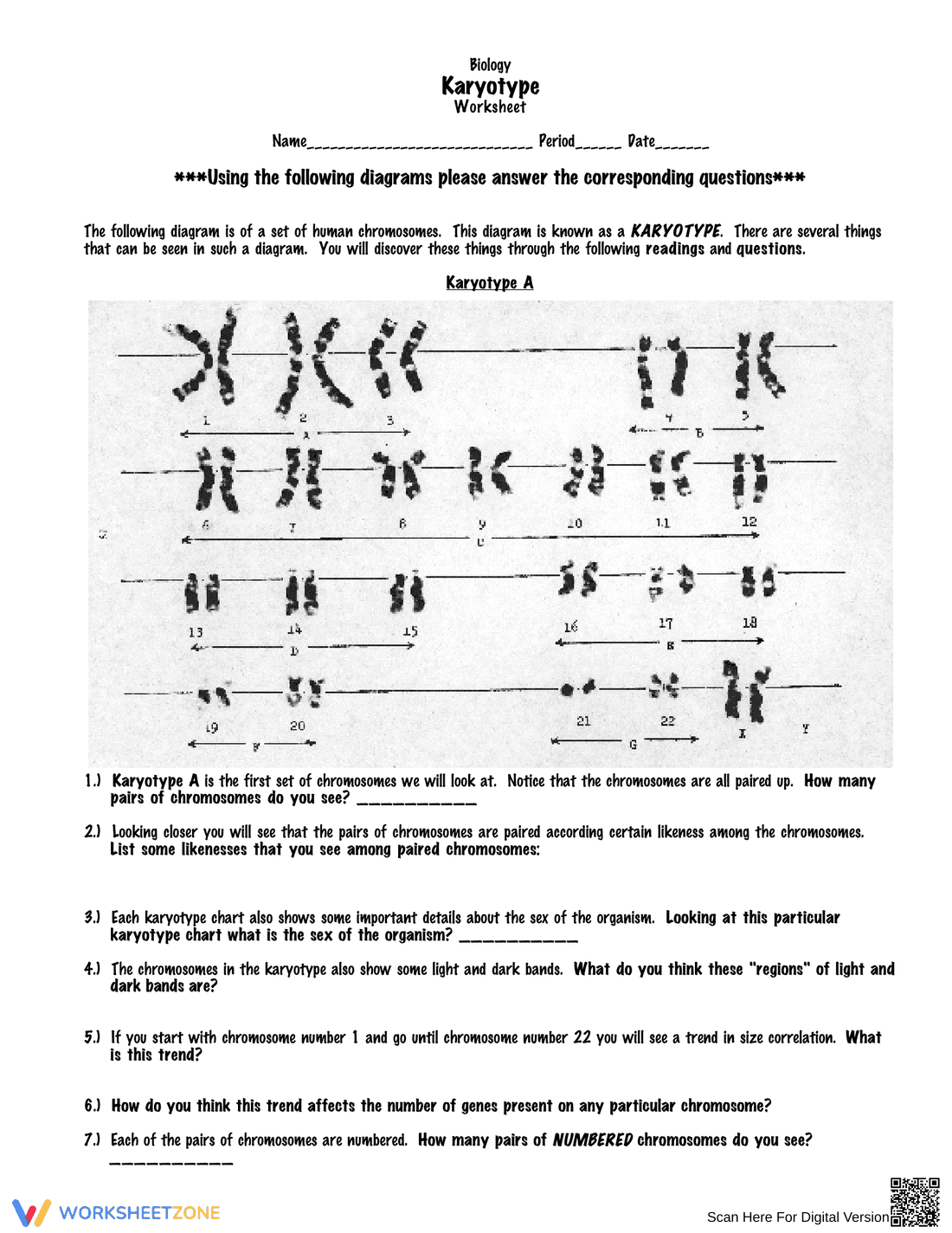
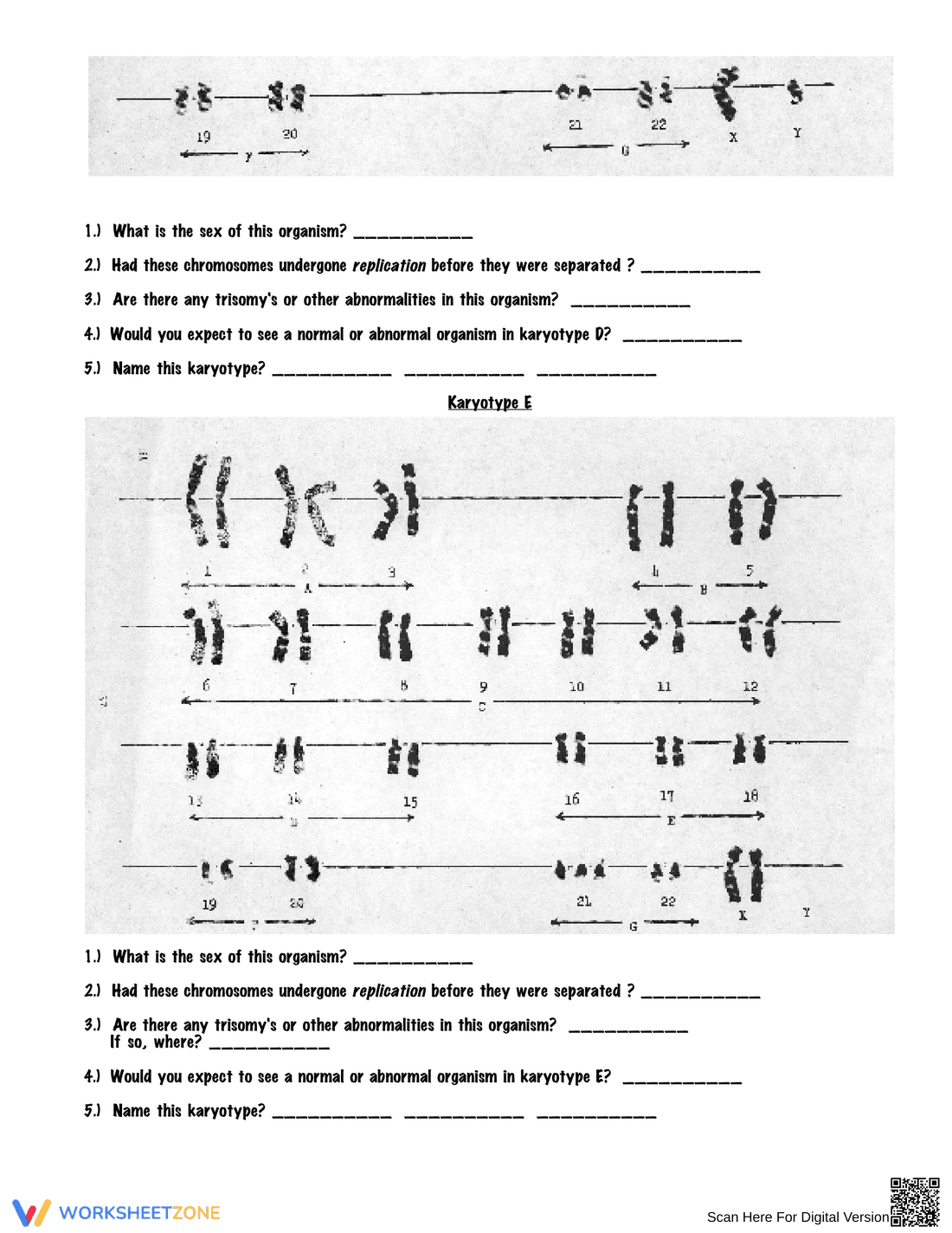
This is a biology worksheet focused on karyotypes. It presents a diagram of a human karyotype, labeled 'Karyotype A,' showing paired chromosomes numbered from 1 to 22, plus X and Y chromosomes. The worksheet includes questions that require students to analyze the karyotype, such as identifying similarities between paired chromosomes, determining the sex of the organism, and observing size trends in the chromosomes. The worksheet also asks about the significance of light and dark bands on the chromosomes.
Grade Level Suitability:
This worksheet is suitable for high school biology (Grades 9-12) or introductory college biology courses. The concepts of karyotypes, chromosome structure, and sex determination are typically covered at these levels. The analytical questions require a foundational understanding of genetics and cell biology.
Why Use It:
This worksheet reinforces understanding of karyotypes and their applications. It helps students develop skills in analyzing scientific diagrams, interpreting genetic information, and making connections between chromosome structure and function. It promotes critical thinking about sex determination and gene organization.
How to Use It:
Students should first review the provided information about karyotypes. Then, they should carefully examine the diagram of Karyotype A. Next, they should answer the questions, referring to the diagram and their knowledge of genetics. The worksheet can be used as an in-class activity, homework assignment, or review exercise.
Target Users:
The target users are high school biology students, introductory college biology students, and teachers looking for supplemental materials to teach karyotypes and chromosome analysis. It can also be useful for students preparing for biology exams or standardized tests.
This is a biology worksheet focused on karyotypes. It presents a diagram of a human karyotype, labeled 'Karyotype A,' showing paired chromosomes numbered from 1 to 22, plus X and Y chromosomes. The worksheet includes questions that require students to analyze the karyotype, such as identifying similarities between paired chromosomes, determining the sex of the organism, and observing size trends in the chromosomes. The worksheet also asks about the significance of light and dark bands on the chromosomes.
Grade Level Suitability:
This worksheet is suitable for high school biology (Grades 9-12) or introductory college biology courses. The concepts of karyotypes, chromosome structure, and sex determination are typically covered at these levels. The analytical questions require a foundational understanding of genetics and cell biology.
Why Use It:
This worksheet reinforces understanding of karyotypes and their applications. It helps students develop skills in analyzing scientific diagrams, interpreting genetic information, and making connections between chromosome structure and function. It promotes critical thinking about sex determination and gene organization.
How to Use It:
Students should first review the provided information about karyotypes. Then, they should carefully examine the diagram of Karyotype A. Next, they should answer the questions, referring to the diagram and their knowledge of genetics. The worksheet can be used as an in-class activity, homework assignment, or review exercise.
Target Users:
The target users are high school biology students, introductory college biology students, and teachers looking for supplemental materials to teach karyotypes and chromosome analysis. It can also be useful for students preparing for biology exams or standardized tests.


