


























0
Views
0
Downloads

0.0
0
Save
0 Likes
Share
"Follow the Moon" - Free Verse Poem
0 Views
0 Downloads
Paste this activity's link or code into your existing LMS (Google Classroom, Canvas, Teams, Schoology, Moodle, etc.).
Students can open and work on the activity right away, with no student login required.
You'll still be able to track student progress and results from your teacher account.
Information
Description
What It Is:
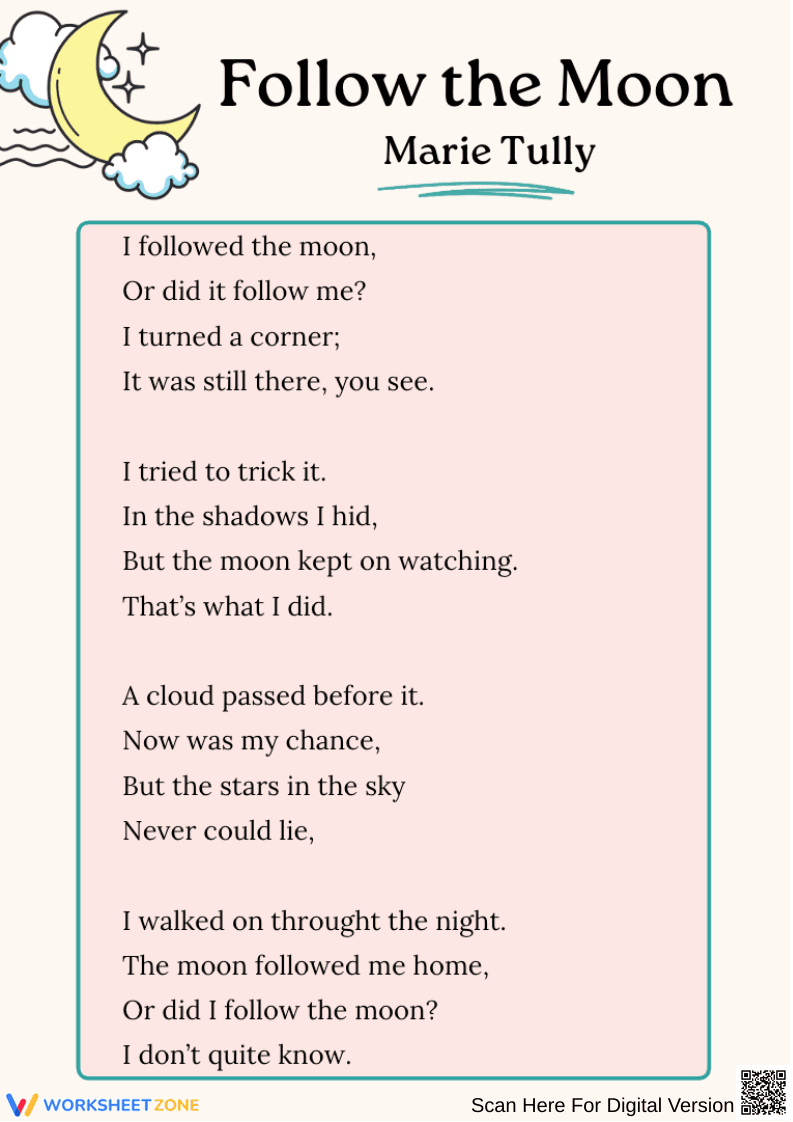
A beautifully illustrated poetry reading and analysis worksheet featuring “Follow the Moon” by Marie Tully. This gentle, imaginative poem explores curiosity, nature, and the magical feeling of the moon appearing to follow you at night. The worksheet provides a clean layout for close reading and classroom discussion.
Why Use It:
This worksheet helps students practice poetry comprehension skills, including identifying mood, imagery, and poetic devices. The poem’s simple language and reflective tone make it ideal for teaching inference, theme, and the relationship between the natural world and human emotions. It supports literacy, creative thinking, and deeper reading engagement.
How to Use It:
• Introduce during a poetry, nature, or creative writing lesson.
• Have students annotate imagery, rhyme patterns, and emotional shifts.
• Use as a warm-up for discussions about perspective, symbolism, or personification.
• Pair with writing prompts such as “Write about a time something in nature felt alive.”
• Assign as independent reading, group work, or a poetry center activity.
Grade Suitability:
Best for Grades 7-9.
• Excellent for ELA poetry units, nature-themed lessons, and creative thinking activities.
• Fits perfectly into whole-class instruction or small-group reading practice.
Target Users:
Perfect for teachers, tutors, literacy specialists, and homeschool educators who want a student-friendly poem to build comprehension and appreciation for poetry.
A beautifully illustrated poetry reading and analysis worksheet featuring “Follow the Moon” by Marie Tully. This gentle, imaginative poem explores curiosity, nature, and the magical feeling of the moon appearing to follow you at night. The worksheet provides a clean layout for close reading and classroom discussion.
Why Use It:
This worksheet helps students practice poetry comprehension skills, including identifying mood, imagery, and poetic devices. The poem’s simple language and reflective tone make it ideal for teaching inference, theme, and the relationship between the natural world and human emotions. It supports literacy, creative thinking, and deeper reading engagement.
How to Use It:
• Introduce during a poetry, nature, or creative writing lesson.
• Have students annotate imagery, rhyme patterns, and emotional shifts.
• Use as a warm-up for discussions about perspective, symbolism, or personification.
• Pair with writing prompts such as “Write about a time something in nature felt alive.”
• Assign as independent reading, group work, or a poetry center activity.
Grade Suitability:
Best for Grades 7-9.
• Excellent for ELA poetry units, nature-themed lessons, and creative thinking activities.
• Fits perfectly into whole-class instruction or small-group reading practice.
Target Users:
Perfect for teachers, tutors, literacy specialists, and homeschool educators who want a student-friendly poem to build comprehension and appreciation for poetry.


