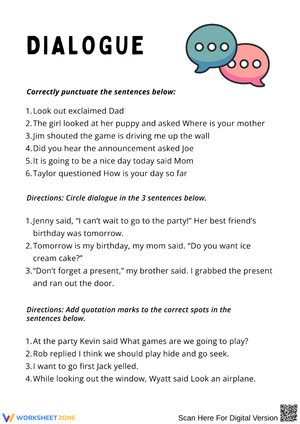
These creative writing printable worksheets for 9th grade address a real inflection point in student writing development: ninth grade is where "a lot happened in my story" stops being enough, and students are expected to make deliberate technique choices — pacing, perspective, sensory language, character interiority. Each worksheet isolates one of these skills so that practice stays focused and revision feedback actually has somewhere to land.
The Techniques Each Worksheet Targets
The set moves through six skill areas that commonly stall 9th-grade writers. Narrative pacing gets its own worksheet, asking students to take a single scene — a character running from something, or a confrontation that has been building for chapters — and rewrite it twice: once using short, clipped sentences to drive momentum, and again using longer, subordinate-clause-heavy syntax to slow time and let the emotional weight register. Students who complete both versions usually have a visible moment of recognition about how sentence rhythm shapes reader experience, not just information transfer.
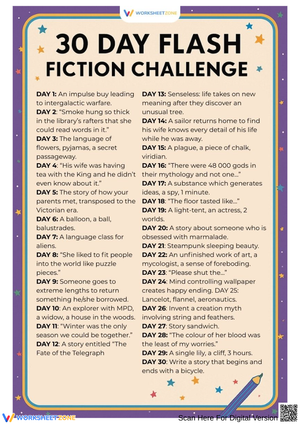
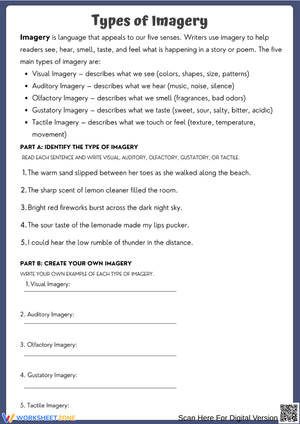
Sensory description worksheets push past sight and sound. Students fill a five-column chart for a single setting — what does the gym smell like before a championship game? What texture does the cafeteria floor have underfoot? — then draft a paragraph drawing from at least three senses. POV worksheets ask students to write the same confrontation from three angles: first person (inside the protagonist's skin), third person limited (close but slightly exterior), and third person omniscient (pulling back to see both characters fully). Each version changes what the reader knows and when, and students often realize for the first time that POV is a structural choice, not just a grammatical preference. Character psychology worksheets use a two-column internal monologue format: what the character says aloud on the left, what they are actually thinking on the right. Genre worksheets offer prompts in dystopian fiction, magical realism, and flash fiction. A final worksheet focuses on voice distinction — writing the same plot beat in the voice of three narrators of radically different ages, backgrounds, and relationships to the events.
Mistakes Students Make That These Worksheets Surface Quickly
The most consistent problem in 9th-grade narrative work is emotional summary substituting for scene. Students write "She felt devastated" and consider the work done. The show-don't-tell worksheets push back on that habit by asking students to first identify what devastation looks like in the body — what it makes someone do, avoid, reach for, or say wrong — before drafting the prose. Some students resist this initially, arguing that cataloging physical details feels mechanical. That resistance is worth sitting with in class discussion, because the real lesson is calibration between summary and scene, not replacing one with the other entirely.
POV drift is another reliable error: students start a scene in first person, then slip into "she felt" or narrate something their narrator couldn't have witnessed. The POV worksheet makes this visible because students see three versions of the same scene side by side and can pinpoint exactly which sentences broke the perspective rules. A third persistent error involves pacing uniformity — every scene written at the same speed, whether it's a fistfight or a character making toast. Students who haven't been asked to think about sentence rhythm before often don't notice that their action scenes meander at the same pace as their reflective ones. The pacing worksheet makes that contrast concrete rather than something students have to take on faith.
Fitting These Worksheets Into the Lesson Week
Most of these worksheets fit into the first 12 to 15 minutes of class — long enough to practice one technique deliberately, short enough to leave the bulk of the period for students to apply it inside their own longer drafts. In a writing workshop structure, this works cleanly: the worksheet is the mini-lesson and the quick-write combined. The pacing worksheet drops easily into the Monday of any week when students are drafting action sequences. Complete it as a class, discuss two or three student examples aloud, then send everyone back to their longer work with a specific task: find one scene and try both sentence-rhythm versions.
The blind peer feedback format pairs well with this set. Instead of trading full drafts — which can overwhelm both the reviewer and the writer — students swap just one completed section, such as the sensory description paragraph or the internal monologue exercise. Reviewers work from a single question: can you find three distinct senses here, and do they serve the setting? That narrowness produces more actionable feedback than "I liked your story." Genre worksheets work especially well as Friday quick-writes: dystopian and magical realism prompts generate real enthusiasm among freshmen and produce drafts interesting enough to read aloud before the period ends. These creative writing printable worksheets for 9th grade fit naturally into that kind of low-stakes writing atmosphere without feeling like busywork.
Standard Alignment
CCSS.ELA-LITERACY.W.9-10.3 requires students in grades 9 and 10 to use narrative techniques including pacing, description, and reflection, and to sequence events in ways that build toward a coherent whole. In classroom terms, this standard is typically introduced in the fall of 9th grade as teachers shift students from the story-retelling work that dominated middle school into original composition with intentional technique. The flash fiction worksheet addresses the sequencing component directly — students must make a complete story arc function in 250 words, which forces every structural decision to be deliberate. Teachers working within the Common Core framework can use these worksheets as formative evidence of student progress toward the W.9-10.3 benchmark before a graded narrative unit concludes.
Adjusting These Worksheets for a Mixed-Ability Class
For students who freeze at an open prompt, the character interview worksheet includes question stems — "What does your character want that they'd never admit out loud?" — that break the blank-page paralysis without dictating the answer. The sensory chart provides a concrete entry point for students who need a structured task before they can produce prose. These are not simplifications of the skill; they are different angles of entry into the same work.
Advanced writers get the most out of constraint-based variations. Assign the pacing worksheet with an added rule: no sentence in the action version may exceed eight words, and no sentence in the reflective version may fall below twenty. For the voice distinction worksheet, advanced students rewrite the same exchange five times, each narrated by someone with a different relationship to the events — the suspect, the detective, the witness who wasn't supposed to be there. The creative writing printable worksheets for 9th grade in this set were built with this kind of range in mind — the core task holds across ability levels, but the ceiling stays open enough that a genuinely strong writer still has somewhere to push.
Frequently Asked Questions
Do students need to have read a specific text before using these worksheets?
No, though they work better when paired with texts students are actively analyzing in class. When a student has just read a chapter of The Road or Their Eyes Were Watching God, a pacing or voice worksheet gives them somewhere to try the technique they have just observed in a professional writer's work. Without that pairing, the worksheets still function — they just rely more on student imagination than on a literary model to imitate and depart from.
How do you grade something like the internal monologue worksheet?
Most of these worksheets work best as formative checks rather than summative grades. Look for evidence that the student grasped the target skill: in the internal monologue worksheet, the two columns should show genuine divergence between spoken words and inner thought — if both columns say essentially the same thing, the student hasn't engaged with the concept. A simple two-point check (attempted the technique / demonstrated understanding of the technique) is usually sufficient. Save letter grades for the longer drafts where students apply the skills across a full narrative piece.
Can the set work in a hybrid or asynchronous setting?
Yes. These resources translate directly to fillable PDF or Google Doc format without losing their structure. The blind peer feedback protocol works cleanly in a shared-document environment — students leave comments on one specific completed section rather than a full draft, which tends to produce more targeted notes than in-person swaps. Teachers assigning creative writing printable worksheets for 9th grade in distance or hybrid settings often use one worksheet as an asynchronous warm-up, then discuss selected examples together at the start of the next synchronous session.
How long does the POV worksheet take compared to shorter exercises?
The POV worksheet — which asks for three separate rewrites of the same scene — runs closer to 30 minutes if students are thorough, making it better suited to a full class period than a bell ringer. The flash fiction worksheet, by contrast, has a strict 250-word ceiling, so the drafting portion typically finishes in under 15 minutes, leaving time to share examples aloud before dismissal.












 Interactive Worksheet Maker
 Quiz Maker
 Word Search Maker
 Crossword Puzzle Maker
 Word Scramble Generator
 Sentence Scramble Generator
 Handwriting Worksheet Generator
 Name Tracing Generator
 Fill In The Blank Generator