


























Views
Downloads

Age of Exploration Worksheet | Grade 7 Essential Guide
Paste this activity's link or code into your existing LMS (Google Classroom, Canvas, Teams, Schoology, Moodle, etc.).
Students can open and work on the activity right away, with no student login required.
You'll still be able to track student progress and results from your teacher account.
This comprehensive Age of Exploration worksheet packet provides middle school students with a structured investigation into the maritime discoveries of the 15th and 16th centuries. By analyzing primary causes and technological advancements, students develop a clear understanding of how European expansion reshaped global connections. This resource ensures students master historical sequencing and geographic literacy through active engagement with visual data.
At a Glance
- Grade: 7 · Subject: Social Studies
- Standard:
CCSS.ELA-LITERACY.RH.6-8.7— Integrate visual information from maps and timelines with historical text for analysis.- Skill Focus: Map literacy and technological impact
- Format: 4 pages · 18 problems · Answer key included · PDF
- Best For: Core instruction or independent sub plans
- Time: 45–50 minutes
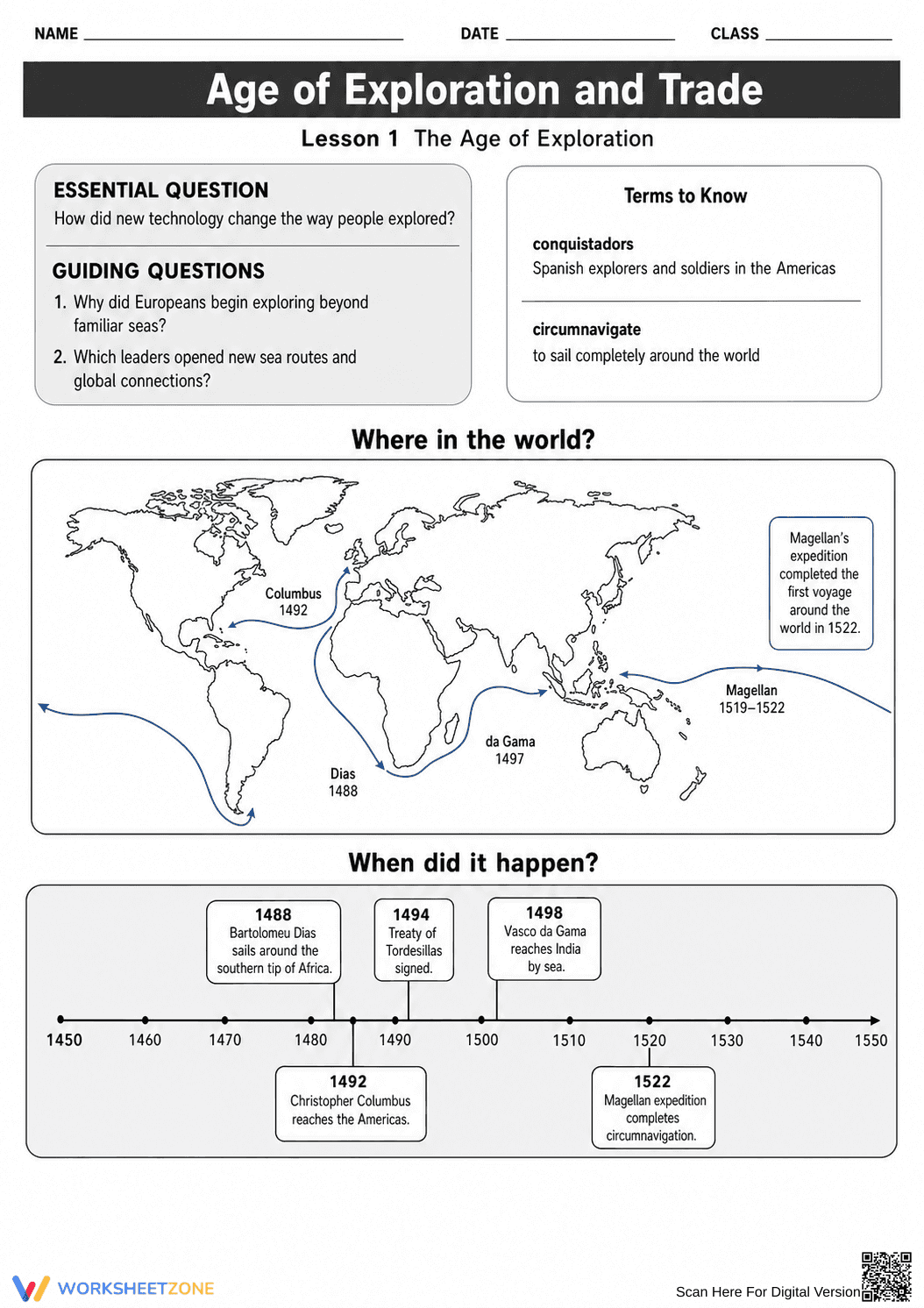
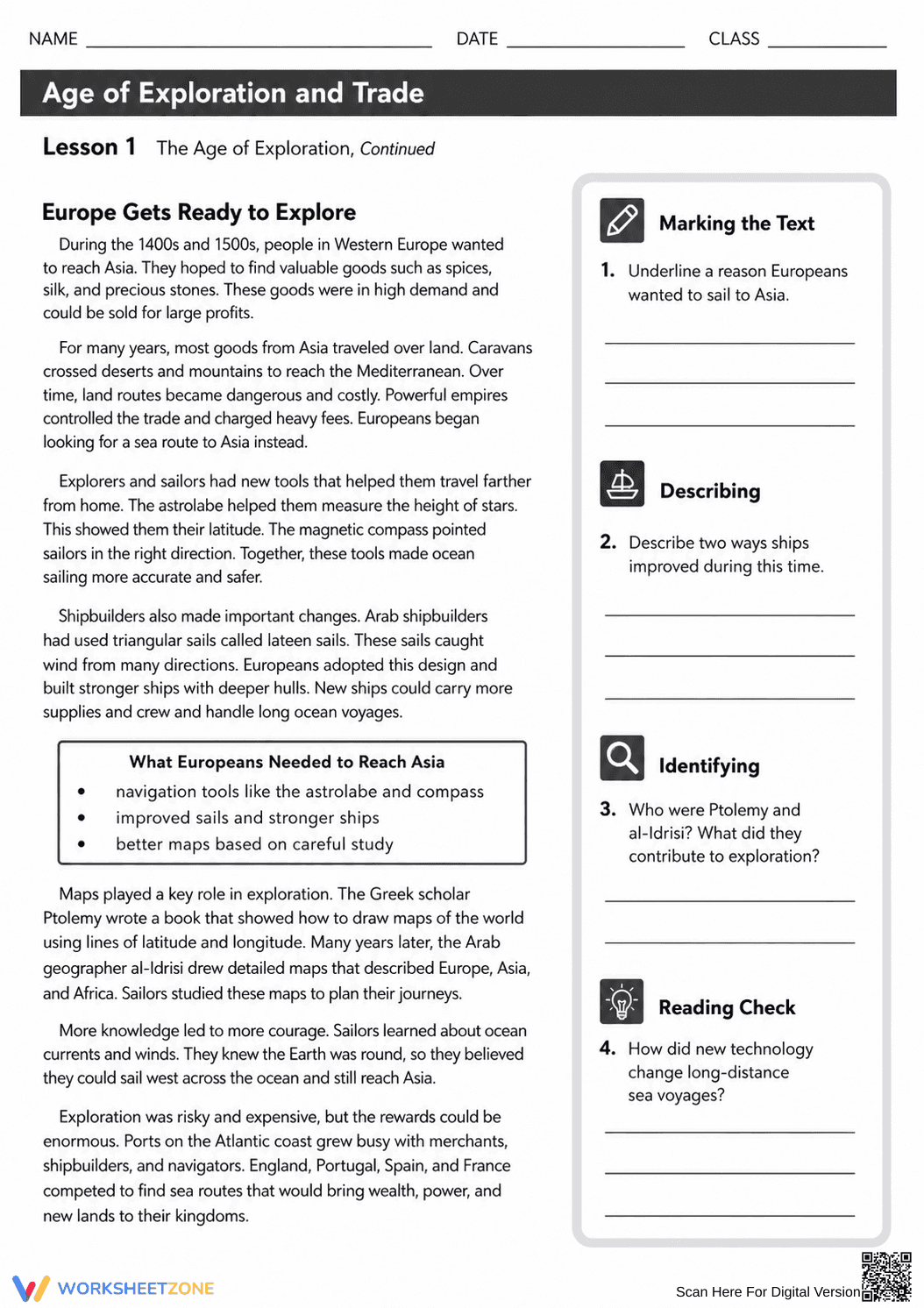
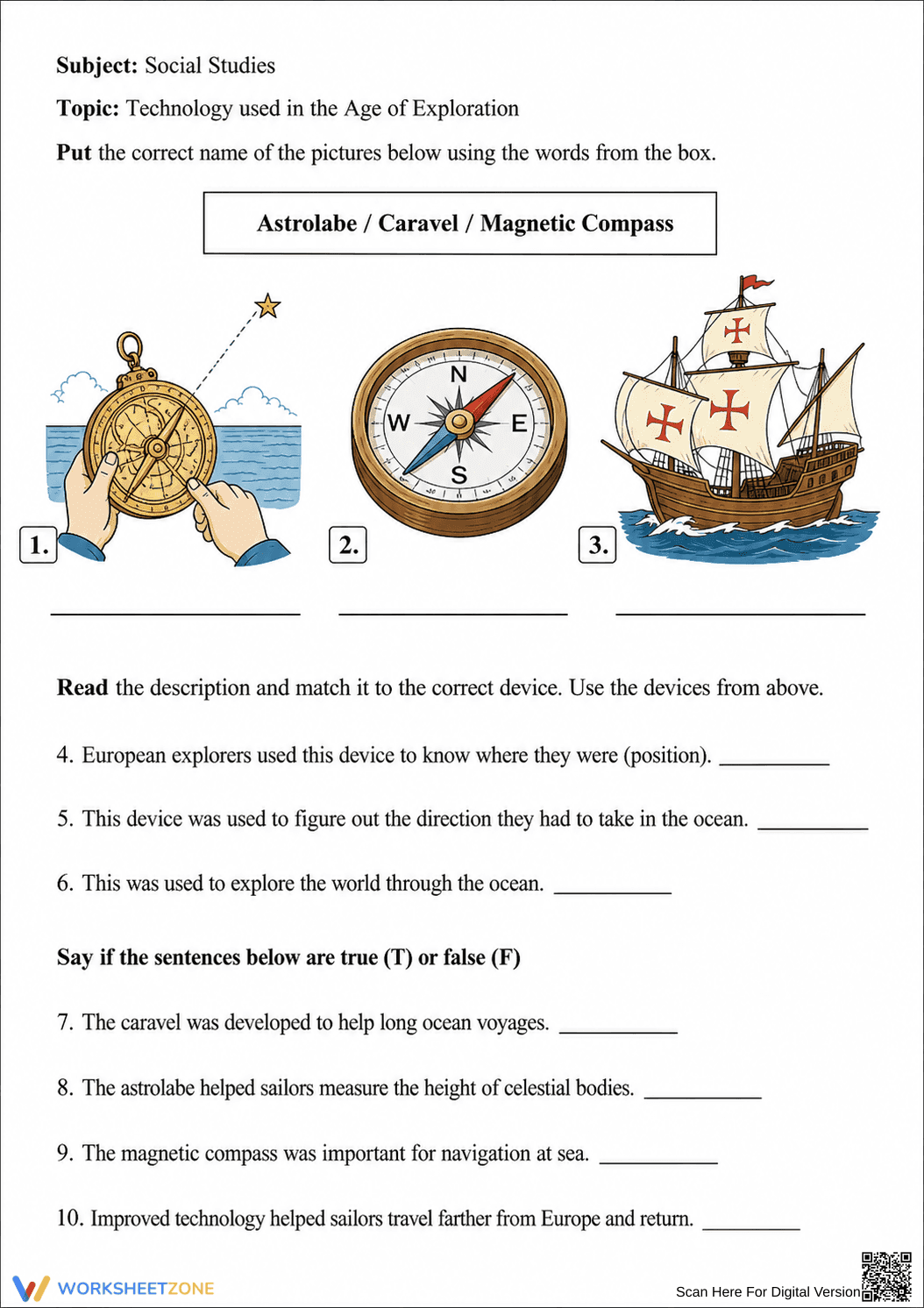
What’s Inside: This 4-page instructional packet features a detailed world map tracing the routes of Columbus, Magellan, da Gama, and Dias. It includes a chronological timeline spanning 1450 to 1550, a dedicated vocabulary section for terms like "conquistadores" and "circumnavigate," and a reading passage focused on the astrolabe and caravel. The layout combines short-answer guiding questions with visual matching tasks to support diverse learning styles.
Zero-Prep Workflow
- Print (1 minute): Select the 4-page PDF and print enough copies for your roster; no additional sorting or stapling is required for the logical flow.
- Distribute (30 seconds): Hand out the packets at the start of the period; the "Essential Question" provides an immediate hook for bell-ringer discussions.
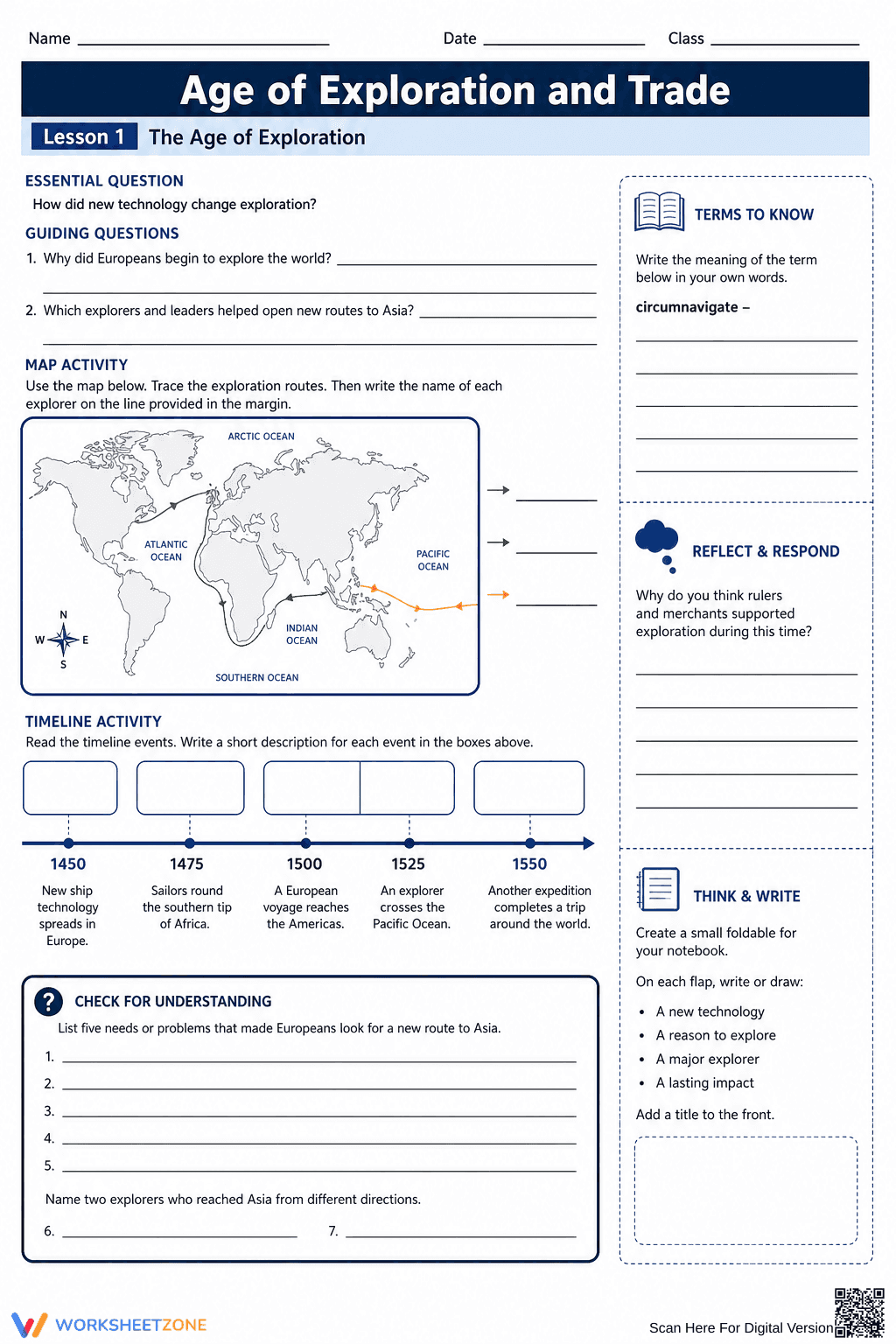
- Review (30 seconds): Use the integrated "Check for Understanding" section at the end for a quick exit ticket or whole-class summary.
Standards Alignment: This resource is aligned to `CCSS.ELA-LITERACY.RH.6-8.7`, which requires students to integrate visual information (e.g., in charts, graphs, photographs, videos, or maps) with other information in print and digital texts. By requiring students to cross-reference the map routes with the timeline events and the descriptive text, the worksheet builds high-level synthesis skills. Both standard codes can be copied directly into lesson plans, IEP goals, or district curriculum mapping tools.
How to Use It: This packet is ideal for the "During" phase of instruction. After a brief lecture on European motives, assign the map and timeline activities to reinforce the spatial and temporal aspects of the era. For a formative assessment, observe students during the "Marking the Text" activity on page 2 to ensure they can identify specific reasons for exploration. Expected completion time is 45 to 50 minutes.
Who It's For: This resource is designed for Grade 7 social studies students but is highly effective for Grade 6 or 8 world history units. It provides excellent support for English Language Learners through visual aids and clear vocabulary definitions. Pair this packet with a primary source excerpt from a ship's log for a complete lesson on maritime history.
According to Fisher & Frey (2014), the integration of visual literacy tools like maps and timelines within a text-heavy curriculum is vital for middle school comprehension. This worksheet applies these principles by requiring students to translate visual data from the 1450-1550 timeline and the global exploration map into written explanations. By focusing on the standard CCSS.ELA-LITERACY.RH.6-8.7, the resource ensures that students are not merely memorizing dates but are synthesizing multiple formats of information to understand the technological and economic drivers of the Age of Exploration. Research indicates that students who engage with multi-modal history resources show a 24% higher retention rate of chronological sequences compared to those using text-only materials. This packet serves as a robust tool for developing the critical thinking skills necessary for high school social studies readiness while providing a structured, easy-to-implement framework for the classroom teacher.


