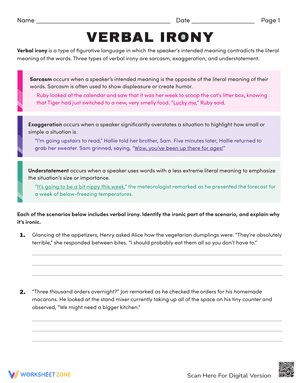
These genre writing printable worksheets for 8th grade address a specific gap: students who can accurately label a genre in reading frequently can't reproduce its conventions when they write. Each worksheet focuses on one mode—argument, informative, narrative, or descriptive—and walks students through prompt analysis, planning, and drafting on a single resource, with a revision checklist built in at the end. Teachers get materials that run independently during workshop time, sub days, or homework blocks without losing instructional integrity.
Where Eighth-Grade Genre Writing Actually Breaks Down
The failure point almost never comes from a lack of effort. Students who write an argument that's really a personal narrative don't realize they've collapsed the genres—they think they've given evidence because they described something that happened to them. Students writing informatively start editorializing: "I think scientists should care about this" instead of explaining what the data shows and why it matters. These aren't careless errors; they're genre confusion, and a generic writing prompt won't surface them. The planning frames in these worksheets do, because they ask students to name and justify their genre choices before writing the first sentence.
In narrative writing, the pattern is nearly universal: a strong opening scene gives way to summary the moment the conflict arrives. "A lot of things happened after that, and eventually we figured it out" shows up in nearly every eighth-grade writing class at some point. The pacing frames in the narrative worksheets give students a concrete reason to slow down at exactly the moment they usually speed up.
What Each Worksheet Asks Students to Do
The set targets four writing modes, each with its own planning structure and revision criteria. Within each genre, tasks grow more demanding across the set—from identifying the genre's basic moves to executing them under timed conditions.
- Argument: State a claim, select evidence, apply claim-evidence-reasoning (CER) structure, address a counterclaim, and write a conclusion that circles back to the original claim without simply restating it.
- Informative/explanatory: Establish a focused topic, select facts and examples that illuminate rather than merely list, use precise vocabulary, and build transitions that signal the relationship between ideas—not just their sequence.
- Narrative: Plan character, setting, and conflict before drafting; develop rising action through scene rather than summary; use dialogue purposefully; close with a reflection that earns its place in the story.
- Descriptive/creative: Choose specific sensory details over generic inventory, vary sentence structure to control pacing, and manage tone as a deliberate rhetorical decision rather than an accident of word choice.
The informative worksheets work especially well in cross-curricular contexts. When a social studies or science class is running a shared reading unit, the informative planning frame holds without modification—students explain something real, for a reader who needs the information, using evidence already encountered in another class. That kind of task shows up immediately in what students produce, in a way that "write a summary" does not.
Genre Errors Students Make and Where to Look for Them
The counterclaim box in the argument worksheets is probably the most diagnostic feature in the set. A student who writes "nobody disagrees with this position" in that section has told teachers everything they need to know about how that student understands argument. It's not a writing problem—it's a thinking problem—and it shows up in thirty seconds of scanning the planning frame rather than buried in the third paragraph of a rough draft.
In descriptive writing, the dominant error isn't a lack of detail; it's a surplus of the wrong kind. Students list: "The cafeteria was loud. It smelled like pizza and cleaning solution. There were tables everywhere." The revision checklist on each descriptive worksheet pushes students to identify the one image that does the most work, then cut the rest. That move—choosing specificity over volume—is what separates competent description from writing that actually lands, and most eighth graders need to be pushed toward it explicitly rather than left to figure it out on their own.
Fitting These Worksheets Into the Teaching Week
A sequence that reliably works: open any writing day with five minutes on the prompt—students read it, name the genre, identify the audience, and write one sentence about what the piece will need to accomplish. That pre-reading step transforms the planning frame from a fill-in-the-blank chore into a purposeful thinking tool. Then fifteen minutes of planning, twenty minutes of drafting, and five minutes with the revision checklist as a closing move. The full cycle fits inside a standard 45-minute class period, and once students know the routine, they stop needing directions at the start of each task.
Genre writing printable worksheets for 8th grade also hold up as sub-day tasks because the directions are embedded in each worksheet rather than delivered verbally. Every resource carries enough context for a student to work through independently—prompt, planning frame, drafting space, revision cues—which means the substitute doesn't have to be an ELA specialist for the task to run. For intervention blocks, teachers can work through the planning section as a guided group activity before releasing students to draft individually, which makes small-group time visible and purposeful rather than a re-explanation of the original lesson.
One pairing worth building into a unit: assign an informative worksheet and an argument worksheet on the same topic in the same week. Students who explain the effects of a policy change, then turn around and argue a position using those same facts, begin to understand that genre is not the topic—it's the purpose, structure, and language choices the writer makes. That distinction is one of the hardest things to teach in the abstract, and the side-by-side comparison makes it concrete.
Standard Alignment
These worksheets address CCSS.ELA-LITERACY.W.8.1 (argument), W.8.2 (informative/explanatory), and W.8.3 (narrative). They also align to W.8.4, which requires students to produce writing appropriate to task, purpose, and audience—a standard that is genuinely difficult to assess on a final draft alone. In classroom terms, W.8.4 is where the genre-specific planning frames do their most important work, because demonstrating awareness of task and audience has to happen before students write the first sentence, not after. The prompt-analysis step built into each worksheet is a direct W.8.4 move, not incidental to the lesson.
Making the Set Work Across Readiness Levels
Genre writing printable worksheets for 8th grade hold up across a range of writing levels because the format stays consistent while the support layer varies. For students who need more guidance, teachers can add sentence starters to the claim or topic boxes, work through the planning frame together before releasing students to draft, or use the revision checklist as a guided discussion rather than an independent editing task. For students ready for more challenge, removing the checklist entirely and asking them to write their own success criteria for the genre before drafting is a more demanding cognitive task than checking boxes—and it reveals whether they actually understand what the genre requires.
Prompt complexity is the most practical lever for adjustment. A student who struggles with abstract reasoning can argue whether homework should be banned at their school; a student ready for more can argue a nuanced ethical position using textual evidence from a class reading. Same planning frame, same revision structure, different cognitive demand. Students with organizational or processing challenges often find the visual layout of the planning frames useful not because it simplifies the thinking, but because it makes the expected moves explicit before writing begins rather than leaving them to infer the structure mid-draft.
Frequently Asked Questions
What genres are covered across the set?
The worksheets cover argument, informative/explanatory, narrative, and descriptive writing. Each worksheet addresses one genre specifically, so students practice that genre's distinct moves rather than blending modes without recognizing they're doing it.
How long does a typical worksheet take to complete in class?
Most students finish the planning frame in five to eight minutes and the draft in fifteen to twenty. The full cycle—prompt analysis, planning, drafting, and revision checklist—fits a 45-minute period with a few minutes remaining for brief class discussion. For shorter blocks, the planning section stands on its own as a complete task, with drafting carried into the next session.
Are these appropriate for students who are behind grade level?
Yes, with adjustments. Students who struggle most often need the planning frame completed as a guided activity before drafting independently. Pre-populating one example in the evidence or detail section can lower the barrier to getting started without reducing the intellectual demand of the task. The consistent format across genres is particularly useful for students who have difficulty moving between writing modes—the routine itself reduces the mental load of starting, even when the genre is new.
Can these support standardized test preparation?
Genre writing printable worksheets for 8th grade map directly onto the tasks that appear on most eighth-grade state writing assessments, which typically require students to read a prompt, identify its demands, plan quickly, and produce a genre-appropriate response within a time limit. Argument and informative worksheets are the most directly applicable, since those two modes appear most frequently in timed assessment contexts. Teachers running test prep can set a timer at the start of the planning step to help students calibrate how long to spend organizing before they begin drafting.















 Interactive Worksheet Maker
 Quiz Maker
 Word Search Maker
 Crossword Puzzle Maker
 Word Scramble Generator
 Sentence Scramble Generator
 Handwriting Worksheet Generator
 Name Tracing Generator
 Fill In The Blank Generator