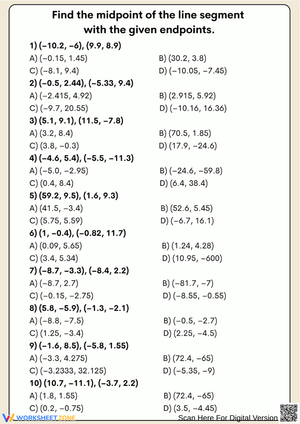
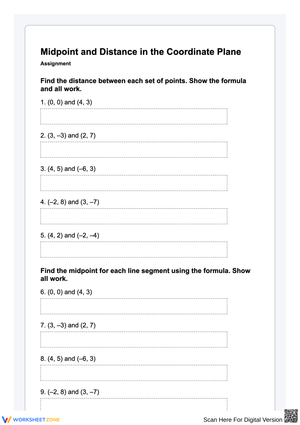
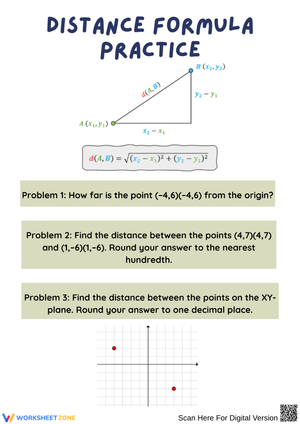
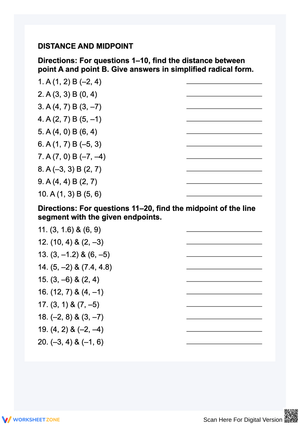
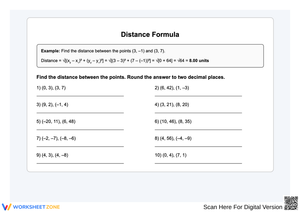
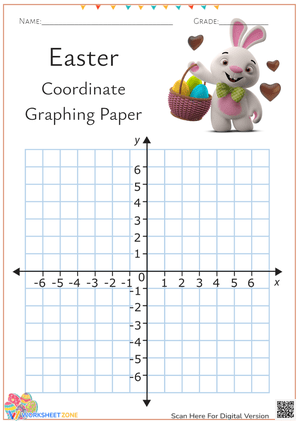
Coordinate planes printable worksheets for 7th grade address a specific transition in the curriculum: students at this level have usually met the coordinate grid in fifth or sixth grade, but almost all of that early work stayed in the first quadrant. Moving into all four quadrants means handling negative values on both axes simultaneously, and that combination trips up more students than teachers expect. These worksheets give teachers print-ready, focused practice that works through this transition — plotting, naming, reflecting, and reasoning — rather than simply repeating what students already know.
Errors Students Make That Are Worth Anticipating and Addressing
The most consistent four-quadrant error is coordinate reversal — not confusion about which axis is x, but a failure to translate that knowledge into physical movement on the grid. A student who can recite "x comes first" will still plot (−3, 5) by moving five units left and three units up, defaulting to a left-then-up habit that overrides the actual order of the pair. These students move quickly and confidently, which makes the error harder to catch than hesitation would be.
Miscounting on the negative side of an axis is a second pattern worth watching. Students who learned to count grid squares on positive-only graphs often miscount when crossing zero — some include the origin square in their count, others skip it — and land at −3 when the correct location is −4. This error appears most often when points sit far from the origin and tends to surface in the first worksheet students complete on a four-quadrant grid. Whether the miscount comes from integer uncertainty or from a grid-reading habit matters, because each problem calls for a different instructional response.
Reflection tasks surface a third misconception. Students learn that reflecting a point across the x-axis changes the sign of the y-coordinate, which is correct. Then they apply that same rule when reflecting across the y-axis and arrive at wrong answers with full confidence. The rule isn't wrong — it applies to a different situation. This error is hard to dislodge through additional practice alone; it needs direct contrast between the two cases, with students writing out coordinate changes for both types before applying them independently.
What Each Worksheet in the Set Covers
The worksheets span the full range of four-quadrant skills, from basic plotting to comparative reasoning about position:
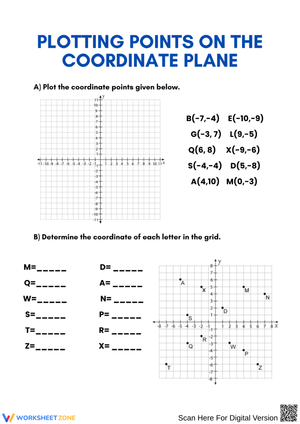
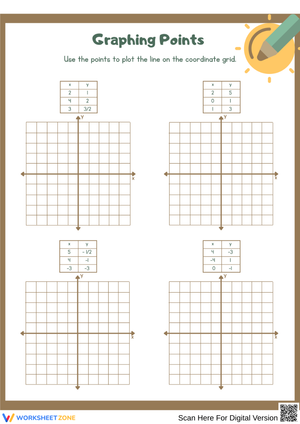
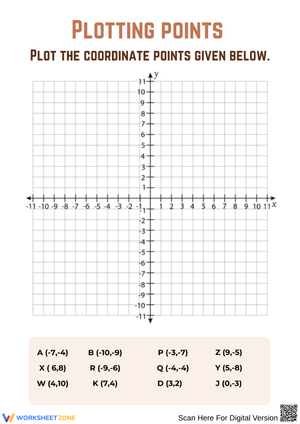
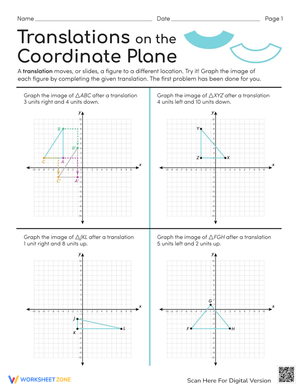
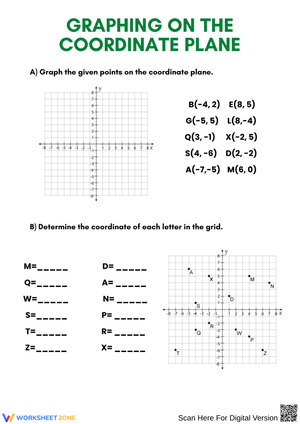
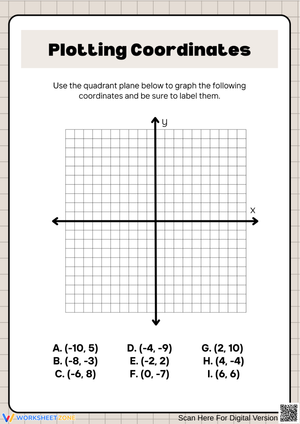
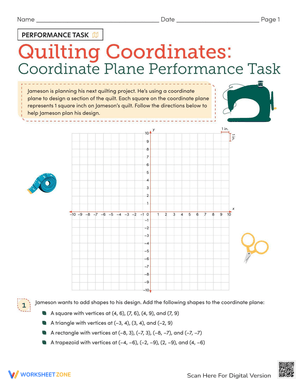
- Plotting ordered pairs in all four quadrants, including points with two negative coordinates and points that fall exactly on an axis
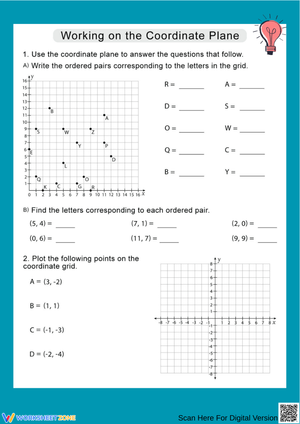
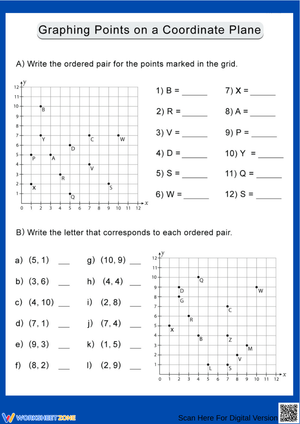
- Reading coordinates from pre-plotted points, always recording x before y with careful attention to sign
- Identifying quadrant location and recognizing sign patterns — for example, any point with a negative x-value and a positive y-value belongs in Quadrant II
- Reflecting points across the x-axis or y-axis and recording both the original and reflected coordinates to make sign-change patterns visible in writing
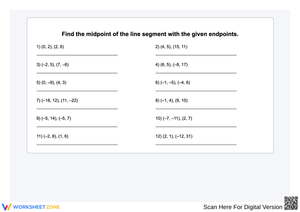
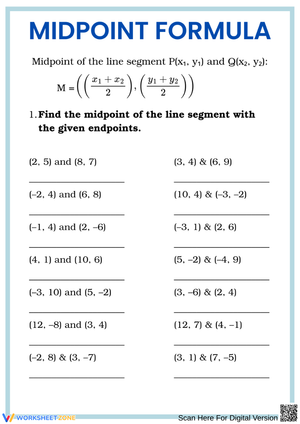
- Finding horizontal or vertical distance between points that share the same x-value or the same y-value, using absolute value reasoning rather than visual counting
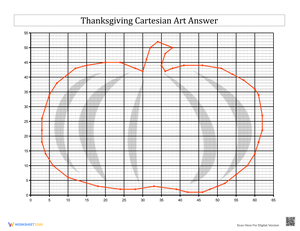
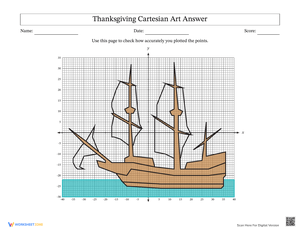
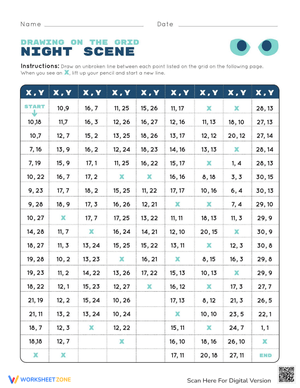
- Short graphing-in-context problems where students locate or identify points from a written description rather than a listed coordinate pair
Mixed-review worksheets draw from across this skill list and are the right choice before a unit assessment. They show whether students can shift between question types independently, or whether they've been using the structure of a single-skill practice worksheet to produce correct answers without truly transferring the skill.
Fitting These Worksheets Into Your Instructional Week
The most reliable placement for coordinate planes printable worksheets for 7th grade is immediately after direct instruction — the first five to eight minutes of independent work before the class transitions. A focused worksheet with four to six plotting or naming problems gives students enough repetition to consolidate the day's skill without extending the lesson past its natural endpoint. That window is short but consistent, and it yields clear information about who understood the instruction and who needs a follow-up conversation before moving on.
For Monday warm-ups, a two- or three-problem plotting task reactivates prior work without demanding the sustained focus that takes time to settle into at the start of the week. For math centers, worksheets with self-check answer keys keep stations running without a teacher present. One routine worth building early: have students trace from the y-axis horizontally and from the x-axis vertically before placing each point, using a pencil tip as a guide. The routine slows the plotting process just enough to interrupt the coordinate-reversal pattern described above, and it gives teachers a visible signal about which students have internalized the correct order versus which ones are still working it out.
It helps to sort printables into three working groups: worksheets for first exposure (clean grids, fewer than ten points, positive and negative values present together), worksheets for active practice (full four-quadrant work, mixed sign values, no visual supports beyond the labeled grid), and worksheets for review (mixed skill types across plotting, reflecting, and distance). That organization makes it faster to reach for the right worksheet when the instructional moment calls for it.
Adjusting These Worksheets Across Student Levels
The set of coordinate planes printable worksheets for 7th grade spans enough skill levels that the same collection serves intervention, on-level, and extension groups — but what's appropriate for each group differs substantially. Students who are still uncertain with integers need a number-line reference along each axis so they can look up positions rather than calculating them while also trying to graph. Without that support, they're managing integer recall and graphing procedure at the same time, which splits working memory in a way that makes both tasks harder. Limiting the item count to six or eight points per worksheet gives these students a realistic path to finishing accurately instead of shutting down after the fourth problem.
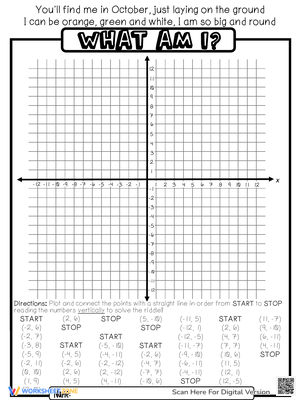
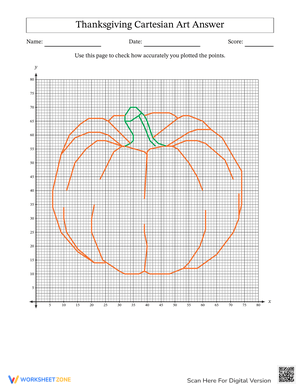
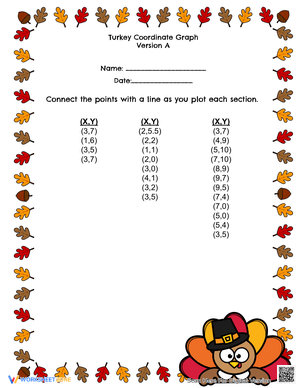
Students who graph quickly and accurately need problems that go beyond plotting from a list. Reflection tasks and distance problems provide genuine challenge. A strong extension option is asking students to generate their own ordered pairs under a constraint — "write four points in Quadrant III where the y-value is greater than the x-value" — because that kind of task requires reasoning about sign and magnitude together rather than reading from a given list. Mystery-image worksheets raise engagement and work well as early-finisher tasks, but they don't push the same conceptual thinking as constraint-based problems, so it's worth being deliberate about which type of challenge a particular student actually needs.
Standard Alignment
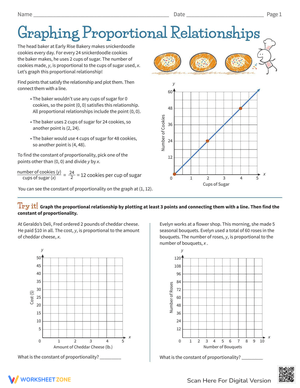
The foundational standard for four-quadrant coordinate plane work is CCSS 6.NS.C.6, which introduces plotting rational numbers — including negative values — on a coordinate grid. In most 7th grade classrooms, these worksheets review and reinforce that standard rather than introduce it for the first time. The grade 7 standard where coordinate plane accuracy becomes critical is 7.RP.A.2, which asks students to graph proportional relationships and interpret specific points in context. A student who reverses coordinates or miscounts on the negative side of an axis will make errors on proportional relationship tasks even when their ratio reasoning is solid. Addressing those graphing errors early — before the unit on proportional relationships — removes a predictable source of confusion before it compounds into something harder to untangle.
Frequently Asked Questions
What's the difference between first-quadrant and four-quadrant worksheets for 7th grade?
First-quadrant worksheets use only positive x- and y-values, which means students never have to track sign changes or decide which direction a negative value goes on the grid. Four-quadrant practice requires integer understanding alongside graphing skill. At the 7th grade level, first-quadrant worksheets make sense for quick review or for rebuilding confidence, but the bulk of practice should involve all four quadrants and negative values on both axes.
How should teachers handle students who consistently reverse their coordinates?
The tracing routine described above — horizontal from the y-axis, then vertical from the x-axis — interrupts the reversal pattern before it solidifies into habit. Having students write out each movement as a sentence before marking the grid also helps: "move three units left, then five units up" creates a brief pause that the rushed reversal habit skips over. If the error continues across multiple worksheets, more plotting practice alone won't fix it. The student likely hasn't connected the coordinate pair to actual axis direction, and a short re-teaching sequence will do more than additional repetition.
Can these worksheets double as informal assessment tools?
Mixed-review worksheets function well as informal assessments when teachers collect them and scan for error patterns rather than simply marking right or wrong. A worksheet with plotting, quadrant identification, reflection, and distance items gives enough variety to show whether a student has broad fluency or is solid on only one or two question types. For a cleaner check, assigning a mixed-review worksheet as an exit task — unassisted, in the last five minutes of class — gives more useful data than homework does, where outside help changes what the results actually show.
Can these worksheets work as homework assignments?
Coordinate planes printable worksheets for 7th grade work well as homework when the assignment is narrow and matches the day's instruction directly. A take-home worksheet with four to six problems on a single skill — plotting in all four quadrants, or identifying quadrant location from listed pairs — is easier for students to complete accurately at home than a mixed-skill worksheet, because they can apply the specific lesson from class without needing to choose which approach fits each problem type. Keep homework tasks focused, and share an answer key students can reference after completing the work so errors don't sit uncorrected until the next class.













 Interactive Worksheet Maker
 Quiz Maker
 Word Search Maker
 Crossword Puzzle Maker
 Word Scramble Generator
 Sentence Scramble Generator
 Handwriting Worksheet Generator
 Name Tracing Generator
 Fill In The Blank Generator