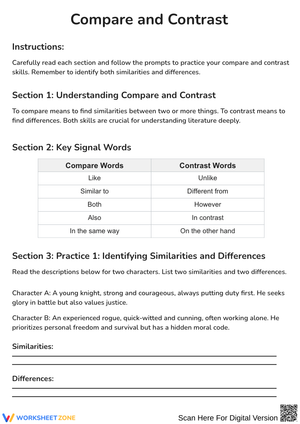
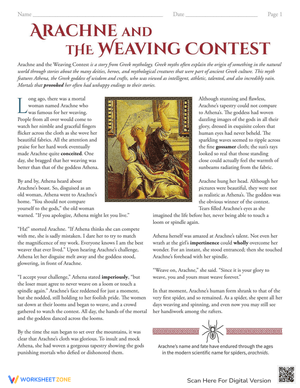
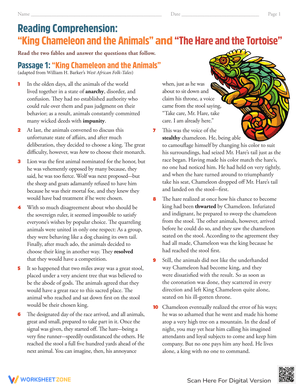
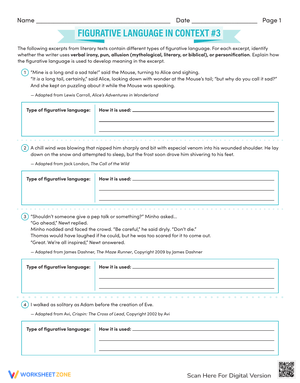
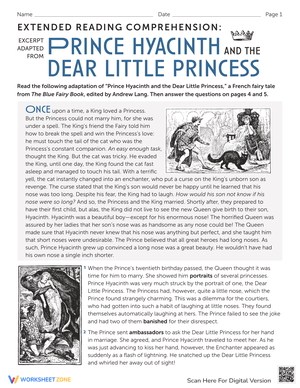
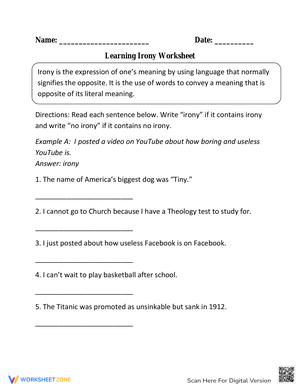
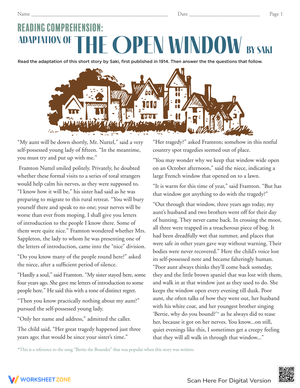
These 7th grade genre writing worksheets resources give teachers a printable set that addresses narrative, informative or explanatory, and argumentative writing from initial planning through final revision. Each worksheet pairs a focused prompt with visible structure cues, so students understand not just what to write but how the genre shapes the choices they make as writers.
The Transfer Problem — and What These Worksheets Do About It
Seventh graders can identify genre features in reading with relative ease. They can tell you a narrative uses dialogue, a persuasive piece needs a claim, and an informational text organizes ideas by subtopic. The harder job is reproducing those features in their own drafts without a teacher standing nearby. That transfer gap is where most writing instruction at this grade level stalls, and it is what each worksheet in this set directly targets by keeping genre features visible during drafting — not just in the lesson that precedes it.
When students see a labeled section for "claim," a dedicated line for "counterclaim," or a box marked "key scene — show what happened, don't summarize it," they make better decisions in real time. That reference point is especially useful during the 8–10 minutes most teachers can carve out for daily writing practice, when there is not enough runway for a full re-teach.
Skills These Worksheets Build
A well-built set of 7th grade genre writing worksheets resources covers the three major writing modes 7th grade ELA classrooms return to all year. Beyond those modes, each worksheet also builds process habits — prewriting, drafting, and revising — rather than treating a finished draft as the only goal.
- Narrative writing: Students build a scene with a clear situation, at least one developed character, paced action, and purposeful dialogue. Each narrative worksheet asks students to identify the moment of tension or change before drafting, which produces more focused stories than open-ended prompts alone.
- Informative or explanatory writing: Students organize a topic into subtopics, explain evidence rather than list it, and close with an insight rather than a summary restatement. The distinction between "tell what" and "explain why" stays visible throughout.
- Argumentative writing: Students move through claim, reasons, evidence, and counterclaim. The structure is named explicitly so students can audit their own work against it during revision.
Mistakes Students Make That These Worksheets Help You Catch
In argument writing, the most reliable error pattern at this grade is circular reasoning. Students state a claim, then restate it slightly reworded as the supporting reason. "Students should be allowed to use phones at school because phones are useful" is not a reason — it restates the claim. The distinction between why (the reason) and how do you know (the evidence) is one many students have never heard explained that plainly. Each argumentative worksheet prompts students to answer both questions separately before they draft a single paragraph.
In narrative, the most common issue is summary standing in for scene. "She was scared and ran away" replaces the actual moment — no dialogue, no physical detail, no slowing of time. Students do this because summary is lower-stakes and faster. The narrative worksheets ask students to mark which part of their event sequence they will slow down and dramatize before drafting, which reduces flat-summary drafts without requiring a conference with every student in the room.
Informative drafts tend to fall into what might be called "Wikipedia mode" — facts presented in order with no explanation of what they mean or why they matter. Worksheet prompts that ask students to explain each piece of evidence in their own words push directly against this habit and reveal quickly which students are processing information versus copying it.
How to Build These Worksheets Into Your Lesson Plans
These 7th grade genre writing worksheets resources work best inside a repeating weekly structure rather than as one-off assignments. A predictable cycle builds student confidence and cuts setup time — students who have used the format before get into writing faster because the decisions about structure are already made.
A five-day rotation that works in practice: open Monday with a short mentor text excerpt and a class conversation about what choices the writer made and why. That discussion sets up the genre focus for the week. Tuesday, students work through the planning section — the prompt, the organizer, the space for gathering ideas. Wednesday is drafting. Students keep their completed planner visible on the desk as they write. Thursday brings peer response or a self-revision checklist focused on genre features, not just surface errors. Friday, students finish, reflect, or try the same genre with a more demanding prompt. The cycle resets the following week with a different genre.
The worksheets also fit cleanly into non-unit contexts: a bell-work task in the first 10 minutes of class, a center activity while other students are in a writing conference, or a sub-day plan that requires no explanation beyond the directions printed on the worksheet itself.
Adjusting the Worksheets for a Range of Learners
Genre writing surfaces readiness gaps fast. Some students draft an argument paragraph with confidence but have never written a sustained scene. Others write naturally in narrative mode but freeze when they see the word "claim." The worksheets are built to accommodate that range without requiring a separate version for every level.
- For students who need more support: Add sentence starters to the planning section, reduce the required length to one well-developed paragraph, and ask students to orally rehearse their idea before writing. Multilingual learners in particular benefit from having genre features labeled with brief examples alongside the prompt.
- For students working at grade level: Use each worksheet as written. The planning space and revision checklist provide enough structure while preserving independence.
- For students ready to extend: Ask them to develop a nuanced counterclaim in argument, shift point of view in a narrative revision, or add a section analyzing the limits of their evidence. These moves are included as optional extension tasks within the set.
One adjustment that works across all readiness levels: keep the planning section face-up on the desk during drafting instead of setting it aside when "writing time" begins. Students who refer back to their organizer while writing produce more focused paragraphs and drift less from their stated thesis or narrative sequence.
Standard Alignment
These worksheets align with the Common Core State Standards for Writing at Grade 7, specifically W.7.1 (argument), W.7.2 (informative or explanatory), and W.7.3 (narrative). They also address W.7.4, which asks students to produce writing appropriate to task, purpose, and audience — a standard that genre-specific instruction directly supports. The planning and revision components built into each worksheet address W.7.5, the production and development standard.
In classroom terms, W.7.1b — the expectation that students acknowledge alternate or opposing claims — is consistently one of the standards teachers flag as underprepared. Most 7th graders can state a claim; far fewer have worked through the logic of addressing a counterargument without simply dismissing it. The argumentative worksheets include a dedicated counterclaim prompt that asks students to name the opposing view and explain why their original claim still holds. That step-by-step format makes W.7.1b teachable and visible rather than something students are left to figure out independently.
Frequently Asked Questions
Which genres should 7th graders practice most often throughout the year?
Narrative, informative or explanatory, and argumentative writing are the three modes that appear most frequently in grade 7 ELA standards and on state writing assessments. Teachers who rotate across all three throughout the year — rather than spending a long unit on one genre and little time on others — see stronger student flexibility by spring. Descriptive writing and response-to-reading tasks round out the set and build precision in word choice and voice.
Can these worksheets work as bell ringers or warm-up tasks?
Yes. Each worksheet includes a planning section and a focused prompt short enough to introduce in under two minutes. Students who spend 8–10 minutes completing the planning section have done genuine prewriting, which sets up drafting for later in the same period or the following day. For bell work specifically, stopping at planning and returning to the draft in the next lesson works better than rushing to a finished piece in a single sitting — the plan stays fresher and students write more deliberately.
How do these worksheets support the revision stage, not just drafting?
Each worksheet ends with a revision checklist tied to the specific genre — not a generic proofreading list. The argumentative checklist asks whether each reason is supported by evidence rather than simply restated. The narrative checklist asks whether the key moment is shown through detail or summarized in a sentence. Students use the checklist before submitting, and teachers can use it as a quick formative tool to spot patterns across the class without reading every draft in full before deciding what to teach next.
Are these worksheets useful for standardized test preparation?
These 7th grade genre writing worksheets resources align directly with the types of writing tasks that appear on most state assessments — on-demand argument, informational response, and narrative writing under time constraints. The claim-reason-evidence structure practiced in the argumentative worksheets mirrors the format most scoring rubrics use for extended responses. Regular practice with timed, structured writing makes the test format familiar before the high-stakes context arrives, which reduces the performance gap that comes from encountering a new writing structure under pressure.












 Interactive Worksheet Maker
 Quiz Maker
 Word Search Maker
 Crossword Puzzle Maker
 Word Scramble Generator
 Sentence Scramble Generator
 Handwriting Worksheet Generator
 Name Tracing Generator
 Fill In The Blank Generator