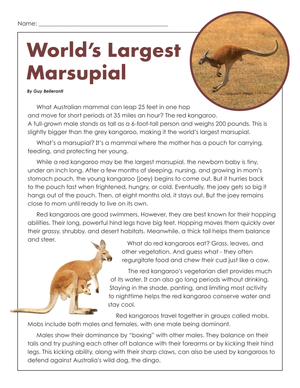
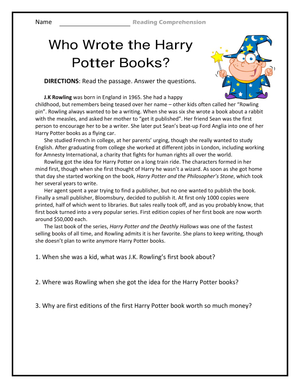
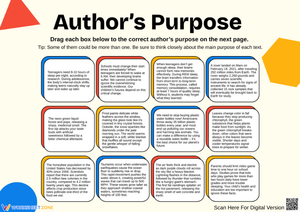
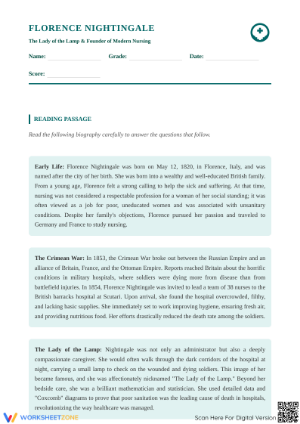
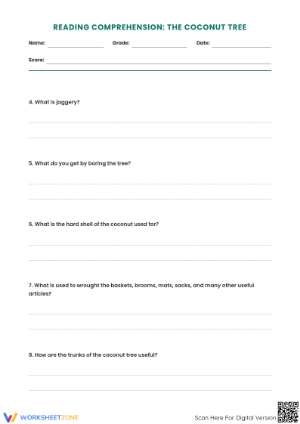
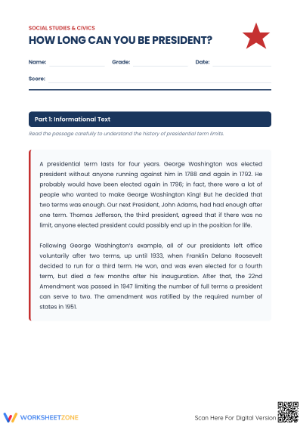
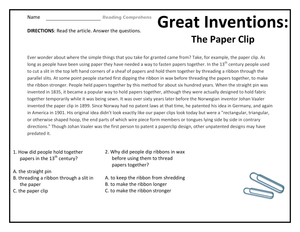
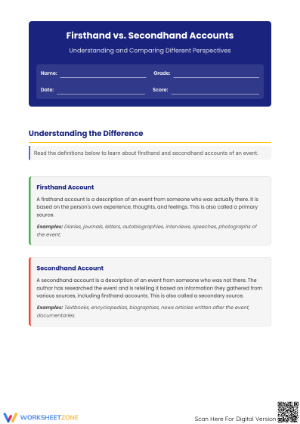
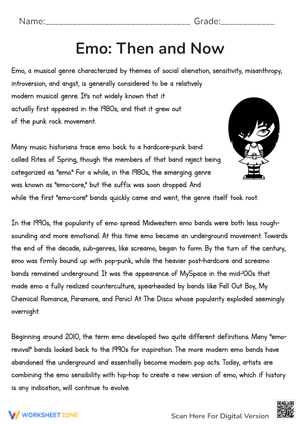
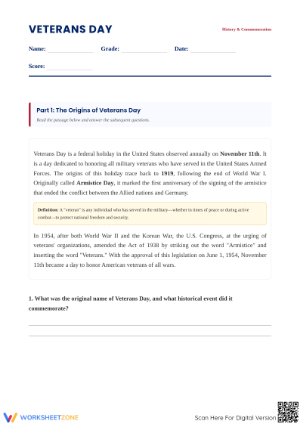
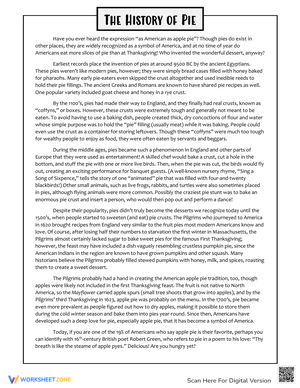
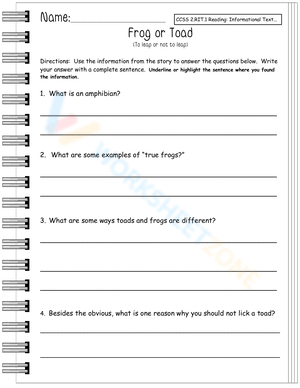
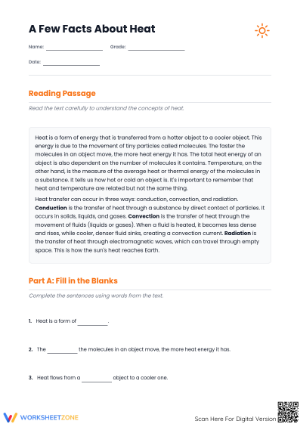
These informational text printable worksheets for 7th grade target the analytical shift that defines Grade 7 reading expectations: students at this level are no longer just locating information — they are expected to explain how authors develop central ideas, evaluate which evidence actually supports a claim, and recognize the structural choices that give a text its shape. Each worksheet pairs a short nonfiction passage with text-dependent questions, keeping the reading contained while still pressing students to think analytically about what the author says and how the text works.
The Specific Skills Covered in Each Worksheet
Central idea practice in this set goes beyond "pick the best title." Students identify the author's main point and then explain how specific details build it — a harder, more revealing task. Evidence questions require pointing to exact lines or sentences, not vague paraphrase. That distinction matters because many seventh graders can locate a relevant section of a passage but still can't articulate why it supports their answer. The questions are written to force that connection.
Each worksheet also targets at least one of the following:
- Author's purpose and point of view — questions that ask why an author included a specific detail, or what perspective shapes how the information is framed
- Text structure — identifying whether a passage uses cause and effect, problem and solution, compare and contrast, or chronological order, then explaining how that organization serves the author's intent
- Vocabulary in context — inferring the meaning of academic and domain-specific words from surrounding sentences rather than from a word bank or memorized definition
- Summarizing — compressing a passage into its most important points without padding with minor details, a skill that transfers directly to content-area reading and test response items
Passage topics across the set span science articles, historical explanations, biography, and high-interest current topics. Rotating through those content areas builds the background knowledge strong readers draw on and keeps students from treating informational reading as a single-genre skill.
Error Patterns That Surface in Grade 7 Nonfiction Reading
The most common confusion in Grade 7 informational reading isn't carelessness — it's a fundamental mix-up between topic and central idea. A student who writes "the central idea is climate change" has named the subject, not the author's claim. Strong informational reading requires students to state what the author argues or explains about the topic — what point is actually being made. Expect to redirect this pattern several times before it shifts; the habit takes deliberate repetition to rewrite.
Evidence citation produces its own persistent problem. Seventh graders who correctly underline the right sentence will often stop there, as though the quotation proves itself. They copy a line and move on without connecting it to the question or to their stated claim. Adding even a short response frame to the task — "This evidence shows... because..." — sharply reduces that pattern without removing the thinking work.
Text structure questions surface a third error worth watching: students who can correctly label a structure ("this is cause and effect") but cannot identify what the cause actually is or trace how the effect follows. Labeling is recall. Tracing the relationship is comprehension. The questions in this set are written to require the latter, which is where actual understanding shows up in student work.
Fitting These Worksheets Into the Week
The contained format of each worksheet — a short passage with 4 to 8 questions — drops cleanly into several instructional slots. The most consistent use in middle school ELA is the bell ringer: 8 minutes of independent reading to open class, with 2 or 3 questions answered before discussion starts. That routine works especially well on Mondays, when students need a low-stakes way back into close reading after a weekend, or right before an assessment when they need to reactivate precise reading habits rather than just review content.
Informational text printable worksheets for 7th grade also run well as an immediate follow-up to direct instruction. After a 10-minute mini-lesson on text structure or central idea, assigning one worksheet transfers the skill into real reading right away — a more efficient loop than saving practice for homework. For small-group reteach, reduce the question set to 3 or 4 items, model how to annotate the first paragraph together, then have students complete the rest independently while you circulate.
- Two-pass reading: Have students read once for gist, then reread specifically to mark evidence and label structure. This routine teaches students that rereading is a strategy, not a signal that something went wrong the first time.
- Stations: Place different passage topics at each station. Students rotate and practice the same skill with varied content, which builds reading flexibility across subject areas.
- Sub plans: A self-contained worksheet with a short passage and mixed question types gives a substitute a complete, low-prep lesson that actually reinforces grade-level reading work.
- Intervention folders: Keep a small stack of lower-demand worksheets ready for pull-out sessions — shorter passages, fewer questions, one skill focus at a time.
Standard Alignment
The skills across this set align to the Common Core State Standards for Grade 7 Reading: Informational Text — specifically RI.7.1 (citing textual evidence to support analysis), RI.7.2 (determining central idea and analyzing how it develops across a text), RI.7.3 (analyzing how authors introduce and elaborate on ideas), and RI.7.6 (determining an author's point of view and analyzing how it is conveyed). In classroom terms, these standards represent the analytical layer of informational reading — not surface recall, but the interpretive moves students are expected to make and explain. They appear on most state literacy assessments and in content-area reading tasks across science and social studies, which is why repeated practice with varied nonfiction passages throughout the year matters more than one concentrated unit.
Working These Worksheets Across a Range of Reading Levels
Grade 7 classrooms rarely have students reading at the same level. Informational text printable worksheets for 7th grade give teachers practical adjustment points without requiring completely separate tasks for each group. Preteaching 3 to 5 key vocabulary words before students read independently removes a significant stumbling block — academic and domain-specific language stops students mid-passage in ways that have nothing to do with their analytical ability. Chunking the text, asking students to annotate one paragraph before moving to the next, also helps readers who lose the thread of an argument across a longer passage.
For students who freeze on written responses, sentence starters direct attention without supplying the answer: The central idea the author develops is... or One detail that supports this is... gets students writing without handing away the thinking. At the other end, the same worksheet can push stronger readers further. Ask them to compare the strongest and weakest pieces of evidence the author provides, or evaluate whether the text structure the author chose was the most effective option for the topic. Both adjustments use the same passage, which keeps the class working from a shared text during whole-group discussion.
Frequently Asked Questions
Do these worksheets work for students who read below grade level?
Yes, with targeted adjustments. Preteach key vocabulary, reduce the number of required responses, or model how to annotate the first paragraph before students work independently. The passages are short enough that most students can access the reading with front-loaded support, even when the analytical questions remain at grade level.
How often should students complete nonfiction reading practice in a week?
Two to three times a week is a workable target for most Grade 7 classes. That frequency gives students enough repetition to build close-reading habits without turning every ELA period into independent seatwork. Spreading practice across the week rather than clustering it ensures students encounter informational text consistently throughout the grading period rather than in one concentrated block.
Can these worksheets be used for grades other than 7th grade?
The question types and passage complexity are calibrated for Grade 7, but many worksheets function well as a stretch for strong 6th grade readers or as reinforcement for 8th graders who need additional work on central idea and evidence-citing. The text structure and evidence questions transfer cleanly across a two-year span of middle school reading levels.
How do these worksheets fit into a test-prep routine?
Informational text printable worksheets for 7th grade that include both multiple-choice and short written response items mirror the formats students encounter on most state literacy assessments. Using them in the weeks before testing builds familiarity with evidence-based questions — the items that consistently separate students who can locate information from those who can explain and justify what they find.












 Interactive Worksheet Maker
 Quiz Maker
 Word Search Maker
 Crossword Puzzle Maker
 Word Scramble Generator
 Sentence Scramble Generator
 Handwriting Worksheet Generator
 Name Tracing Generator
 Fill In The Blank Generator