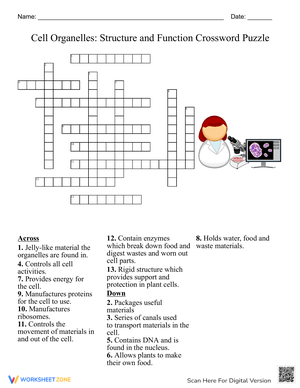
These resources are especially useful when you need classroom-ready practice that fits different parts of a unit. Teachers often use cell worksheets during direct instruction, independent work time, homework, review, bell ringers, or short assessments. Because the topic includes both visual labeling and concept explanation, printables work well for checking whether students understand the parts of a plant cell and an animal cell, not just their spelling.
What students should practice in Grade 6
In a Grade 6 life science unit, the main goal is usually not memorizing a long list of tiny details. Instead, students need repeated practice with the idea that each cell structure has a specific function. A worksheet should make that connection visible and simple.
- Identify major organelles on a clear diagram of plant and animal cells.
- Match structures to functions using short, student-friendly descriptions.
- Compare plant and animal cells to notice what both cell types share and what is unique.
- Use science vocabulary in writing through short responses or sentence frames.
- Explain relationships such as why chloroplasts are linked to plant cells or how the cell membrane helps control movement in and out.
Resources like Britannica Kids - Cell and National Geographic Society - Cells support this basic middle school approach by presenting the cell as a living system with parts that work together. That idea is helpful when building worksheet questions because it keeps students focused on function, not isolated facts.
Worksheet formats that work best
Not every printable gives the same level of practice. For cell structure and function, the most useful worksheets usually combine more than one task type so students process the content in different ways.
Labeling diagrams
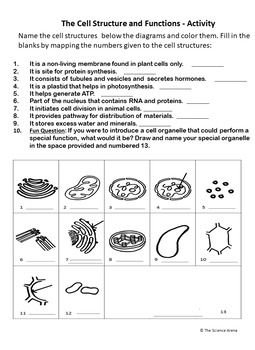
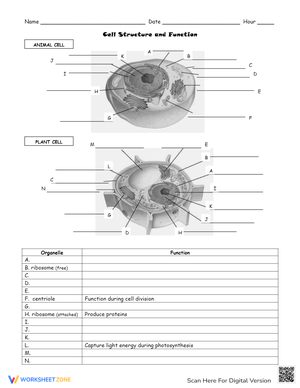
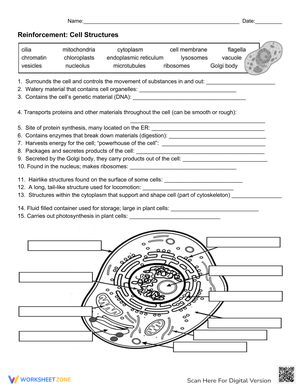
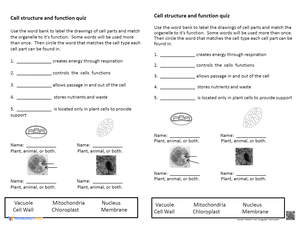
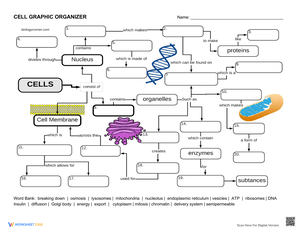
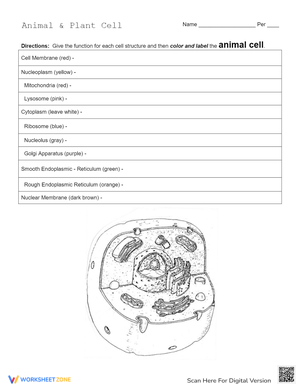
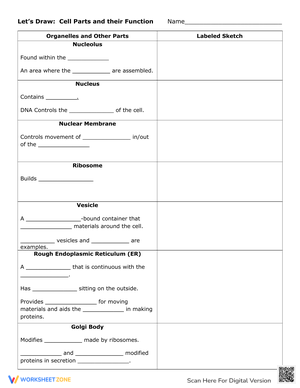
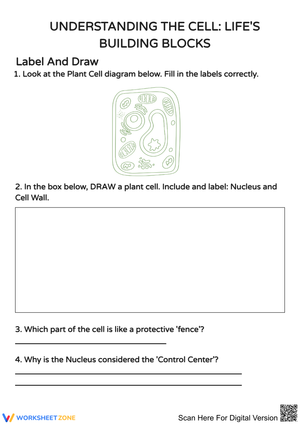
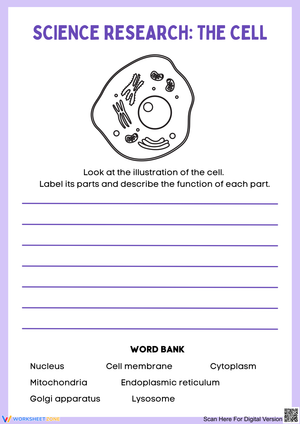
Labeling remains one of the fastest ways to check whether students recognize major organelles. A clean plant cell diagram and a clean animal cell diagram can be used for direct teaching, guided notes, or review. This format works well at the start of a lesson because it gives students a visual anchor for later discussion.
Matching parts to jobs
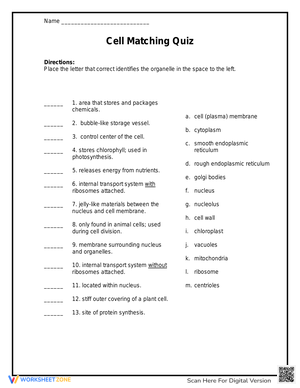
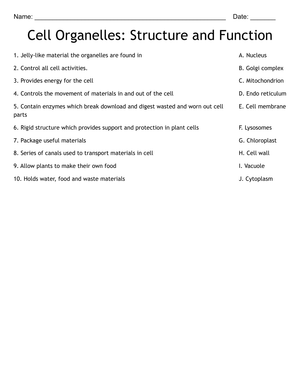
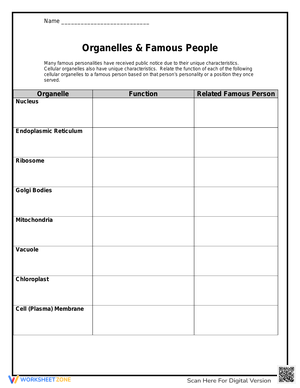
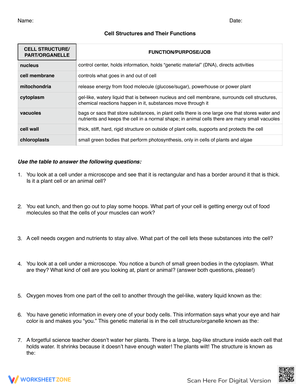
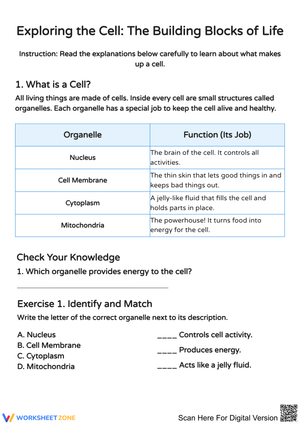
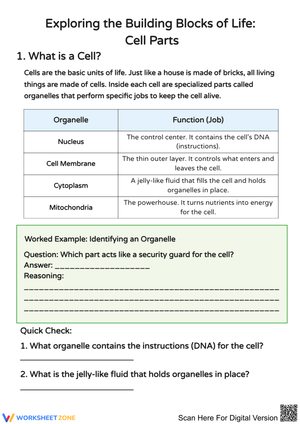
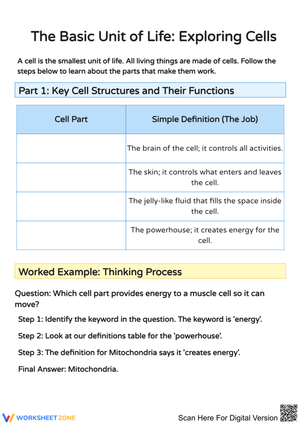
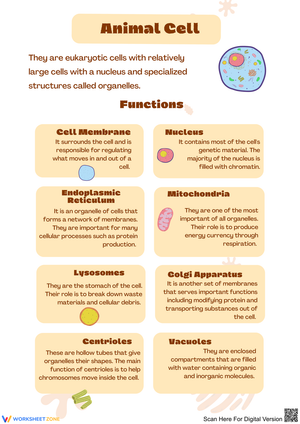
Matching items help students connect vocabulary to meaning. For example, students may match nucleus with control center, mitochondria with energy release, or cell membrane with regulating what enters and exits. This format is quick to grade and helpful for exit tickets.
Compare and contrast pages
A plant-and-animal-cell comparison sheet is one of the strongest printable options for Grade 6. Students can sort traits into shared and unique categories, which supports better retention than looking at two diagrams separately. This is where features like chloroplasts and cell walls become more meaningful.
Short constructed response
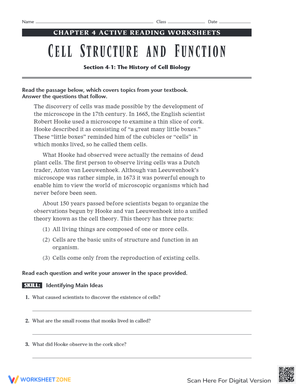
A few brief written questions can show whether students truly understand the topic. Prompts such as Why would a plant cell need chloroplasts? or How is the cell membrane important to the cell? encourage explanation instead of guessing.
Mixed review sheets
Many teachers prefer one printable page that includes labeling, matching, and one short response. Mixed-format pages are useful for review days and give a more balanced picture of student understanding.
Classroom Implementation
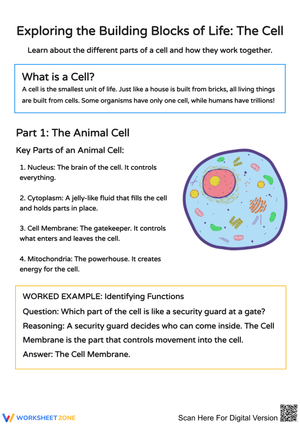
One effective sequence is to begin with a labeled model, move into a guided worksheet, and finish with a brief comparison task. For example, students can first identify the nucleus, cytoplasm, and cell membrane on an animal cell image. Next, they complete a second printable that adds plant cell features such as chloroplasts and the cell wall. Finally, they answer two short questions about how plant and animal cells are alike and different.
A useful classroom move is to have students highlight the structure in one color and the function in another on the same worksheet. That small step makes misunderstandings easy to spot. If a student can label mitochondria but cannot connect it to energy, the worksheet immediately shows the gap, which helps teachers adjust instruction before a quiz.
Another smart use is station rotation. One station can focus on diagram labeling, another on vocabulary matching, and a third on plant-versus-animal comparison. Because the content stays consistent while the task changes, students get repetition without doing the same exact page three times.
Frequently Asked Questions
1. What cell parts should Grade 6 students know on a printable worksheet?
Most Grade 6 worksheets focus on nucleus, cell membrane, cytoplasm, mitochondria, vacuole, chloroplast, and cell wall. Teachers often want students to label these parts and explain each function in simple terms.
2. How do plant and animal cell worksheets differ for Grade 6?
Plant cell worksheets usually include chloroplasts and a cell wall, while animal cell worksheets do not. Many printables ask students to compare both cell types so they can identify shared structures and plant-specific features.
3. What types of questions work best for checking cell structure and function understanding?
The most useful question sets usually combine diagram labeling, matching organelles to functions, and 1 or 2 short written responses. That mix checks both recognition and understanding.
Final thoughts for teachers
Cell structure and function printables are valuable because they keep an abstract topic visible and manageable for Grade 6 learners. With the right worksheet, students can practice the names of cell parts, connect each part to its job, and compare plant and animal cells in a format that fits everyday classroom routines. For teachers, that means less prep and clearer evidence of what students know. When a printable includes diagrams, function-based questions, and a short comparison task, it becomes more than a review sheet; it becomes a practical tool for science understanding.












 Interactive Worksheet Maker
 Quiz Maker
 Word Search Maker
 Crossword Puzzle Maker
 Word Scramble Generator
 Sentence Scramble Generator
 Handwriting Worksheet Generator
 Name Tracing Generator
 Fill In The Blank Generator