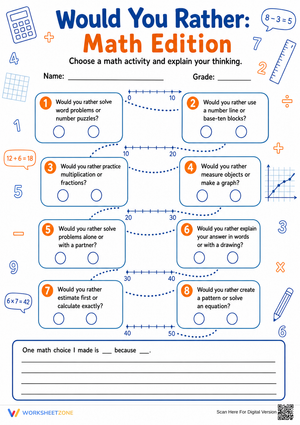
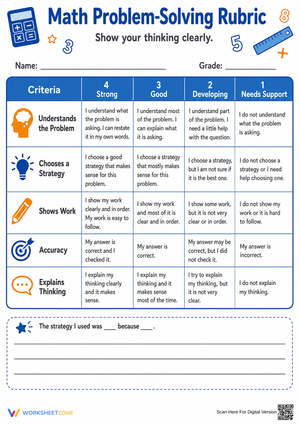
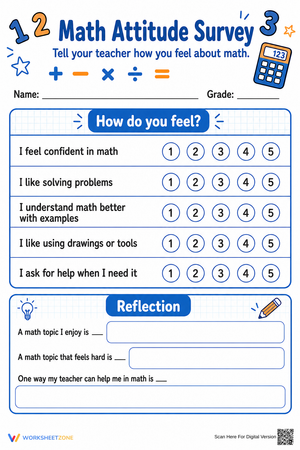
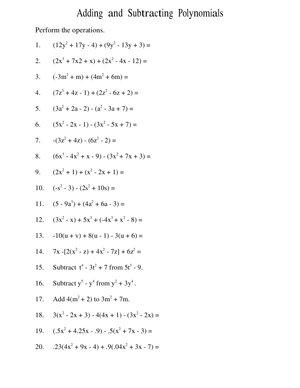
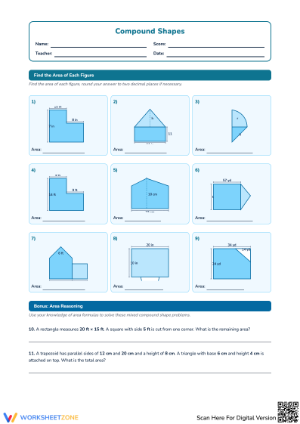
The 6th grade others math worksheets resources in this set cover the full sweep of grade 6 math — ratio reasoning, fraction and decimal operations, expressions and equations, geometry, and statistics — giving teachers printable practice they can match to direct instruction, morning warm-ups, small-group intervention, or Friday review. Answer keys are included with every worksheet so checking student work does not eat into planning time.
The Specific Skills Targeted
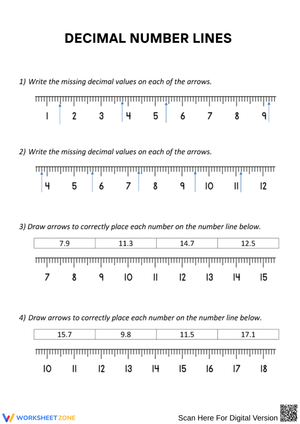
Ratio and rate worksheets ask students to write and interpret ratios, identify unit rates, and use equivalent ratio tables to solve real-world problems. The contexts are deliberately varied — students see miles per hour, dollars per item, and ingredient quantities — so they practice extracting and applying ratio relationships across different situations rather than recognizing one surface-level problem type. Fraction and decimal work goes beyond basic computation: students divide fractions by fractions, place integers and absolute values on the number line, and work through multi-step decimal operations with enough sequential steps that order-of-operations errors become visible in the student work.
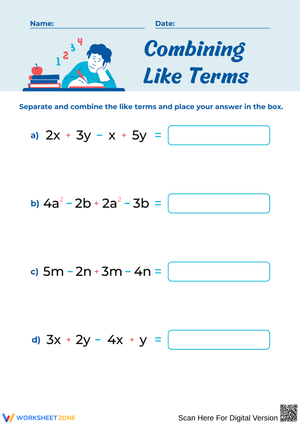
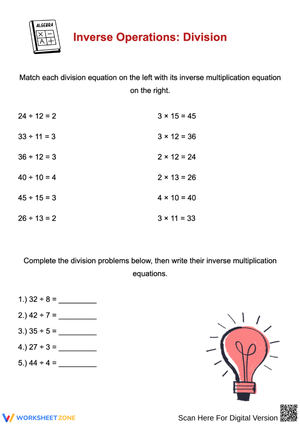
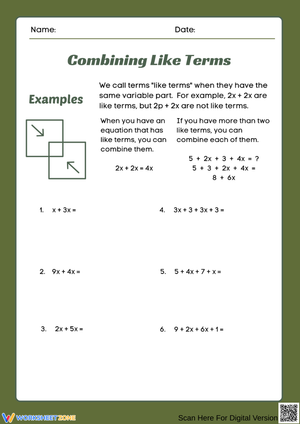
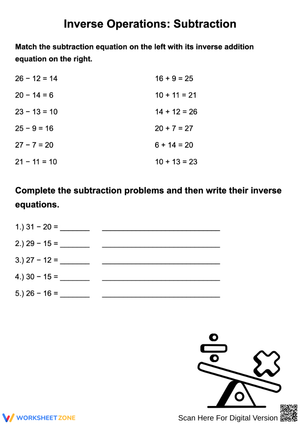
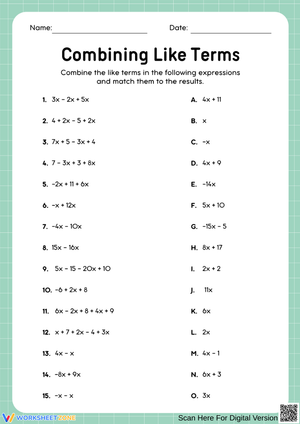
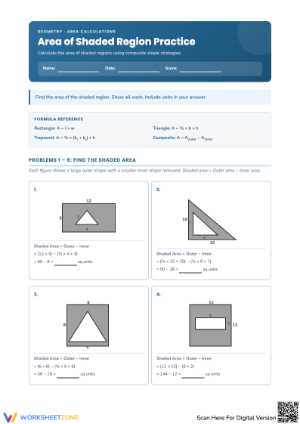
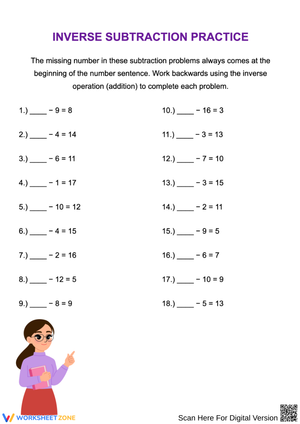
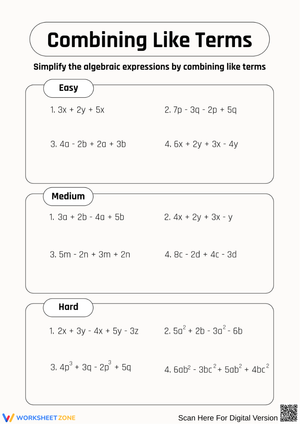
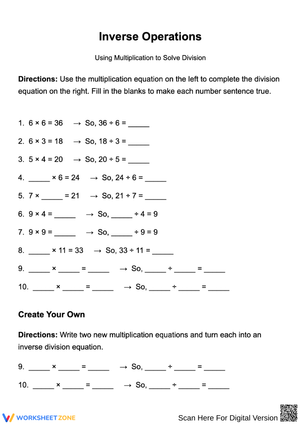
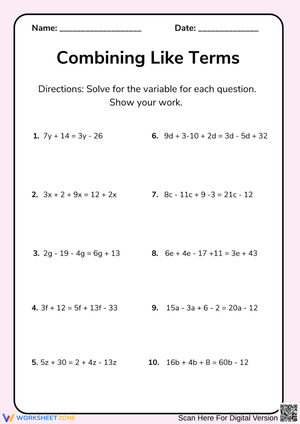
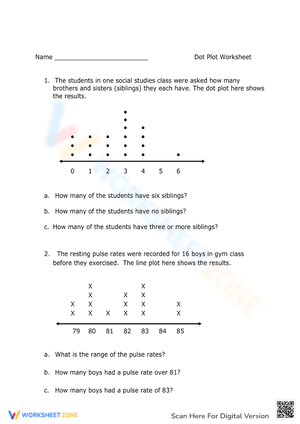
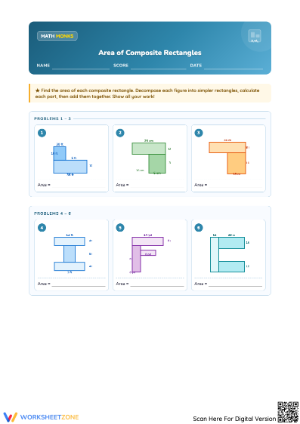
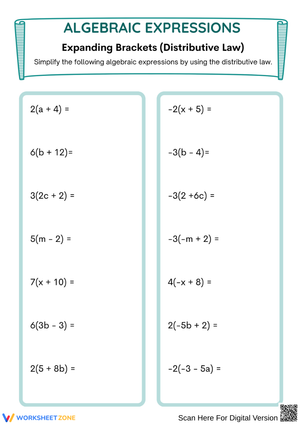
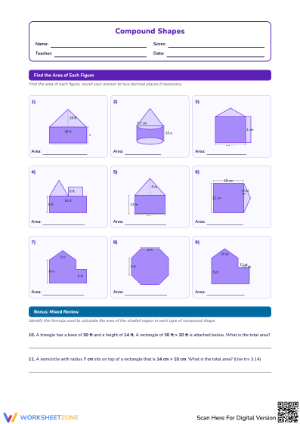
Expressions and equations worksheets have students write algebraic expressions from verbal descriptions, evaluate expressions by substituting given values, and solve one-step equations using inverse operations. Geometry worksheets cover area of triangles and composite figures, surface area of rectangular prisms, and coordinate plane work in all four quadrants. Statistics worksheets give students real data sets to analyze — students calculate mean, median, mode, and range, then explain what each measure communicates about the distribution rather than simply produce a number.
Where Student Thinking Breaks Down in Grade 6 Math
Sixth grade is where elementary arithmetic habits collide with new abstract demands, and that collision produces consistent, predictable errors. Ratio-fraction confusion is one of the most common patterns in student work. A student who correctly writes a ratio as 3:5 will frequently treat that same ratio later in the worksheet as though the colon signals division, computing 3 ÷ 5 = 0.6 and proceeding from there. That error is invisible on computation-only items — it only surfaces when the worksheet includes a context question requiring students to interpret the answer within a real situation.
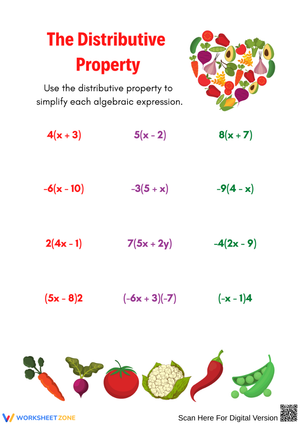
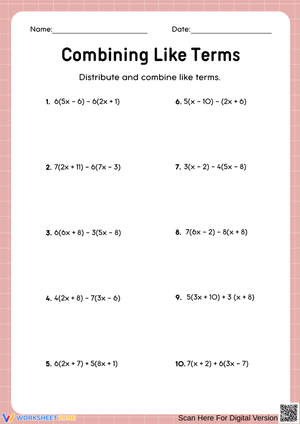
In expressions and equations, the most consistent error is premature combining. When evaluating 4x + 3 for x = 5, most students correctly write 4(5) + 3 = 23. But those same students, when they encounter 4(x + 3), will frequently distribute incorrectly — writing 4x + 3 and treating the multiplication as if it applies only to the variable. These are not random mistakes. They follow a pattern rooted in partial mastery, and a worksheet that alternates both expression types within the same set makes those patterns visible in ways a single-type drill cannot.
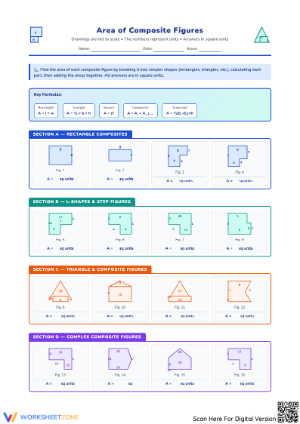
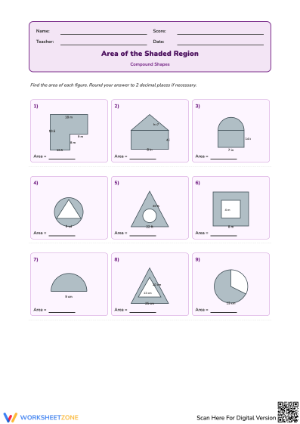
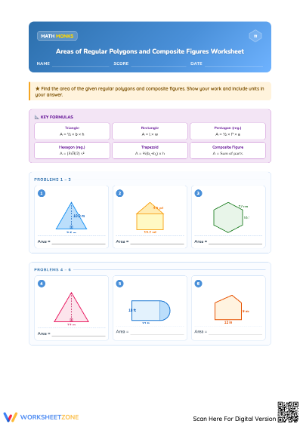
In geometry, students reliably apply the rectangle area formula to triangles — multiplying base by height without halving — and the confusion compounds when composite figures require decomposing the shape before applying any formula at all. Worksheets that include both standalone triangles and composite figures give teachers a quick read on the situation: a student who gets the standalone item right but misses the composite has a decomposition problem, not a formula recall problem. That distinction changes what the reteaching looks like.
Matching Each Worksheet to the Right Instructional Moment
These resources work best when teachers assign them with a specific purpose rather than reaching for whichever worksheet comes next. During a ratio unit, a targeted ratio worksheet fits well as the day's independent practice after whole-class instruction. That same worksheet comes back four weeks later in a spiral slot — three or four problems assigned at the start of class before the expressions unit begins — to check whether students retained the earlier learning or whether the new content has started to crowd it out.
For Monday warm-ups after a weekend, mixed-domain worksheets outperform single-skill ones. Students who have been away from math for two days need to reactivate multiple knowledge threads at once, and a mixed worksheet with two ratio problems, two equation problems, and one geometry item mirrors exactly that demand. For the last eight minutes before Friday dismissal, a short statistics or geometry worksheet serves as a formative check — collect it, scan for patterns, and adjust Monday's plan accordingly. These 6th grade others math worksheets resources are also straightforward enough for substitute days: clear directions, predictable formatting, and included answer keys keep class routines intact when the regular teacher is away.
Standard Alignment
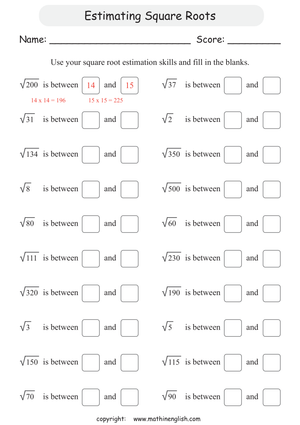
These worksheets align to the Common Core State Standards for Grade 6 Mathematics across all five domains. Ratio and rate worksheets target 6.RP.A.1 (understanding ratio concepts), 6.RP.A.2 (unit rate reasoning), and 6.RP.A.3 (ratio and rate problem solving in context). Number system work addresses 6.NS.A.1 (division of fractions by fractions), 6.NS.B.3 (fluency with multi-digit decimal operations), and 6.NS.C.6 (number line and coordinate plane concepts, including negative numbers). Expressions and equations worksheets cover 6.EE.A.1 through 6.EE.B.7 — exponents, writing and evaluating expressions, and solving one-step equations. Geometry worksheets address 6.G.A.1 and 6.G.A.4 for area and surface area. Statistics practice spans 6.SP.A.1 through 6.SP.B.5, from identifying statistical questions through interpreting measures of center and variability in context.
In classroom terms, the 6.RP standards typically anchor the first unit of the grade 6 year because ratio reasoning underpins the proportional relationship work students face in seventh grade. Teachers who front-load ratio worksheets during the fall, then return to those ideas in mixed review across the winter, build the conceptual footing students need when 7.RP becomes the dominant strand — a transition that tends to go more smoothly when students have encountered ratio concepts repeatedly across the year rather than only during one focused unit.
Making the Set Work for Students at Every Level
For students who need extra support, narrowing the scope of an assignment is often more effective than replacing the worksheet entirely. A student who is still working out what a variable represents can be assigned only the evaluation problems from an expressions worksheet — skipping the writing and word-problem sections until substitution feels automatic. Pairing that reduced assignment with a brief reference card listing key terms (expression, variable, coefficient, constant) lets students direct their attention toward the reasoning rather than decoding vocabulary they have not yet internalized.
Students who move quickly through grade-level work benefit from cross-domain mixing. Finishing the geometry worksheet and then working through a statistics worksheet — with a prompt asking students to look for connections between the two domains — builds the kind of transfer thinking state assessments demand at the end of the year. Teachers can also pull extension problems from multiple worksheets and combine them into a single challenge set for fast finishers. A collection of 6th grade others math worksheets resources that spans all five math domains makes that kind of flexible assignment quick to put together without requiring separate extension materials.
Frequently Asked Questions
Do these worksheets work for whole-class instruction, small-group intervention, or both?
Both. During whole-class instruction, a targeted single-domain worksheet gives everyone focused practice on the current lesson's skill. During intervention, teachers pull a short worksheet or assign selected problems from a mixed worksheet to a small group, then use the errors students make to guide reteaching in the moment. The content stays the same — teachers adjust which problems they assign and how they discuss student work afterward.
How long does a typical worksheet take students to complete?
Most worksheets in the set include 12 to 20 problems, with a mix of computation, short-response, and word-problem items. A student working at grade level typically finishes in 15 to 20 minutes during independent work time, leaving enough of the period for a brief class discussion of errors or strategy sharing before the block ends. Students who need more time can complete remaining problems as homework without the assignment losing its instructional purpose.
Can these be used with 5th graders working ahead, or 7th graders who need to revisit foundational content?
Teachers regularly use these 6th grade others math worksheets resources in both directions. Advanced fifth graders working with ratio concepts or integer operations find the material appropriately challenging. Seventh graders who need to revisit fractions, expressions, or coordinate geometry use selected worksheets during intervention blocks or at the start of a new unit that builds directly on grade 6 foundational knowledge.













 Interactive Worksheet Maker
 Quiz Maker
 Word Search Maker
 Crossword Puzzle Maker
 Word Scramble Generator
 Sentence Scramble Generator
 Handwriting Worksheet Generator
 Name Tracing Generator
 Fill In The Blank Generator