Printable Soil Formation Practice for 5th Grade Science
✦Soil formation worksheets for 5th grade give teachers a focused set of printable resources for one of fifth-grade earth science's most process-heavy units. Students move through the full sequence — how rock weathers, how fragments accumulate alongside organic matter, and why distinct soil layers develop over long periods — using diagrams, vocabulary work, sequencing tasks, and short written explanations. These materials fit whole-group instruction, science centers, homework assignments, and end-of-lesson formative checks.
Skills These Worksheets Build
Each worksheet targets a distinct piece of the soil formation topic rather than reviewing everything at once. Across the set, students practice:
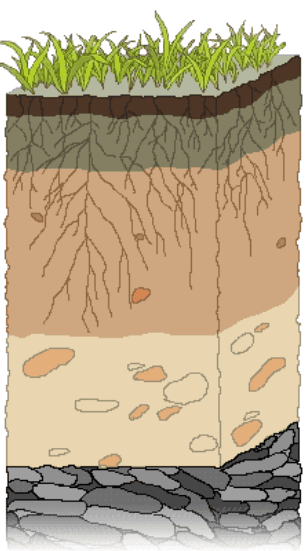
- Identifying and labeling soil layers — topsoil, subsoil, and parent material — on cross-section diagrams
- Sorting and explaining weathering, erosion, and deposition as separate processes with distinct causes and outcomes
- Explaining the role of organic matter in topsoil fertility and plant root growth
- Connecting soil development to five influencing factors: parent material, climate, organisms, topography, and time
- Writing cause-and-effect explanations that trace rock material from breakdown through transport to deposition
- Sequencing events from exposed bedrock to developed topsoil in the correct order
The vocabulary work goes beyond matching definitions. Students label diagrams, complete sentences in context, and use terms like weathering, deposition, parent material, and organic matter in their own written explanations. That variety gives teachers better evidence of understanding than a glossary fill-in alone.
Frequent Student Errors Worth Watching For
The most persistent confusion at fifth grade is treating weathering, erosion, and deposition as a single process with different names. Students can often say "weathering breaks rock down" and "erosion moves it" when prompted directly, but when shown an image of a sandbar forming at a river bend and asked which process created it, many write "erosion" because they associate all water-related earth changes with that word. Deposition — the step where sediment is actually dropped — gets systematically skipped. Each worksheet in this set asks students to identify the specific process in a scenario, which surfaces that gap before the unit assessment rather than on it.
A second error involves the relationship between organic matter and soil fertility. Students understand at a general level that dead plants decompose, but they rarely connect decomposition directly to topsoil quality. A student who writes "soil is good for plants because it has nutrients" without explaining where those nutrients come from is showing surface-level recall. The short-answer prompts in this set ask students to trace the path explicitly: organisms die, decompose, mix with weathered material, and build the organic-rich topsoil layer that plant roots depend on. That connection is one that whole-class instruction often passes over too quickly.
How to Work These Worksheets Into Your Lesson Plans
The most reliable sequence starts with a visual anchor before any written work. Project a photograph of cracked granite, a river carrying sediment, and a forest soil cross-section side by side. Two minutes of student observation — just noticing and naming what they see — reduces the cognitive load when students hit diagram-labeling items, because they have already formed a mental image to attach the labels to. That brief anchor makes the written work move faster and with less confusion.
Across a unit week, teachers who pick up soil formation worksheets for 5th grade during planning find the set has natural reuse built in. Run the vocabulary and sequencing worksheet as a Monday warm-up after morning meeting. Return to the same sequencing logic in the cause-and-effect worksheet on Wednesday — students handle it with less support the second time, which is exactly how spaced retrieval is supposed to work. Pull three short-answer questions on Friday as exit tickets, and you have a fast formative read on who still conflates erosion and deposition before the unit test.
Sub-plan use also works reliably here. The reading passages are written in plain language, which means a substitute does not need a science background to run a lesson where students read a short explanation of parent material weathering, then label the soil layers diagram and respond in writing. That self-sufficiency matters when teachers are trying to stay on unit pace during absences.
Standard Alignment
These worksheets align to NGSS 5-ESS2-1, which calls on students to describe how Earth's materials — rock, soil, sediment, and water — move from one location to another and how those movements alter Earth's surface. Soil formation sits at the center of that standard because it requires students to follow the movement of rock material through weathering, transport, and deposition, then connect that sequence to how soil layers build up over time. The diagram tasks, sequencing questions, and short written explanations in this set directly support the explanatory thinking students need for performance tasks tied to 5-ESS2-1. In most fifth-grade schedules, this unit lands in the Earth's Systems domain during the second half of the year, after students have worked through basic landform and water cycle content — which is exactly when these resources are most useful for consolidating connected ideas.
Adapting the Set for Mixed-Ability Classrooms
Students still building science vocabulary benefit from a word bank during diagram and short-answer work. Print the vocabulary list from the first worksheet and keep it posted on an anchor chart or on a student's desk during practice. This removes the word-retrieval barrier without removing the reasoning task — the goal is for students to demonstrate they understand the processes, not to prove they have memorized spelling.
For students who move through the content quickly, any cause-and-effect prompt on soil formation worksheets for 5th grade extends naturally by adding a second variable. After a student explains why forest topsoil is rich in organic matter, push the thinking further: ask them to predict what topsoil would look like in a desert environment and which of the five soil-formation factors — climate, organisms, or time — best explains the difference. That question keeps the same vocabulary and the same logical structure as the original task but shifts the demand from recall to application. No additional worksheet required.
Frequently Asked Questions
What should 5th graders know about soil formation?
Fifth graders need to explain that soil forms over time as rock breaks down through weathering and mixes with decomposed organic matter. They also need to distinguish between the three main soil layers, explain why topsoil supports plant growth, and understand that parent material, climate, organisms, topography, and time all influence how and how quickly soil develops in any given location.
How are weathering, erosion, and deposition different from one another?
Weathering is the breakdown of rock into smaller fragments. Erosion is the movement of those fragments by wind, water, ice, or gravity. Deposition is what happens when transported material is dropped in a new location. Soil formation is the longer, slower process that occurs when weathered material accumulates and combines with organic matter over time. The three processes are steps, not synonyms, and fifth graders need to use them separately and correctly in their written explanations.
What vocabulary belongs in a 5th grade soil unit?
Core terms include weathering, erosion, deposition, topsoil, subsoil, parent material, and organic matter. Students should use those words in writing — not just match them to definitions — before any unit assessment. Strong practice resources ask students to label, sequence, and explain using those terms in context rather than simply recalling them in isolation.
How can teachers use these resources across different classroom formats?
The full set of soil formation worksheets for 5th grade works across bell ringers, guided group practice, independent review, science centers, homework, and sub-plan lessons. Because each worksheet focuses on a specific skill — vocabulary, diagram work, sequencing, or short-answer explanation — teachers can assign individual worksheets based on where a class or small group actually needs support, rather than moving every student through every task in sequence.
Clear All