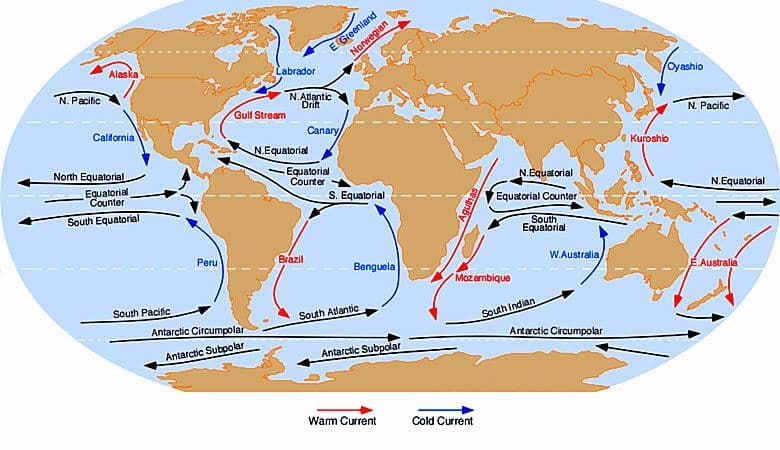
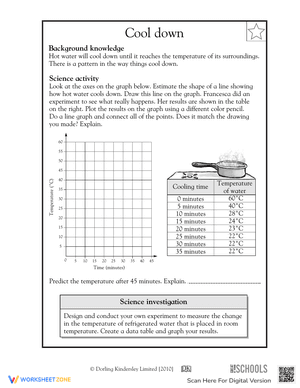
These 5th grade water pdf worksheets give teachers print-ready practice for Earth science units without building activities from scratch. The set targets the water cycle, water distribution across Earth's reservoirs, and diagram interpretation — the three areas where Grade 5 instruction most reliably needs targeted, repeatable material that fits inside a single class period.
Mistakes Students Regularly Make — and What These Worksheets Help Surface
The most consistent error we see at this grade level involves explanation gaps. A student can label all four stages of the water cycle accurately and still write a response that omits the Sun's role entirely. They'll sequence evaporation, condensation, precipitation, and collection in the correct order, then answer "why does water evaporate?" with something like "because it rises" — leaving the driving force completely out. A labeling task alone will not catch this. Short constructed-response prompts do.
A second pattern is worth flagging before you teach this unit: students conflate condensation as a physical observation (the cold glass on a humid day) with condensation as an atmospheric process. They know the word from direct sensory experience, but they cannot apply it to cloud formation. When a worksheet asks them to explain where clouds come from, many students describe clouds as simply "appearing" — without connecting that observation to water vapor cooling and changing state. That conceptual gap is surprisingly persistent through fifth grade and shows up clearly in written responses, which is exactly why this format produces more useful assessment data than matching tasks.
What Students Practice Across the Set
- Labeling and sequencing the water cycle stages, including identifying what drives each stage — not just naming them
- Reading a diagram or visual model and using it as evidence to support a written explanation
- Sorting water storage locations — oceans, glaciers, groundwater, rivers, atmosphere — by type or relative amount
- Comparing freshwater and saltwater distribution on Earth
- Using water cycle vocabulary in context rather than in isolation
- Constructing short explanations about why water movement matters for weathering, erosion, and living systems
Because these resources lean toward diagram-based and constructed-response formats, students who have memorized definitions quickly discover whether they can actually use them. When searching for 5th grade water pdf worksheets, most teachers are looking for exactly this — material that shows whether students can explain a process, not just recognize a term on a word bank.
Working These Worksheets Into Your Lesson Planning
Water cycle content typically falls mid-unit in a Grade 5 Earth science sequence, after students have built some initial context around Earth's systems. That placement makes these resources most effective as mid-lesson checkpoints or exit tasks rather than anchors for an entire class period. A worksheet used in the last ten or twelve minutes of instruction, right after direct teaching on a new concept, gives you faster and cleaner formative data than the same worksheet assigned as homework that night. By the time homework comes back, you've already moved on — the in-class window is where the information is actually actionable.
The set also supports a targeted instructional split that experienced teachers find useful: use one worksheet for process knowledge — how water moves through the cycle — and a separate one for distribution knowledge, meaning where water is stored and in what relative amounts. These are related concepts, but conflating them makes reteaching imprecise. A student who cannot explain why most of Earth's freshwater is locked in glaciers and ice caps has a different gap than a student who cannot sequence precipitation and collection. Keeping those targets separate, even when 5th grade water pdf worksheets address both topics, lets you respond to what you actually see in the student work.
Standard Alignment
The central standard for this content is NGSS 5-ESS2-2 Earth's Systems, which asks students to describe and graph the quantities of water found in various Earth reservoirs and use that data to explain distribution patterns. In classroom terms, the standard has two distinct demands: students must understand how water moves through a cycle and where water accumulates across the planet in measurable amounts. Both are assessable, and both appear in well-constructed Grade 5 benchmark tasks.
The U.S. Geological Survey's water cycle materials for kids provide reliable background knowledge that aligns closely with what Grade 5 students are expected to explain. When a worksheet prompts students to trace water movement or compare reservoir types, those USGS explanations serve as a solid reference for verifying that the science language on the page is accurate — which matters when curriculum coordinators or parents ask where the content comes from. The related USGS interactive water cycle diagram reinforces the visual sequence students encounter on printable pages, making it a natural pairing for classroom instruction.
Adjusting the Set for Different Student Levels
For students still building reading fluency or struggling with abstract process diagrams, the most effective adjustment is to anchor written tasks to a completed visual model. Print a labeled diagram alongside the worksheet and let students reference it while writing their responses. The science thinking stays fully in place; the demand of vocabulary retrieval drops enough that students can focus on explanation rather than word-finding. This keeps the rigor in the right place — on reasoning, not on memory under pressure.
Students who move quickly through the content need a different kind of challenge — not more vocabulary review, but open construction tasks. Rather than labeling a pre-drawn cycle, ask them to build their own model from scratch and annotate each stage with an explanation of the driving force. The blank-page approach to a water cycle diagram is considerably harder than the labeled version, and it reveals far more about understanding. These 5th grade water pdf worksheets support this kind of split naturally: print a standard version for most of the class and a minimally structured version for students ready for the extension, without rebuilding the underlying content.
Frequently Asked Questions
What topics do these water worksheets cover at the Grade 5 level?
The set addresses the water cycle — evaporation, condensation, precipitation, and collection — along with the distribution of water across Earth's reservoirs: oceans, glaciers, groundwater, rivers, and the atmosphere. Related skills include diagram reading, vocabulary used in context, and short constructed-response explanation. The content aligns with the Grade 5 NGSS expectation that students describe and interpret water distribution data, not just recite cycle stages.
Which worksheet should I assign first — water cycle or water distribution?
Start with the water cycle. Students need a clear understanding of how water moves before they can make sense of why it accumulates in specific reservoirs. Assigning distribution tasks before cycle knowledge is solid leads to surface-level answers — "water goes to the ocean" — without any explanation of the pathway or driving forces. Once students can trace the cycle and identify what drives each stage, distribution work has something meaningful to connect to.
Can these worksheets function as formative assessments rather than graded assignments?
They work better as formative tools than summative grades. The short constructed-response format surfaces specific language students are using — and misusing. A student who writes "evaporation happens because water gets warm" has told you something precise about their understanding, and about where instruction still needs to go, in a way that a multiple-choice item cannot. Using these resources as low-stakes in-class checks rather than graded homework gives you more actionable information before the unit assessment arrives.















 Interactive Worksheet Maker
 Quiz Maker
 Word Search Maker
 Crossword Puzzle Maker
 Word Scramble Generator
 Sentence Scramble Generator
 Handwriting Worksheet Generator
 Name Tracing Generator
 Fill In The Blank Generator