


























0
Views
0
Downloads

9.0
0
Save
0 Likes
Share
Understanding Soil Components Worksheet
0 Views
0 Downloads
Paste this activity's link or code into your existing LMS (Google Classroom, Canvas, Teams, Schoology, Moodle, etc.).
Students can open and work on the activity right away, with no student login required.
You'll still be able to track student progress and results from your teacher account.
Information
Description
What It Is:
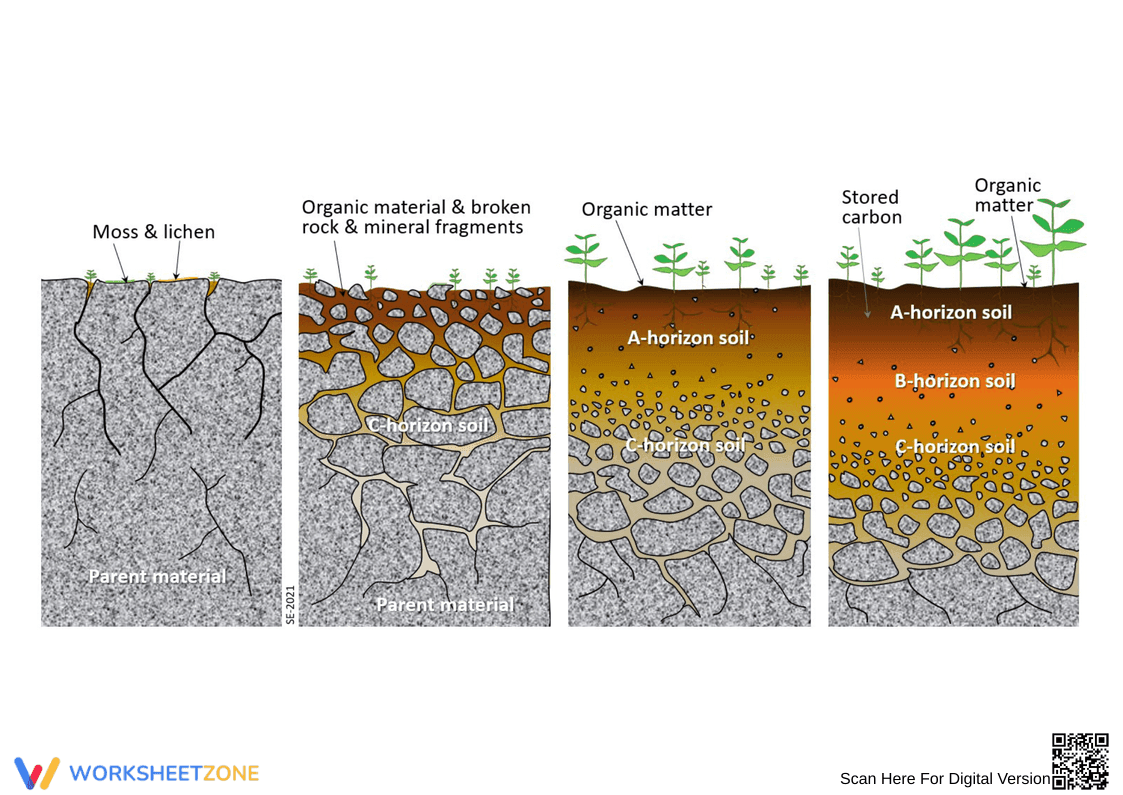
This is a diagram illustrating the different stages of soil formation. It shows the progression from parent material with moss and lichen, to parent soil with organic material and rock fragments, then to A-horizon soil with organic matter, and finally a soil profile showing A, B, and C horizons with stored carbon and plant life. Each stage is visually represented with varying compositions and textures.
Grade Level Suitability:
This worksheet is suitable for grades 5-8. The visual representation of soil formation and the clear labeling of different soil horizons make it accessible for middle school students learning about earth science and ecosystems.
Why Use It:
This worksheet helps students understand the process of soil formation and the composition of different soil layers. It visually connects the relationship between parent material, organic matter, and the development of distinct soil horizons. It aids in comprehension of key concepts like decomposition, weathering, and carbon storage in soil.
How to Use It:
Use this diagram as a visual aid when teaching about soil formation. Students can label the different stages, describe the composition of each layer, and explain the processes involved in the transition from parent material to mature soil. Discuss the role of organisms and weathering in soil development.
Target Users:
This worksheet is ideal for science teachers teaching earth science, environmental science, or biology. It is also helpful for students learning about ecosystems, soil composition, and the role of soil in supporting plant life.
This is a diagram illustrating the different stages of soil formation. It shows the progression from parent material with moss and lichen, to parent soil with organic material and rock fragments, then to A-horizon soil with organic matter, and finally a soil profile showing A, B, and C horizons with stored carbon and plant life. Each stage is visually represented with varying compositions and textures.
Grade Level Suitability:
This worksheet is suitable for grades 5-8. The visual representation of soil formation and the clear labeling of different soil horizons make it accessible for middle school students learning about earth science and ecosystems.
Why Use It:
This worksheet helps students understand the process of soil formation and the composition of different soil layers. It visually connects the relationship between parent material, organic matter, and the development of distinct soil horizons. It aids in comprehension of key concepts like decomposition, weathering, and carbon storage in soil.
How to Use It:
Use this diagram as a visual aid when teaching about soil formation. Students can label the different stages, describe the composition of each layer, and explain the processes involved in the transition from parent material to mature soil. Discuss the role of organisms and weathering in soil development.
Target Users:
This worksheet is ideal for science teachers teaching earth science, environmental science, or biology. It is also helpful for students learning about ecosystems, soil composition, and the role of soil in supporting plant life.


