


























Views
Downloads



4.NBT.B.4 Worksheet: Math Diagnostic — Grade 4 Aligned
Paste this activity's link or code into your existing LMS (Google Classroom, Canvas, Teams, Schoology, Moodle, etc.).
Students can open and work on the activity right away, with no student login required.
You'll still be able to track student progress and results from your teacher account.
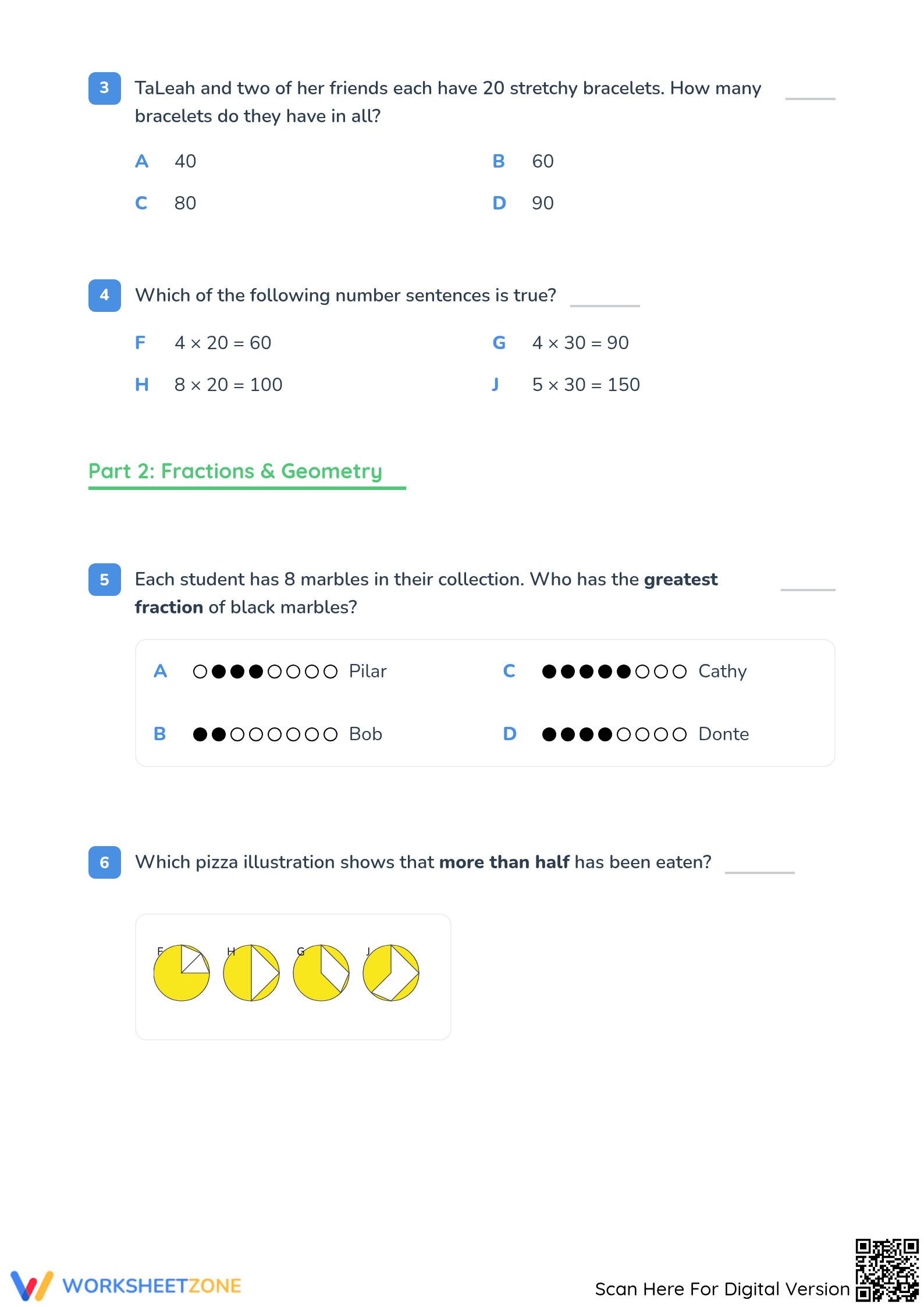
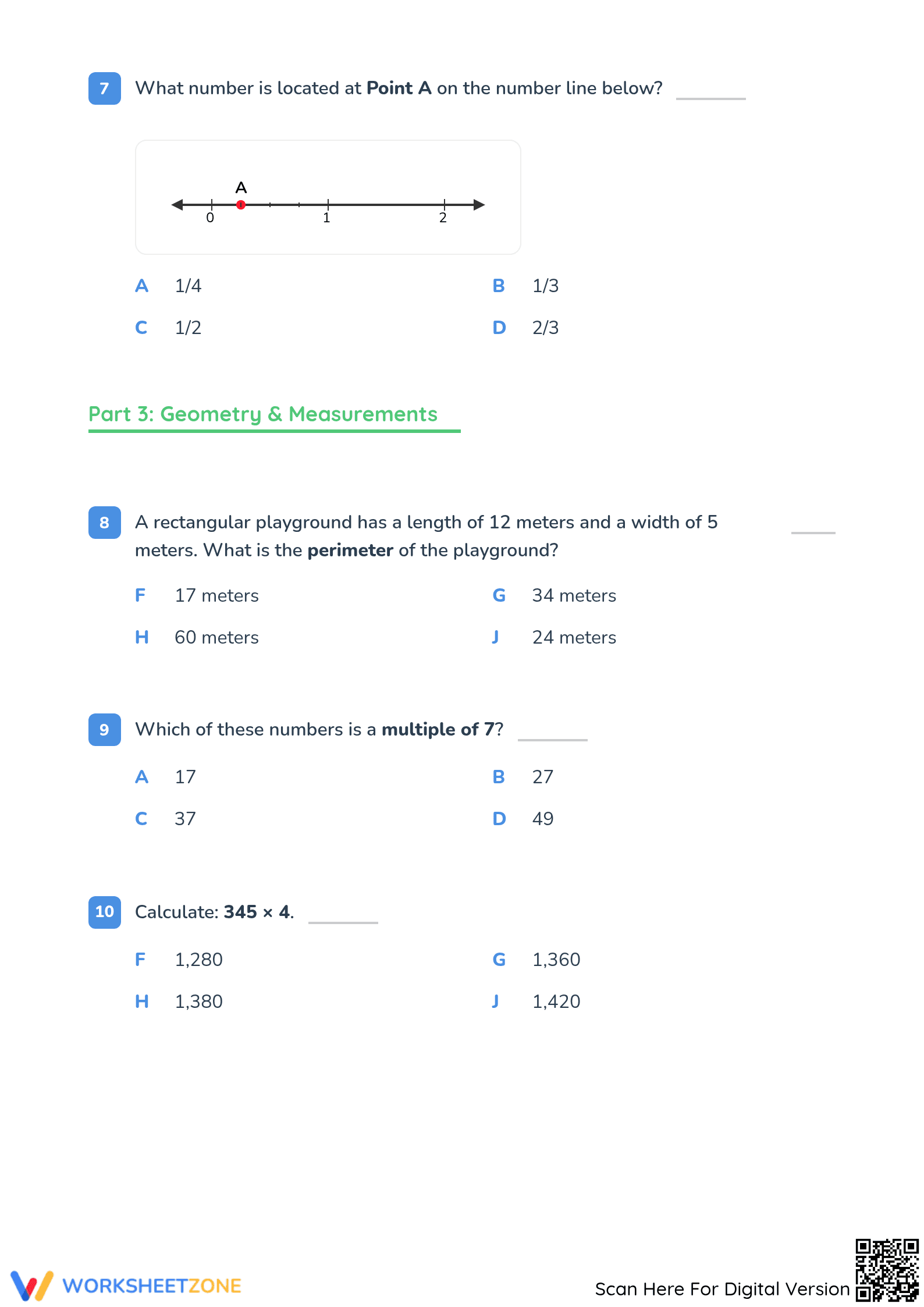
This Grade 4 math diagnostic assessment provides a robust baseline for evaluating student proficiency across essential mathematical domains. Covering numbers, fractions, geometry, and data analysis, this tool identifies specific learning gaps. Students demonstrate mastery through fifteen structured problems designed to elicit clear evidence of mathematical reasoning.
At a Glance
- Grade: 4 · Subject: Math
- Standard:
CCSS.MATH.CONTENT.4.NBT.B.4— Fluently add and subtract multi-digit whole numbers using the standard algorithm- Skill Focus: Comprehensive Math Proficiency Diagnostic
- Format: 4 pages · 15 problems · Answer key included · PDF
- Best For: Beginning of year placement or unit pre-assessment
- Time: 30–45 minutes
What's Inside
This assessment is organized into four parts to simplify data analysis. Part one covers place value and rounding. Part two transitions into fractions and geometry. Part three challenges students with measurement and multi-step multiplication. Finally, part four evaluates data analysis and time conversion. Each problem includes a dedicated response line, and a comprehensive answer key is included for rapid grading.
Mastery Evidence
Each task is mapped to specific fourth-grade sub-skills, providing a transparent bridge between performance and standards. Educators can categorize scores into mastery tiers based on the specific domains where students succeed. This granular data allows for the direct entry of proficiency levels into gradebooks or IEP progress notes, ensuring that every instructional decision is backed by objective evidence collected directly from student work.
Standards Alignment
The primary focus is CCSS.MATH.CONTENT.4.NBT.B.4, requiring students to fluently add and subtract multi-digit whole numbers. The assessment also integrates CCSS.MATH.CONTENT.4.OA.A.3 through multi-step word problems involving various operations. These standard codes can be copied directly into lesson plans, IEP goals, or district curriculum mapping tools to streamline administrative tasks and ensure consistent instructional compliance across the grade level.
How to Use It
Deploy this diagnostic during the first week of school to establish a clear baseline. Alternatively, use specific sections as pre-assessments before starting units on fractions or geometry. While students work, observe their strategies for solving multi-digit multiplication or identifying fractions on a number line. This formative observation provides qualitative context to the score, revealing the specific thought processes behind their answers.
Who It's For
This resource is designed for Grade 4 classrooms, but it is effective for Grade 5 review or Grade 3 enrichment. Special education teachers will find the clear layout and multiple-choice format helpful for students with writing accommodations. Pair this diagnostic with a direct instruction lesson for a complete cycle that informs your semester of mathematical instruction.
Aligned to CCSS.MATH.CONTENT.4.NBT.B.4, this diagnostic assessment evaluates multi-digit addition and subtraction fluency alongside core fourth-grade competencies in fractions, geometry, and data analysis. According to EdReports (2024), high-quality diagnostic tools are essential for identifying specific learning gaps before beginning new instructional units. This 15-item assessment utilizes multiple-choice formatting to provide clear data points on student proficiency across four distinct mathematical domains. By focusing on place value, operational logic, and measurement calculations, the tool ensures that educators can pinpoint whether a student requires foundational support or is ready for advanced curriculum. Research from NAEP indicates that early identification of misconceptions in place value and fraction equivalence is a key predictor of long-term success in middle school mathematics. This assessment provides the objective evidence needed to differentiate instruction effectively and monitor progress toward year-end mastery goals, making it a critical asset for data-driven classroom environments and IEP planning.


