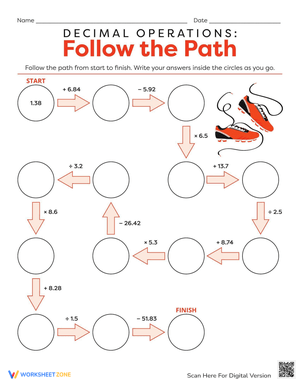
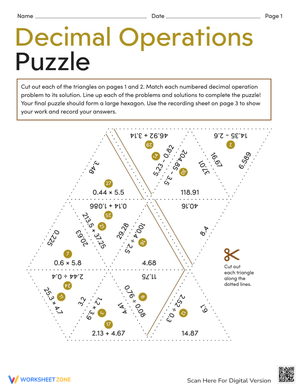
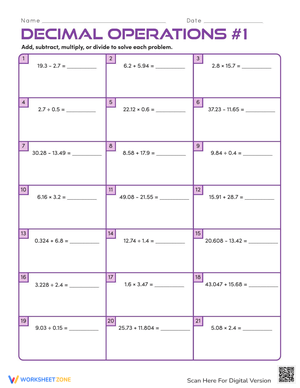
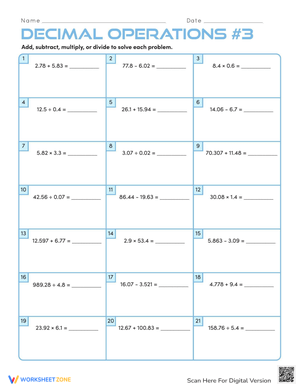
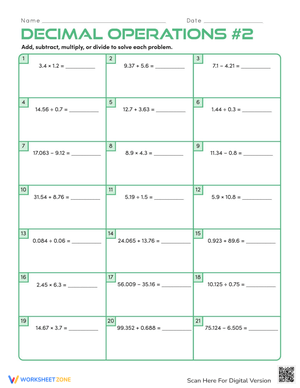
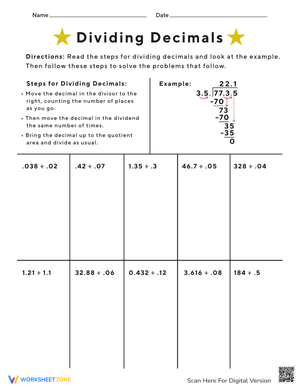
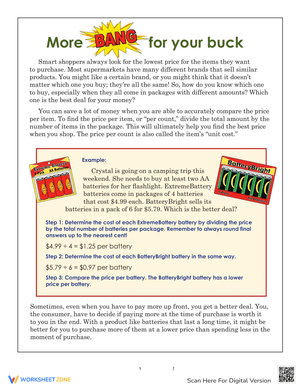
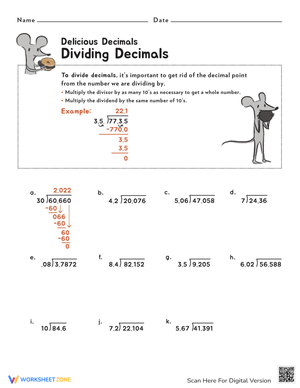
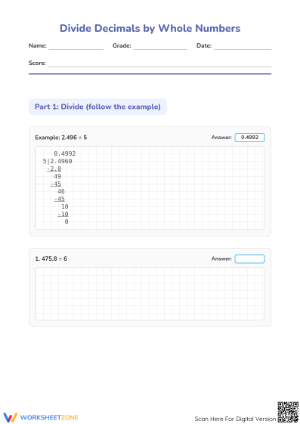
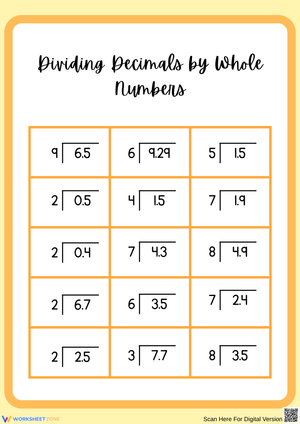
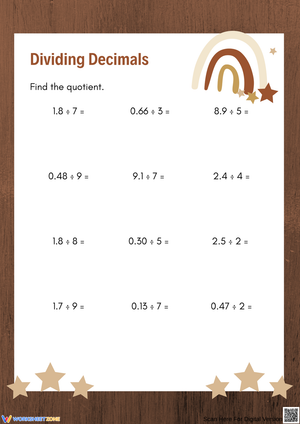
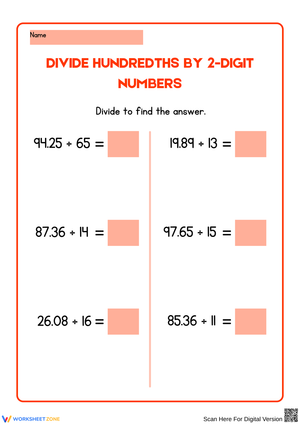
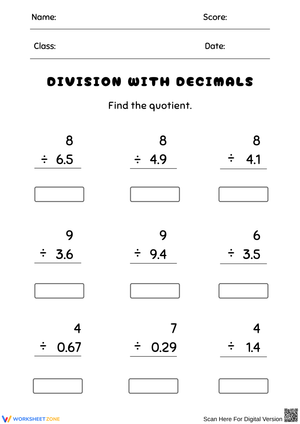
These 5th grade dividing decimals printable worksheets give teachers a targeted set of resources organized around the specific sub-skills that cause the most trouble in upper elementary math — place-value reasoning, powers of ten, estimation, and the word problems that ask students to do something meaningful with a quotient. Each worksheet addresses one of those demands directly, which makes it practical to assign by student need rather than by lesson number.
Mistakes Students Make That These Worksheets Help You Catch
The most reliable error in fifth-grade decimal division is the dropped decimal. A student who correctly solves 48 ÷ 6 = 8 will often write 4.8 ÷ 6 = 8, because the procedure they remember is anchored in whole numbers and they treat the decimal as something to handle afterward — then forget. A related version appears as 4.8 ÷ 6 = 0.08: the student knows a decimal belongs somewhere and inserts one, but chooses the wrong position because they are guessing at placement rather than reasoning from place value.
Word problems surface a different gap. Students who compute correctly stop at the quotient without noting that 1.25 means $1.25, or that 0.4 meters is less than half a meter. The division feels finished the moment a number appears. A worksheet that follows the calculation with a sentence prompt — "What does your answer mean in this situation?" — forces the interpretation step and makes that gap visible.
A useful diagnostic routine: assign a computation-focused worksheet and a word problem worksheet back to back, then compare each student's results. When a student performs well on computation but poorly on word problems, the issue is usually reading the context, not the arithmetic. The reverse — word problems attempted but computation errors throughout — often means the student is applying a memorized rule without understanding why the decimal lands where it does. That distinction shapes small-group instruction far more precisely than a single test score.
What Each Worksheet Builds
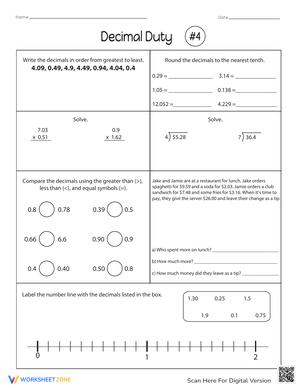
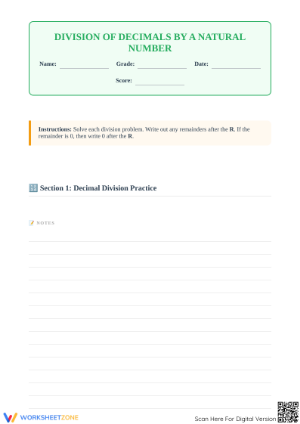
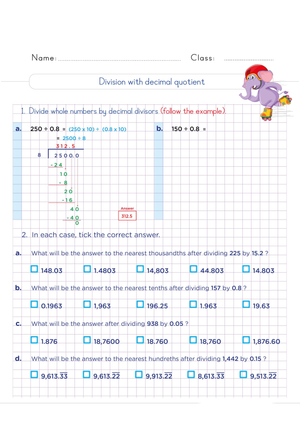
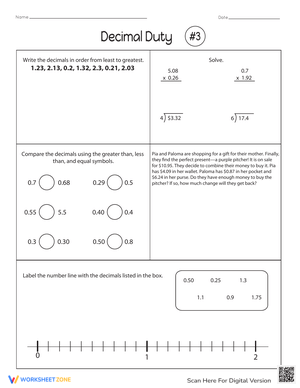
The set covers the range of skills Grade 5 decimal division requires, moving from accessible entry points into more demanding application tasks. Problems differ meaningfully from one worksheet to the next, which discourages the mechanical repetition that lets students execute steps without engaging the reasoning behind them.
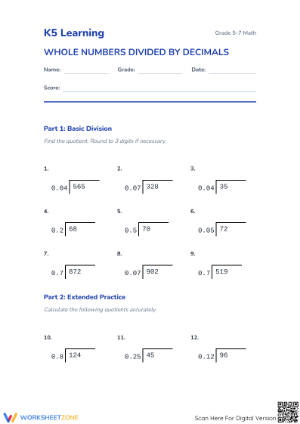
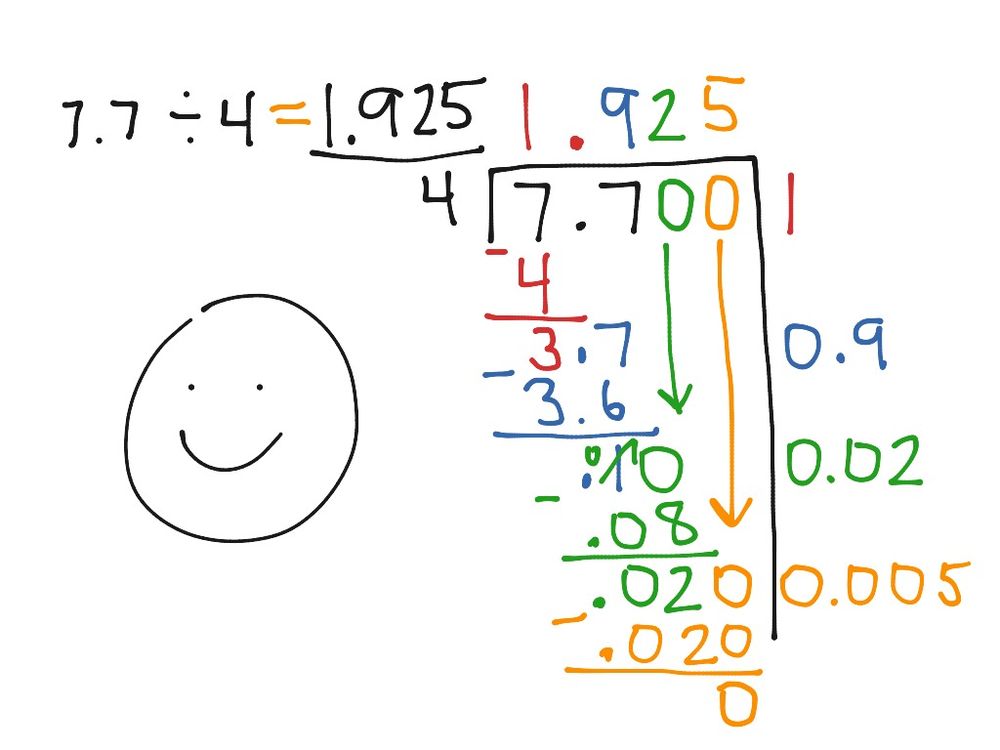
- Dividing decimals by whole numbers: Students partition decimal amounts and track how place value carries through the quotient. A problem like 6.3 ÷ 7 should prompt thinking about 63 tenths divided by 7 — not just a procedural step.
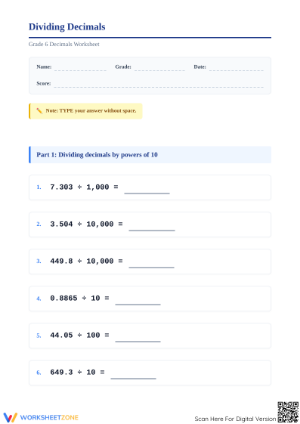
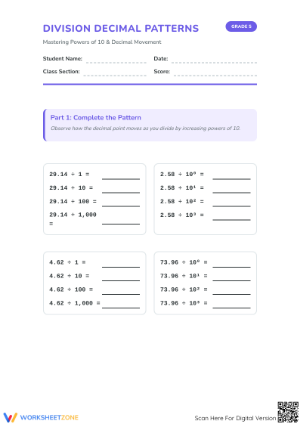
- Dividing by powers of ten: These problems reinforce what happens to digits when you divide by 10, 100, or 1,000, and they build the estimation fluency students need when checking larger division problems.
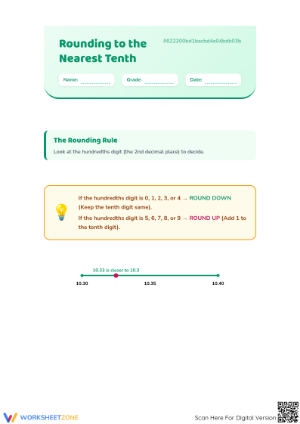
- Estimation and reasonableness: Students write an estimate before solving, then check whether their quotient is plausible. This step gets its own space instead of appearing as a small checkbox at the bottom of a crowded problem set.
- Visual and model-based reasoning: Area models and base-ten decomposition help students see what the quotient represents rather than just producing a number.
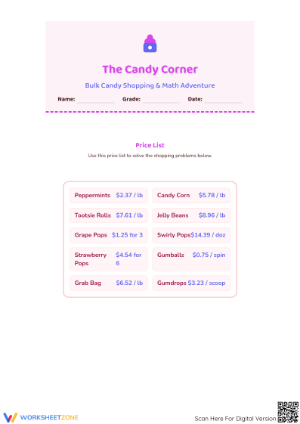
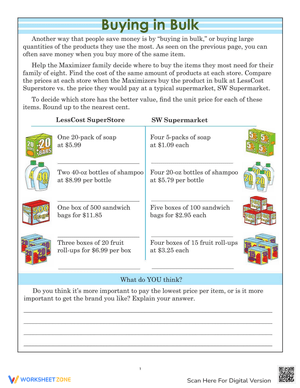
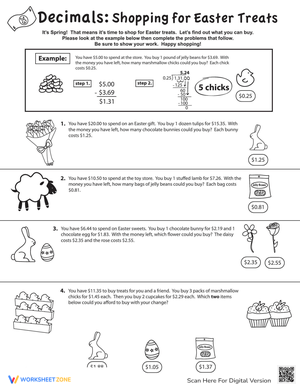
- Word problems in realistic contexts: Money, measurement, and multi-step situations require students to set up the division, carry it out, and interpret the result in terms of the original question.
Smart Ways to Work These Worksheets Into Your Week
The most practical entry point is using a short, focused worksheet as guided practice immediately after modeling a strategy — during the lesson itself, while there is still time to catch misplaced decimal points before they harden into habits. Assign six to eight problems, circulate, and use what you see to shape the class discussion before students pack up. That feedback loop is tighter than reviewing homework the following morning, when the moment has passed.
For math centers and independent stations, the focused format works well because students can begin without teacher direction. A partner can check work against an answer key, or students can mark their own estimates before comparing quotients. For intervention — whether that is a pull-out group or the last ten minutes before specials — choose one worksheet that targets a single error pattern, either decimal placement or reasonableness checking, not both simultaneously. Combining two demands in a short intervention window usually means neither receives the attention it needs.
- Warm-up routine: Three or four estimation problems before the main lesson reactivate place-value thinking without consuming the period.
- Sub plans: The clear, self-contained format lets a substitute hand out a worksheet without additional explanation, and completed work gives the returning teacher immediate information about what held up.
- Pre-assessment prep: Pair a computation-focused worksheet with a word problem worksheet in the same session so students practice both fluency and interpretation before a unit test.
Standard Alignment
Common Core State Standards for Mathematics standard 5.NBT.B.7 expects fifth graders to divide decimals to hundredths using place-value strategies, models, and properties of operations — and to explain their reasoning. That last clause carries real instructional weight. The standard does not stop at computation; it requires visible thinking that teachers can examine and respond to. Each worksheet addresses that expectation by including estimation prompts, model-based problems, or written explanation tasks alongside computation, so student work reflects the full standard rather than only its procedural surface.
Adjusting the Worksheets for a Range of Learners
Grade 5 classes reach decimal division with a wide spread of readiness. Some students still hesitate on basic division facts — 56 ÷ 8 costs several seconds of working memory, and layering a decimal on top pushes them into overload. Others arrive having already internalized how powers of ten shift digits and are ready for decimal divisors or multi-step situations. Grouping the worksheets into entry, on-level, and extension tiers makes that range manageable without building three separate lesson plans.
For students who need more support, start with worksheets that limit the problem count and include models or number lines beside the computation space. Having these students write an estimate first — even a rough one — gives them a concrete check to use when they finish. On-level students work through mixed computation and explanation tasks, including at least one word problem that requires them to label the quotient. Extension work fits naturally on worksheets with decimal divisors, multi-step word problems, or prompts asking students to compare two solution strategies and explain which is more efficient. The 5th grade dividing decimals printable worksheets in this collection span that range, so tiering by readiness does not require pulling materials from separate sources.
Frequently Asked Questions
Which decimal division skills does Grade 5 actually require?
By the end of fifth grade, students should divide decimals to hundredths using place-value reasoning, explain where the decimal belongs in the quotient, estimate to confirm that an answer is reasonable, and apply decimal division in word problems involving money and measurement. The Grade 5 expectation centers on hundredths with reasoning shown — students are not expected to handle all decimal divisors at this level.
How should I sequence these worksheets across a unit?
Begin with division by whole numbers and powers of ten, where decimal placement follows the most predictable patterns. Then move into estimation and reasonableness tasks before adding word problems. Save multi-step or comparison problems for students who have demonstrated solid control of the basic procedure. The 5th grade dividing decimals printable worksheets are organized by skill rather than by a fixed order, which makes that kind of responsive sequencing straightforward.
Can I use these for students who are working below grade level?
The worksheets that focus on dividing by whole numbers or use place-value models are accessible entry points for students who need to rebuild foundational understanding. For a student still uncertain about basic division facts, pairing a worksheet with a multiplication chart removes that obstacle and keeps the focus on decimal reasoning. Assign one worksheet at a time and treat each completed worksheet as a formative data point before moving to the next skill.
Do these work for homework or sub plans?
Both, reliably. For homework, choose a worksheet that mirrors the lesson's examples closely — familiar problem types with clear directions reduce confusion when students are working without teacher support. For sub plans, the standalone format of each worksheet means no verbal setup is needed beyond "complete the problems and show your work." These are among the most dependable uses of 5th grade dividing decimals printable worksheets precisely because the format is predictable and entirely self-contained.














 Interactive Worksheet Maker
 Quiz Maker
 Word Search Maker
 Crossword Puzzle Maker
 Word Scramble Generator
 Sentence Scramble Generator
 Handwriting Worksheet Generator
 Name Tracing Generator
 Fill In The Blank Generator




 BACK TOSCHOOL