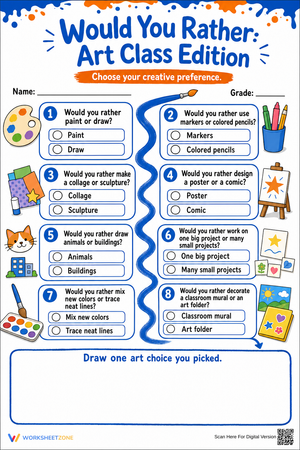
5th grade art printable worksheets earn their place in real instruction when they ask students to make a specific move — label the use of contrast in a sample composition, revise a thumbnail sketch after identifying the weakest focal point, or write one sentence explaining why a design choice works. This set gives teachers resources that fit the actual rhythms of upper elementary art: short enough to use in a 5-minute warm-up or a 20-minute sub period, specific enough to generate real portfolio evidence.
The Specific Skills These Worksheets Build
Each worksheet in this set targets one clearly defined skill rather than sweeping across the full scope of visual arts in a single sitting — because in the 40-minute elementary art block, a resource that tries to do everything usually does nothing well. The set moves through both creating and responding. Creating-side worksheets ask students to plan thumbnail compositions, experiment with value and texture in small practice areas, and mark the weakest area of emphasis before revising. Responding-side worksheets ask students to analyze a sample image, identify specific elements at work, and explain how one element — such as implied line or color temperature — directs the viewer's eye.
Vocabulary runs consistently through both sides of the set: line, shape, form, color, texture, space, balance, contrast, and emphasis appear across multiple worksheets so students build fluency through repetition in real contexts rather than through a vocabulary list reviewed once before a quiz.
- Elements identification: Students locate and label specific elements in a provided image or in their own in-progress work.
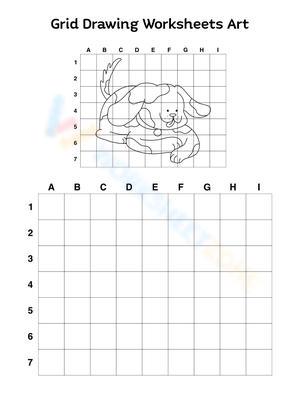
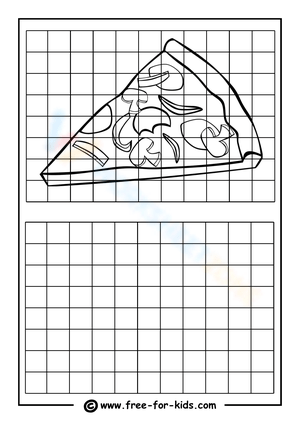
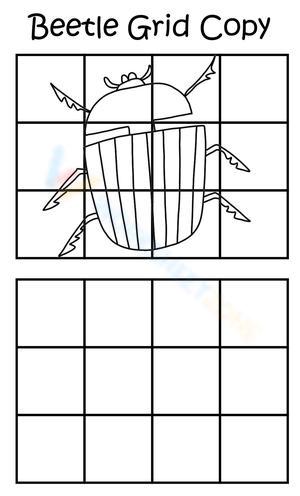
- Composition planning sheets: Thumbnail sketch grids with targeted prompts — students generate at least two arrangements before selecting one to develop.
- Artist response tasks: Students describe what they observe, name which element carries the most visual weight, and connect the work to a technique covered in class.
- Critique structure guides: Students move through description, analysis, and response, with each step anchored by a question specific enough to prevent responses from collapsing into "I like it because it looks cool."
- Revision reflection prompts: After completing a studio piece, students identify one design decision that shifted during the process and explain what prompted the change.
Error Patterns to Watch in Analysis and Critique Tasks
The form-versus-shape distinction trips up more fifth graders than most teachers expect. Students who correctly label a circle as "shape" on a flashcard will still describe a shaded sphere in a charcoal drawing as "good shading of the shape" — not recognizing that the shading is what creates the illusion of form, the 3D quality that separates form from its flat counterpart. Each worksheet that covers form includes a visual prompt that makes this contrast explicit, because students who miss it in writing are usually not confused about the definition; they are confused about applying it to an actual image.
In critique tasks, the default student move is to evaluate effort rather than design. "The artist tried really hard" appears constantly in written responses — even from students who make sharper observations when questioned directly. The critique structure worksheets address this by making effort-praise literally unanswerable: the prompts require students to point to a specific design choice and name its visual effect. A second persistent error: when asked to identify emphasis, students almost always point to the largest element in a composition rather than the visually dominant one. A small bright yellow form against a gray background commands more attention than a large neutral shape, but students need direct instruction and repeated practice before size and dominance stop feeling like the same thing.
Fitting These Worksheets Into Weekly Lesson Planning
Teachers get the most from 5th grade art printable worksheets when they sit inside a lesson sequence rather than float as standalone seat work. An elements identification worksheet at the start of class gives students something to look at and discuss before studio time begins — which also shortens the time spent managing transitions. A revision reflection prompt at the end of class closes the lesson without requiring teachers to run a full group critique when only 6 minutes remain before dismissal.
The 3-part block routine that works well in many elementary art rooms — visual analysis, making, reflection — fits this set directly. Open with 5 minutes of analysis using a responding-side worksheet, run 15 to 20 minutes of studio production, then close with a short reflection prompt from a creating-side worksheet. Students who struggle to write can sketch their response in the provided space. Teachers circulating during the studio block can scan completed opening worksheets quickly to identify who needs a vocabulary check before independent work time.
The set also runs cleanly as station tasks. A responding station built around the artist analysis worksheet, a creating station using the composition planning sheet, and a vocabulary station using the elements identification task can operate simultaneously with minimal teacher direction — which matters most when teachers need to pull a small group or manage an inclusion period. For sub plans, the critique structure guide and the elements identification worksheet both work without setup because the directions are self-contained and the task is visually grounded.
Standard Alignment
These worksheets align to the National Core Arts Standards for Visual Arts at Grade 5, specifically within the Creating and Responding artistic processes. VA:Cr1.1.5a asks students to combine ideas to generate innovative approaches for art-making — the composition planning and thumbnail revision worksheets address this directly by requiring students to produce multiple arrangements before committing to one. VA:Re7.1.5a asks students to compare approaches to using visual imagery to represent the same subject — the artist response and critique worksheets target this standard by asking students to identify specific design choices and explain their effect rather than summarize overall impressions. Teachers in states with adapted standards frameworks will find the skills here — planning, revising, analyzing, critiquing — appear in nearly all Grade 5 visual arts benchmarks because those moves are foundational to the discipline at every level.
Adjusting the Set for Mixed-Readiness Groups
Differentiation in art response tasks works best when it adjusts the access point without lowering the intellectual demand. A student who reads below grade level still processes visual information with the same sophistication as peers — but might need the written response broken into sentence frames ("I notice ___ in this artwork. This makes the viewer look at ___ because ___") rather than an open-ended prompt. Both versions of the task require the same analysis; one removes the writing barrier without removing the thinking.
5th grade art printable worksheets in this set are short enough that teachers can modify them in minutes. For students who need more structure, the critique guide works well when read aloud or completed through partner discussion before students write independently. For students ready for extension, the composition planning worksheet includes a challenge prompt asking them to design a composition that uses two opposing elements — rough texture against smooth, or warm color against cool — to create visual tension. That extension sits at the bottom of the existing worksheet and can be skipped by groups not yet ready for it, so no separate resource is needed.
Frequently Asked Questions
Can these worksheets be used in a general classroom during a cross-curricular unit?
Yes. The artist response and elements identification worksheets work well alongside social studies or reading units that involve visual primary sources, illustrated texts, or image analysis. The vocabulary — line, color, texture, space — applies to historical photographs, book illustrations, and maps just as directly as it applies to fine art reproductions. Teachers without formal art training can facilitate those tasks because the prompts direct students to look and describe rather than evaluate technique.
How long does each worksheet take to complete?
Most worksheets in the set take 8 to 12 minutes when students are already familiar with the relevant vocabulary. The critique structure guide runs closer to 15 minutes for a full written response. The thumbnail composition worksheet can stretch to 20 minutes if students are engaged and producing multiple sketches. Teachers planning sub days or fast-finisher bins should note those ranges: the elements identification and artist response worksheets work best when time is tight, while the planning and critique worksheets benefit from slightly more breathing room.
Are these worksheets useful for portfolio documentation?
The revision reflection prompt and critique structure guide both produce written artifacts that hold up in portfolio contexts. During conferences or report card preparation, a student's written explanation of a design choice — even a brief one — gives teachers and families something concrete to discuss beyond the finished artwork. The reflection prompt in particular captures thinking that a polished final piece does not always show: a student who revised their composition twice and can explain why made a more sophisticated artistic decision than one who finished faster and never reconsidered the original arrangement.
Do these worksheets work for students who say they "can't draw"?
Most responding-side worksheets require no drawing at all — students write, label, or annotate provided images. The creating-side worksheets use a thumbnail format that explicitly frames the task as planning, not performance. A thumbnail is not a finished drawing; it is a thinking tool, and naming it that way removes a significant amount of the self-consciousness fifth graders bring to blank paper. The 5th grade art printable worksheets in this set are built so students spend their energy on visual thinking rather than on producing a drawing they consider polished enough to show.