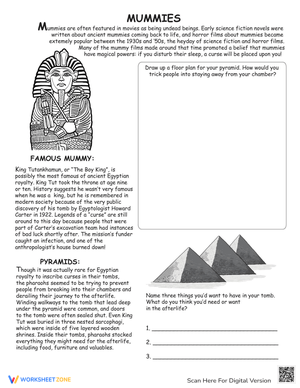
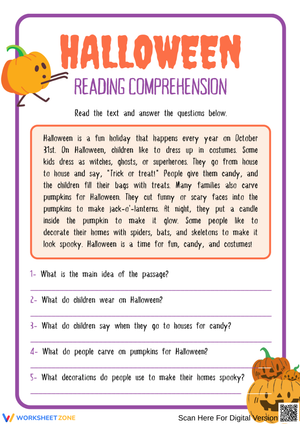
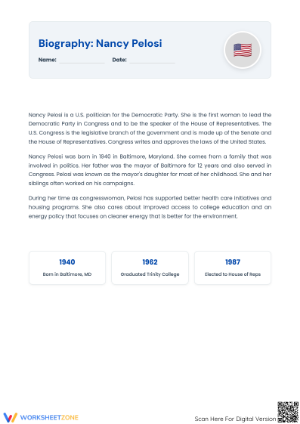
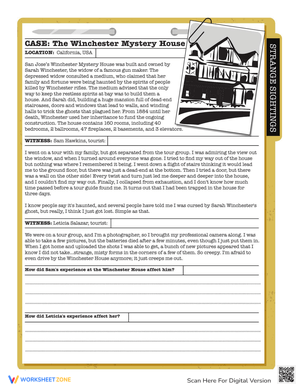
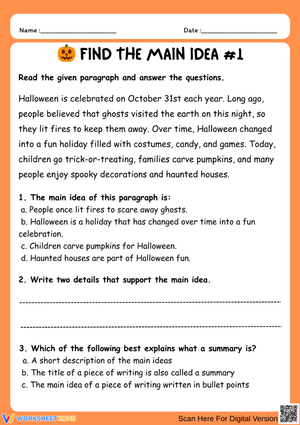
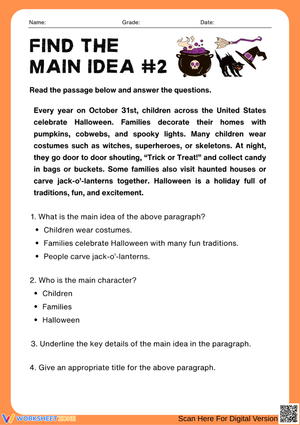
These main idea printable worksheets for 5th grade ask students to do the actual work of comprehension — read a passage, state what it is mostly saying in a complete sentence, select the details that prove it, and write a brief summary that does not simply copy language from the text. The set covers both informational and literary passages, making it practical across a reading unit without requiring separate materials for each genre.
The Specific Skills Each Worksheet Targets
The grade 5 expectation is meaningfully harder than the grade 4 version. Fifth graders must determine two or more main ideas within a single text and explain how key details support each one — not just name what the passage is about. These worksheets address that in sequence. Early in the set, passages are clearly organized with repeated key vocabulary that signals what matters. Later, the texts are denser and students have to reason through why a compelling sentence is supporting evidence rather than the central point itself.
- State the main idea as a complete sentence, not a topic word or phrase.
- Select supporting details from among answer choices that include plausible distractors — facts that are accurate but secondary.
- Distinguish between ideas that are too narrow to be the main point and ideas that are too broad to be useful.
- Write a two- to three-sentence summary that captures the author's argument without restating every fact in order.
- Identify how individual paragraphs contribute to a main idea that runs across the full text.
Student Errors Worth Anticipating Before You Assign the Set
The most consistent grade 5 error is not that students miss every detail — it's that they select a detail-heavy sentence that sounds authoritative and call it the main idea. A student reading a passage about the water cycle might choose "Water vapor rises into the atmosphere and condenses around tiny particles to form clouds" because the sentence is long, technical, and feels conclusive. The actual main idea — that the water cycle continuously moves water through environments in a repeating pattern — is never stated that neatly, which is exactly what makes it harder to find.
A more effective reteach move than reviewing the definition again is asking students to sort all the details into categories first, then name the idea that holds the largest category together. That step turns a guessing task into a reasoning one. A second common error is collapsing "topic" and "main idea" — writing "the water cycle" rather than a complete sentence that explains what the text argues about that topic. The written response format on these worksheets catches that error directly because a phrase will not satisfy the sentence requirement.
Where These Worksheets Fit in a Reading Block
The opening minutes of a reading lesson are one of the most practical slots for a short passage from this set. Students read, underline what they think is the central claim, and write one sentence before a brief discussion — that sequence primes the thinking without consuming the block. The worksheet becomes the anchor for the think-aloud rather than a follow-up task after the lesson is already over.
Small groups can run two formats at once with the same worksheet. One group reads independently and selects the details that support the main idea they named. A second group works through the text paragraph by paragraph, jotting a one-phrase gist note before writing anything. In intervention, the shorter passages work well for direct modeling: read aloud together, annotate the heading and any repeated vocabulary, identify what those repeated terms point toward, then attempt the written response. Main idea printable worksheets for 5th grade also slot cleanly into substitute plans because the format is self-contained and an answer key lets a sub verify responses without content-area expertise.
Standard Alignment
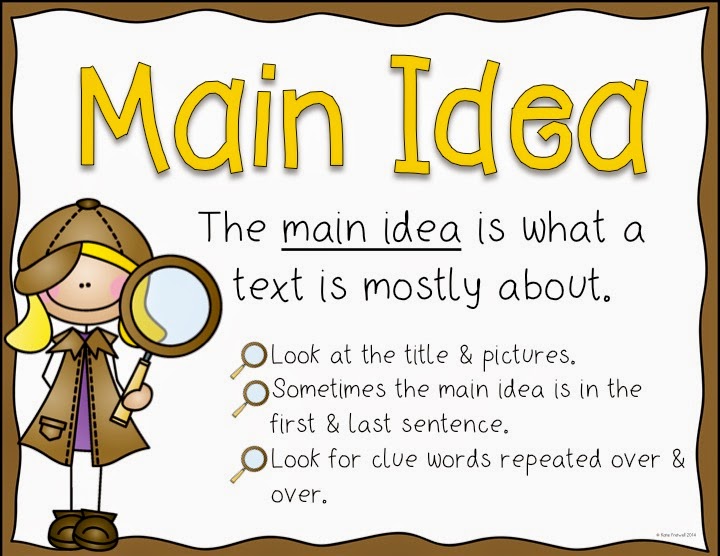
These worksheets address CCSS.ELA-LITERACY.RI.5.2: "Determine two or more main ideas of a text and explain how they are supported by key details; summarize the text." That standard represents a genuine jump from Grade 4, which asks students to identify a single main idea. The shift to determining multiple main ideas — and explaining the supporting structure around each — is where students most commonly stall in the first months of fifth grade. The progression in this set reflects that arc: single-main-idea passages come first, then multi-main-idea texts with clear paragraph breaks, then denser passages where organizational structure is less obvious and students have to work harder to see how the parts connect.
Tailoring the Set to Different Reading Levels
Students reading at or above grade level can work through these worksheets independently and extend by comparing how two different passages on the same topic each present a distinct central idea. For students who are still building fluency or content vocabulary, the same passage becomes more manageable when you read the heading and first sentence aloud together and ask them to predict what category of information follows — that prediction step reduces the cognitive demand of holding a long text in working memory while simultaneously forming a judgment about it.
- For students who discuss the text clearly but struggle to get ideas onto paper: ask them to say the main idea aloud, confirm it together, then write it down.
- For students who write quickly but skip past the evidence: ask them to underline every detail referenced in their summary and verify each one appears in the text rather than inferred from background knowledge.
- For students who consistently choose answer choices that are too broad: ask them to cross out any choice that a different passage on the same topic could also support, then select from what remains.
- For intervention groups: work through each worksheet one paragraph at a time, building a gist note for each chunk before combining them into a full main idea statement.
Main idea printable worksheets for 5th grade serve intervention groups particularly well because the task format stays consistent across difficulty levels — students in reteaching sessions encounter familiar directions rather than an entirely new structure every time they sit down to practice.
What Student Work Reveals After the Lesson
A completed worksheet shows three distinct error patterns when you review it. Students who select a detail-heavy sentence need practice sorting before selecting — they are not reading carelessly, they are applying the wrong criteria for what "important" means. Students who write summaries that list facts without a unifying statement can identify details but have not yet internalized what "mostly about" requires. Students who produce a grammatically correct main idea statement that is far too broad — "This passage is about the environment" — understand the task format but are avoiding the harder cognitive work of reading closely enough to name a specific argument.
Sorting a class set into those three groups takes roughly five minutes and produces a cleaner reteaching plan than simply noting who got the right answer. When students underline supporting details, write the main idea in one sentence, and produce a brief summary on the same worksheet, that three-part response shows whether comprehension is stable enough to transfer into content-area reading later in the day.
Frequently Asked Questions
What should fifth graders actually be able to do with main idea, and how do these worksheets reflect that expectation?
By grade 5, students identify the main idea — or two or more main ideas in a longer text — explain how key details support each one, and write a summary. These worksheets build each of those steps separately before combining them: identification, evidence selection, summary writing. They do not stop at multiple-choice selection because that format alone does not reveal whether a student understands why a detail is supporting evidence rather than the central claim.
Do these work for nonfiction only, or do they include literary texts?
Both genres are included. Nonfiction passages lead the set because that is where fifth graders most urgently need the skill — science, social studies, and content-area reading all require it. Literary passages appear in the rotation because central idea work in narrative and literary nonfiction demands the same moves applied to different text structures. Moving between genres within a unit shows students that the thinking is consistent even when the vocabulary and organizational patterns shift.
How do these worksheets fit alongside small-group and intervention instruction rather than replacing it?
The worksheets give intervention groups a consistent, low-setup text for direct modeling and guided practice. A teacher reads the passage aloud, walks through the sorting-before-selecting move, and uses the worksheet response as immediate formative feedback — not as an independent task assigned in place of instruction. The answer key supports follow-up discussion of why specific choices are too narrow or too broad, which is the kind of reasoning practice that makes the skill stick.
Can these also serve as test preparation?
The task formats — passage reading, detail selection, written summary — align with how main idea appears on state assessments. But the intent is everyday comprehension practice, not test-prep rehearsal in isolation. Main idea printable worksheets for 5th grade used consistently across a reading unit give students repeated exposure to the same reasoning, which transfers to assessment contexts without reducing every lesson to timed practice-test conditions.












 Interactive Worksheet Maker
 Quiz Maker
 Word Search Maker
 Crossword Puzzle Maker
 Word Scramble Generator
 Sentence Scramble Generator
 Handwriting Worksheet Generator
 Name Tracing Generator
 Fill In The Blank Generator