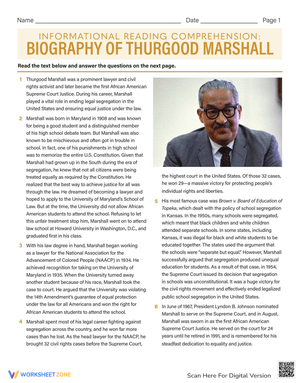
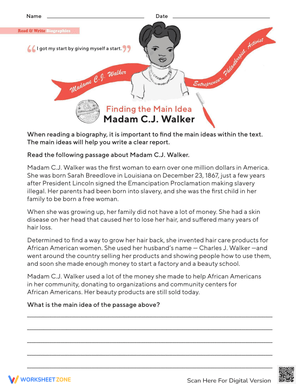
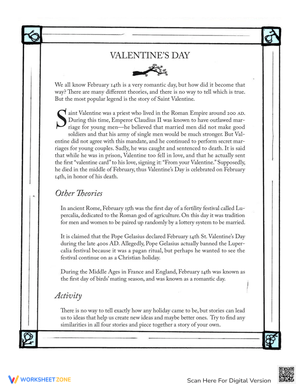
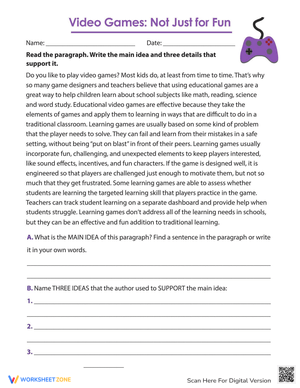
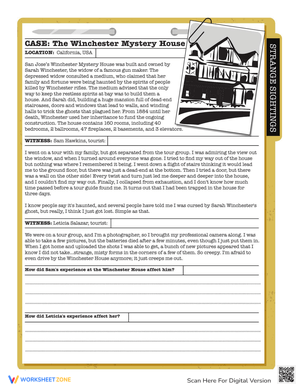
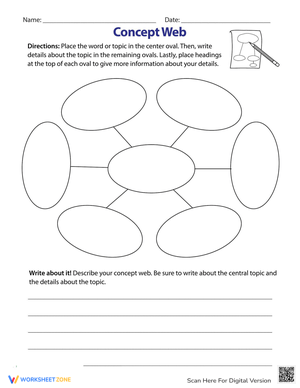
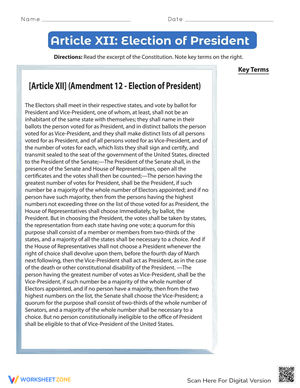
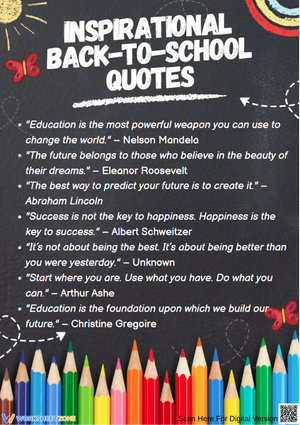
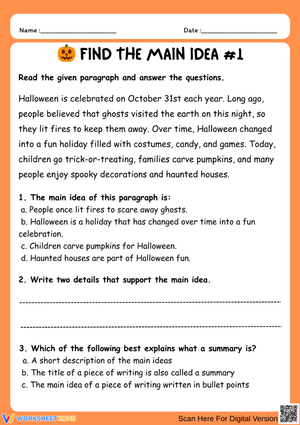
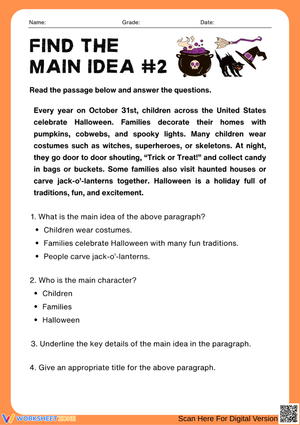
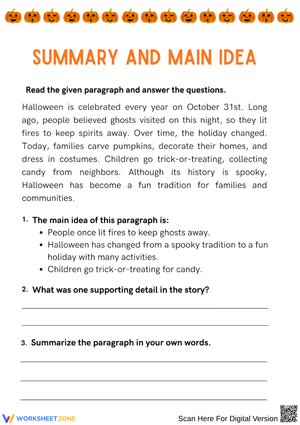
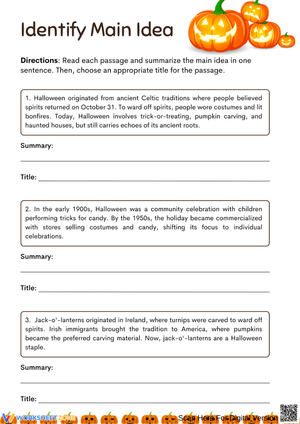
These main idea in nonfiction printable worksheets for 5th grade give teachers a set of ready-to-use resources for independent practice, small-group intervention, and homework — without rebuilding materials from scratch every time informational reading shows up on the schedule. Fifth graders aren't simply naming a broad topic anymore; they're expected to read informational text closely, sort which details carry the most weight, and explain how those details build the author's central claims.
The Specific Skills Each Worksheet Targets
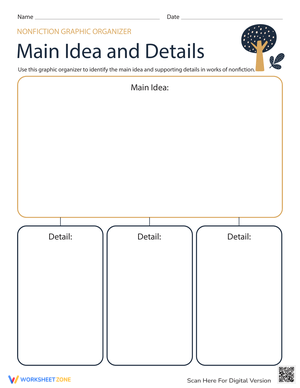
Grade 5 main idea work has a defined three-part expectation: determine the main idea, explain how key details support it, and write a summary. Each worksheet sequences these moves — students read the passage, write the main idea in one sentence, identify two or three supporting details, and draft a short summary. That sequence makes the summary feel earned rather than invented, because students have already named what the text is mostly saying and selected the evidence behind it before they write a single word of synthesis.
Fifth grade nonfiction also introduces more complex text structures — compare-contrast, cause-effect, problem-solution — that make main idea harder to isolate. When a passage uses a cause-effect structure, students often latch onto the effect (the dramatic outcome) and name it as the main idea, missing the broader claim the author builds across the section. These worksheets use passages that span multiple structures so students practice reading text organization as a comprehension tool, not just a term from a chart on the wall.
Errors Students Consistently Make With This Skill
The most persistent problem in Grade 5 is confusing a specific, vivid detail for the main idea. A passage about the water cycle will often contain a striking fact — the volume of water that evaporates from the ocean each day, or the temperature differential that drives precipitation at different altitudes — and students who find that fact first will circle it and move on. They've answered with something true and text-based. They've also answered the wrong question.
Summary writing reveals a related but distinct gap. Students who correctly identify the main idea will sometimes write a summary that lists every fact in passage order, producing something closer to a retelling than a synthesis. A summary that reads "First, the article says... Then it says... Also..." shows that the student can recall the text but hasn't decided which ideas are load-bearing. Having students write the main idea sentence first — before anything else — interrupts that list-making habit before it becomes automatic.
A third pattern worth flagging: students who treat headings as the answer. Headings signal subject matter, not authorial argument. A student who copies the heading word for word as the main idea has done pattern-matching, not reading for meaning. Several passages in this set include sections where the heading names the topic but the main idea requires understanding what the author is claiming about that topic — a harder and more important reading move.
Standard Alignment
CCSS.ELA-Literacy.RI.5.2 is the anchor standard for this set. It calls on fifth graders to determine two or more main ideas of a text, explain how they are supported by key details, and summarize the text. In classroom terms, that places main idea instruction alongside detail identification and summary writing — rarely any of these is taught well in isolation from the others. Teachers pacing toward this standard typically introduce it through short, highly structured passages early in the year, then build toward longer multi-section informational texts as the year progresses. Each worksheet fits across that progression: students move from identifying the main idea to citing supporting details to writing a brief summary, all within one focused reading task.
Reading Rockets' comprehension research reinforces this approach, noting that readers develop understanding by constructing meaning actively — not by scanning for the most plausible answer. That's why these worksheets ask students to explain their thinking at each step rather than simply select a choice and move on.
Building These Worksheets Into Your Weekly Lesson Plans
These resources land best when they follow a shared reading or mini-lesson rather than opening cold as independent work. During a whole-class lesson, a teacher models the process aloud: preview the heading, read the first and last sentences of each paragraph, note which ideas reappear across the section. Students then apply that same routine on their own worksheet — the think-aloud names the moves, and the independent practice asks students to execute those moves with text they're encountering for the first time on their own. This sequence uses gradual release intentionally: the teacher carries the thinking first, then hands it off.
For small-group intervention, pare the task down. Give students one paragraph instead of a full passage, offer two possible main idea sentences to evaluate before asking them to write one independently, and ask them to explain aloud why a particular detail supports the main idea before committing it to paper. That verbal explanation step is the most revealing part of the lesson — students who can't articulate why a detail supports the main idea often don't yet understand what "support" means in a nonfiction argument. That kind of targeted small-group work is where main idea in nonfiction printable worksheets for 5th grade show their practical value most clearly, because each worksheet gives the teacher and student a concrete shared text to reason through together.
- After a science or social studies read-aloud, use one worksheet as a quick formative check tied directly to the content lesson
- During the Friday review block, assign a passage with a summary task as a low-stakes exit ticket
- In a substitute plan, include two or three worksheets with a clear routine written at the top — read, underline, write — so students can work independently without extra guidance
- During literacy centers, place one passage for spiral review after whole-class instruction has already moved to a new standard
Making the Set Work Across Different Reading Levels
The most useful adjustment for students who struggle is shifting from generating to selecting. Give a student the completed main idea sentence and ask them to identify which two details from the passage best support it. The reading thinking is identical — they're still deciding what counts as evidence — but the writing demand is reduced. Once they're identifying supporting details accurately, move to partially completed prompts: "The author's main point is that renewable energy ___." That step-by-step increase in generation keeps the comprehension work rigorous while managing the cognitive load of producing written response at the same time.
For students who are ready for a more demanding version of the task, ask them to track two distinct main ideas across separate sections of the same passage and write a single summary that holds both claims. This directly mirrors the two-or-more-main-ideas expectation in RI.5.2 and gives advanced readers a genuine challenge rather than just more of the same exercise.
When the whole class is working on main idea in nonfiction printable worksheets for 5th grade at the same time, circulate with these adjustments in mind rather than printing separate versions for every tier. A brief one-on-one question — "Can you tell me in one sentence what the author wants the reader to understand?" — often surfaces more about a student's comprehension than a modified task sheet would, and it costs thirty seconds.
Frequently Asked Questions
What should a 5th grader be able to do with main idea beyond simply naming it?
Naming the main idea is the starting point, not the endpoint. At Grade 5, students should be able to identify which specific details support that main idea, judge whether a given detail is central or peripheral to the author's argument, and produce a summary that reflects the text's actual claim rather than restating the topic in broader terms. CCSS.ELA-Literacy.RI.5.2 expects students to handle two or more main ideas across a longer informational text, so single-paragraph practice should build deliberately toward that multi-section work throughout the year.
How do these worksheets connect main idea and summarizing without treating them as separate tasks?
Each worksheet asks students to complete both moves in sequence — identify the main idea, select supporting details, then write a summary — so the relationship is structural rather than incidental. Students who complete the detail step before writing the summary consistently produce stronger summaries because they've already decided what the most important evidence is. Teachers who use these resources within a nonfiction unit often notice that summary quality improves noticeably by mid-unit, once students stop treating summarizing as a retelling task and start treating it as a synthesis of main idea and evidence.
Can these worksheets be used during science and social studies, not only during ELA?
The passages in this set draw from science, geography, history, and biography, which makes them useful well outside the ELA block. A science teacher working through an ecosystems unit can assign a relevant passage and get information about both content knowledge and reading comprehension from the same task. That cross-curricular use is one of the practical reasons teachers reach for main idea in nonfiction printable worksheets for 5th grade when planning content-area lessons — not just literacy rotations.
How should teachers give feedback on student summaries from these worksheets?
Focus on two things: whether the summary reflects the main idea the student named, and whether it cuts the extraneous details. Students at this level tend to write summaries that are either too broad ("This was about water") or too narrow (two verbatim sentences from the passage). A targeted feedback comment — "Your summary should show that the author argues X, not just that the topic is Y" — gives students a clear revision target without rewriting the work for them, and it models the distinction between topic and argument that the whole skill depends on.












 Interactive Worksheet Maker
 Quiz Maker
 Word Search Maker
 Crossword Puzzle Maker
 Word Scramble Generator
 Sentence Scramble Generator
 Handwriting Worksheet Generator
 Name Tracing Generator
 Fill In The Blank Generator