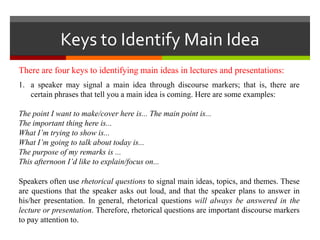
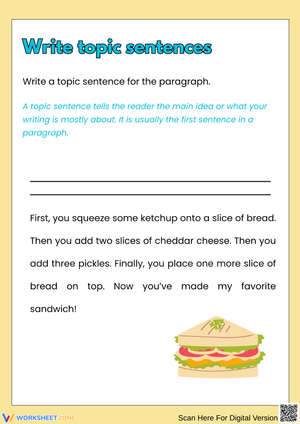
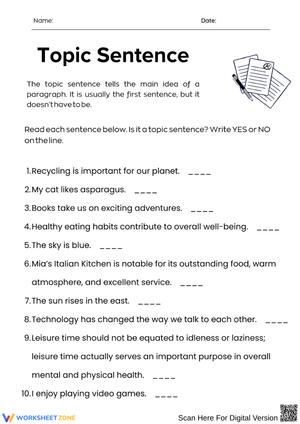
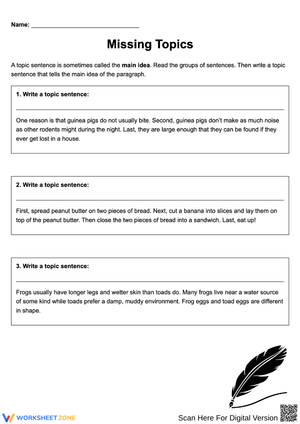
These main idea worksheets for 5th grade give teachers a ready-to-print set of nonfiction reading tasks that move past answer-circling into evidence-based thinking. Each worksheet pairs a short informational passage with structured response prompts — students name the main idea in a complete sentence, identify the details that directly support it, and write a focused summary. That combination makes the set practical for independent work, small-group discussion, and intervention folders without requiring any additional materials.
The Specific Skills Targeted
Each worksheet works through the full comprehension sequence, not just the recognition step. Rather than asking students to select among four answer choices, the prompts require written responses — a meaningful distinction at this grade level because multiple-choice formats can be passed by students who are guessing from context rather than reading purposefully.
- Read a short nonfiction passage on a science, social studies, or high-interest topic.
- State the main idea in a complete sentence — not a topic label, a full claim.
- Identify two or three supporting details that directly develop the central idea.
- Cross out one detail from a provided list that appears in the text but does not connect to the main point.
- Write a short summary that captures the author's overall message without pulling in outside information.
- Use a graphic organizer to sort ideas before writing, available on each worksheet for students who need a visible thinking structure before drafting.
The cross-out task earns its place. Fifth graders frequently treat all facts in a passage as equally relevant — the surprising statistic, the historical date, and the cause-and-effect explanation all seem to carry the same weight. Asking students to actively eliminate an unrelated detail makes the discrimination work visible in a way that selection formats never do.
Frequent Student Errors Worth Watching For and Addressing
The most persistent error in fifth-grade main idea work is confusing a vivid detail for the central point. A student reading a passage about how coral reefs respond to warming water temperatures will often write "coral turns white" as the main idea — because that detail is memorable — rather than the larger argument the text builds about ecosystem stress. The detail is accurate; it just is not the point the author is making. Each worksheet's "state the main idea in a complete sentence" prompt surfaces this pattern before it compounds into a habit.
A second pattern appears at the summary stage. Students who can name the main idea verbally collapse into list mode when they write: "the coral turns white and fish leave and the reef dies" is a sequence, not a summary. A sentence frame — The author's main point is ___ because the text explains ___ and ___ — interrupts that reflex and also speeds up teacher feedback, because the frame shows exactly where the student's thinking broke down.
The third error is less commonly discussed but just as consistent: students who latch onto the first sentence of each paragraph as the main idea. Topic sentences are often — but not always — main idea sentences, and third-grade instruction sometimes over-teaches that shortcut. Fifth graders apply it mechanically even when the passage structure does not support it. Each worksheet in the set deliberately mixes paragraph types — some with strong topic sentences, some with implied central ideas — so teachers can identify and address that pattern directly.
Standard Alignment
Common Core State Standards ELA, Reading Informational Text RI.5.2 sets three linked expectations for fifth grade: students determine two or more main ideas in a text, explain how key details support each idea, and summarize the text. Each worksheet's task sequence mirrors that three-part structure — identify, support with evidence, synthesize. Teachers who track RI.5.2 progress can use completed worksheets as formative evidence of where individual students are in that progression.
The phrase "two or more" in RI.5.2 marks a real developmental step from third and fourth grade, where most practice centers on single-paragraph texts and a single central idea. By fifth grade, students need enough text length to see a second idea emerge — which is why the passages run two to four short paragraphs. That range is enough complexity to surface the multi-idea structure the standard requires without turning each worksheet into a stamina exercise. Teachers using main idea worksheets for 5th grade alongside their informational reading units will find the passage topics coordinate naturally with common science and social studies content areas.
Lesson-Planning Ideas to Get the Most From These Worksheets
The clearest entry point is the whole-group model-and-release. Read the passage aloud, think aloud about which sentence is doing the most work — which idea the author keeps reinforcing through the details — then release students to finish the response prompts independently. That pattern fits the ten minutes before a writing unit begins, a Monday warm-up after morning meeting, and the Friday review block when students need structure but not new instruction.
In small groups, the same worksheet shifts function. Instead of independent completion, use it as a discussion anchor: ask one student to name the main idea, ask a second to confirm or challenge using a specific detail from the text, then ask a third to summarize without looking back at the passage. That oral rehearsal before writing reliably surfaces misconceptions before they appear on a larger assessment. Students who struggle to move from a list of details to a synthesized statement benefit from the graphic organizer step — mapping the relationship visually first makes the summary writing less of a leap.
For intervention work, main idea worksheets for 5th grade can slot directly into a reading folder a student works through during a teacher-led rotation. The task directions are short and consistent enough that students rarely need the format re-explained after the first use — which matters when you need three students working independently while a guided reading group runs at the same table.
Differentiating the Worksheets Across Ability Levels
Students working above grade level get more from the set when the graphic organizer option is closed off and they are asked to write a two-sentence explanation of how the two main ideas in a passage relate to each other. That task aligns directly with the full RI.5.2 expectation and demands analytical synthesis, not just identification. A brief partner debate — which main idea carries more weight in the passage, and why — extends the thinking further without requiring a different worksheet.
For students reading below grade level, the most effective adjustment is a single pre-read of the passage aloud before independent work begins. That step reduces decoding load enough to let comprehension work come forward. The tasks themselves do not need to change. A struggling reader paired with a stronger partner for the passage read, then completing the written responses independently, can engage with the same thinking as grade-level peers — the support is in the access point, not the expectation.
On-grade students typically move through each worksheet independently and benefit most from a brief partner-compare step at the end: share main idea sentences, resolve any disagreement using text evidence, and revise if needed. That process mirrors what standardized tasks ask students to do internally, which makes it low-stakes test preparation with no additional prep.
Frequently Asked Questions
What should each worksheet in this set ask students to do?
Each worksheet should ask students to identify the main idea in a complete sentence, select supporting details that directly develop that idea, and write a short summary. At fifth grade, worksheets built around nonfiction passages with short written responses are more diagnostic than multiple-choice formats — they show whether students understand the relationship between main idea and evidence, or are only recognizing familiar vocabulary in the answer choices.
How does this set connect to RI.5.2 specifically?
RI.5.2 asks fifth graders to determine two or more main ideas, explain how key details support them, and summarize the text. Each worksheet is built through all three parts of that standard rather than stopping at identification. Teachers can use completed worksheets to pinpoint exactly where a student's understanding breaks — whether at the determine step, the explain step, or the summarize step — which makes the set useful for both daily instruction and progress monitoring.
Can the same worksheet work for homework and intervention without changes?
Because the format stays consistent across the set, students learn the routine quickly — and that consistency is exactly what makes main idea worksheets for 5th grade practical across multiple settings. A student working in an intervention folder follows the same task structure practiced during class, so cognitive effort goes toward comprehension rather than decoding directions. That predictability also means teachers can assign the same worksheet for homework without re-explaining the format the following morning.
How is main idea different from supporting details at this grade level?
The main idea is the claim or central point the entire passage builds toward. Supporting details are the facts, examples, and explanations that develop and defend that point. Fifth graders often need explicit, repeated practice with this distinction — not because the concept is new, but because the texts grow more complex. A detail that is true and important is still not the main idea if the passage uses it to prove a larger argument. That nuance is where grade 5 main idea instruction most consistently needs to go.












 Interactive Worksheet Maker
 Quiz Maker
 Word Search Maker
 Crossword Puzzle Maker
 Word Scramble Generator
 Sentence Scramble Generator
 Handwriting Worksheet Generator
 Name Tracing Generator
 Fill In The Blank Generator