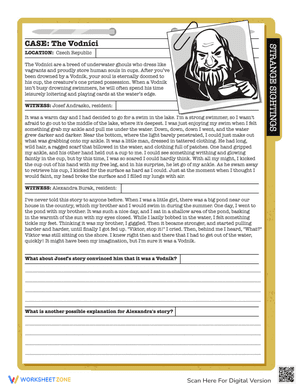
5th grade compare and contrast printable worksheets give teachers a focused, low-setup way to practice one of the most cognitively demanding comprehension moves in upper elementary reading. Each worksheet asks students to read closely, sort evidence, and explain a relationship — not simply list what is alike or different. The set covers the full range of comparison tasks Grade 5 reading requires: characters under pressure, two texts on the same event, theme development, and how author craft choices shape the way information reaches the reader.
The Reading Moves These Worksheets Build
In Grade 5, comparison is expected to be evidence-based and text-specific. A student who writes "both characters want to succeed" without pointing to a passage moment is working at a surface level that the standards have moved past. What the grade actually demands looks more like: identify how one character's response to conflict differs from another's, explain what that difference reveals about each character's motivation, and then cite the text. These worksheets train that sequence repeatedly, across both literary and informational reading.
Each worksheet targets one of several comparison types:
- Two characters facing the same conflict and responding differently
- Two informational texts covering the same event or concept
- Theme development traced across two literary passages
- How two authors organize similar content through different text structures — chronological order versus problem-solution, for example
Graphic organizers appear throughout — Venn diagrams and two-column comparison charts — but they function as planning tools, not finished products. Text-dependent questions follow each organizer and ask students to move from sorted notes to a written explanation: what the comparison shows, not just what the comparison is. Several worksheets also include a signal-word annotation step, where students mark words like however, both, similarly, and in contrast directly in the passage before completing the organizer. That move trains students to read with a comparison structure in mind instead of hunting for evidence after the fact.
Patterns in Student Work Worth Watching
The error teachers encounter most often is not failure to notice differences. Students can usually see that two characters behave differently. The problem is they write the comparison without anchoring it to the text. A 5th grader will write "Character A is determined, but Character B gives up easily" and consider the job done — an observation has been made, but no evidence has been cited. When these students are prompted to find support in the passage, they usually can. The gap is that they did not know they needed to include it.
Category confusion in the organizer is the second pattern. Students will place a detail that describes only one text into the "both" section of a Venn diagram, usually because they assume — without checking — that the detail applies to the second text as well. One instructional fix: ask students to re-read the corresponding section of the second text immediately after placing any item in the "both" circle. That single checkpoint catches most false similarities before they make it into the written response.
There is also a developmental ceiling worth naming directly. Many 10- and 11-year-olds default to surface-level comparison — setting descriptions, character names, plot sequence — because those were the moves the task rewarded in earlier grades. Shifting them toward comparison of author craft, text structure, or theme requires repeated exposure to those categories over time. A reminder prompt at the top of a worksheet is not sufficient. The comparison type needs to be modeled explicitly in shared reading before students attempt it on their own.
How to Build These Worksheets Into Your Instructional Week
The most reliable entry point is directly after a close reading lesson. Students have already encountered the text and talked through it with the class; the worksheet becomes a structured way to move from discussion into independent written analysis. A 12-minute work period usually handles the organizer portion, and a brief share-out before the period ends surfaces the most useful misconceptions for the next day's instruction.
In literacy centers, each worksheet works well as a self-contained rotation task. The directions are explicit enough that students rarely need to interrupt the teacher during a small-group pull — which is the practical test for whether a center task is actually ready to run without live teacher presence. Students annotate, sort, and write within the rotation window without needing additional explanation.
For small-group reteach, the organizer becomes a conversation tool rather than a silent work task. The teacher reads a short section of the passage aloud, pauses, and asks the group to decide together where a detail belongs — similarities, differences, or one-text-only. The reasoning happens out loud before anything is written, and the written questions at the end can be answered orally when writing fluency is not the target skill for that session.
5th grade compare and contrast printable worksheets also hold up well as sub-plan materials. The task is contained, the directions are clear, and a substitute can manage the session without prior knowledge of the current unit. A teacher who prepares ahead can leave a completed-example worksheet alongside the student copies so students have a concrete reference if they get stuck mid-task.
Standard Alignment
The Common Core State Standards for ELA/Literacy make comparison work a Grade 5 expectation across both literary and informational reading. RL.5.3 asks students to compare and contrast two or more characters, settings, or events using specific details from the text. RL.5.9 asks students to compare and contrast stories in the same genre according to their approaches to similar themes and topics. RI.5.9 asks students to integrate information from two texts on the same topic and explain how the authors treat the subject differently.
These 5th grade compare and contrast printable worksheets address all three standards directly. The literary passage worksheets connect to RL.5.3 and RL.5.9; the informational text worksheets connect to RI.5.9. For teachers who need documentation of standards-aligned practice during instructional reviews or walkthroughs, the organizer and written-response sections together provide evidence of both the sorting work and the evidence-based explanation these standards require at Grade 5.
Adapting the Set for a Range of Learners
These 5th grade compare and contrast printable worksheets keep the core task stable across ability levels — every student identifies a comparison, organizes evidence, and explains a relationship. What changes is the amount of structure surrounding that work, not the intellectual demand of the task itself.
For students reading below grade level, shorter passages with fewer embedded details reduce cognitive load without removing the comparison requirement. Partially completed organizers — where category labels are already filled in and one example has been placed — help students understand the sorting system before applying it independently. Preteaching the comparison categories before students open the passage is also productive; once students know they are looking for how two characters respond differently to conflict, they read with considerably more focus.
For English learners, a signal-word bank printed at the top of each worksheet and sentence frames for the written response lower the language barrier without simplifying the thinking. Frames like Both texts show... while only one text explains... or One key difference is... give students a starting point for producing a complete comparison rather than stalling at a blank page. Oral rehearsal with a partner before writing is a useful addition that teachers can build in without modifying the worksheet at all.
For students ready for more challenge, the extension move is evaluation: not just comparing two texts on the same topic, but arguing which author presents the information more clearly and explaining why. That question can be added as a written prompt at the end of the set without changing anything else. Every student still completes the same organizer; advanced students simply go one analytical step further.
Frequently Asked Questions
What comparison tasks are 5th graders expected to handle in reading class?
At Grade 5, students compare characters, themes, story events, topics, and how two texts present information differently. The standard moves past identifying similarities and differences and asks students to explain those relationships with evidence from the reading. This set addresses each of those comparison types across both literary and informational text.
How do these worksheets work with both literature and informational text?
The set includes worksheets built around literary passages — characters, themes, and story events — and worksheets built around paired informational texts on the same subject. The graphic organizer format holds up for both text types, and the text-dependent questions are calibrated to the kind of comparison each passage requires. Teachers can pull from the literary or informational worksheets depending on what the class is currently reading.
Are Venn diagrams still a useful tool at this grade level?
Yes, when they function as planning tools rather than end products. At Grade 5, a Venn diagram helps students organize evidence before writing. The problem arises when the completed diagram is treated as the finished task. The most productive sequence is to sort evidence in the organizer first, then answer a written question that requires citing the strongest specific details from those sorted notes. That two-step routine also helps teachers distinguish a comprehension problem from a writing-organization problem — which are not always the same issue.
How do I fit one of these worksheets into a 45-minute reading block?
A workable sequence: ten minutes of shared reading or passage review, twelve to fifteen minutes of independent organizer work, five minutes of partner comparison, and ten minutes of whole-group debrief focused on the written response. The remaining time covers transitions and any direct instruction the class needs before independent work begins. The organizer and written-response sections are short enough that neither dominates the period.















 Interactive Worksheet Maker
 Quiz Maker
 Word Search Maker
 Crossword Puzzle Maker
 Word Scramble Generator
 Sentence Scramble Generator
 Handwriting Worksheet Generator
 Name Tracing Generator
 Fill In The Blank Generator