


























Views
Downloads

Comparing Texts Worksheet | Essential Grade 5 ELA
Paste this activity's link or code into your existing LMS (Google Classroom, Canvas, Teams, Schoology, Moodle, etc.).
Students can open and work on the activity right away, with no student login required.
You'll still be able to track student progress and results from your teacher account.
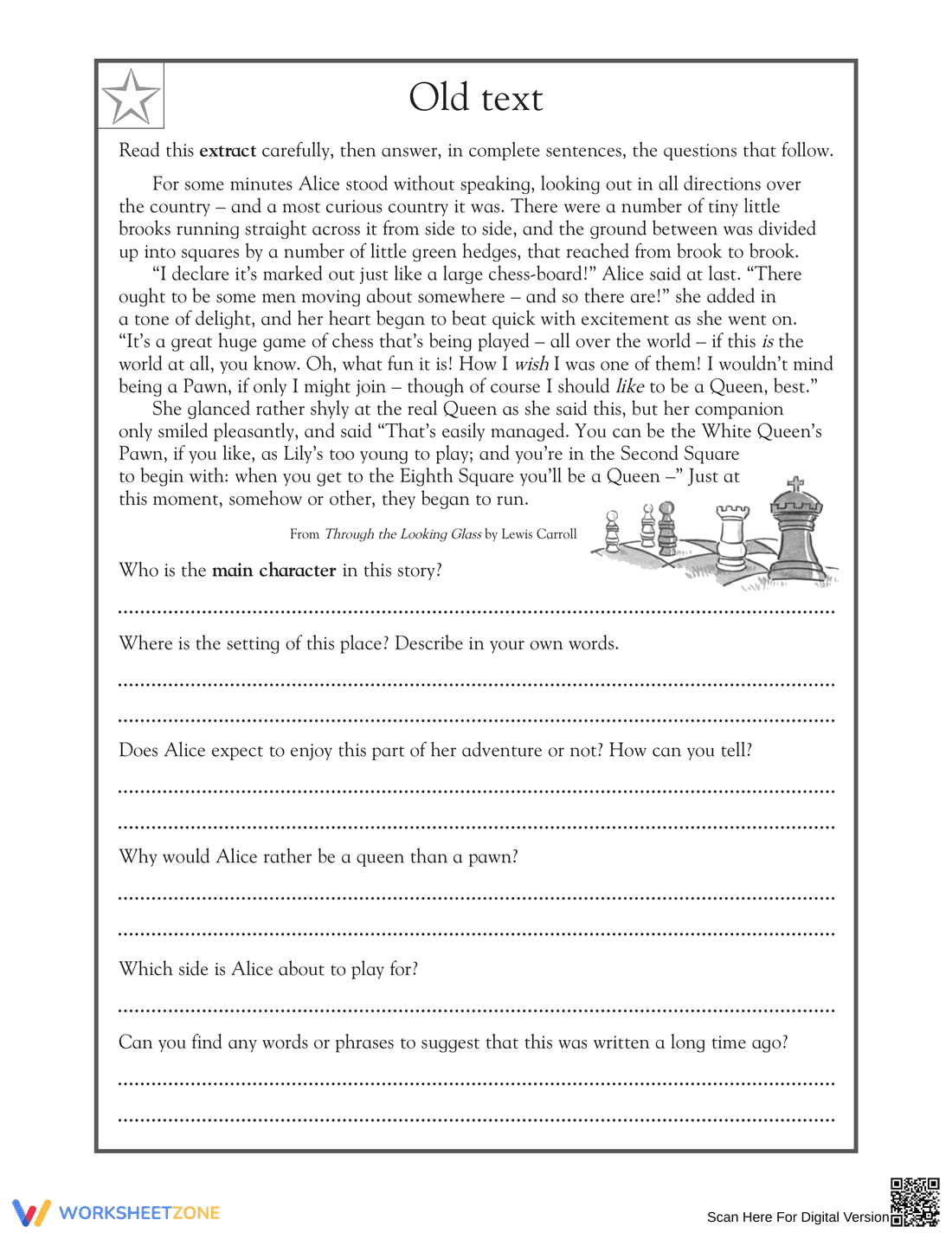
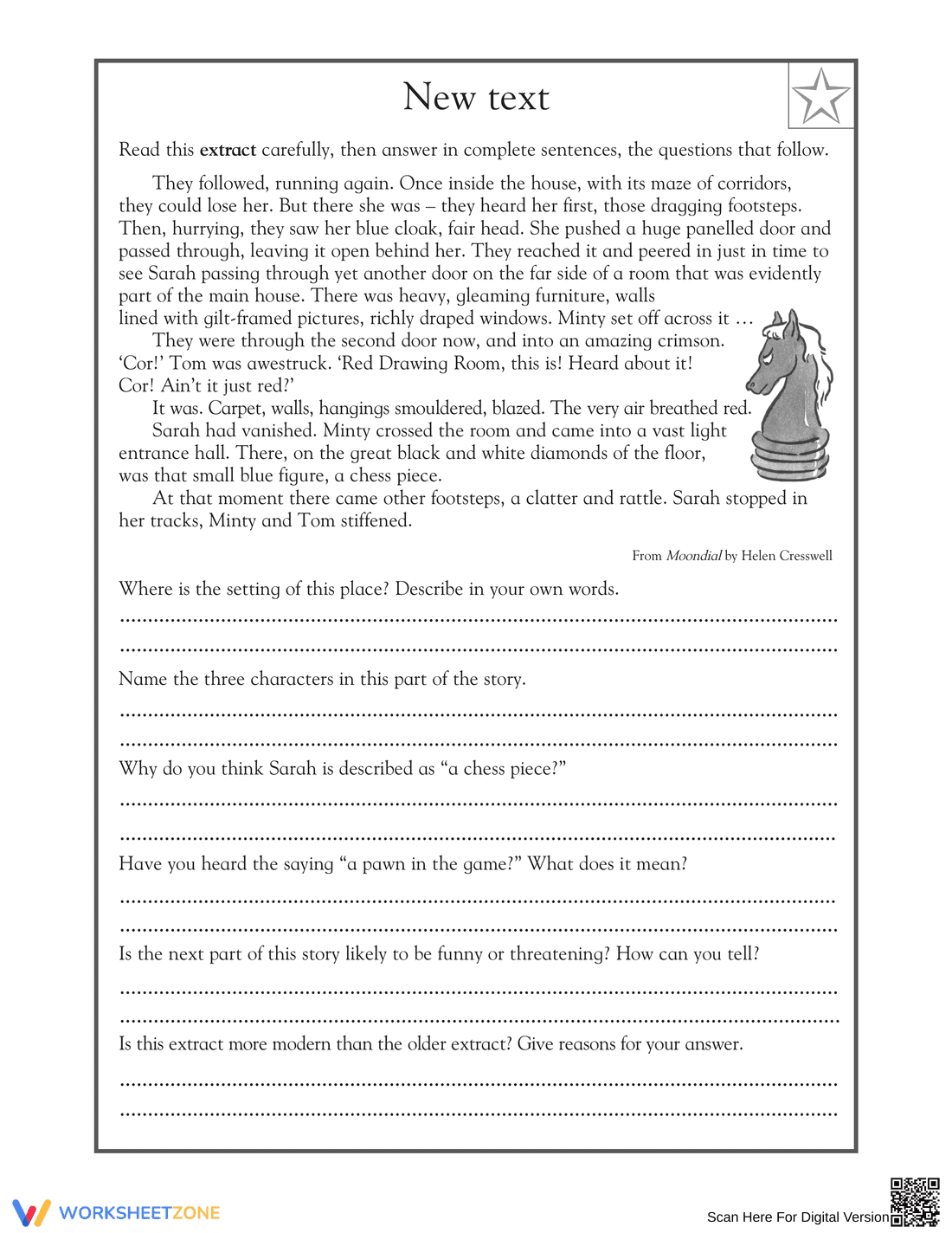
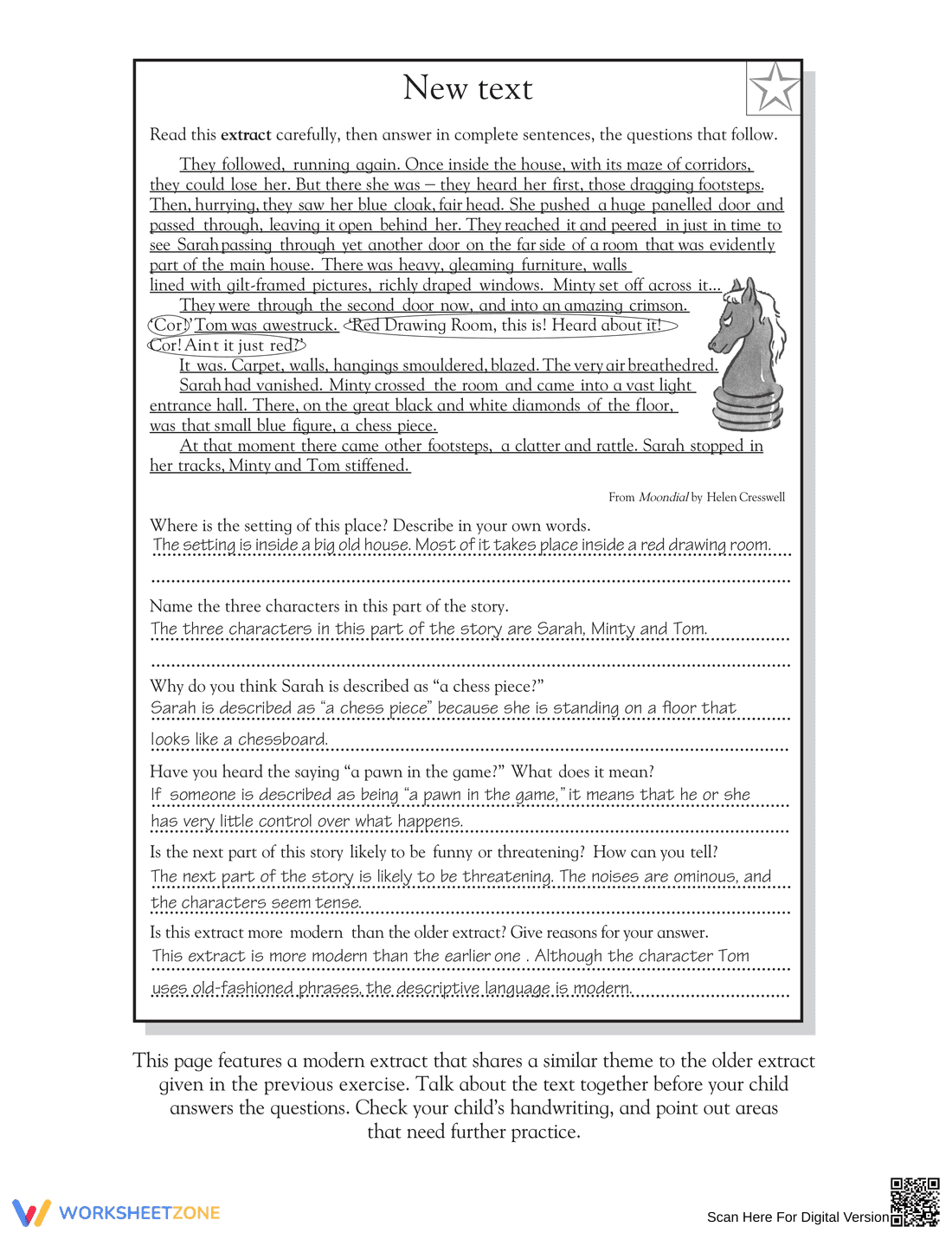
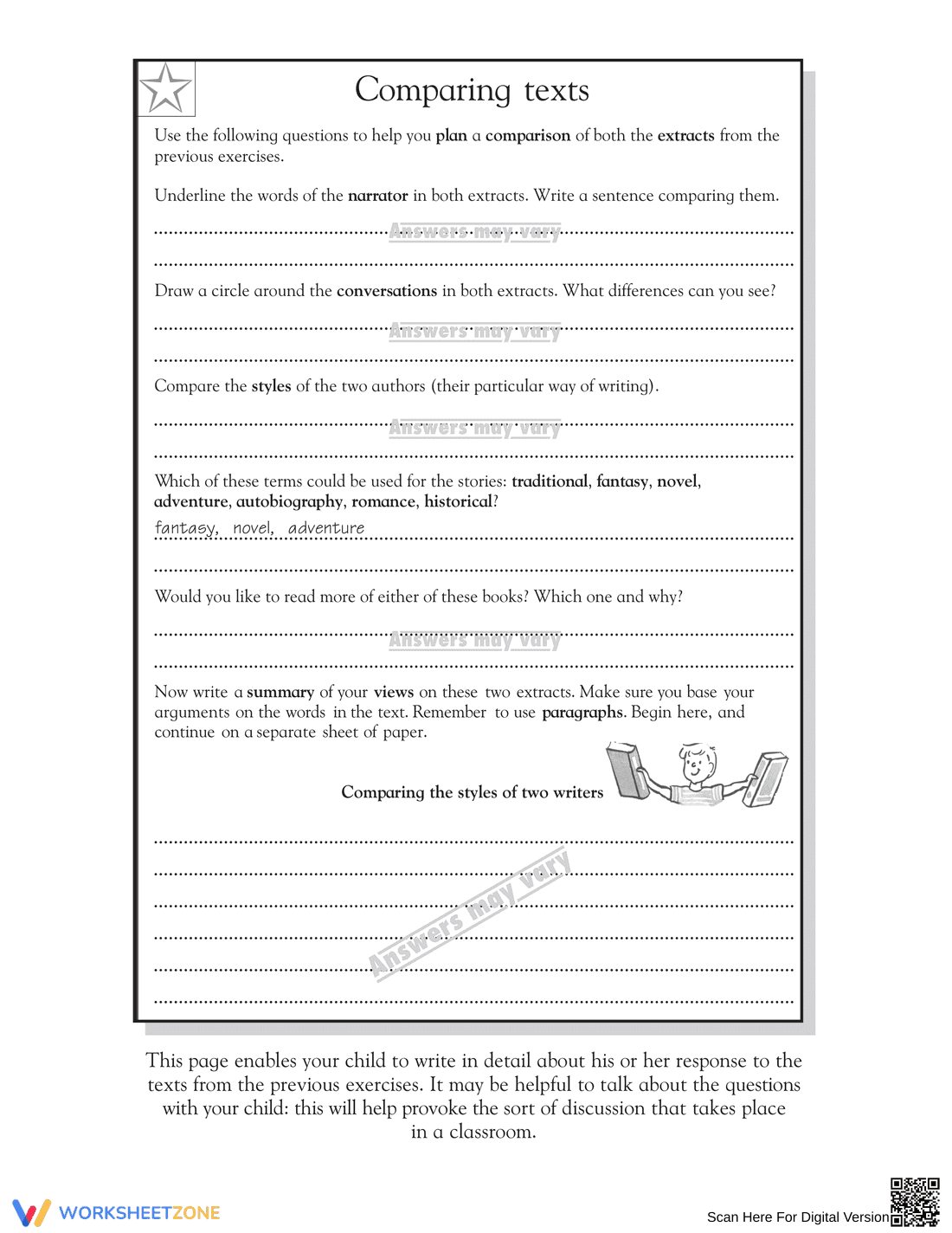
This Grade 5 ELA worksheet empowers students to analyze and compare two distinct literary extracts to identify shifts in style and tone. By examining a classic text alongside a modern selection, learners develop the critical thinking skills needed to synthesize information across multiple sources. Students will demonstrate mastery by citing specific evidence to support their comparative claims.
At a Glance
- Grade: 5 · Subject: ELA
- Standard:
CCSS.ELA-LITERACY.RL.5.9— Compare and contrast stories in the same genre on similar themes- Skill Focus: Comparative Literary Analysis
- Format: 6 pages · 18 problems · Answer key included · PDF
- Best For: Independent practice or literary circles
- Time: 45–60 minutes
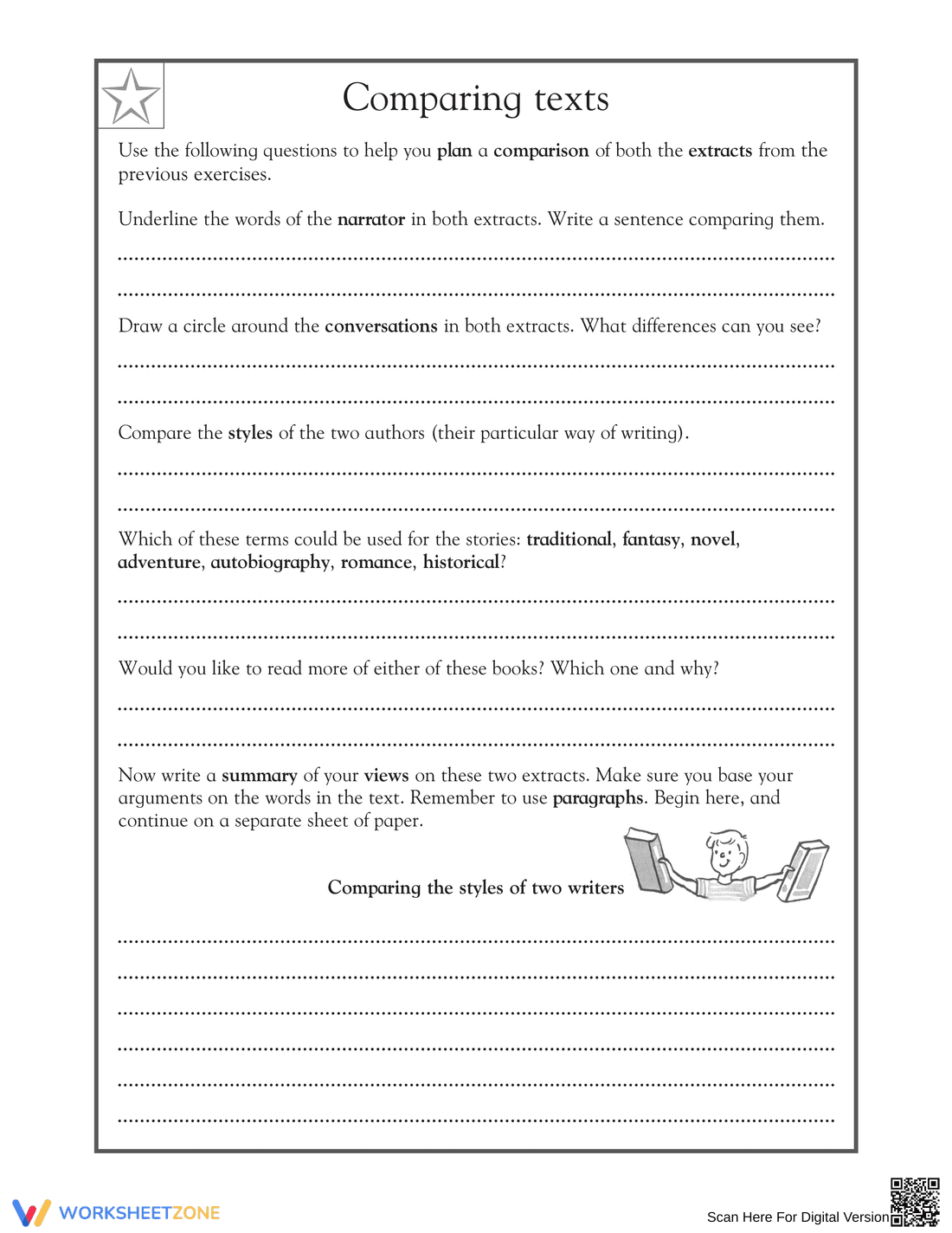
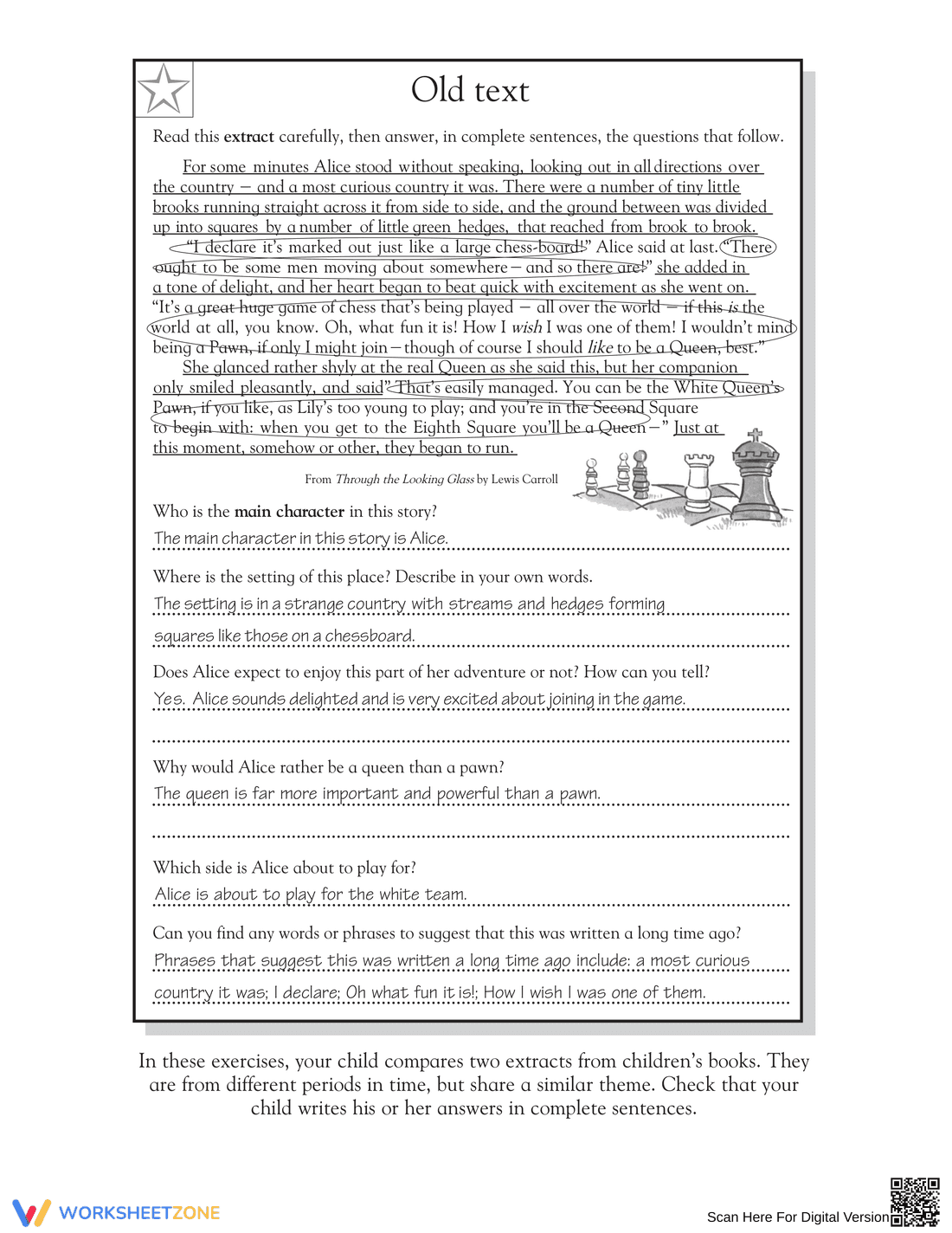
This comprehensive 6-page PDF includes three student activity pages and three corresponding answer keys. The resource features high-quality literary extracts from "Through the Looking Glass" by Lewis Carroll and "Moondial" by Helen Cresswell. Students encounter 18 total tasks, including short-answer questions, sentence completion, and a final summary paragraph. The layout provides ample writing space and clear headings to guide students through the comparative process.
The worksheet follows a structured progression to ensure student success. First, students engage in guided practice with an "Old text" extract, answering 6 foundational questions about setting and character. Next, they move to supported practice with a "New text" extract, identifying parallel elements like the chess motif. Finally, the independent practice section requires students to synthesize their findings by comparing the styles, narrators, and genres of both pieces. This gradual-release model ensures students are prepared for the final summary task.
This resource is primarily aligned with `CCSS.ELA-LITERACY.RL.5.9`, which requires students to compare and contrast stories in the same genre on their approaches to similar themes and topics. It also supports `CCSS.ELA-LITERACY.RL.5.1` by requiring students to quote accurately from a text when explaining what the text says explicitly. Both standard codes can be copied directly into lesson plans, IEP goals, or district curriculum mapping tools.
Use this worksheet during the independent practice phase of a lesson on comparative literature. It works exceptionally well as a summative assessment after students have practiced identifying narrative voice in single texts. For a formative assessment, observe how students handle the comparison of authorial styles on the final page to see if they can identify specific linguistic differences. Completion typically takes 45 to 60 minutes.
This resource is designed for Grade 5 students but is also suitable for advanced Grade 4 learners or Grade 6 students needing a review of comparative analysis. It is an excellent pairing for a unit on fantasy literature or historical fiction. Teachers can use this as a standalone sub plan or as a structured homework assignment to reinforce classroom instruction and build reading stamina.
According to Fisher & Frey (2014), the ability to synthesize information across multiple texts is a hallmark of advanced literacy development in the middle grades. This worksheet targets CCSS.ELA-LITERACY.RL.5.9 by requiring students to analyze how different authors approach similar themes of fantasy and mystery across different historical periods. By engaging with 18 specific tasks that range from literal comprehension to stylistic analysis, students build the cognitive stamina necessary for complex literary criticism. The inclusion of both a 19th-century classic and a 20th-century modern extract provides the necessary contrast for students to identify shifts in narrative voice and descriptive language. Research indicates that structured comparison tasks significantly improve a student's ability to cite textual evidence and explain authorial intent. This resource serves as a rigorous tool for measuring student progress toward Grade 5 mastery in reading literature and comparative analysis.


