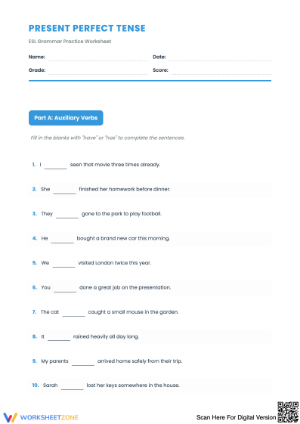
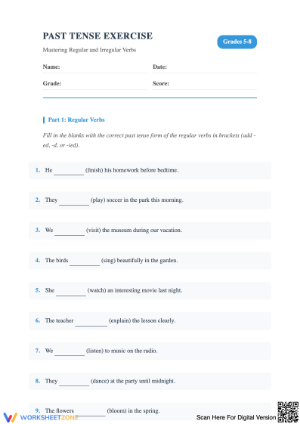
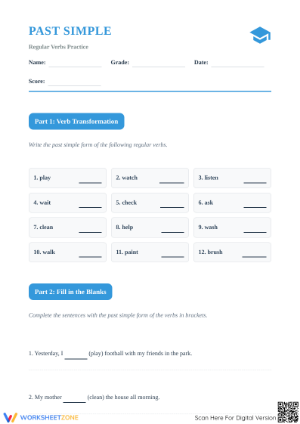
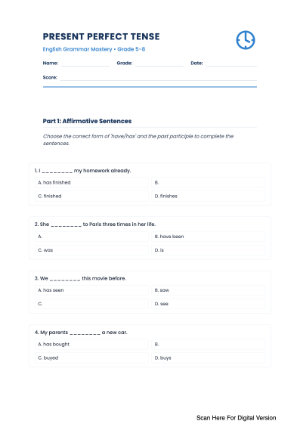
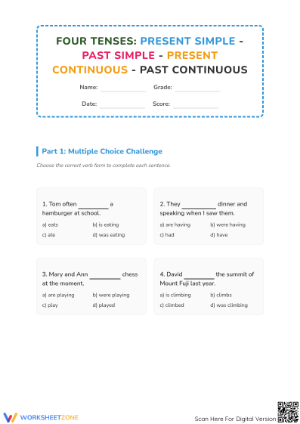
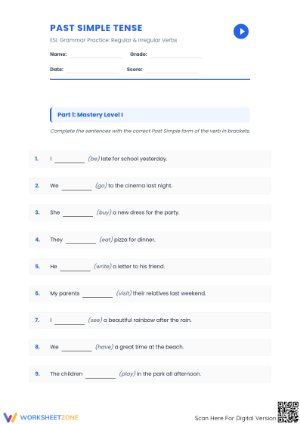
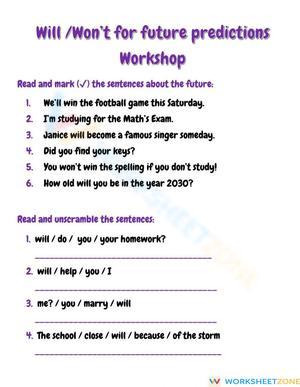
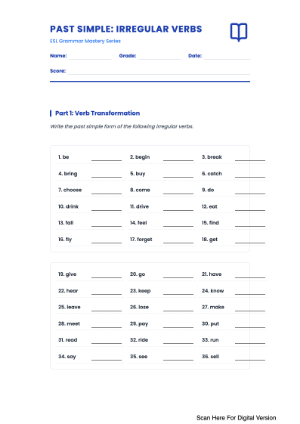
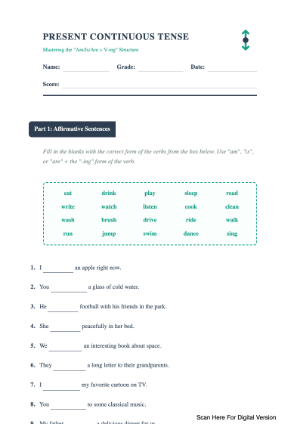
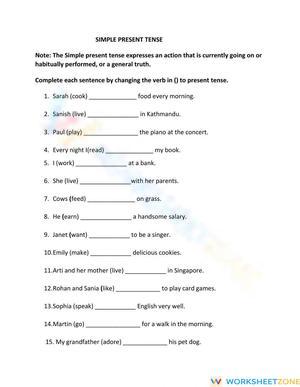
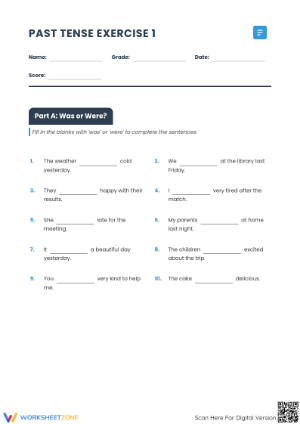
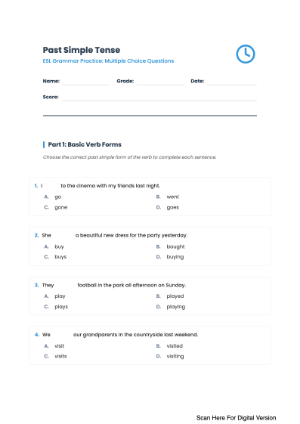
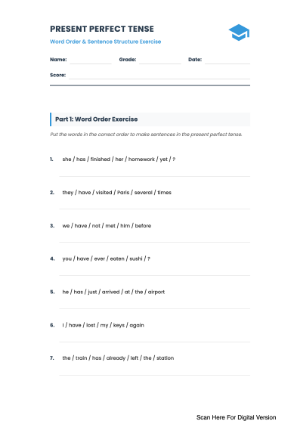
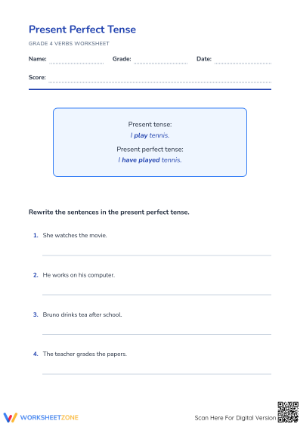
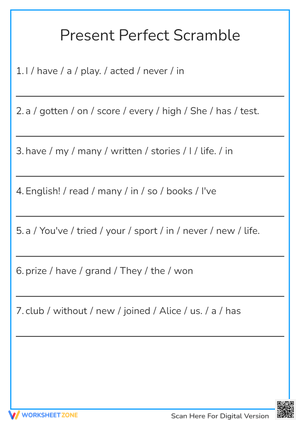
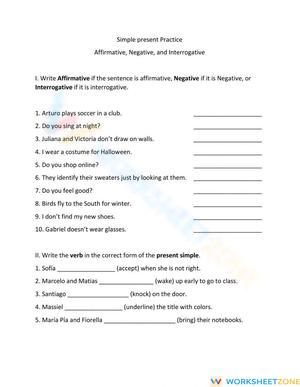
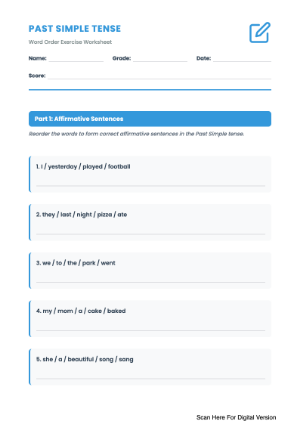
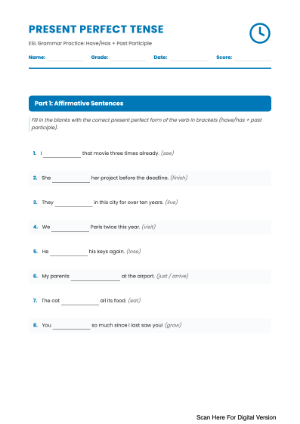
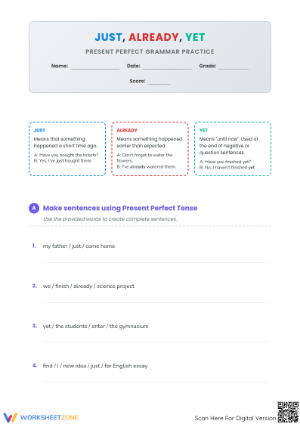
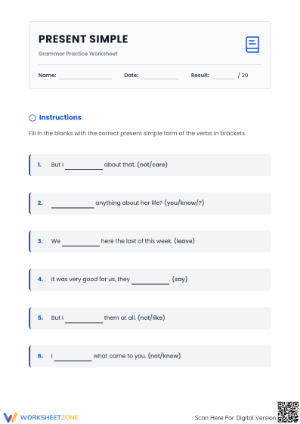
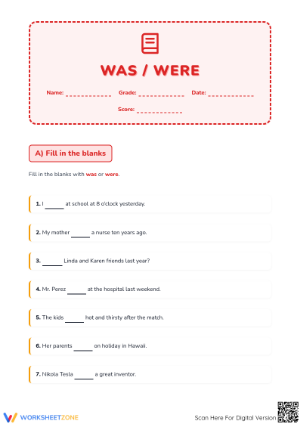
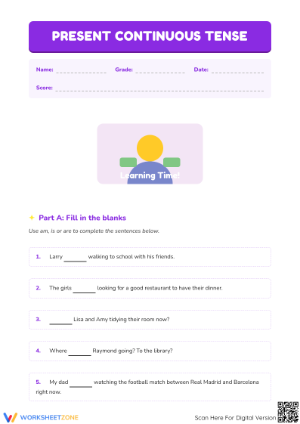
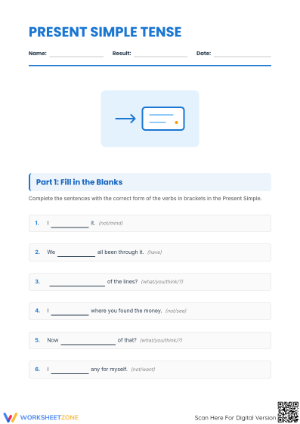
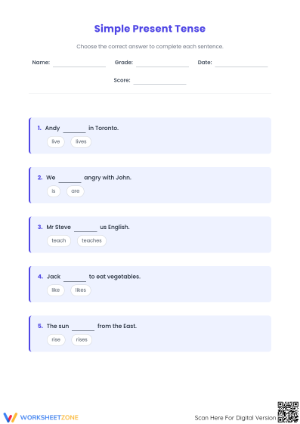
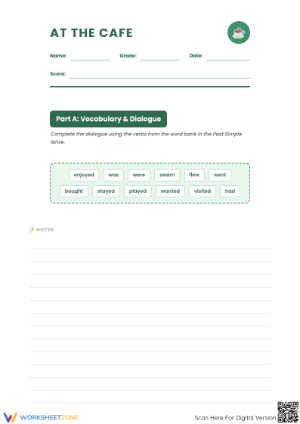
These 5th grade tenses printable worksheets resources go straight to what grade 5 actually requires—distinguishing present perfect from simple past, maintaining tense consistency across connected sentences, and understanding why she walked, she has walked, and she will have walked are not interchangeable. The set gives teachers ready material for grammar blocks, writing conferences, and small-group reteach without building new examples from scratch each time the need surfaces.
The Specific Skills Targeted
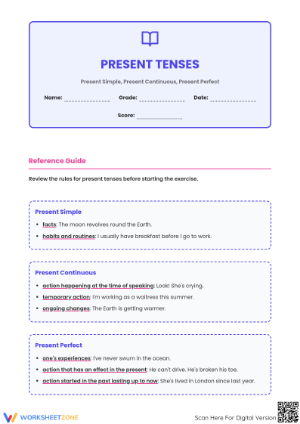
The biggest instructional lift in fifth grade grammar is moving students from naming tenses to using them with purpose. These worksheets cover that full progression, starting with a brief review of simple forms and moving into the territory that trips students up most: the three perfect tenses and tense consistency within a passage.
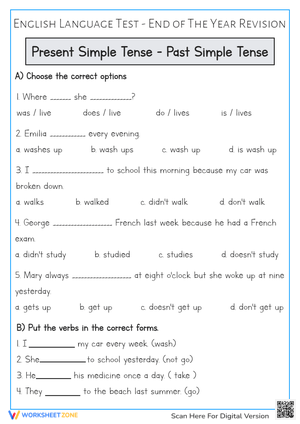
- Simple tense consolidation: Students identify and rewrite present, past, and future verb forms in sentences with clear time signals such as yesterday, every day, and next week.
- Present perfect: Students distinguish has/have + past participle from simple past and explain in writing what that distinction adds to sentence meaning.
- Past perfect: Students order two events, mark which action was completed first, and form the correct had + past participle structure.
- Future perfect: Students complete sentences containing a fixed future deadline, selecting the verb form that shows the action will be finished before that deadline arrives.
- Passage-level editing: Students read a short paragraph, underline every verb, circle any tense inconsistency, and write a corrected version in the space provided.
The passage-level editing worksheets reveal what isolated sentence items miss. A student who completes present perfect fill-in-the-blank exercises correctly can still write a narrative that opens in past tense and drifts to present by the third sentence. That inconsistency only becomes visible when students have to inspect verbs across several connected sentences at once.
Tense Errors Worth Anticipating Before You Teach the Lesson
Fifth graders tend to make a few predictable tense mistakes, and recognizing them before the lesson makes correction work faster. The most common: students correctly form the past tense of the first verb in a sentence but revert to simple present on the second—writing She finished her lunch and runs outside rather than ran. That shift is so automatic they rarely catch it during a first read. These 5th grade tenses printable worksheets resources include sentence-level editing tasks that require students to read verb by verb rather than scanning for general meaning, which is exactly the habit that catches this pattern.
Perfect tenses produce a separate category of error. When students write I have went to the store or She has ran the race, they understand the helping verb structure but have not internalized the past participle forms. Keeping a short irregular verb reference visible while students work through the perfect tense worksheets reduces errors that are really vocabulary problems, not grammar misunderstandings. The other common mistake is using present perfect where past perfect belongs: By the time we arrived, she has already eaten instead of had already eaten. The phrase by the time is a reliable teaching anchor because it signals that one action was fully completed before another began.
Standard Alignment
These worksheets address CCSS.ELA-Literacy.L.5.1.c, which calls for students to use verb tense to convey various times, sequences, states, and conditions, and CCSS.ELA-Literacy.L.5.1.d, which requires students to recognize and correct inappropriate shifts in verb tense. In classroom terms, L.5.1.c drives instruction on perfect tense formation and what each form communicates—it is the teaching standard. L.5.1.d is the application standard and shows up most clearly in writing workshop when students audit a draft verb by verb. The passage-editing worksheets in this set align directly to L.5.1.d and work well as a concrete reteach move before students return to a revised piece of writing.
Fitting These Worksheets Into a Real Teaching Week
In most fifth grade classrooms, grammar instruction runs in short daily blocks rather than extended lessons. These worksheets fit that rhythm because each one targets a narrow skill rather than packing every tense form into one sitting. At the start of a tense unit, use the simple tense review worksheet as a morning warm-up—students can complete it in the eight minutes before announcements, and the results show immediately which students need explicit review before perfect tenses are introduced. After a mini-lesson on present perfect, assign the comparison worksheet for independent practice. Reserve the passage-level editing worksheet for a small group that finishes early or for the Friday review block, when the goal is looking at verb choices across a full paragraph rather than sentence by sentence.
These worksheets also work inside writing conferences. When a student's narrative keeps slipping from past to present tense mid-paragraph, pulling one targeted editing worksheet lets the student see and correct the pattern in controlled text before returning to their own draft. That is faster than reteaching every tense form in conversation. For homework, the shorter sentence-correction worksheets work better than the passage-editing ones—students can complete them independently, without the back-and-forth that passage editing benefits from in class. Teachers find that using 5th grade tenses printable worksheets resources in layers—warm-up, targeted practice, passage editing, conference support—builds stronger tense control in student writing over time than any single extended lesson does.
Adjusting the Worksheets for a Range of Learners
For students who need additional support with perfect tense formation, adjust the expectation: ask them to identify and label each tense rather than rewrite sentences right away. Once they can consistently name what they see, move them into correction tasks. A short irregular verb reference clipped to the worksheet keeps the focus on the helping verb structure—which is the actual target—rather than on whether students know that the participle of run is run, not ran.
Students who move through the standard worksheets quickly benefit from open-ended extension: take a sentence in simple past and rewrite it three ways—present perfect, past perfect, and future perfect—then explain in a sentence what changes about the meaning each time. That task is genuinely challenging because it asks students to articulate the logic behind a tense shift, not just produce a grammatically correct form. For English language learners, passage-level editing worksheets work best after sentence-level work is secure. Tracking tense consistency across connected clauses adds the complexity of recognizing implied time relationships that may not map onto the tense conventions of a student's home language, so that layer is worth building toward rather than starting with.
Frequently Asked Questions
What tense skills should fifth graders focus on most?
The heaviest instructional focus at fifth grade belongs to the three perfect tenses and to correcting inappropriate tense shifts. Most fifth graders have a working knowledge of past, present, and future in simple form. The real growth happens when students learn to use present perfect to show ongoing relevance, past perfect to show sequence, and future perfect to show completion before a deadline—and when they can hold tense consistent across a full paragraph rather than just a single sentence.
How do these worksheets work in a small-group setting?
In a small group, these worksheets work best when the teacher models one item aloud before students work independently. Have students mark every verb first—circling, underlining, or boxing each one—so the group has a shared visual reference for the discussion that follows. For a group still shaky on simple past, start with the review worksheet before introducing perfect tense. For a group that understands perfect tense in isolation but loses consistency in writing, go straight to the passage-level editing worksheet, which generates the most productive conversation about why tense choices affect meaning.
Can a passage-editing worksheet serve as a formative assessment?
It holds up better than most multiple-choice quizzes. Students have to identify the problem, explain what is wrong, and produce a corrected version—three distinct moves that reveal whether the understanding is solid or surface-level. For tracking growth across a tense unit, use a passage-editing worksheet at the start and again at the end. These 5th grade tenses printable worksheets resources are organized by skill, which makes it straightforward to match the assessment task to the instruction that directly preceded it.
How many worksheets does a tense unit typically need?
A focused fifth grade tense unit usually runs one to two weeks. Four to six worksheets—one for simple tense review, one each for the three perfect tenses, and one or two for passage-level editing and mixed review—gives enough material to cover new instruction, provide independent practice, and run a small-group reteach without repeating the same task twice.












 Interactive Worksheet Maker
 Quiz Maker
 Word Search Maker
 Crossword Puzzle Maker
 Word Scramble Generator
 Sentence Scramble Generator
 Handwriting Worksheet Generator
 Name Tracing Generator
 Fill In The Blank Generator