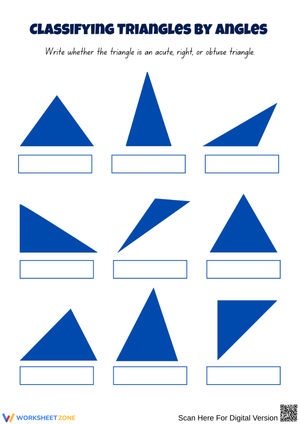
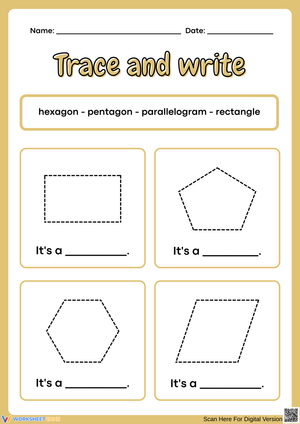
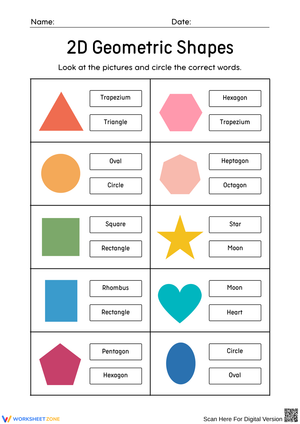
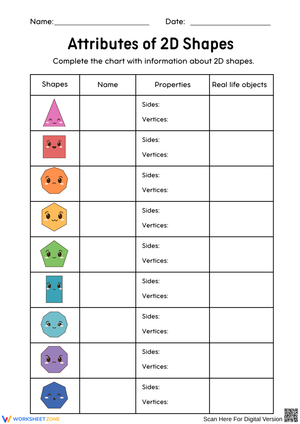
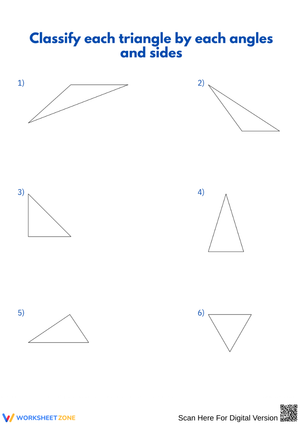
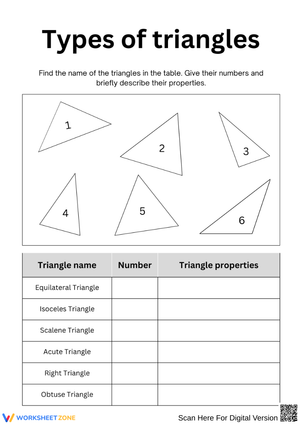
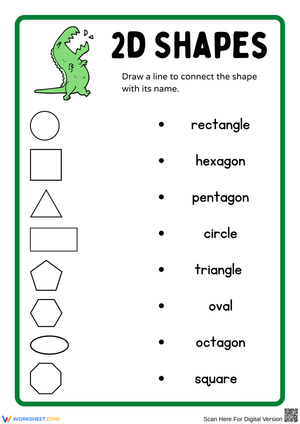
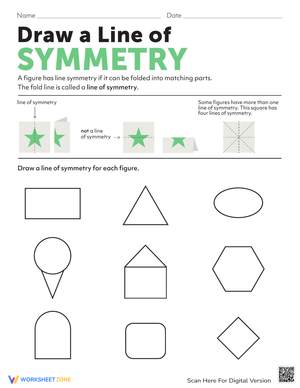
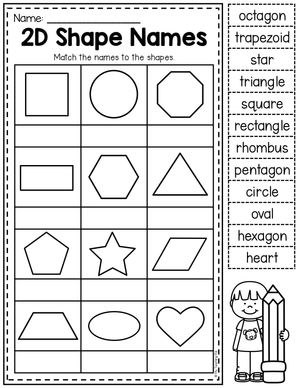
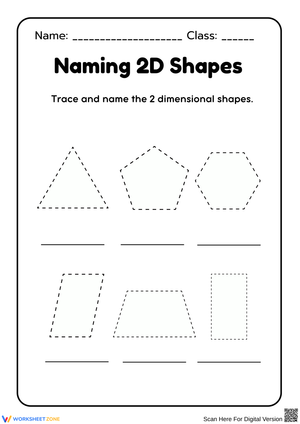
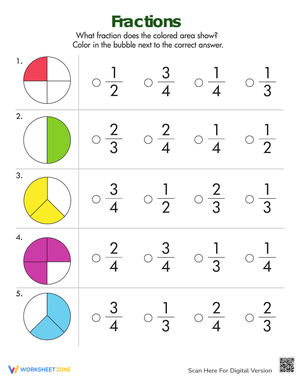
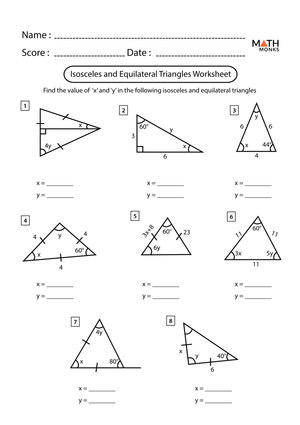
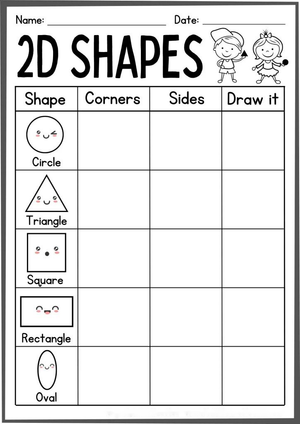
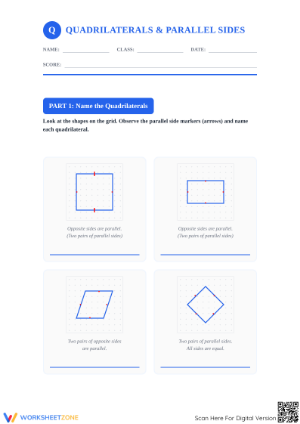
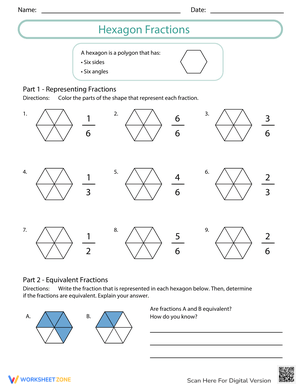
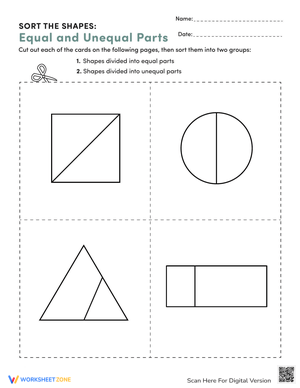
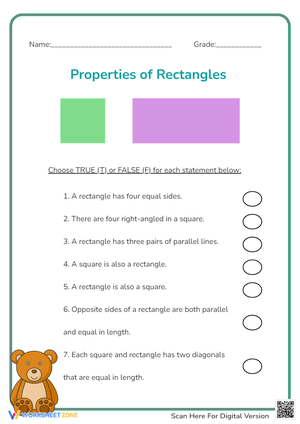
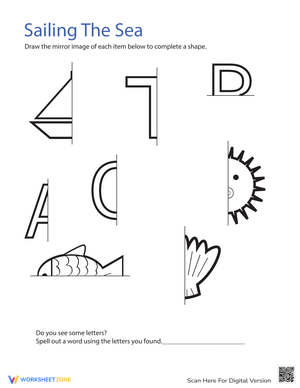
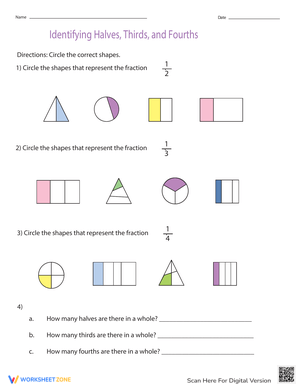
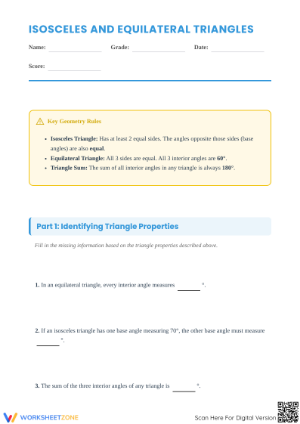
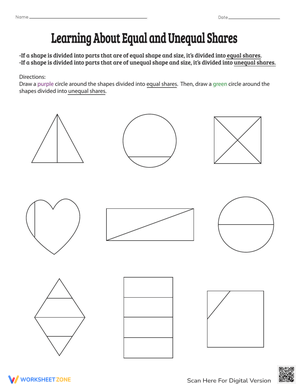
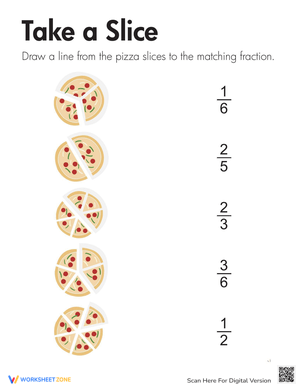
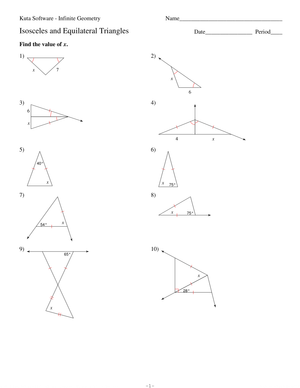
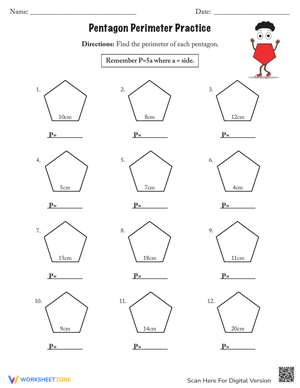
These 2d shapes pdf worksheets for 4th grade give teachers structured practice material for the moment the curriculum shifts from "what is this shape called?" to "how do you know?" — the analytical turn that defines Grade 4 geometry. Each worksheet targets a specific geometric skill: classifying polygons by angle type or line relationship, identifying perpendicular and parallel lines inside figures, or drawing and counting lines of symmetry. Teachers can pull individual worksheets selectively rather than working through the set in a fixed sequence.
The Geometric Skills Each Worksheet Targets
The set covers four major areas of the 4.G.A standards. Angle identification worksheets ask students to mark right, acute, and obtuse angles within given polygons — not just name the type but locate and label it inside a figure. Line-relationship worksheets require students to identify parallel and perpendicular line pairs within quadrilaterals and mixed polygon sets; on several worksheets they draw those relationships from scratch using a straightedge.
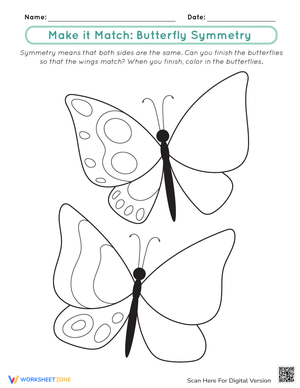
Polygon classification runs across multiple worksheets at increasing specificity. Early tasks ask students to sort shapes by a single criterion — presence of at least one right angle, for instance. Later worksheets stack criteria: parallel sides and equal side lengths, pushing students toward the quadrilateral hierarchy. A square is a special type of rectangle and also a special type of rhombus — understanding why requires students to work through properties systematically rather than rely on a shape's name. Symmetry worksheets close out the set: students identify how many lines of symmetry a figure has, draw those lines with a ruler, and in some worksheets complete the second half of a symmetric figure. That drawing task reveals understanding in a way that multiple-choice questions simply don't.
Student Errors Worth Anticipating Before the Lesson
The most persistent error in this unit involves orientation. A square rotated 45 degrees consistently gets labeled "diamond" or rhombus by students who haven't yet separated shape properties from visual appearance. This shows up in actual student work even after direct instruction — a student who correctly identifies a standard square will misclassify the same figure when it's tilted. Worksheets that present figures in non-standard orientations are specifically useful here because they force students to check properties rather than pattern-match.
Lines of symmetry produce a related problem. Students will draw a diagonal across a non-square rectangle and mark it as a line of symmetry without mentally folding the halves to check. They see "the line passes through the center" and conclude the figure is symmetric along that line. Asking students to fold a physical copy, or to trace one half and flip it to see whether it aligns, catches this error more reliably than simply marking the answer wrong. The quadrilateral hierarchy trips students in a different way: many fourth graders confidently say a rectangle is never a square, not realizing that a square satisfies every defining property of a rectangle. That's a conceptual gap, not a vocabulary gap, and it needs repeated exposure to the hierarchy alongside multiple worked examples before it closes.
Building These Worksheets Into Your Weekly Lesson Plan
The most productive approach is to pair each worksheet with a brief anchor activity before students work independently. A five-minute warm-up where the class analyzes a single projected shape — naming its line relationships, checking its angles, deciding which categories it fits — primes students to apply the same logic on paper. Without that anchor, students tend to rush through classification tasks by appearance rather than by property analysis.
These 2d shapes pdf worksheets for 4th grade also work well as formative check-ins at the end of an instructional block. After a lesson on the quadrilateral hierarchy, handing students a classification worksheet gives an immediate picture of who internalized the sorting logic and who is still calling a rhombus a diamond. That five-minute check takes less time than a quiz and gives clearer diagnostic information because you can see exactly which property distinction broke down. For math centers, the symmetry worksheets are the strongest fit — they're self-contained, the drawing tasks take a predictable amount of time, and students who finish early can test additional figures from a shape bank on the same worksheet.
Standard Alignment
The worksheets address standards within the 4.G.A cluster of the Common Core State Standards for Mathematics. Specifically, they cover 4.G.A.1 (drawing and identifying points, lines, line segments, rays, angles, and perpendicular and parallel lines), 4.G.A.2 (classifying two-dimensional figures based on the presence or absence of parallel or perpendicular lines and angles of a specified size, including right triangle identification), and 4.G.A.3 (recognizing and drawing lines of symmetry for two-dimensional figures). In classroom sequencing terms, 4.G.A.1 and 4.G.A.2 land in the same instructional unit because students need the angle and line vocabulary from 4.G.A.1 before they can do the classification work in 4.G.A.2. Symmetry is typically taught last, after students have a working understanding of shape properties, because it asks them to apply spatial reasoning to figures they've already analyzed rather than introducing a new category of shapes.
Adjusting the Worksheets for a Range of Learners
For students still working on angle identification, the classification worksheets become more accessible when students complete just the "mark the right angles" step before attempting to name the shape type. That keeps cognitive demand manageable — one operation at a time rather than angle identification and classification running simultaneously. A small desk reference card with angle definitions and parallel/perpendicular examples reduces working-memory load without changing what the worksheet asks students to produce.
These 2d shapes pdf worksheets for 4th grade can be extended for students who move through classification tasks quickly by asking them to write their own "always, sometimes, never" statements using the shapes on the page. A student who correctly classifies a set of quadrilaterals can then be asked: "Is a square always a rectangle? Write a sentence that uses the word because." That writing requirement surfaces reasoning in a way that checked boxes don't. For students who benefit from visual supports, pairing the line-relationship worksheets with a straightedge and two colors of pencil — one for parallel pairs, one for perpendicular — makes the abstract relationship concrete enough to work with independently.
Frequently Asked Questions
How do these worksheets fit into a unit that also uses hands-on tools like pattern blocks?
The worksheets function as the analysis and recording layer in a unit that also uses manipulatives. Pattern blocks give students something physical to sort and examine; the worksheets ask students to formalize what they noticed — marking the right angles, identifying the parallel lines, and stating which category the shape belongs to. Running a pattern block sorting activity first, then following with a classification worksheet the same day, reinforces the connection between physical properties and the written symbolic representation those properties support.
Is the quadrilateral hierarchy considered on-grade content, or does it push toward enrichment?
It's on-grade material. The 4.G.A.2 standard explicitly requires students to classify shapes by properties, and the quadrilateral hierarchy — understanding that a square is both a rectangle and a rhombus — is the natural result of that work. Some students reach it earlier in the unit than others, but the conceptual groundwork (parallel lines, right angles, equal side lengths) is built across the whole unit rather than dropped in at the end as an extension topic.
How do teachers address students who know shape names but haven't connected them to geometric properties?
That gap is more common than it seems — students arrive in fourth grade knowing "rectangle" and "triangle" as visual labels rather than as property-defined categories. The most effective approach is to use the 2d shapes pdf worksheets for 4th grade alongside a simple property checklist: before naming a figure, students mark whether it has parallel sides, right angles, and equal side lengths. Naming comes last. That sequence breaks the habit of visual identification and replaces it with property-based reasoning, which is what the standards require.
Do the symmetry worksheets require students to use a ruler?
Yes, and it's worth enforcing. Drawing a line of symmetry freehand consistently produces lines that drift off-center, which makes it hard for students to self-check. Requiring a ruler also reinforces the precision norm that runs through the rest of the unit: in geometry, lines are straight, angles are measured, and claims about a figure are checked against its properties rather than its appearance.













 Interactive Worksheet Maker
 Quiz Maker
 Word Search Maker
 Crossword Puzzle Maker
 Word Scramble Generator
 Sentence Scramble Generator
 Handwriting Worksheet Generator
 Name Tracing Generator
 Fill In The Blank Generator