Why 4th Grade Addition Worksheets Matter for CCSS 4.NBT.B.4 Fluency
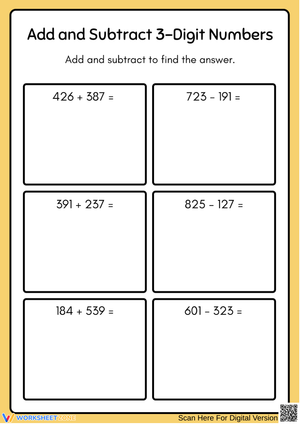
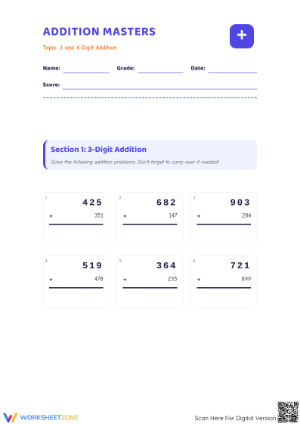
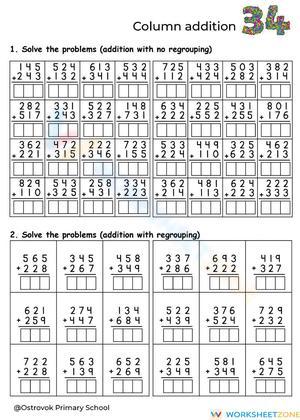
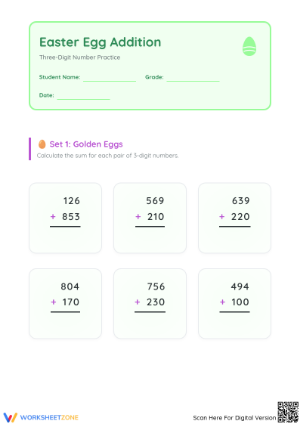
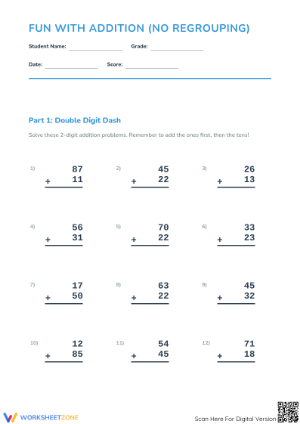
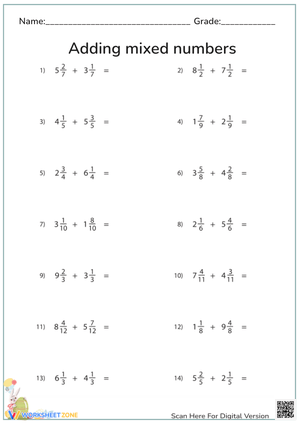
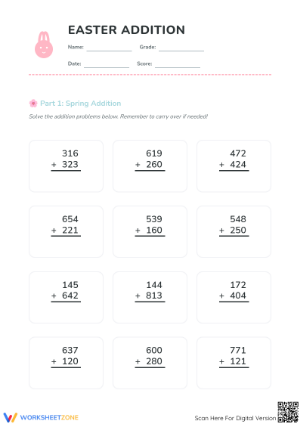
Fourth grade is the year multi-digit addition shifts from a strategy students are exploring to a procedure they are expected to own. Under the Common Core State Standards, this expectation is captured in the Number & Operations in Base Ten domain, and 4th grade addition worksheets are one of the most direct ways to give students the repeated, structured practice that standard requires. Rather than treating worksheets as busywork, teachers can use them as a deliberate tool for moving students from "I can add with a strategy" to "I can add fluently and explain why the algorithm works."
Because addition fluency underpins so much of the rest of the year, from multi-digit subtraction to multi-step word problems, worksheets aligned to this standard function as a foundation-building resource rather than a one-off assignment. A well-sequenced set of worksheets lets a teacher move a class from guided regrouping practice to independent fluency checks over the course of a unit.
Building Regrouping Fluency Across the Place-Value Chart
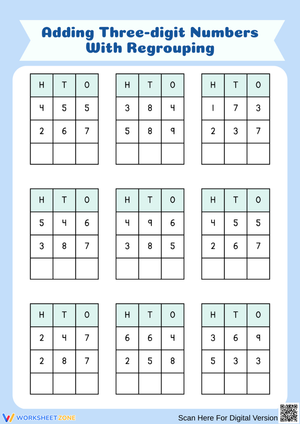
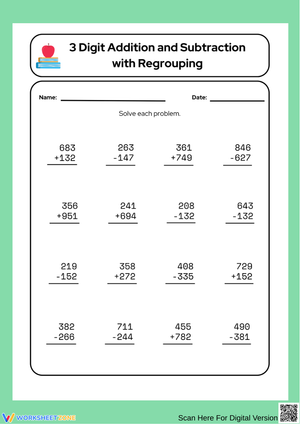
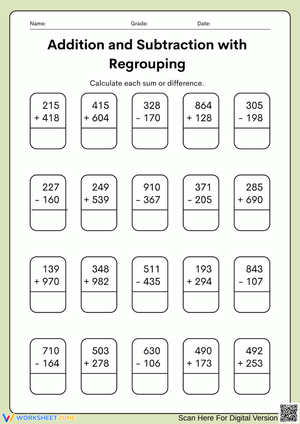
Regrouping is where most 4th grade addition errors happen, particularly when a problem requires regrouping across more than one place value in a row. Worksheets that isolate regrouping, ones to tens, tens to hundreds, hundreds to thousands, give students focused reps before they are asked to combine several regroupings in a single problem.
Instruction that names the regrouping explicitly, for example describing the move as taking a one out of the hundreds place and regrouping it into the tens place, tends to reduce the kind of place-value slippage that shows up when students regroup correctly in isolation but lose track of it inside a longer, multi-step addition problem. Worksheets that require students to write out this place-value language next to at least one problem per page can surface that kind of thinking error before it becomes a habit.
Classroom Implementation
To put this into practice, start a unit with worksheets that show expanded-form and standard-algorithm problems side by side, then narrow to standard-algorithm-only practice as students demonstrate accuracy. Use a short, mixed-regrouping worksheet roughly once a week as a fluency check, and route students who miss two or more regrouping steps into a small-group worksheet that isolates that specific transition.
- Open a unit with expanded-form-to-standard-algorithm bridge worksheets.
- Use isolated regrouping worksheets for small-group intervention.
- Run a short mixed-regrouping worksheet weekly as a fluency check.
- Reserve one or two explain-your-reasoning prompts per worksheet.
- Increase number size toward the 1,000,000 range for enrichment groups.
Keeping a simple tracking sheet of which students struggle with which regrouping transition, ones to tens, tens to hundreds, or hundreds to thousands, makes it easier to build the next week's small-group worksheet sets without re-diagnosing the class from scratch each time.
Frequently Asked Questions
1. How should 4th grade teachers use addition worksheets to build standard-algorithm fluency?
Sequence worksheets from expanded-form and place-value-based problems toward standard-algorithm-only practice, and use short mixed-regrouping sets regularly to check whether students are ready to move on.
2. What CCSS standard do 4th grade addition worksheets align to?
They align to CCSS.Math.Content.4.NBT.B.4, which requires students to fluently add and subtract multi-digit whole numbers using the standard algorithm for numbers up to 1,000,000.
3. How can addition worksheets be used for small-group intervention in 4th grade?
Use worksheets that isolate a single regrouping transition, such as ones to tens, so students in intervention groups can practice that specific skill before combining it with others.
4. What number range should 4th grade addition worksheets cover to match grade-level expectations?
Worksheets should progress toward numbers up to 1,000,000, matching the ceiling described in the standard, with enrichment groups practicing closer to that upper range.
5. How do addition worksheets help connect place-value strategies to the standard algorithm?
Worksheets that show expanded-form or place-value breakdowns alongside standard-algorithm problems help students see the algorithm as a formalized version of strategies they already know.













 Interactive Worksheet Maker
 Quiz Maker
 Word Search Maker
 Crossword Puzzle Maker
 Word Scramble Generator
 Sentence Scramble Generator
 Handwriting Worksheet Generator
 Name Tracing Generator
 Fill In The Blank Generator