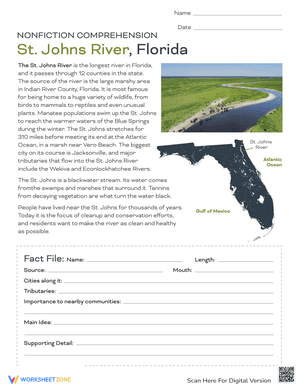
These main idea worksheets for 4th grade give teachers a ready-to-print tool for the comprehension skill that third grade left unfinished — identifying what a passage is mostly saying, not just cataloging what it mentions. Each worksheet pairs a short reading passage with structured response tasks that push students to prove their interpretation with text evidence. The set works across multiple classroom contexts: whole-group guided practice, small-group reading, and independent literacy block work.
Student Errors That Reveal How Deep the Confusion Goes
At fourth grade, the most persistent misconception isn't that students don't understand reading — it's that they substitute a vivid detail for the central idea and genuinely believe they're correct. A passage about honeybee colonies might emphasize how bees communicate direction and distance through movement, but a student who finds the waggle dance description memorable will circle that detail and stop there. They aren't being careless; they're responding to what struck them most.
Two other errors surface with predictable regularity. The first is first-sentence bias — the assumption that whatever opens a paragraph is automatically the main idea, regardless of what the rest of the passage develops. The second is scope confusion: when students encounter a multiple-choice task, they can't reliably distinguish a too-broad option ("animals are fascinating") from a too-narrow one ("bees perform a specific dance near the hive") from a well-calibrated main idea statement. Both errors respond to repeated exposure to the three-way comparison — too broad, too narrow, or just right — because it gives students a decision-making habit they can apply before committing to any answer. The written response tasks on these worksheets surface these errors in a way multiple-choice alone doesn't, which tells teachers exactly what kind of reteaching is actually needed.
What Each Worksheet Asks Students to Do
The resources move students through three levels of thinking. First, students identify the topic — the broad subject the passage addresses. Then they select or write the main idea sentence, which states what the passage argues or explains about that subject. Finally, they return to the text to locate supporting details, with some tasks asking them to explain why one detail fits and why another doesn't belong as evidence.
Specific task types across the set include:
- Circling the topic and distinguishing it from the main idea in a written response
- Selecting the best main idea from three answer choices, then explaining why the other two are too broad or too narrow
- Underlining two supporting details directly in the passage text
- Writing the main idea independently when the passage implies it rather than stating it outright
- Identifying a detail that doesn't support the central point and explaining the mismatch
The combination of multiple-choice and open-response tasks matters here. A student who selects the correct answer on a multiple-choice item might still write a main idea sentence that restates a single supporting fact — having both formats gives a much clearer picture of what's genuinely understood. Passages include both nonfiction and narrative text. Nonfiction tends to make the relationship between claim and evidence more transparent; narrative passages develop the same skill at a different angle, asking students what an author is mostly showing about a character or situation rather than explicitly stating.
Building These Worksheets Into Your Weekly Lesson Plans
The most effective sequence isn't handing out a worksheet and waiting. Before students work independently, two or three minutes of whole-class modeling — thinking aloud through one paragraph under a document camera, marking repeated ideas, testing each answer choice against the too-broad/too-narrow standard — produces noticeably stronger independent work afterward. The routine stays consistent across lessons: read once for general meaning, reread and mark, build the main idea from those marks, then check that each supporting detail fits the sentence.
The main idea worksheets for 4th grade fit into several parts of the week without requiring much redesign. One worksheet works well as guided practice immediately after a reading mini-lesson. Two questions pulled from a single worksheet make a clean exit ticket on a tight day. The longer open-response tasks suit small-group work mid-week, when there's time to hear students explain their thinking aloud before writing it down. On Fridays, a passage students haven't seen becomes a quick formative check on whether the skill is transferring.
For intervention, limiting the task to a single short paragraph and offering a sentence frame — "This paragraph is mostly about ___ because the author says ___ and ___" — reduces working memory demands without changing the comprehension target. Students who still struggle with the sentence frame send a clear signal that vocabulary or decoding is the actual barrier, not the main idea strategy itself.
Standard Alignment
These worksheets address CCSS RI.4.2 and RL.4.2, which both require students to determine the main idea or theme of a text and explain how it is supported by key details. RI.4.2 applies to informational text; RL.4.2 applies to literature, where fourth graders work on identifying what an author is mostly showing rather than explicitly stating — a distinction that matters most when narrative passages are assigned.
In the progression across grades, RI.4.2 builds directly on the third-grade expectation that students can recount key details — now they must synthesize several details into a single central claim. The worksheets follow this developmental move, pushing students from restating facts to constructing meaning across a full passage.
Adapting the Set for Different Levels of Readers
The main idea worksheets for 4th grade span a wider readiness range than they might appear to at first. For students still in early stages with this skill, the most useful adjustments are structural: choose a worksheet with a brief single paragraph rather than a multi-paragraph passage, pre-teach two or three key vocabulary words before reading begins, and limit the task to topic identification and one supporting detail before asking for a full main idea sentence. Color-coding helps too — one color for supporting details, a second for a possible main idea sentence — because it makes the distinction visible on the paper rather than abstract in discussion.
Students ready for more challenge benefit from a different set of adjustments. Removing the multiple-choice support and requiring them to write the main idea without options provided raises the demand significantly. Passages where the main idea is implied rather than stated are a further step. These students can also name a detail they wish the author had included and explain whether it would strengthen or weaken the stated main idea — a synthesis task that requires no additional worksheet at all, just a different set of directions for the same passage.
Frequently Asked Questions
How many passages should students complete in a single session?
One or two passages per session is right for most fourth graders. Identifying the main idea correctly requires rereading, marking, and evaluating answer choices against a standard — done carefully, it's genuinely demanding cognitive work. Three or more passages in a single sitting tends to produce rushing and surface-level circling rather than careful comprehension. When review volume is the goal rather than careful skill-building, that trade-off is worth naming to students explicitly.
Should students work through these independently or with teacher support?
The sequence matters more than the setting. The first time students encounter a new passage type or question format, guided practice — with the teacher verbalizing the decision-making process step by step — produces better independent performance later. Moving to independent work before the mental routine is internalized produces the familiar pattern: students circle the first sentence, skip the rereading step, and miss the main idea entirely. That's not a student failure; it's a release-to-independence decision made too early.
How do these worksheets connect to writing instruction?
More directly than many teachers expect. Students who practice identifying what a passage is mostly about are rehearsing the same thinking they need to write a focused paragraph. The move from "what is this text mostly saying?" to "what is my paragraph going to be mostly saying?" transfers when teachers make the link explicit — a brief conversation after the reading task, connecting the main idea the student found to the main idea they'll need to construct in their own writing. That connection often produces visible improvement in paragraph focus within a week or two.
Do these resources work for students reading below grade level?
Yes, with attention to passage selection and task scope. The main idea worksheets for 4th grade include passages at different levels of complexity, so teachers can match text difficulty to the reader without abandoning the skill target. The critical factor is choosing a passage where students can decode and understand the words — when vocabulary is blocking comprehension, no amount of main idea strategy instruction will reach them, and the worksheet becomes a frustration exercise rather than a useful one.















 Interactive Worksheet Maker
 Quiz Maker
 Word Search Maker
 Crossword Puzzle Maker
 Word Scramble Generator
 Sentence Scramble Generator
 Handwriting Worksheet Generator
 Name Tracing Generator
 Fill In The Blank Generator