


























Views
Downloads

Grades 4-5 Problem Solving — Printable No-Prep Worksheet
Paste this activity's link or code into your existing LMS (Google Classroom, Canvas, Teams, Schoology, Moodle, etc.).
Students can open and work on the activity right away, with no student login required.
You'll still be able to track student progress and results from your teacher account.
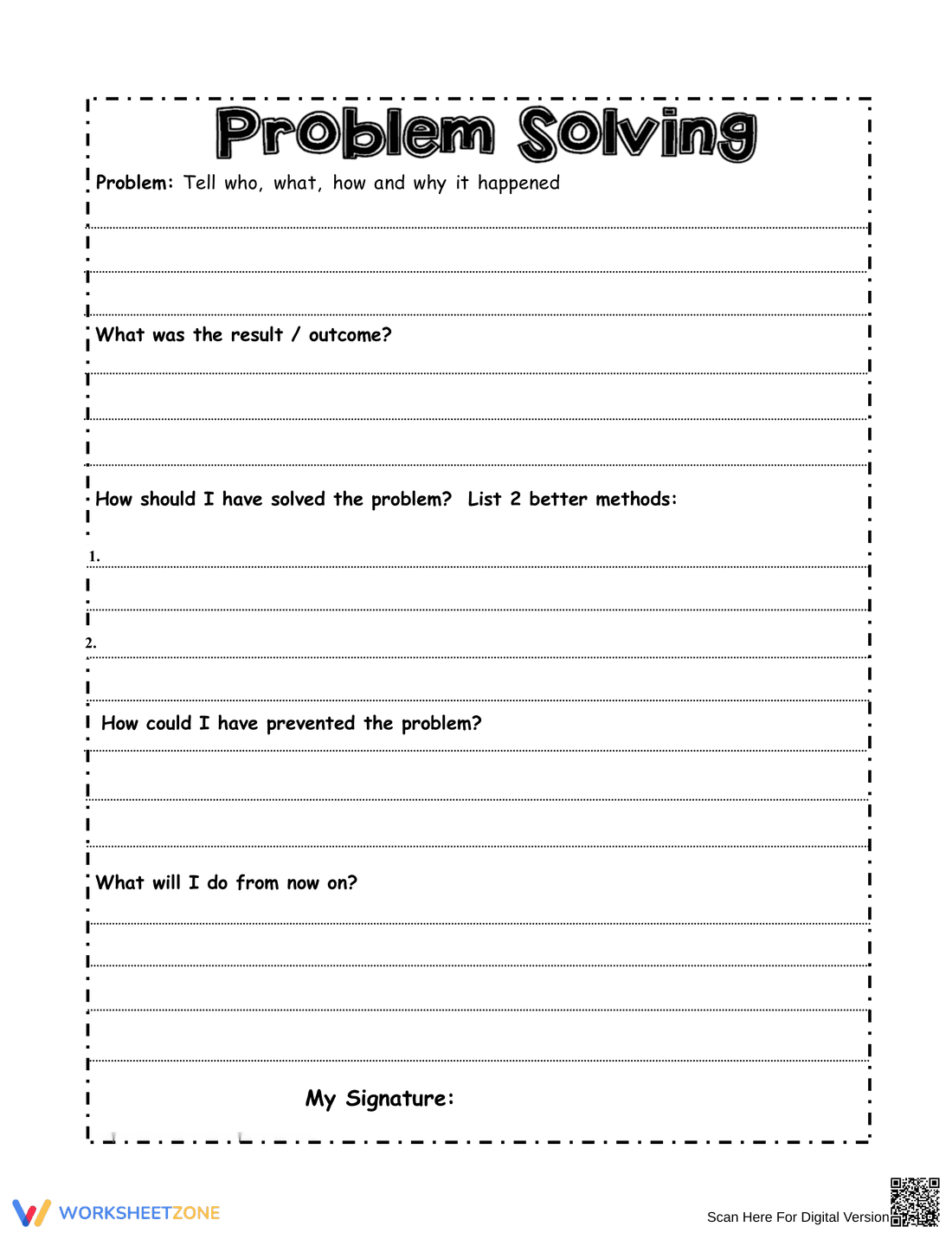
This behavior reflection worksheet helps upper elementary students resolve conflicts and analyze choices through structured writing. By documenting an incident, students identify negative outcomes and brainstorm alternative actions. This process builds self-regulation and critical thinking, transforming behavioral challenges into learning opportunities.
At a Glance
- Grade: Grades 4–5 · Subject: Behavior & Writing
- Standard:
CCSS.ELA-LITERACY.W.4.10— Write routinely for reflection and discipline-specific tasks- Skill Focus: Conflict resolution and self-reflection
- Format: 1 page · 5 prompts · Open-ended response · PDF
- Best For: Calm-down corners and behavior intervention
- Time: 10–15 minutes
This single-page PDF features a clean layout designed to guide students through self-assessment. It contains five open-ended prompts that guide students to define the problem, analyze consequences, propose two better choices, plan prevention, and commit to future actions. A signature line reinforces accountability.
Zero-Prep Workflow
This resource requires under 2 minutes of prep. First, print the single-page PDF. Second, distribute the sheet immediately following an incident, allowing 10 minutes of quiet writing time. Third, review the completed reflection with the student during a brief 2-minute check-in. This workflow is ideal for sub plans or calm-down stations.
Standards Alignment
This worksheet aligns with `CCSS.ELA-LITERACY.W.4.10`, which requires writing routinely for discipline-specific tasks. It supports ELA standards by encouraging students to produce clear, coherent writing appropriate to the task. Both standard codes can be copied directly into lesson plans, IEP goals, or district curriculum mapping tools.
How to Use It
Use this worksheet immediately following a classroom disruption. Alternatively, integrate it into weekly social-emotional learning lessons. For formative assessment, observe whether the student can independently identify the root cause and propose realistic alternatives. The reflection process typically takes 10 to 15 minutes.
Who It's For
This resource is designed for fourth and fifth graders needing support with self-regulation. It is highly effective for students with IEP behavioral goals. Teachers can provide sentence starters for struggling writers or pair this worksheet with a short reading passage about empathy.
This behavior reflection worksheet aligns with `CCSS.ELA-LITERACY.W.4.10` by engaging students in routine, purposeful writing to analyze real-world situations. According to research by Fisher & Frey (2014) on restorative practices and the gradual release of responsibility, structured self-reflection prompts help students internalize behavioral expectations and develop metacognitive skills. By requiring students to document the problem, identify outcomes, and generate two alternative solutions, this tool fosters the cognitive processing necessary for long-term behavior modification. The inclusion of a signature line establishes a formal commitment, reinforcing student agency and accountability. Educators can confidently integrate this evidence-based tool into tier-one classroom management systems or tier-two targeted interventions to support social-emotional growth and meet writing standards simultaneously. This structured approach ensures students connect their actions directly to consequences, promoting lasting behavioral change.


