3rd grade phases of the moon printable worksheets give teachers a ready-made instructional set for one of the more conceptually demanding units in elementary Earth science — moving students past "the moon looks different each night" toward understanding that the moon reflects sunlight from changing angles as it orbits Earth. The resources cover all eight phases and include activity formats that build phase vocabulary, diagram-reading, and sequencing skills within the same unit.
The Eight Phases and the Skills Each Worksheet Builds
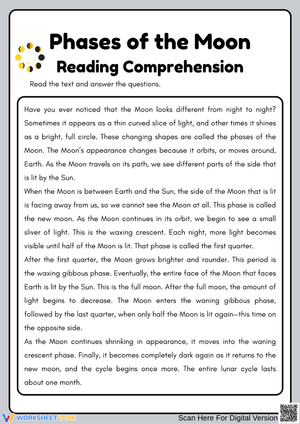
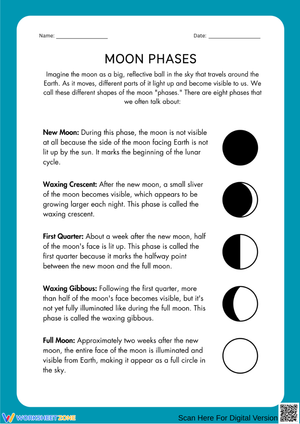
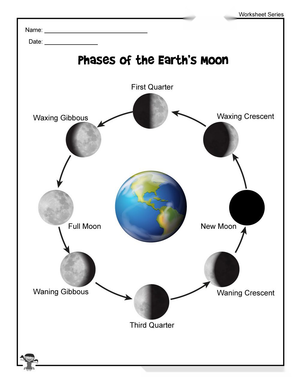
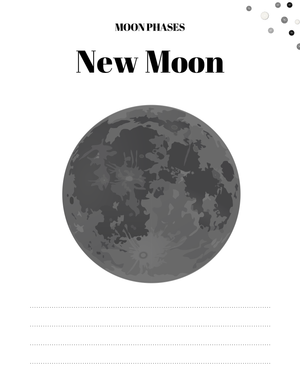
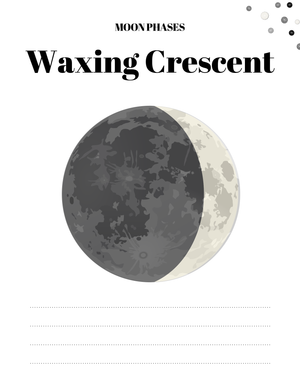
The lunar cycle runs through eight phases over approximately 29.5 days: new moon, waxing crescent, first quarter, waxing gibbous, full moon, waning gibbous, third quarter, and waning crescent. Each phase has a distinct visual appearance, and students need to do more than memorize names — they need to understand whether the lit portion is growing (waxing) or shrinking (waning) and why the cycle repeats.
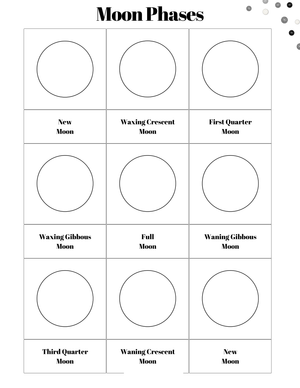
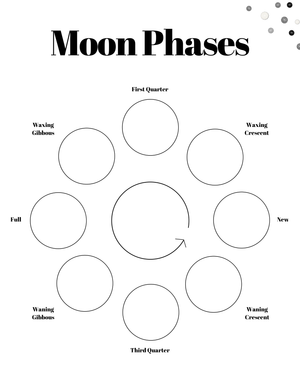
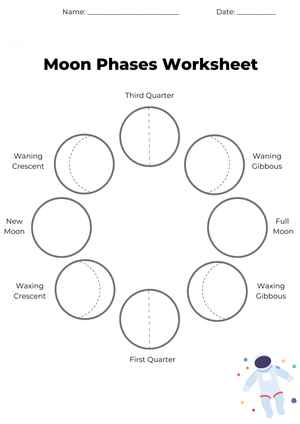
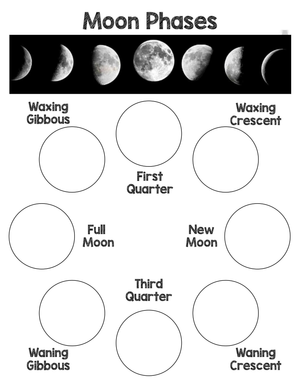
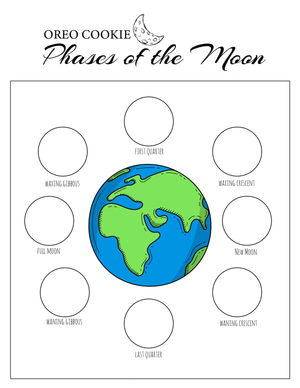
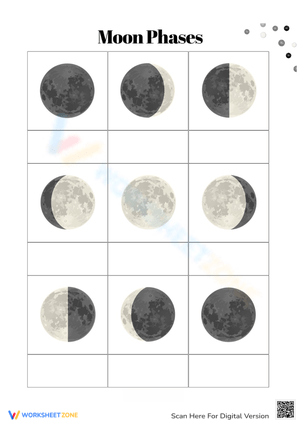
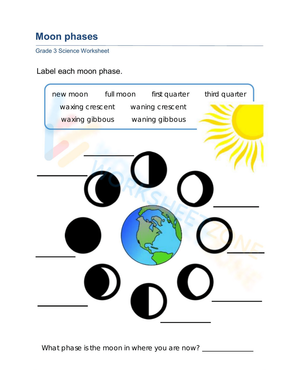
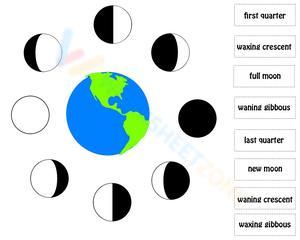
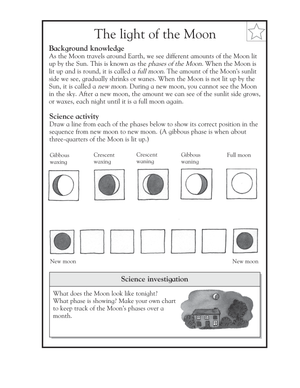
Labeling diagrams present all eight phases in a circular layout and ask students to write the correct name beneath each image, building visual recognition and science vocabulary at the same time. Sequencing tasks — most commonly formatted as cut-and-paste activities — ask students to arrange scrambled phase images in correct order, developing a sense of how the cycle moves from one phase to the next. Matching worksheets connect phase names to corresponding moon images and work well as a five-minute opener at the start of a science block. Fill-in-the-blank activities put the four terms students consistently struggle with — waxing, waning, crescent, and gibbous — into sentence context, reinforcing the vocabulary more durably than isolated word lists. Printable observation logs give students a structured format for recording the moon's actual appearance each night, connecting written classwork to real sky-watching over several weeks. These 3rd grade phases of the moon printable worksheets span that full range, from basic recognition tasks early in the unit to observational recording that extends through the month.
Misconceptions Worth Addressing Before Sequencing Begins
The most persistent misconception at this grade level is that Earth's shadow causes the moon's phases. Students arrive having heard the word "eclipse," and many assume that any partial illumination means something is blocking the light. This needs direct attention early in the unit — the Earth-moon-sun relationship diagram on labeling worksheets gives you a concrete visual to return to when the shadow explanation resurfaces, and it will.
A subtler error shows up on labeling tasks: students who correctly identify the full moon and the new moon will still mix up waxing gibbous and waning gibbous because the illuminated shapes look nearly identical. Only the trajectory distinguishes them — is the lit portion growing toward full, or shrinking away from it? Having students draw a small directional arrow on the diagram closes this gap faster than restating the definition. The waxing-lit-on-the-right rule also creates confusion when students encounter moon images from different sources, since that orientation reflects a Northern Hemisphere view. Flagging this explicitly during observation journal discussions prevents the "but mine looked different last night" moment from derailing the lesson.
Building These Worksheets Into Your Week-by-Week Unit
The most effective sequence starts with observation before naming. In week one, send home the observation log worksheet and ask students to sketch the moon each night. Even with cloud cover interrupting a few evenings, a week of actual sky-watching gives students a visual memory that makes labeling work land more concretely. Students who have watched the moon narrow from a gibbous shape to a crescent have a real image in memory when the formal vocabulary appears on paper the following week.
Week two is when labeling worksheets do their core work. Display an anchor chart showing all eight phases while students work so they can self-check as they go. Week three moves to sequencing and fill-in-the-blank tasks — this is also the right moment for the Oreo cookie modeling activity, where students scrape the cream filling to represent each phase and arrange eight cookies on top of a large printed diagram. The tactile experience of physically shaping each phase noticeably reduces errors on the sequencing worksheet the next day. What students shaped with their hands, they tend to order correctly on paper.
Week four shifts to paired review. Have partners use their completed labeling diagrams to walk each other through the full cycle, then use a matching worksheet as a written check before any summative task. 3rd grade phases of the moon printable worksheets fit naturally into science centers and sub-day plans during this final week — they require nothing beyond a pencil and are easy to collect for quick progress monitoring.
Making the Set Work Across Ability Levels
Students still building science vocabulary do well starting on matching worksheets that include a word bank. They are reading phase names and connecting them to images without needing recall from memory — a meaningful reduction in demand that keeps them engaged with the content. Once those students can match accurately, removing the word bank on a labeling worksheet raises the cognitive demand without requiring a different activity entirely. That shift from recognition to recall is worth preparing two versions of the same task.
Students who move through the standard sequence quickly benefit from the observation log as an extension. Asking them to predict the next night's phase before going outside — and record whether the prediction held — adds a reasoning layer that challenges without requiring new materials. For students who struggle specifically with the circular diagram format, a linear strip of phase images arranged left to right often resolves the spatial confusion before returning to the traditional circular layout. Offering both formats within the unit lets teachers address that bottleneck without pulling students out of the content.
Standard Alignment
Moon phases instruction at Grade 3 draws from the NGSS Earth's Place in the Universe disciplinary core idea (ESS1), which establishes that patterns in the motion of sky objects can be observed, described, and predicted. The foundational expectation in 1-ESS1-1 — using sky observations to describe predictable patterns — anchors the early part of the unit. At Grade 3, instruction extends that base toward causal explanation: students are expected to reason about why the moon appears to change, not only to recognize that it does. Many state-level science frameworks place the full eight-phase lunar cycle at Grade 3 because holding a multi-step causal sequence in mind — sun position, moon orbit, reflected light — reflects precisely the kind of reasoning most third graders are actively developing. Labeling and sequencing worksheets completed across the unit give teachers direct formative evidence of student progress before any summative check.
Frequently Asked Questions
What are the eight moon phases in order, and which ones do third graders consistently confuse?
In order: new moon, waxing crescent, first quarter, waxing gibbous, full moon, waning gibbous, third quarter, waning crescent. The full moon and new moon lock in quickly for most students. The two gibbous phases cause the most persistent errors because the illuminated shapes look nearly the same size — only the direction of the cycle distinguishes them. Labeling worksheets that prompt students to annotate whether each phase is growing or shrinking help anchor the distinction more reliably than naming alone.
How long is one complete lunar cycle, and how does that affect when to start the unit?
One full cycle takes approximately 29.5 days. Starting the observation log at a point in the school calendar where students can witness a complete cycle — from new moon back to new moon — dramatically increases the impact of the journaling component. These 3rd grade phases of the moon printable worksheets pair most effectively with a unit timed to include at least three to four weeks of active sky-watching alongside classroom activities.
What is the difference between waxing and waning, and how do you make it stick?
Waxing means the lit portion is growing larger night by night, moving toward the full moon. Waning means it is shrinking, moving away from the full moon back toward the new moon. The most reliable classroom anchor is the right/left illumination rule: waxing phases show light on the right side of the moon, waning phases on the left — as viewed from the Northern Hemisphere. Teaching this rule in week two, then revisiting it during sequencing tasks in week three, builds the spaced retrieval that moves the distinction into long-term memory. Having students underline the lit side on each image and write "growing" or "shrinking" beside it reinforces the terms through writing rather than passive reading.
Can these worksheets work as a substitute plan?
Yes. Directions on each worksheet are self-contained and require no teacher introduction to begin. A matching or fill-in-the-blank worksheet is accessible for most third graders working independently; labeling tasks run well as partner work if students are midway through the unit and have an anchor chart visible for reference.












 Interactive Worksheet Maker
 Quiz Maker
 Word Search Maker
 Crossword Puzzle Maker
 Word Scramble Generator
 Sentence Scramble Generator
 Handwriting Worksheet Generator
 Name Tracing Generator
 Fill In The Blank Generator