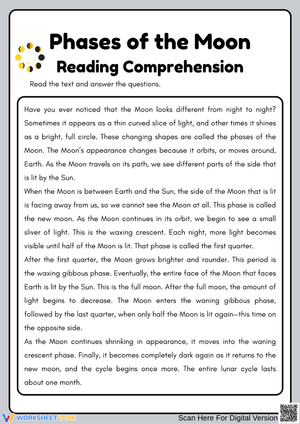
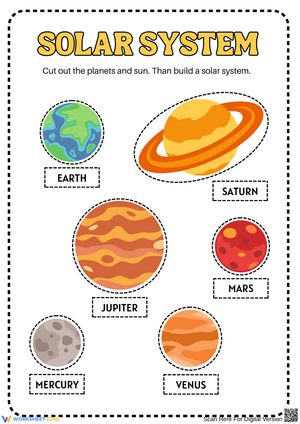
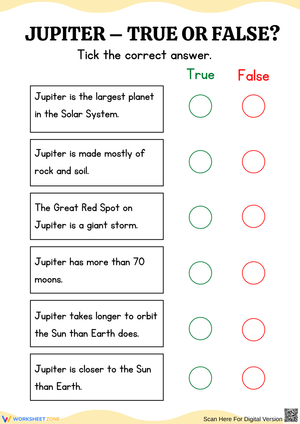
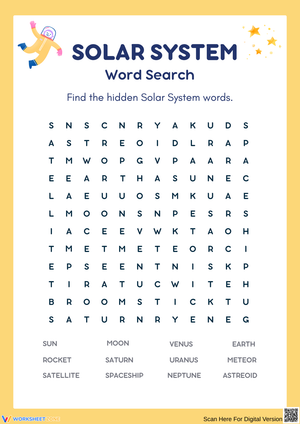
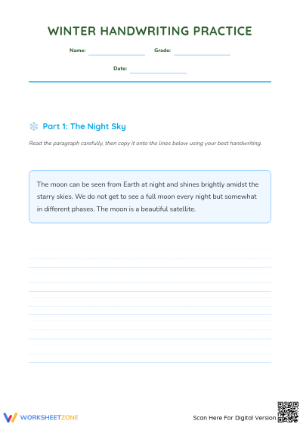
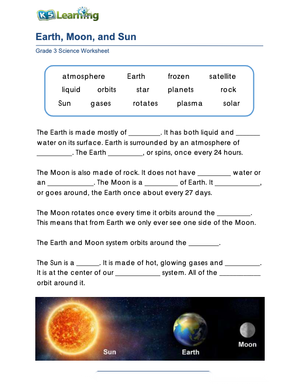
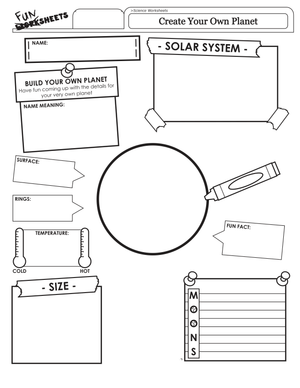
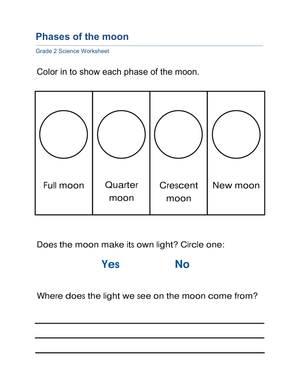
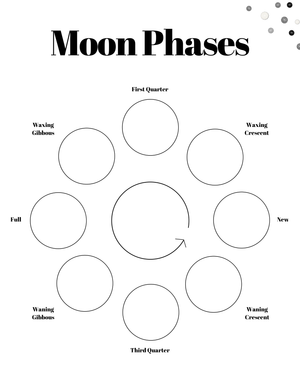
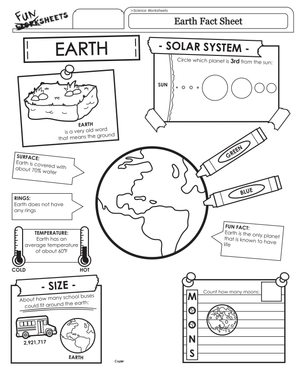
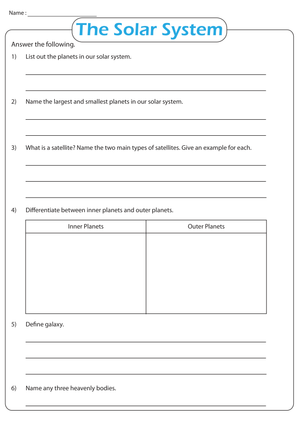
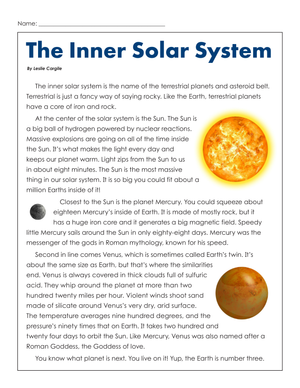
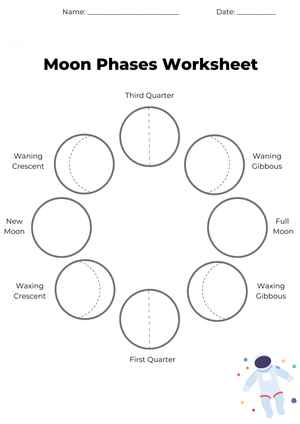
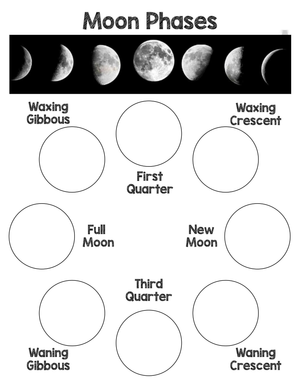
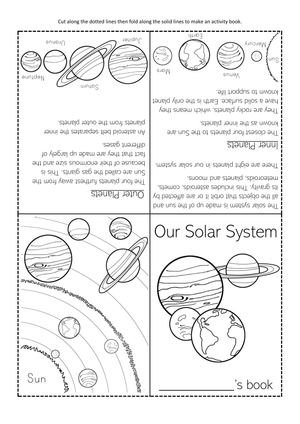
These 3rd grade space and the solar system printable worksheets give teachers a targeted set of resources covering the Sun's role as a central star, the eight planets and their defining characteristics, Earth's rotation and revolution, and the scale relationships that make the solar system genuinely difficult to picture. The set pushes students past loose planet trivia — most can name Jupiter and Saturn on day one — toward understanding the solar system as a structured, physically governed system.
The Specific Skills Covered in Each Worksheet
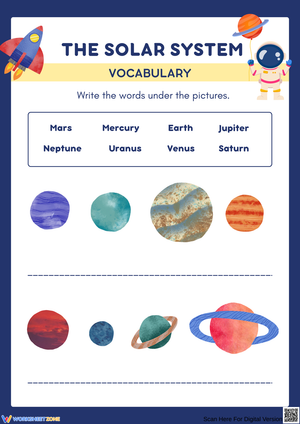
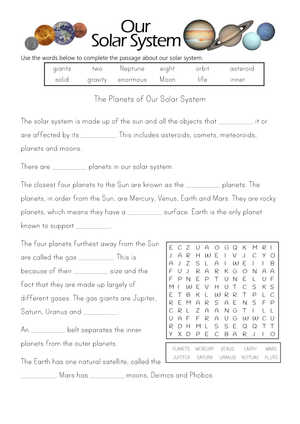
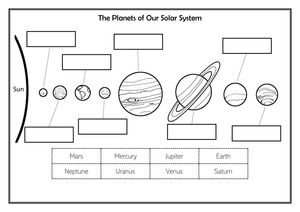
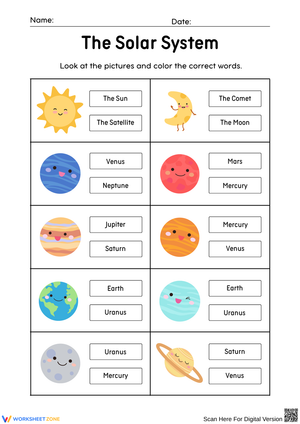
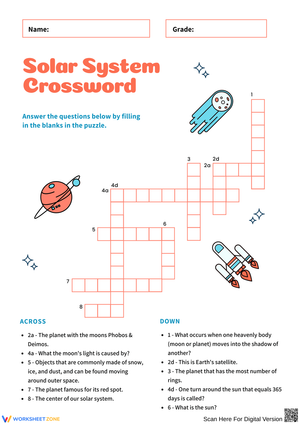
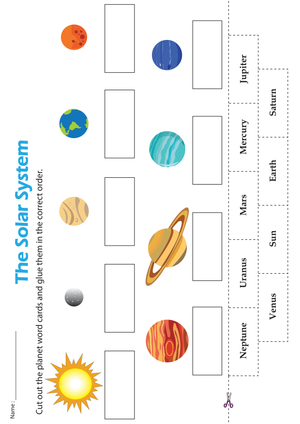
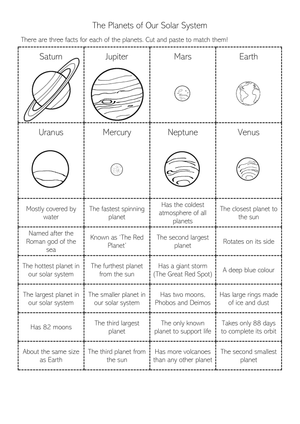
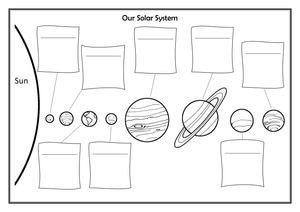
Each worksheet in this 3rd grade space and the solar system printable worksheets set addresses one focused area of content, which keeps cognitive load manageable per sitting. Across the full set, students label orbital diagrams placing the eight planets in correct sequence from the Sun, sort planets into inner rocky planets and outer gas giants by composition and position, and fill in structured comparison charts tracking size, surface type, and distance. A Sun-focused worksheet has students identify it as the star at the center of the system — one that generates its own light and heat — contrasting it explicitly with planets, which only reflect light they receive. Rotation and revolution each get dedicated worksheet space: students annotate diagrams showing Earth's 24-hour spin on its axis and its 365-day orbit around the Sun, then connect each movement to the cycle it creates. Vocabulary work runs throughout the set, targeting terms like orbit, axis, gravity, terrestrial, and dwarf planet.
Misconceptions to Watch For and Address Before They Stick
The rotation/revolution distinction produces more persistent errors than any other concept in this unit. Students conflate the two even after solid instruction because both involve circular motion. A student who correctly labels a rotation diagram on Wednesday will write "the Earth revolves around its axis" on Friday's vocabulary check — the vocabulary hasn't yet separated into distinct mental categories. Repeated low-stakes retrieval beats re-explaining: a brief daily prompt asking students to define one term in their own words, without the glossary open, does more work than another diagram.
Scale is the other persistent problem. Every solar system diagram in print compresses the outer planets toward the center of the page, and students internalize that as physical reality. They genuinely believe Neptune is maybe four or five times farther from the Sun than Earth. Sending the class into the hallway with a toilet-paper model — one square per 50 million miles — makes the actual outer-planet distances land in a way no labeled worksheet can replicate. That physical anchor gives the written data meaning when students return to their seats.
Students also consistently rank Mercury as the hottest planet because they assume proximity to the Sun determines surface temperature. Venus is the counterexample worth dwelling on: its thick atmosphere traps heat and pushes surface temperatures well above Mercury's. That one case, handled in a short class discussion, teaches more about how planetary systems work than several rounds of planet-trivia matching.
How to Build These Worksheets Into Your Lesson Planning
Teachers get the most out of 3rd grade space and the solar system printable worksheets when each one follows direct instruction or a shared experience — a video clip, a class discussion, or the toilet-paper distance activity — rather than serving as an introduction to new content. The most reliable entry point for the unit is a warm-up where students write down everything they already believe about each planet. That exercise isn't an assessment; it surfaces the misconceptions that will otherwise persist through instruction.
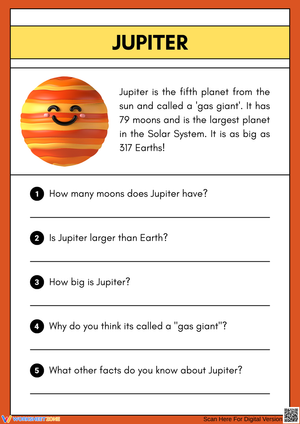
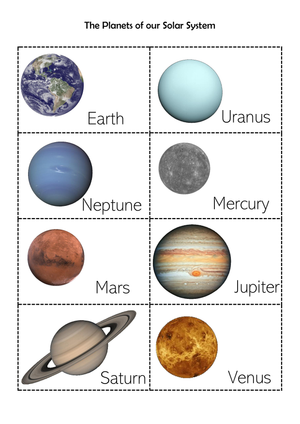
The planet-profile worksheets translate well into a jigsaw structure. Assign small groups one planet each, have them complete the worksheet, and then have each group present their key facts to the class. By the end, every student has heard about all eight planets from a peer, not just read about one alone. For the rotation/revolution worksheet, a two-minute physical demo before students write — one student spinning in place, another orbiting the first — gives everyone a shared image to annotate. Vocabulary worksheets work best as a five-minute end-of-week review, not as a graded event. When students can define orbit and axis in their own words rather than recite a copied definition, they're ready to use those terms accurately on assessments.
Standard Alignment
The content in this set sits within the NGSS ESS1: Earth's Place in the Universe domain. The core disciplinary ideas for solar system scale and orbital patterns formally reach their full expression at grade 5 (5-ESS1-1, 5-ESS1-2), but the grade 3 ESS1 work on the Sun as a star and Earth's observable patterns — day, night, and seasons — builds the conceptual groundwork those later standards depend on. Many state science frameworks introduce the eight planets and solar system structure at grade 3 as direct preparation for that grade 5 work. The planet comparison activities also support NGSS Crosscutting Concept 3 (Scale, Proportion, and Quantity), and the rotation/revolution worksheets connect directly to Crosscutting Concept 1 (Patterns).
Adjusting These Worksheets for a Range of Learners
For students who struggle with the volume of planet names and facts, narrowing the focus to the four inner planets first reduces cognitive load considerably. Pairing those students with a labeled reference card — planet names, one key fact each — lets them spend their effort on reasoning and writing tasks rather than on retrieval they haven't yet consolidated. The orbital diagram work can be completed with a word bank provided; removing the word bank is a straightforward way to raise the demand once students show readiness.
Students who move quickly through the core worksheets can extend into dwarf planets: researching Pluto's 2006 reclassification and writing a short explanation of why it no longer meets the three-part planet definition. That task requires actual argument construction, not just fact recall. A second extension is having students calculate simplified distance ratios between planets using round numbers, which bridges naturally into the math block and reinforces Scale, Proportion, and Quantity without leaving the science content behind.
Frequently Asked Questions
Why do textbook diagrams show the planets much closer together than they actually are?
Diagrams compress distances to fit all eight planets onto a single readable image. If Neptune were placed at its actual proportional distance from the Sun on a standard sheet of paper with the Sun at one edge, it would sit roughly half a mile away. Naming this distortion explicitly — telling students that diagrams show orbital order accurately but distance very inaccurately — prevents one of the most common scale misconceptions in the unit.
Should I address Pluto, and how do I handle students whose older books still list it as a planet?
Address it directly. The 2006 reclassification is a real teaching moment about how science updates itself when new evidence accumulates. Students accept the change readily when it's framed as scientists learning more, not as taking something away: researchers discovered so many Pluto-like icy objects in the Kuiper Belt that the existing category needed to be refined to stay meaningful. That framing also reinforces the nature of science, which is worth a few minutes at the start of the conversation.
How do I keep the star/planet distinction from blurring after the initial lesson?
The two-sentence contrast works better than a longer re-explanation: a star makes light; a planet borrows it. Returning to that pair of sentences at the start of several lessons — especially during vocabulary review — builds the distinction faster than restating the full definition each time. A flashlight demonstration in a darkened room, with the flashlight as the star and a ball showing only reflected light as the planet, gives struggling learners a visual anchor they can return to on their 3rd grade space and the solar system printable worksheets assignments.












 Interactive Worksheet Maker
 Quiz Maker
 Word Search Maker
 Crossword Puzzle Maker
 Word Scramble Generator
 Sentence Scramble Generator
 Handwriting Worksheet Generator
 Name Tracing Generator
 Fill In The Blank Generator