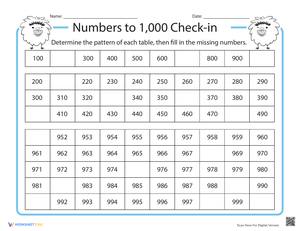
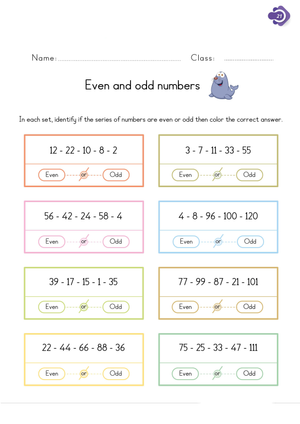
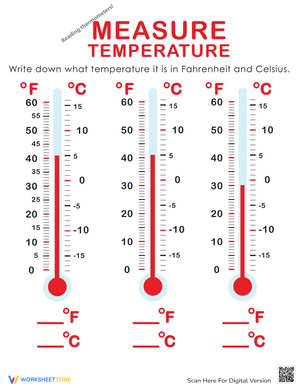
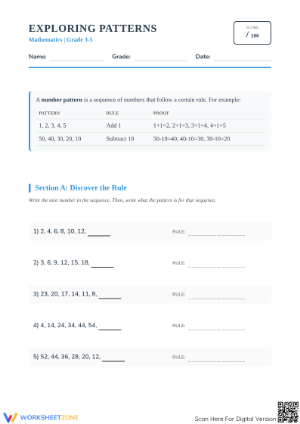
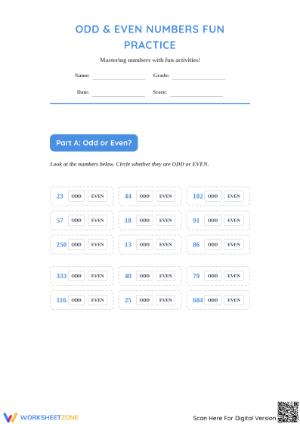
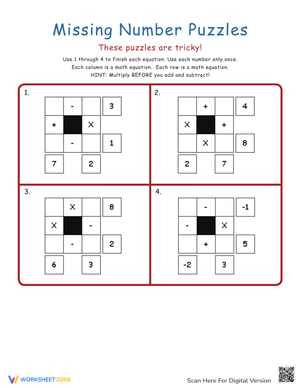
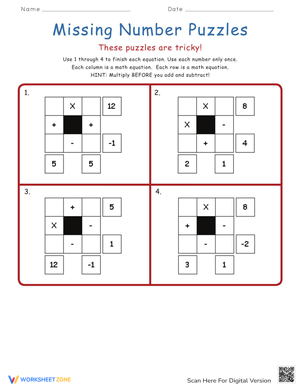
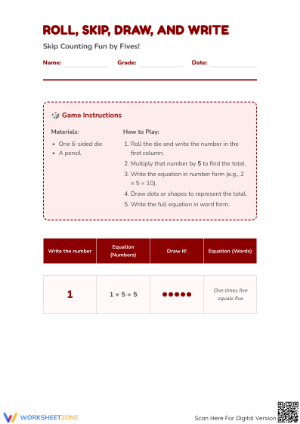
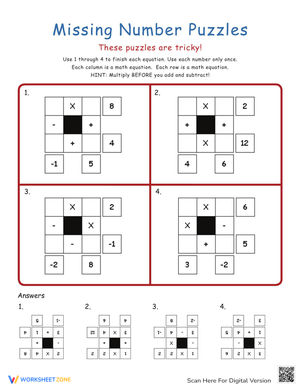
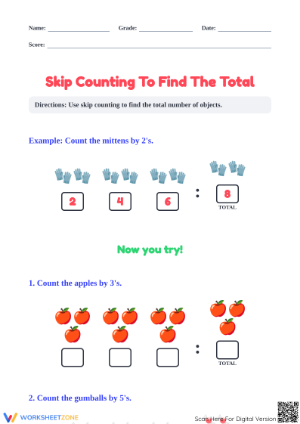
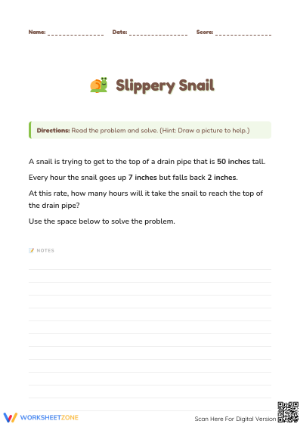
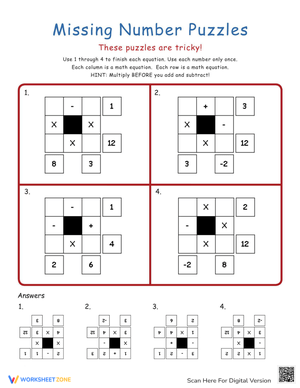
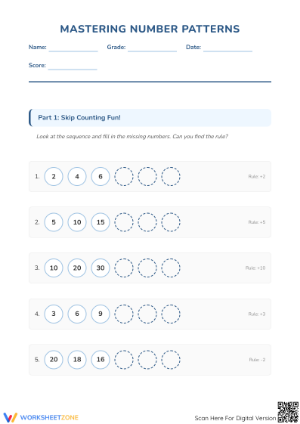
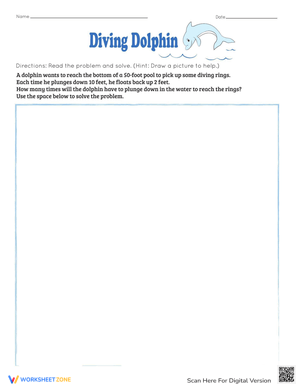
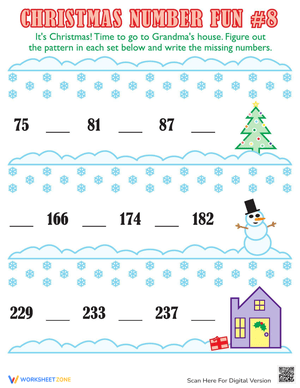
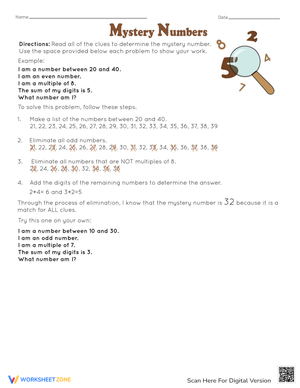
These 3rd grade number patterns printable worksheets give teachers a targeted, no-prep set covering the four pattern types third graders are expected to handle before multiplication fluency takes over the curriculum. Each worksheet isolates a specific skill — skip counting sequences, growing and shrinking patterns, input-output tables, or multiplication grid analysis — so the resource matches exactly where the class is in the unit rather than running ahead of or behind instruction.
The Specific Skills Targeted
The 3rd grade number patterns printable worksheets in this set address a defined range of skills rather than a broad sampling of everything pattern-related.
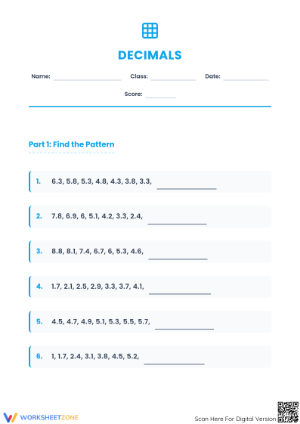
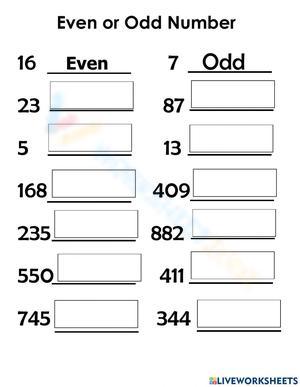
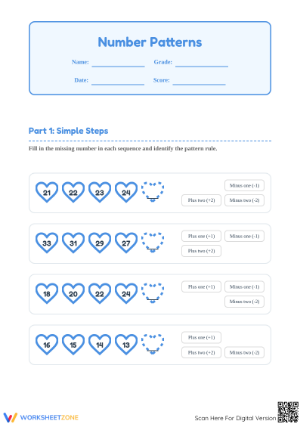
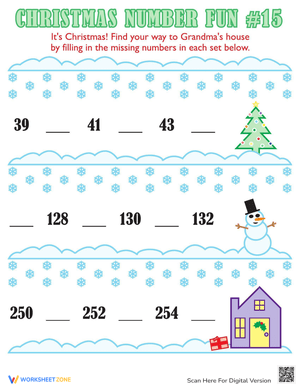
- Skip counting sequences with missing terms — by 2s, 3s, 4s, 5s, and 10s — presented as number lines or horizontal sequences
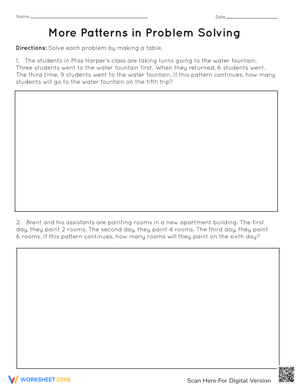
- Growing patterns where students identify a constant addend and extend the sequence
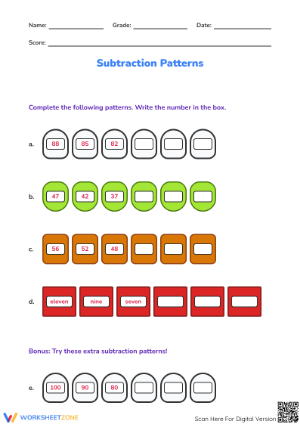
- Shrinking patterns where students subtract a constant amount and fill in missing terms
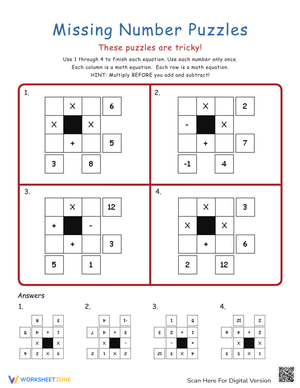
- Single-step input-output tables with rules involving addition, subtraction, or multiplication through 5
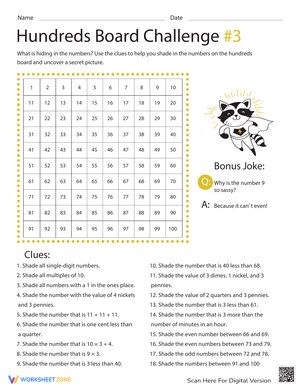
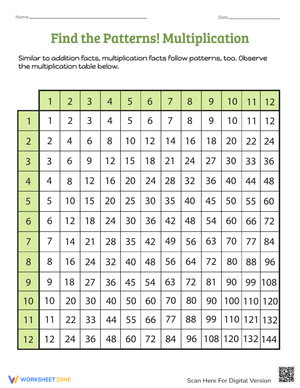
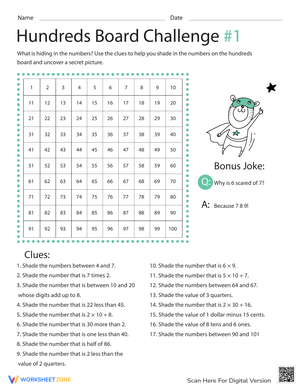
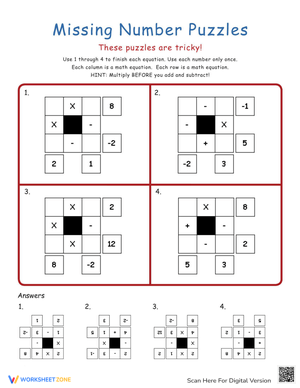
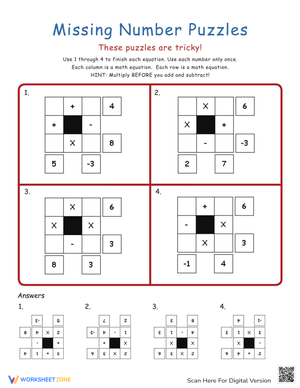
- Hundred chart and multiplication grid explorations where students shade multiples and describe the visual pattern in writing
The worksheets that require students to write the rule in their own words are the most useful ones to collect for a quick formative read. A student who fills in all the correct numbers but writes "the pattern is 12, 15, 18" instead of "+3 each time" needs a different follow-up conversation than one who made a straightforward computation error.
Frequent Student Errors Worth Watching For
The most common mix-up: students confuse the value of a term with the operation that generates it. In a sequence like 4, 8, 12, 16, many students write "the rule is 4" rather than "+4." They've correctly located where the pattern starts, but they haven't separated the term from the relationship between terms. Having students draw an arrow between two consecutive numbers and label the operation on that arrow — before writing the full rule — clears this up faster than re-explaining the concept from the front of the room.
Shrinking patterns catch a different group of students: those who've internalized addition so thoroughly that they add regardless of what the sequence shows. This surfaces most often when the starting number is large enough that the decline isn't visually obvious at a glance. It peaks on worksheets that mix growing and shrinking patterns on the same task — that format is worth using precisely because it forces students to read each sequence before applying an operation.
Transfer between skip counting sequences and input-output tables is worth naming explicitly with students before assigning those worksheets. A student who breezes through 5, 10, 15, 20 will sometimes stall at a table showing "input: 1, output: 5; input: 2, output: 10; input: 3, output: ___" — not because the arithmetic is different, but because the column format doesn't read like a sequence yet. That's a concept gap, not a computation gap, and it calls for a different teacher response than assigning more practice.
Standard Alignment
CCSS.MATH.CONTENT.3.OA.D.9, within the Operations and Algebraic Thinking domain, asks third graders to identify arithmetic patterns — including patterns in the addition and multiplication tables — and explain them using properties of operations. The explanation requirement is what most computation practice skips. Each worksheet that includes a dedicated space for writing the rule in words addresses that component directly. In most pacing guides, teachers reach this standard in the second half of the year, after multiplication is introduced but before the fraction unit begins.
How to Build These Worksheets Into Your Lesson Plans
Skip counting worksheets work cleanly as bell-ringers during the 5-8 minutes while students settle after morning meeting or return from specials. Students complete the sequence silently, then spend about a minute comparing answers with a partner. That brief exchange catches most errors before any teacher correction is needed, which keeps the warm-up from expanding into a whole-group discussion.
For a 45-minute block, a three-station rotation fits the set well. One station uses skip counting and growing-pattern worksheets for independent practice. A second uses input-output tables with the teacher present to prompt written rule explanations. The third station uses the multiplication grid and hundred chart worksheets, which most students can work through without direct support after a brief orientation. Rotating every 12-14 minutes puts every student in contact with each pattern type in a single period.
These 3rd grade number patterns printable worksheets also work well with a "build, then record" sequence: students use counters or linking cubes to construct the first four terms of a growing pattern before writing the sequence on the worksheet. This is especially useful at the start of the unit, when students are still connecting the physical act of adding objects to the abstract notation of a number sequence.
Differentiating the Set Across Skill Levels
Students still developing addition fluency should work through the skip counting and small-increment growing-pattern worksheets before moving to input-output tables. Pairing those worksheets with a number line or hundred chart redirects working memory toward pattern reasoning rather than fact retrieval — a meaningful difference when a student understands what a pattern is but loses track of the arithmetic mid-sequence.
For students who finish quickly and accurately, reversing the task is more productive than assigning another worksheet of the same type. After completing an input-output table where the rule is given, they generate their own table with a two-step rule — say, multiply by 3, then subtract 1 — and trade with a classmate who has to identify the rule from the completed examples. Deriving the rule from outputs alone is harder than applying a stated rule, and it keeps advanced students genuinely engaged.
One honest limitation: the input-output worksheets assume at least partial fluency with multiplication facts through 5. Students who don't have those facts yet will stall not because they can't understand patterns but because they can't calculate outputs quickly enough to perceive the relationship. For those students, restrict the rule set to addition and subtraction until fact fluency is more reliable.
Frequently Asked Questions
Which standard do these worksheets address?
The set aligns to CCSS.MATH.CONTENT.3.OA.D.9, which requires students to identify arithmetic patterns in addition and multiplication tables and explain them using properties of operations. Worksheets that include a written-rule component address the "explain" part of the standard — not just pattern completion.
My students haven't started multiplication yet. Can they still use the input-output worksheets?
Yes, with one adjustment. Limit the rules to addition and subtraction for those worksheets. The table format teaches the same pattern-recognition reasoning; you're simply removing the multiplication requirement until facts are solid. The concept transfers cleanly once students are ready for multiplicative rules.
How often should I assign pattern practice each week?
Two or three shorter sessions — each running 10-12 minutes — produce stronger retention than one extended block. Spacing practice across the week gives students repeated chances to retrieve and apply pattern rules in different lesson contexts rather than completing everything in a single concentrated sitting.
Are these appropriate as first instruction, or only for practice?
These 3rd grade number patterns printable worksheets function as practice and formative assessment tools, not as first instruction. Students who encounter an unfamiliar pattern format without any prior modeling tend to guess at the rule rather than reason through it. Introduce each pattern type with a class example or think-aloud first, then assign the corresponding worksheet for guided or independent follow-up.













 Interactive Worksheet Maker
 Quiz Maker
 Word Search Maker
 Crossword Puzzle Maker
 Word Scramble Generator
 Sentence Scramble Generator
 Handwriting Worksheet Generator
 Name Tracing Generator
 Fill In The Blank Generator