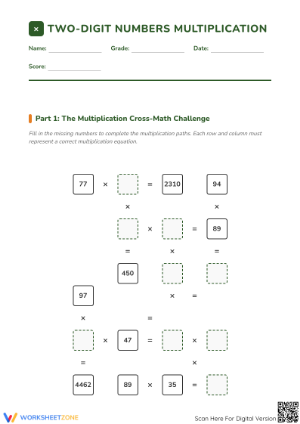
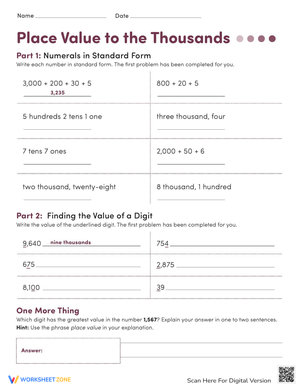
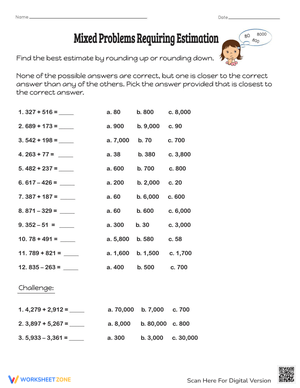
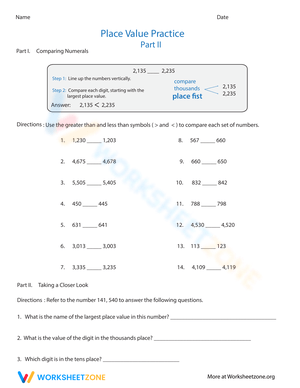
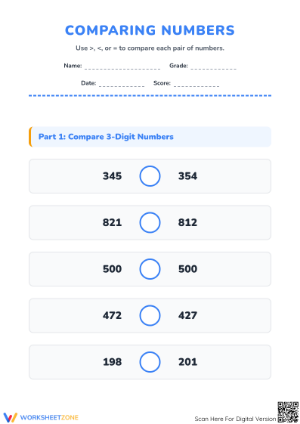
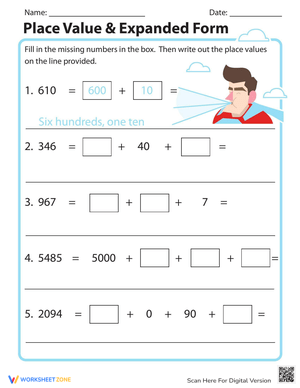
These multi digit numbers printable worksheets for 3rd grade give teachers targeted practice material for the stretch of the year when students move from hundreds into thousands — a conceptual jump that trips up more children than most people expect. The set covers place value, rounding, regrouping, and comparing numbers up to 10,000, with each worksheet focused on one clear skill so teachers can assign exactly what a class or small group needs.
Skills These Worksheets Build
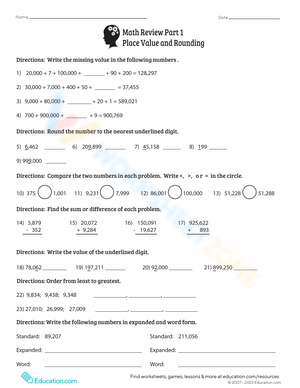
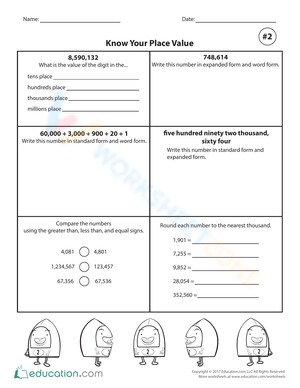
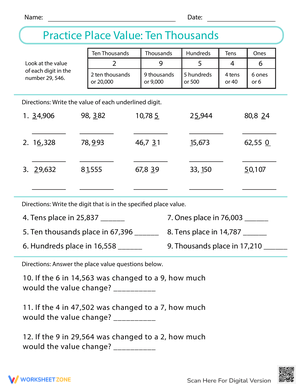
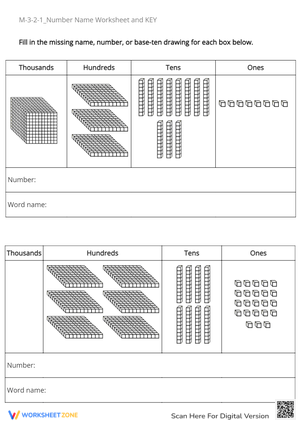
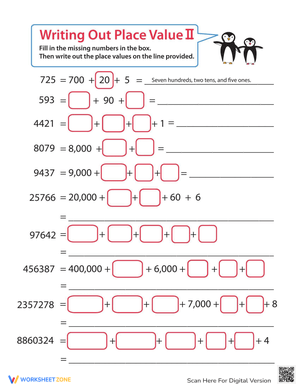
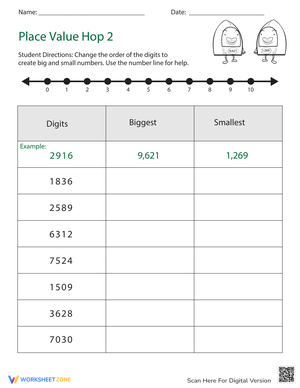
Place value is the thread running through the entire set. Before students can regroup accurately in subtraction or round to the correct digit, they need to know the value of each position in a four-digit number — not just name the position, but understand that the 4 in 4,352 represents four thousands. Each worksheet in the place value section moves from identifying digit values to working across three representations: standard form, expanded form, and word form. Converting between them — writing 6,208 as 6,000 + 200 + 8, then reading it aloud as six thousand two hundred eight — forces students to hold the whole number in mind rather than treating each digit as an isolated numeral.
Beyond place value, the skills addressed across the set include:
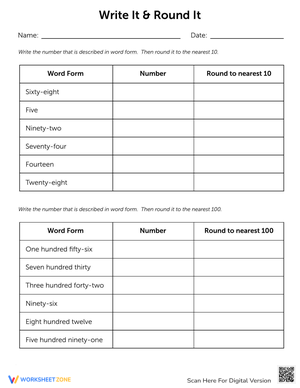
- Rounding to the nearest 10 and the nearest 100, using number lines and place value reasoning
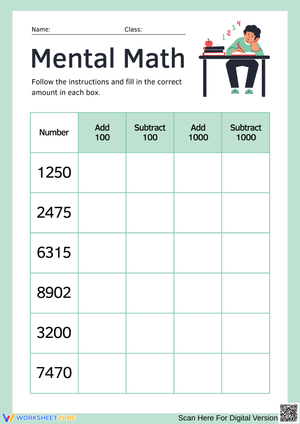
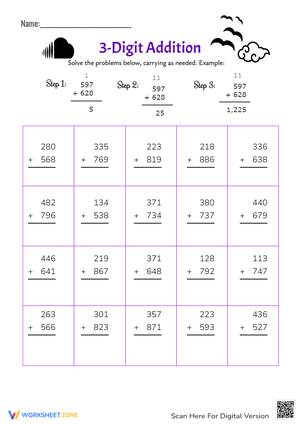
- Adding and subtracting within 1,000, with and without regrouping across multiple places
- Comparing numbers up to 10,000 using greater than, less than, and equal to
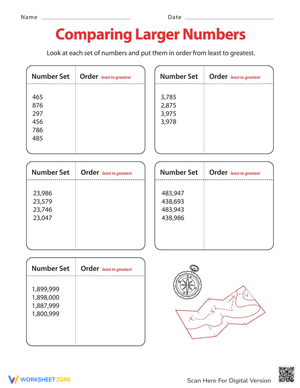
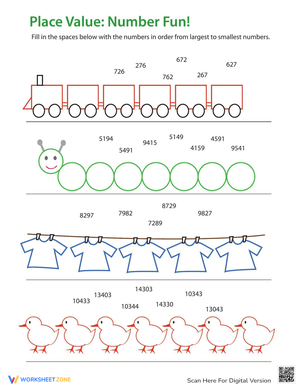
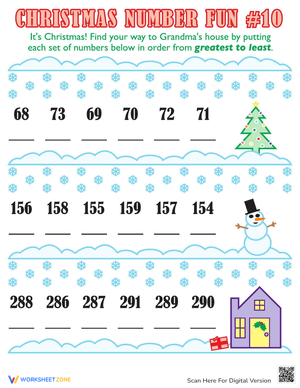
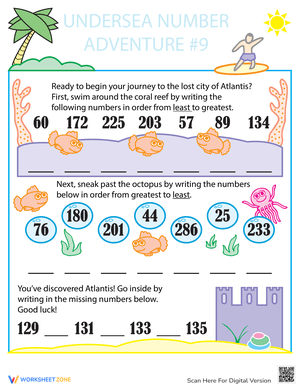
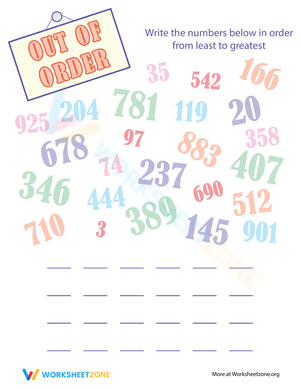
- Ordering sequences of three to five multi-digit numbers from least to greatest and greatest to least
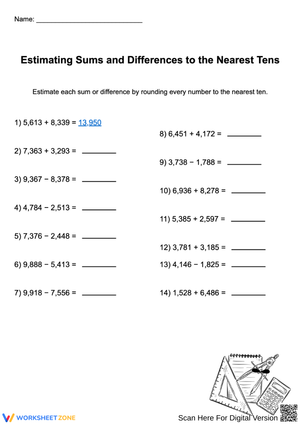
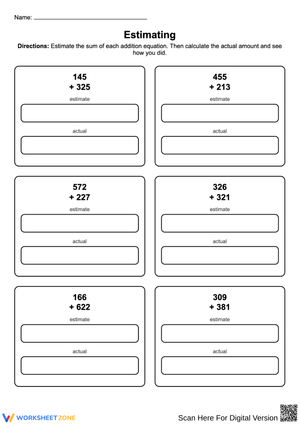
- Applying estimation to check addition and subtraction answers before verifying with the algorithm
Error Patterns Worth Anticipating Before You Assign
The zero-as-placeholder problem shows up in third-grade work more reliably than almost any other place value error. When students see 4,052, many write 452 in expanded form — not because they don't know zero exists, but because they haven't yet internalized that it holds the hundreds place open. The worksheets targeting expanded form deliberately include numbers with interior zeros: 5,007, 3,060, 8,004. Placing those numbers alongside cleaner ones forces students to account for every position rather than silently skipping over empty places.
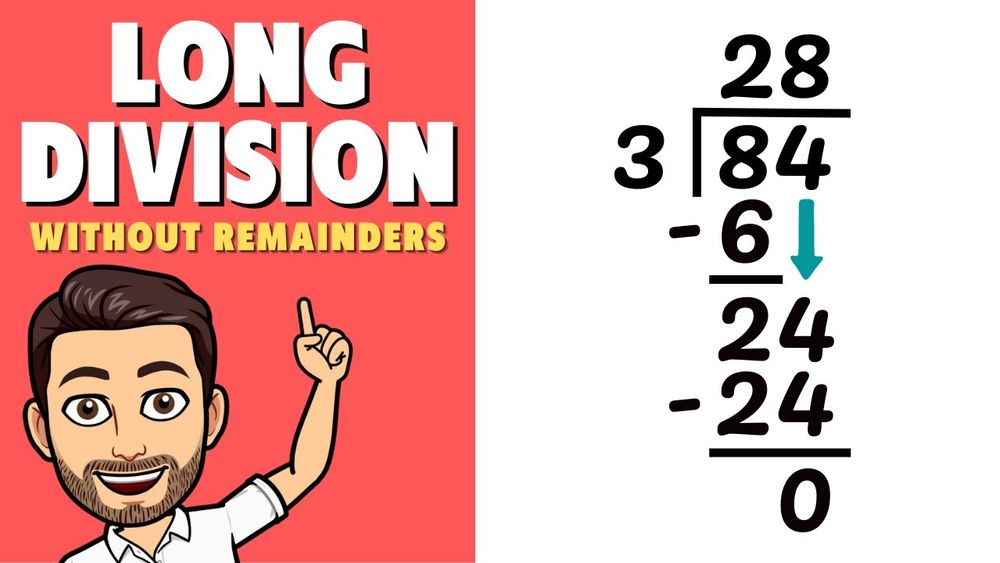
Rounding generates its own consistent mistakes. The most common: students focus on the digit being rounded rather than the digit one place to its right. When asked to round 473 to the nearest hundred, a student who stares at the 4 in the hundreds place — instead of the 7 in the tens place — will hesitate, guess, or round in the wrong direction. Number line exercises on each rounding worksheet make the decision visible; students mark the number and physically see which hundred it sits nearer to, redirecting attention to the actual comparison being made. Regrouping errors look different: a student who mentally solves 362 minus 178 and arrives at 184 often writes 216 on paper because the digits drifted out of column alignment during setup. Grid-format subtraction worksheets address this directly by giving students the structure to place each digit before they begin calculating.
Building These Worksheets Into Your Instructional Week
Three moments in the week tend to be the most productive slots for this material. The Monday warm-up works well for comparing and ordering — the task is low-stakes, gets students back into number reasoning before new instruction begins, and takes about eight minutes, which fits cleanly before morning meeting wraps up. Small-group rotation time is where regrouping worksheets earn the most: a teacher can sit alongside three or four students, watch their column alignment in real time, and ask questions while the rest of the class works independently. Friday review is where you find out what actually transferred — a short place value or rounding worksheet given at the end of the week tells you more than a quiz because students are working without the pressure of a grade attached.
For regrouping specifically, sequence matters more than pace. Spend at least two class periods with base-ten blocks before students encounter multi digit numbers printable worksheets for 3rd grade that ask them to regroup on paper. The physical trade — ten ones blocks for a tens rod, ten tens rods for a hundreds flat — gives the written algorithm something concrete to represent. When students who have done that exchange see a crossed-out digit in a vertical subtraction problem, they recognize the action. Without it, they memorize a rule they don't understand and forget it by the following week.
Standard Alignment
This set addresses three standards from the Common Core Number and Operations in Base Ten domain. 3.NBT.A.1 covers rounding whole numbers to the nearest 10 or 100 — the rounding worksheets here target that standard directly and serve as prerequisite work for the estimation strategies students need once operations begin. 3.NBT.A.2 requires fluency in adding and subtracting within 1,000 using strategies and algorithms based on place value, and it accounts for the largest share of instructional time in the set; teachers who return to it repeatedly across the fall and winter will find the regrouping and grid-format worksheets useful for practice, small-group work, and ongoing review. 3.NBT.A.3 — multiplying one-digit whole numbers by multiples of 10 — connects directly to the place value understanding built in the earlier worksheets, since students who genuinely understand why 6 × 40 = 240 are applying the same reasoning about the tens place that the place value worksheets establish.
Tailoring the Set for Different Starting Points
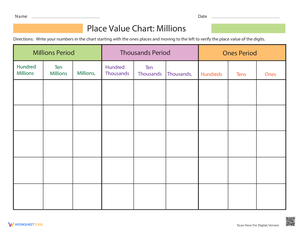
For students still building confidence with three-digit numbers, narrow the number range before introducing four-digit problems. Pull the worksheets that stay within the hundreds, let students reach fluency there, then move to thousands. Adding a place value chart at the top of the worksheet — a simple labeled grid students fill in before writing expanded form — gives them a reference structure without removing the thinking. On the other end, students ready for a challenge can extend any ordering or comparing worksheet by writing a number that fits between two given values and explaining in a sentence why it belongs there. That one step shifts the task from recognition to construction, which is meaningfully harder.
Students who struggle specifically with word problems on multi digit numbers printable worksheets for 3rd grade often freeze not because of the math but because of the reading load. Teaching them to annotate first — underline the numbers, circle what the question is asking — before attempting any calculation separates the decoding step from the computation step. It does not simplify the problem; it makes both demands manageable without conflating them.
Frequently Asked Questions
What order should these worksheets follow across a unit?
Place value identification and the three forms of a number — standard, expanded, word — come first. Students who cannot explain why the 3 in 3,400 is worth 3,000 will struggle with every operation that follows. Once that foundation is solid, rounding worksheets make sense because students already understand which digit occupies which position. Regrouping in addition and subtraction builds on both of those. Comparing and ordering can run alongside any point in the sequence — it is a reliable warm-up task that doesn't depend on regrouping knowledge being in place first.
How can these worksheets support formative assessment rather than serve only as practice?
The most useful move is collecting a worksheet mid-task rather than waiting until students finish. If you pull what a student has completed after three problems, you see the error pattern before it repeats six more times — and you can intervene before the mistake gets practiced into a habit. Expanded form and regrouping worksheets are especially diagnostic: the work a student shows reveals exactly where place value understanding breaks down, which gives you more specific information than a unit test score does.
Are these resources appropriate for intervention groups, or are they built primarily for whole-class use?
The multi digit numbers printable worksheets for 3rd grade in this set work in both contexts, but small-group intervention often produces more from students who are behind. When a teacher can sit alongside a student and ask "what does that crossed-out digit mean?" mid-worksheet, the resource becomes a conversation prompt rather than a silent assignment. For intervention groups specifically, the place value and expanded form worksheets are the right entry point — not the most advanced problems in the set, but the ones that surface and address the conceptual gap underneath most procedural errors in regrouping and rounding.













 Interactive Worksheet Maker
 Quiz Maker
 Word Search Maker
 Crossword Puzzle Maker
 Word Scramble Generator
 Sentence Scramble Generator
 Handwriting Worksheet Generator
 Name Tracing Generator
 Fill In The Blank Generator