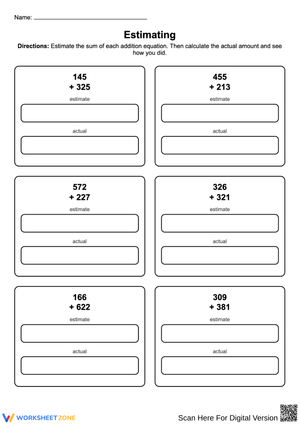
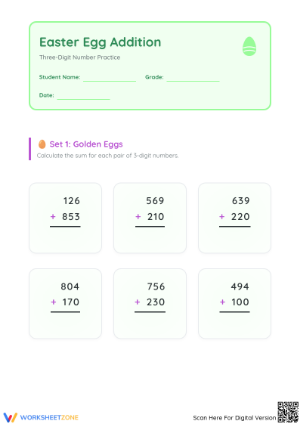
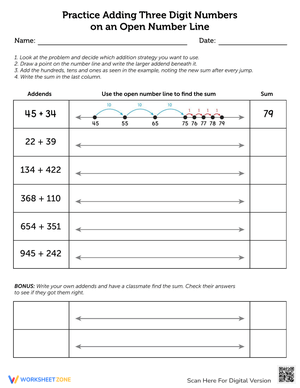
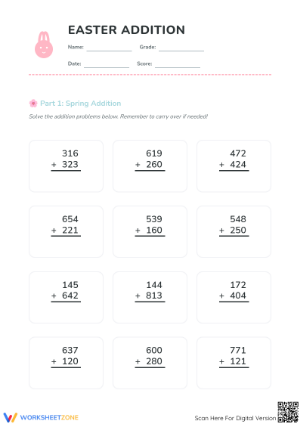
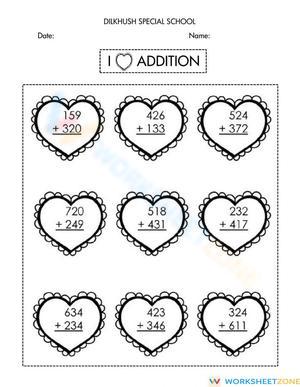
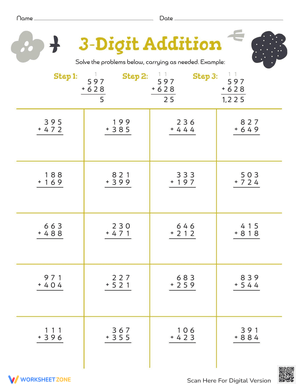
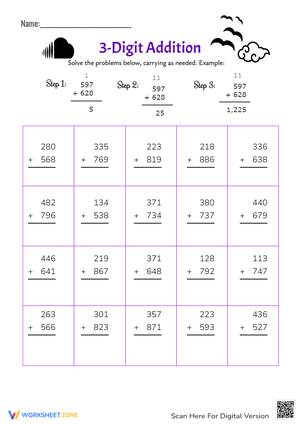
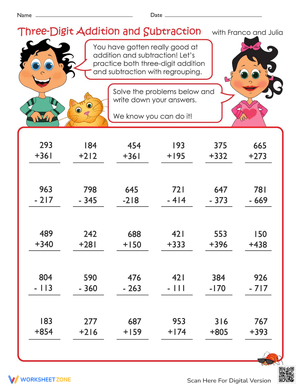
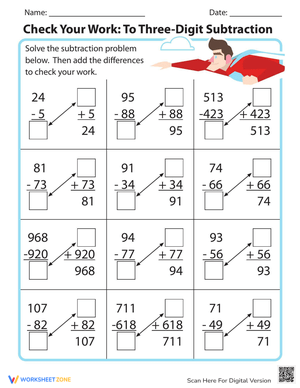
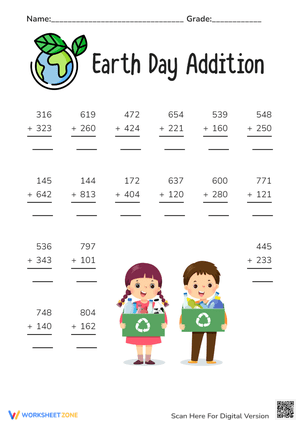
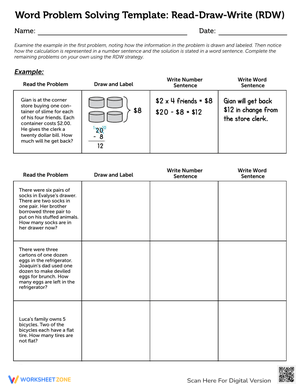
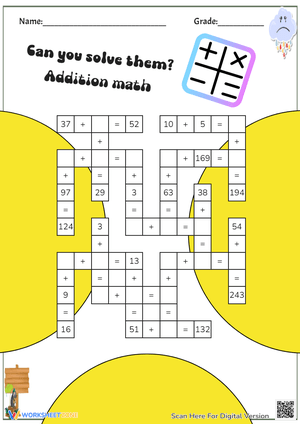
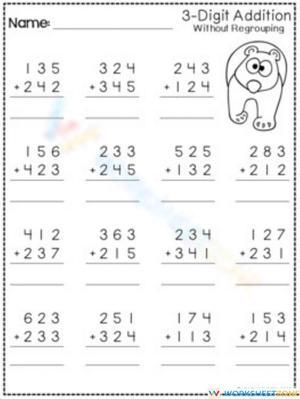
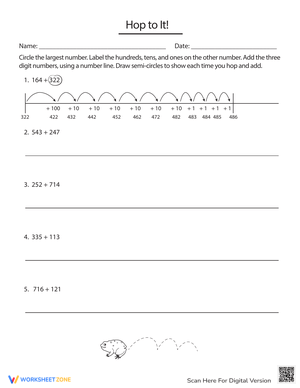
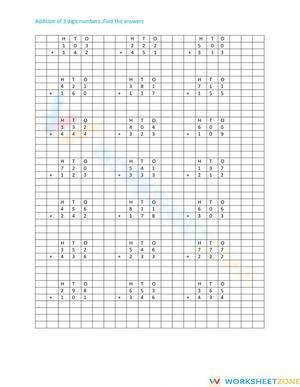
3rd grade three digit addition pdf worksheets give teachers a printable sequence for building addition fluency within 1,000 — moving students deliberately from clean no-regrouping problems through the two-column carrying work that reliably trips up most third graders. The set is organized around the procedural steps where Grade 3 students most often break down: lining up digits by place value, tracking the carried digit across two columns, and recognizing when regrouping is actually required.
Where Student Work Actually Breaks Down
Three-digit addition has predictable failure points, and recognizing them quickly saves a lot of reteaching time. The most common error in actual student papers is not forgetting to regroup — it is forgetting to add the carried digit once it has been written. A student solves 347 + 285, correctly writes a small "1" above the tens column, then adds 4 + 8 = 12 instead of 4 + 8 + 1 = 13. The notation is there; the student just does not return to it. This is a working-memory issue, not a conceptual gap, and repeated practice with the carrying step — not further explanation — is what closes it.
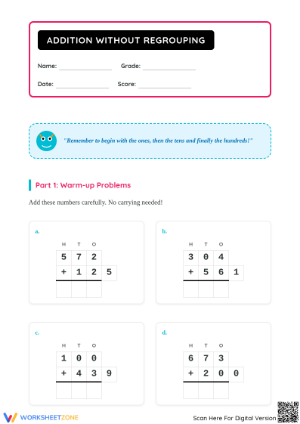
Column misalignment is the second pattern worth watching. It appears most often when students copy a horizontal problem into vertical format, or when one addend contains a zero. Writing 403 + 259 in columns, some students shift digits because the zero feels like something they can skip. Tens end up added to ones, and the result looks plausible enough that students do not catch it. A worksheet with pre-formatted columns and place-value headers removes that source of confusion without reducing the computational demand. A third, less frequent error: students write the full two-digit column sum in place rather than splitting it — recording "15" in the ones space instead of writing "5" and carrying the one. That tells you the student understands the arithmetic but has not internalized what the algorithm asks them to record.
The Specific Skills Each Worksheet Targets
Each worksheet in the set addresses a distinct stage of the three-digit addition procedure. The progression is deliberate — not just "easy to hard" but organized around which step is being isolated so teachers can see exactly where a student's work is clean and where it is not.
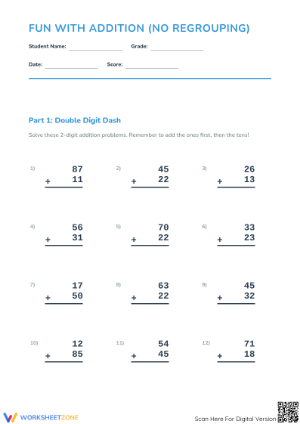
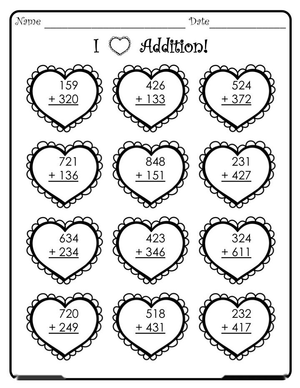
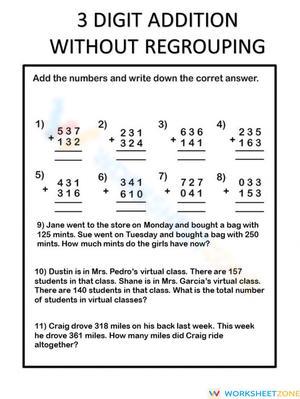
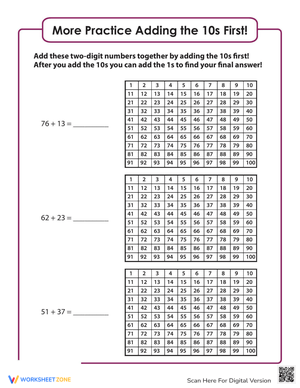
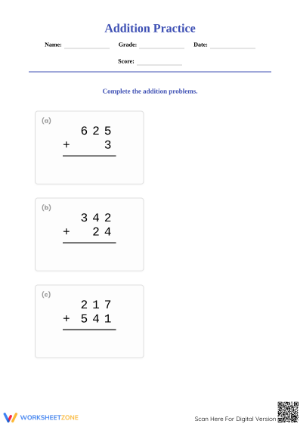
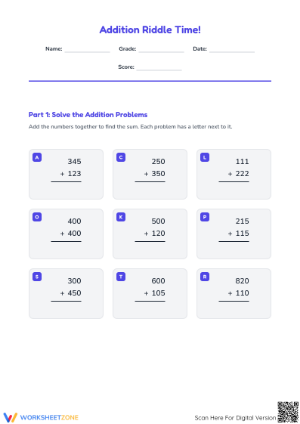
- No-regrouping addition: Focuses entirely on digit alignment and algorithm execution without the carrying step. Alignment errors surface clearly here because there is nothing else to blame them on.
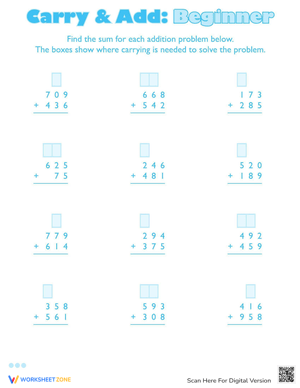
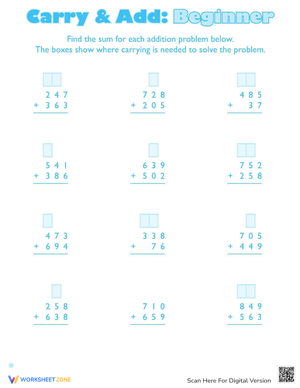
- Regrouping in the ones place only: Introduces the first carrying step — adding the ones column, writing the digit, recording the carried ten above the tens column. This is the step most commonly dropped.
- Regrouping in both the ones and tens places: Two-column carrying requires students to hold the procedure in working memory while executing two separate carrying steps in sequence.
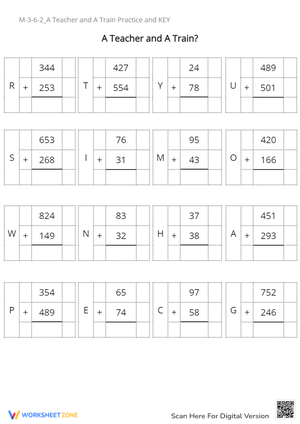
- Mixed review: Problems without a consistent regrouping pattern. Students must judge each problem individually rather than applying a blanket strategy to every row.
- Answer keys: Included with each worksheet so students can self-check during centers and teachers can verify work without marking every item by hand.
The mixed-review worksheet is the most informative of the set. Students who have only drilled regrouping problems in batches tend to apply the carrying step automatically, even when no carrying is needed. Mixed problems break that habit and show whether understanding is genuine or purely procedural.
Fitting These Worksheets Into Your Lesson Plans
3rd grade three digit addition pdf worksheets fit several recurring classroom slots without added prep. The most consistent use is as a warm-up: a no-regrouping or one-regrouping worksheet at the start of a math block, completed in 8 to 10 minutes while attendance is taken or morning meeting wraps up. Because the format stays consistent across the set, students begin immediately without needing directions repeated — a small thing that protects real instructional time.
Small-group intervention is another strong fit. When a student consistently misses the carried digit, pulling a focused one-regrouping worksheet and working through two problems aloud together — narrating each step — addresses the gap faster than reassigning the whole-class version. For exit tickets, a selection of 4 to 6 mixed-regrouping problems gives enough data to sort students before the next lesson in under 5 minutes. Mixed problems work best here because they reveal whether students are reading each problem or running a rote strategy regardless of what the numbers require.
Standard Alignment
These worksheets address CCSS.MATH.CONTENT.3.NBT.A.2, which requires students to fluently add and subtract within 1,000 using strategies and algorithms based on place value, properties of operations, and the relationship between addition and subtraction. In most Grade 3 pacing guides, this standard lands in the first or second unit of the year — before multiplication, fractions, or multi-step word problems take over. That early placement matters: fluency with three-digit addition is a prerequisite for later computation work, not an enrichment goal. These resources belong in the first quarter of the year, not saved as end-of-year review.
Adjusting the Set for a Range of Learners
3rd grade three digit addition pdf worksheets cover a wider ability range than the grade label alone suggests. Students who are still uncertain about basic addition facts need the no-regrouping worksheet first — not because the carrying step is too advanced, but because fact confusion masks procedural errors. Getting facts stable first means that when regrouping is introduced, teachers can see the algorithm clearly instead of guessing whether a wrong answer came from a shaky fact or a missed carrying step.
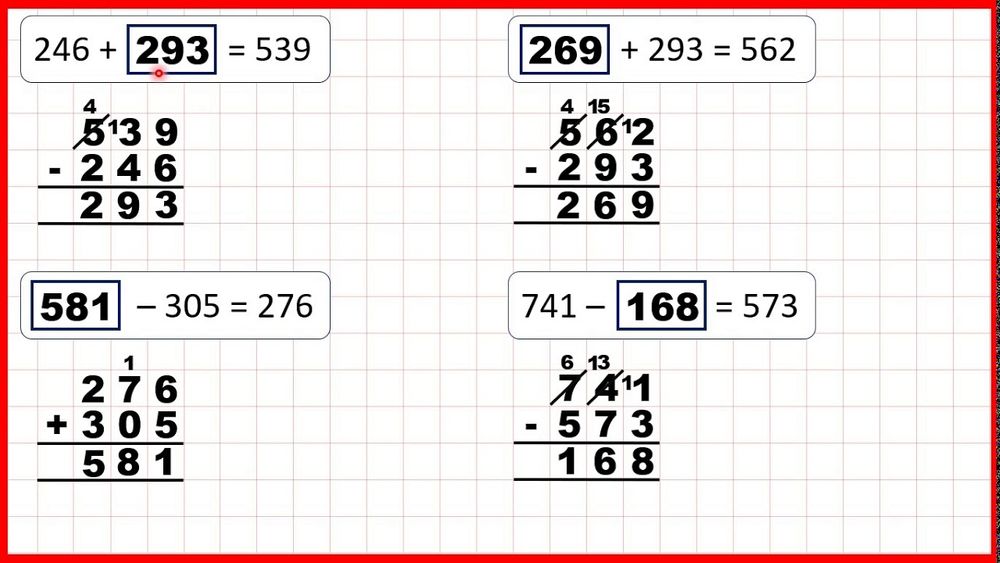
Students working above grade level can extend any worksheet in the set by converting standard problems into missing-addend equations: given that the sum is 742 and one addend is 358, find the missing number. That variation uses the same place-value knowledge and arithmetic but reverses the procedure, which is genuinely harder and keeps advanced students thinking without requiring separate materials. In a mixed-ability class, the base worksheet goes to the full group; the extension prompt goes verbally or on a sticky note to students who finish early.
Frequently Asked Questions
Should no-regrouping worksheets always come before regrouping worksheets, or only at the start of the unit?
Primarily at the start of the unit, but also when reteaching. If a student is added to a small group mid-unit or returns after an absence, starting with a no-regrouping worksheet quickly confirms whether alignment and algorithm steps are solid before layering in the carrying step. That takes 10 minutes and gives much cleaner diagnostic information than starting with a mixed worksheet and trying to determine which specific step failed.
How many problems per worksheet is realistic for Grade 3?
Somewhere between 12 and 20 for independent practice. Fewer than 12 may not reveal a consistent error pattern — a student can get through 8 problems without the issue appearing reliably. More than 20 tends to produce rushed work in the final rows, which hides what students actually understand. For exit-ticket use, 4 to 6 problems is enough to make a grouping decision for the next day without consuming lesson time.
Can these replace textbook exercises for three-digit addition?
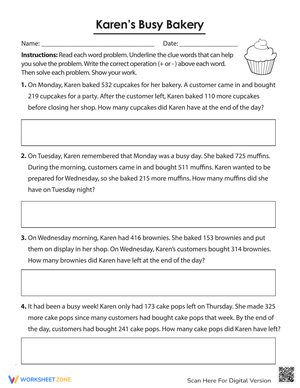
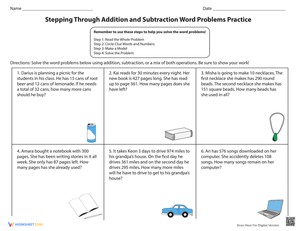
They work best alongside the textbook, not as a permanent substitute. Textbook problems are often embedded in word contexts or multi-step sequences that build meaning around the operation. Worksheet practice — specifically, 3rd grade three digit addition pdf worksheets organized by regrouping level — adds the repetition needed to make the procedure automatic. Both serve different instructional purposes, and most teachers use worksheet sets to fill the practice gap that textbooks leave, particularly for students who need more trials before a skill holds.
Is this resource worth keeping in the rotation after the addition unit ends?
Yes. Three-digit addition resurfaces inside multi-step word problems, measurement, and data work throughout the rest of Grade 3 and into Grade 4. Keeping a small bank of mixed-regrouping worksheets available for spiral review — a short set before a multi-step unit, or a row of problems as a Monday warm-up — prevents the carrying procedure from deteriorating when students go weeks without using it deliberately.













 Interactive Worksheet Maker
 Quiz Maker
 Word Search Maker
 Crossword Puzzle Maker
 Word Scramble Generator
 Sentence Scramble Generator
 Handwriting Worksheet Generator
 Name Tracing Generator
 Fill In The Blank Generator