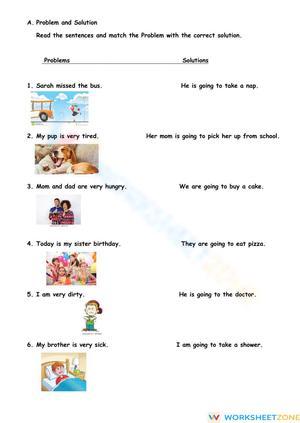
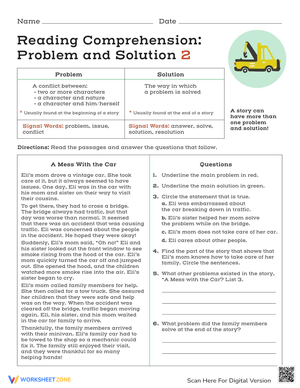
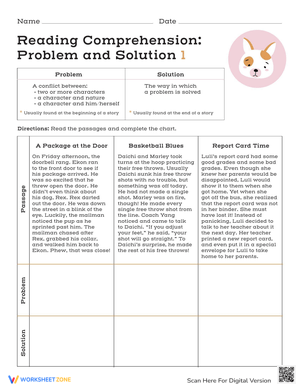
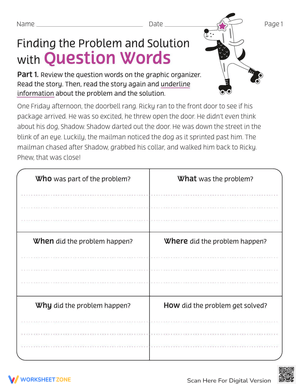
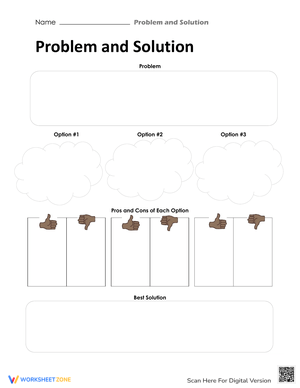
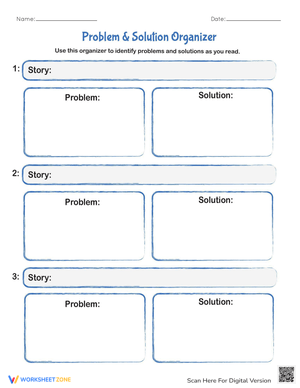
These problem and solution worksheets for 3rd grade give teachers short reading passages paired with structured response tasks—covering both narrative fiction and informational text, which is where this skill lives in the 3rd-grade ELA block. Each worksheet moves students from basic identification toward the kind of text-structure thinking that shows up in reading comprehension work across genres.
What Each Worksheet Targets
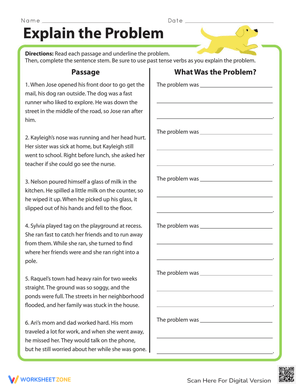
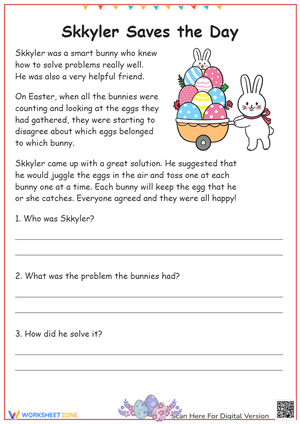
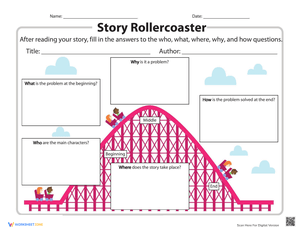
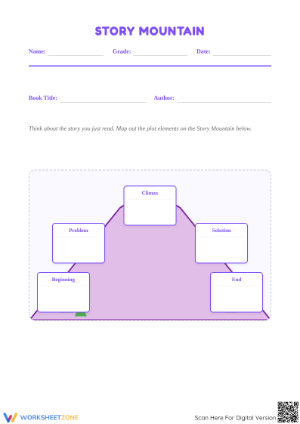
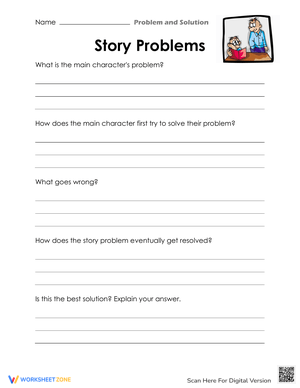
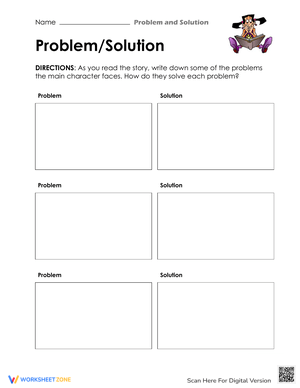
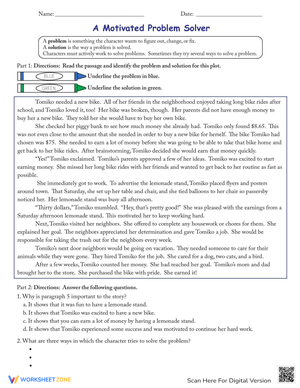
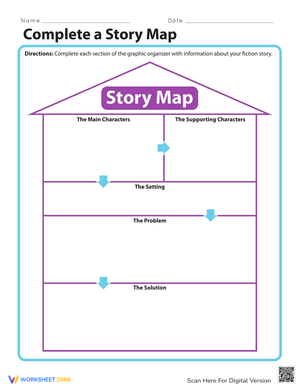
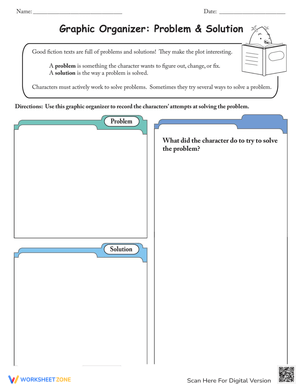
The fiction-based worksheets present stories built around a central conflict—the kind of problem that drives character decisions and forces a resolution. Students identify what the problem is, who is affected, and what action resolves it. The nonfiction worksheets work differently: a short informational passage presents a real-world issue, and students track the problem-to-solution arc that structures the author's argument. Keeping these genres separate matters because the text cues work differently. In a story, the problem is usually introduced through a character's feelings or actions. In an article, it appears in the topic sentence and carries its own vocabulary—issue, challenge, dilemma—that fiction rarely uses.
Each worksheet also incorporates a signal-word task. Students circle or underline markers like therefore, as a result, so, and the answer was before responding to the text-structure questions. Signal-word recognition is the fastest route to helping struggling readers stop re-reading the whole passage and start locating structural relationships efficiently.
Where Students Tend to Go Wrong With This Structure
The most reliable confusion at this grade is between problem-solution and cause-and-effect. Both involve a before-and-after relationship, but problem-solution requires intentional action—someone decides to fix something. A student who writes "The sun came out and the ice melted" as a problem-solution pair has identified a cause and an effect. Watching for this in student work is the fastest diagnostic for whether a child understands the structure or is applying a surface-level pattern.
A second error, specific to fiction, is when students name a character's emotional state as the problem. Third graders will write "Maya's problem is that she is scared" when the actual problem is that Maya is lost in the woods and needs to find her way back to camp. The emotion is a symptom; the conflict is structural and requires resolution. These worksheets surface that confusion reliably—if a student's problem box says something like "he felt nervous," that is your opening for a direct conversation about what actually needs to be resolved in the story.
In nonfiction, a different issue appears: students often copy the solution sentence verbatim without connecting it back to the stated problem. They fill in both boxes and still have no working understanding of why one addresses the other. A brief oral check—"tell me how that solution fixes the specific problem the author described"—catches this quickly and is worth building into your small-group routine after students work through the nonfiction set.
Building These Worksheets Into Your Reading Block
The most effective use follows a gradual release pattern across the week. On Monday, use one worksheet as a whole-group anchor during a read-aloud, projecting the passage and working through the response boxes together. Think aloud as you look for signal words and character motivations so students can see the process, not just the answer. Tuesday or Wednesday works well for a small-group session where you can sit with the readers who struggled to distinguish between the central problem and minor obstacles in the story. By Thursday, students are ready to complete a problem and solution worksheets for 3rd grade independently—and that finished worksheet gives you a clean formative check before moving on.
One strategy worth keeping in regular rotation is reverse engineering: give students the solution first and ask them to write or discuss what the problem must have been. For example—"A family began composting kitchen scraps. What problem were they trying to solve?" This backward-mapping approach forces students to think about the logical necessity of specific actions rather than forward-scanning for an answer that already appears in the text. It works especially well with the nonfiction set, where the solutions tend to be specific and defensible rather than emotionally driven.
Standard Alignment
The fiction worksheets align directly to RL.3.3, which asks students to describe characters and explain how their actions contribute to the sequence of events. Understanding the problem is what makes character motivation legible—students cannot explain why a character does something without first identifying what that character is trying to fix. The nonfiction worksheets support RI.3.8, which focuses on describing the logical connections between sentences and paragraphs in informational texts. Problem-solution is one of the primary structures that creates those logical connections in 3rd-grade nonfiction, which is why this standard and this text structure are typically taught in the same instructional unit.
Adjusting the Set for a Range of Readers
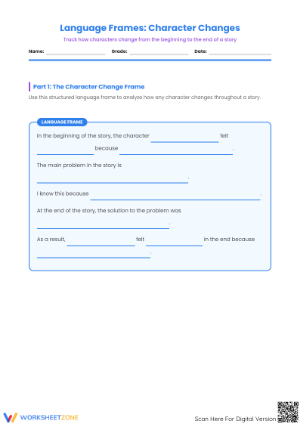
For readers still working on basic decoding, reading the passage aloud before asking for written responses keeps the task accessible without removing the structure work. Sentence frames—"The problem was ___ because ___. The solution was ___."—preserve the analytical demand while reducing the language-production barrier.
On-level readers use the worksheets as written. For students reading above grade level, the most productive adjustment is removing the signal-word task and giving them texts where the solution is implied rather than stated outright. These students are ready to infer—they do not need the linguistic handholds the signal-word exercise provides. A problem and solution worksheets for 3rd grade that withholds the explicit signal markers turns a practice task into genuine analytical reading, which is where advanced 3rd graders need to be working.
Frequently Asked Questions
Can these worksheets be used outside the ELA block?
The nonfiction set fits naturally in science and social studies. A passage about soil erosion or a community water shortage works in those content blocks while still giving students structured practice with the text structure. Teachers who use these problem and solution worksheets for 3rd grade in science report that students start noticing the structure in their textbook chapters too—a sign that the skill is transferring beyond the ELA block.
How do these worksheets address the overlap between problem-solution and cause-and-effect?
The passage selection is where this distinction is handled—texts are chosen because the problem requires a deliberate response, not just a subsequent event. When a student's work conflates the two, that is the moment to work through a concrete contrast: "The ice melted because the sun came out" is cause and effect. "We shoveled the ice off the path because it was blocking the door" is problem and solution. Spending three minutes on that comparison after returning a finished worksheet tends to stick better than addressing it before students have tried the task.
What does a strong student response look like on these worksheets?
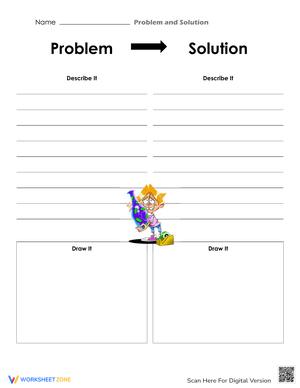
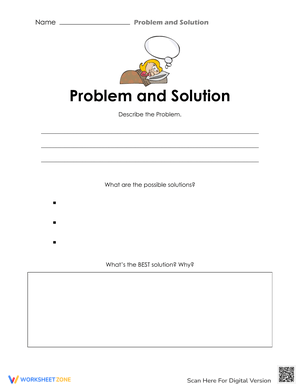
A strong response names the specific problem in the student's own words, identifies the specific action taken to address it, and—especially in nonfiction—can explain why that action addresses the problem rather than just restating it. The most common gap between a weak and a strong response is not detail; it is the logical connection. Students who describe both the problem and the solution but cannot explain the relationship between them are reading for content, not yet for structure.












 Interactive Worksheet Maker
 Quiz Maker
 Word Search Maker
 Crossword Puzzle Maker
 Word Scramble Generator
 Sentence Scramble Generator
 Handwriting Worksheet Generator
 Name Tracing Generator
 Fill In The Blank Generator