




























0
Views
0
Downloads

0.0
0
Save
0 Likes
Share
Problem Solving Social Skills Worksheet
0 Views
0 Downloads

Paste this activity's link or code into your existing LMS (Google Classroom, Canvas, Teams, Schoology, Moodle, etc.).
Students can open and work on the activity right away, with no student login required.
You'll still be able to track student progress and results from your teacher account.
Information
Description
What It Is:
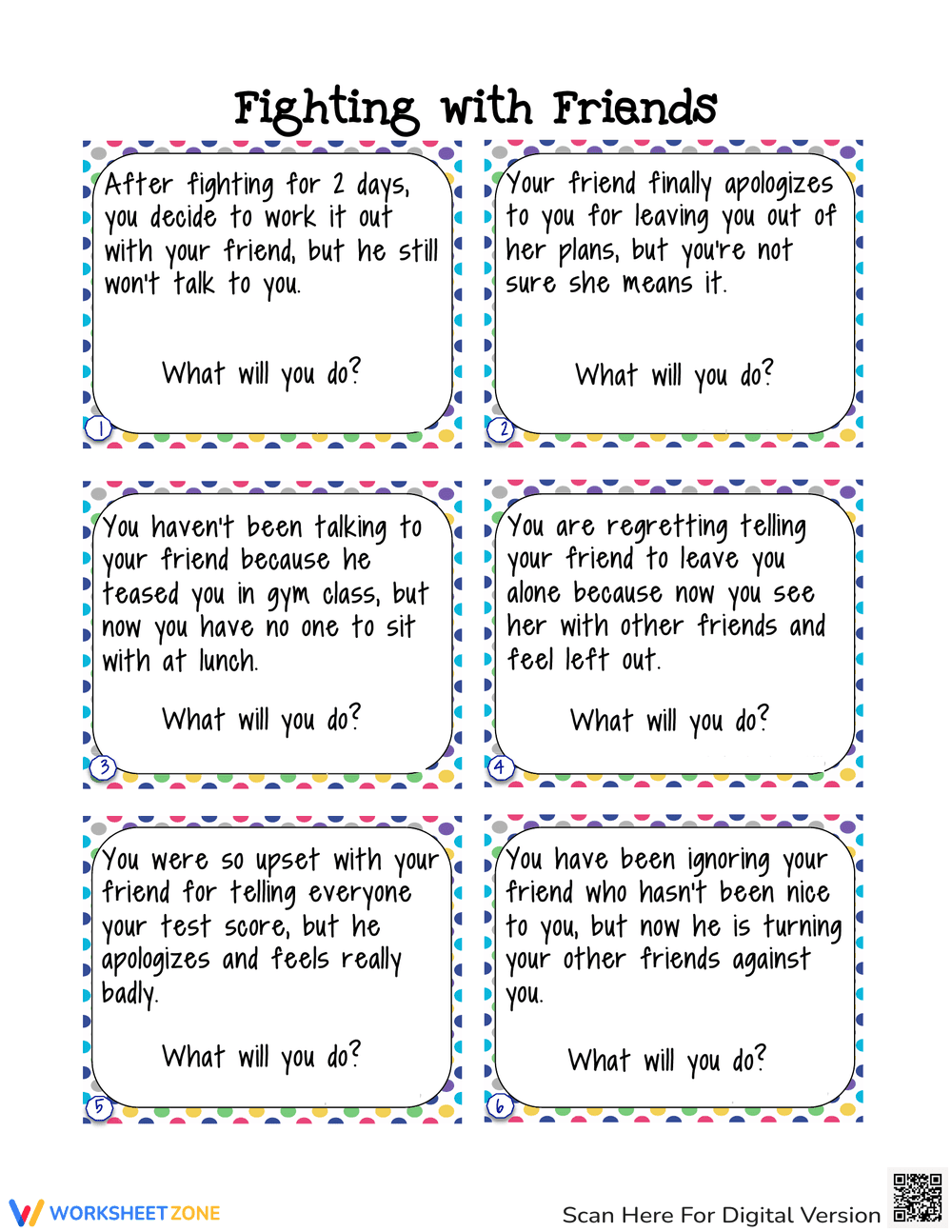
This is a worksheet titled 'Fighting with Friends' containing six different scenarios about friendship conflicts. Each scenario presents a common issue between friends and asks the student 'What will you do?'. The scenarios include situations like a friend not talking after a fight, a friend apologizing insincerely, being teased by a friend, feeling left out, a friend apologizing for sharing a test score, and a friend turning others against you.
Grade Level Suitability:
This worksheet is suitable for grades 3-6. The scenarios are relatable to children in this age range, and the questions prompt them to consider their own actions and feelings in social situations. The language used is simple and easy to understand.
Why Use It:
This worksheet helps students develop social-emotional learning skills, specifically conflict resolution and empathy. It encourages them to think critically about how their actions impact others and to consider different perspectives in friendship disputes. It promotes self-reflection and problem-solving in social contexts.
How to Use It:
Students can read each scenario and then write down or discuss their potential responses. The worksheet can be used individually, in small groups, or as a class discussion starter. Teachers can use the responses to facilitate conversations about healthy communication, forgiveness, and understanding different viewpoints.
Target Users:
This worksheet is ideal for elementary and middle school students, counselors, teachers, and parents who want to support children's social and emotional development. It is particularly useful for students who struggle with friendship issues or need help developing conflict resolution skills.
This is a worksheet titled 'Fighting with Friends' containing six different scenarios about friendship conflicts. Each scenario presents a common issue between friends and asks the student 'What will you do?'. The scenarios include situations like a friend not talking after a fight, a friend apologizing insincerely, being teased by a friend, feeling left out, a friend apologizing for sharing a test score, and a friend turning others against you.
Grade Level Suitability:
This worksheet is suitable for grades 3-6. The scenarios are relatable to children in this age range, and the questions prompt them to consider their own actions and feelings in social situations. The language used is simple and easy to understand.
Why Use It:
This worksheet helps students develop social-emotional learning skills, specifically conflict resolution and empathy. It encourages them to think critically about how their actions impact others and to consider different perspectives in friendship disputes. It promotes self-reflection and problem-solving in social contexts.
How to Use It:
Students can read each scenario and then write down or discuss their potential responses. The worksheet can be used individually, in small groups, or as a class discussion starter. Teachers can use the responses to facilitate conversations about healthy communication, forgiveness, and understanding different viewpoints.
Target Users:
This worksheet is ideal for elementary and middle school students, counselors, teachers, and parents who want to support children's social and emotional development. It is particularly useful for students who struggle with friendship issues or need help developing conflict resolution skills.


