These 3rd grade cause and effect worksheets give teachers a targeted practice set built around one of the trickiest comprehension moves in early elementary reading — not whether students understand what happened in a passage, but whether they can explain why. Third grade is exactly when the curriculum shifts toward informational text, and that shift exposes how many students have been using context clues and sequence logic to guess meaning rather than tracking genuine logical relationships. The set addresses that directly.
Skills Built Across the Set
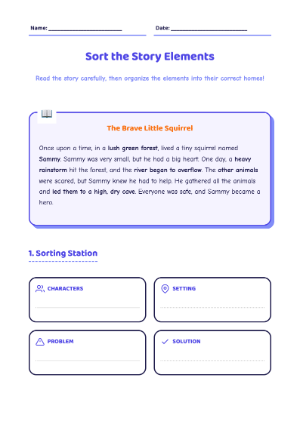
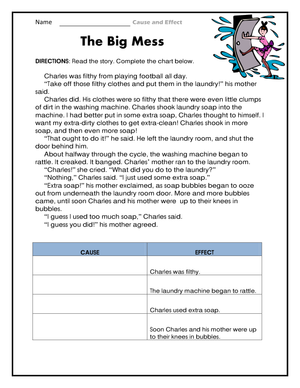
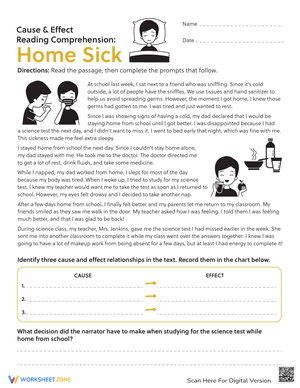
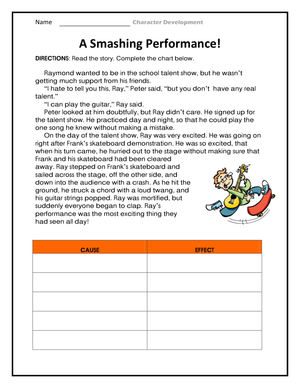
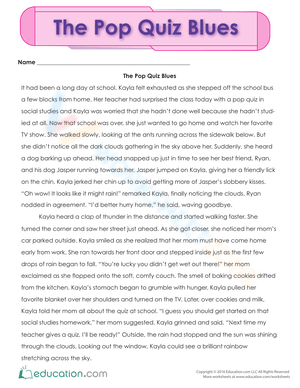
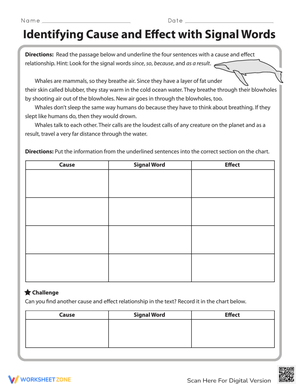
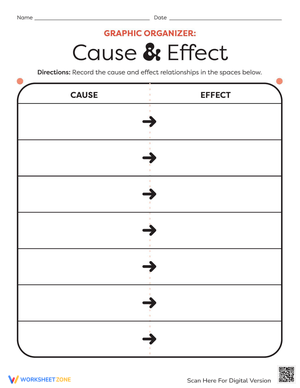
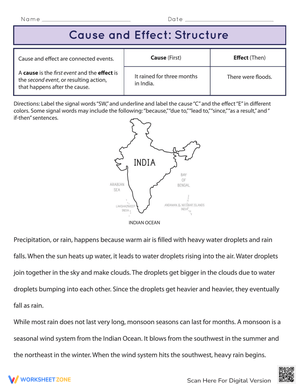
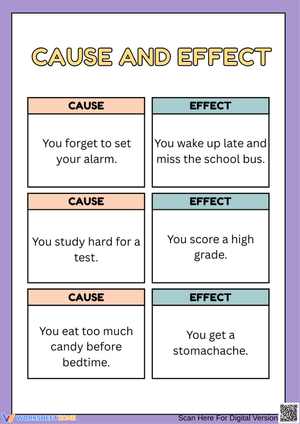
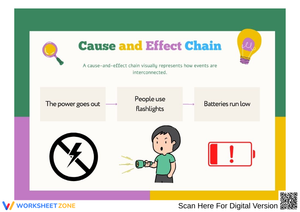
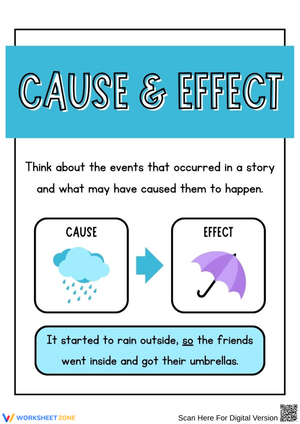
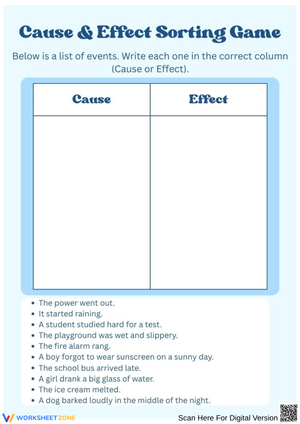
Each worksheet targets a distinct layer of cause-and-effect comprehension instead of repeating the same task at different readability levels. Students circle and label signal words — because, so, since, therefore, as a result — in short passages, then rewrite the relationship in their own words to confirm they're reading the connection and not just marking a vocabulary word. Other worksheets use T-charts, with causes in the left column and effects in the right, and arrow-flow organizers where one effect becomes the cause of the next event in a chain reaction.
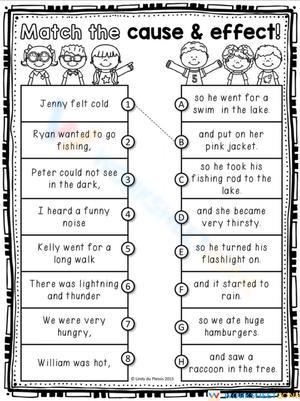
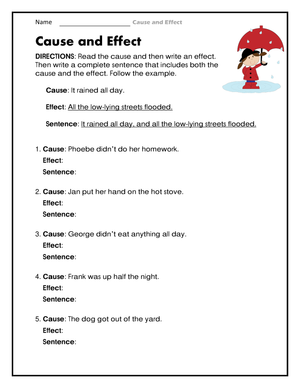
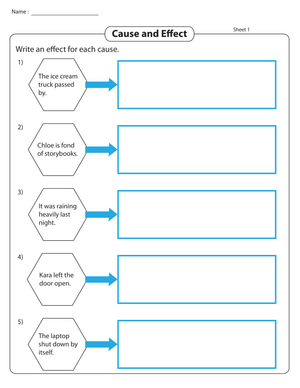
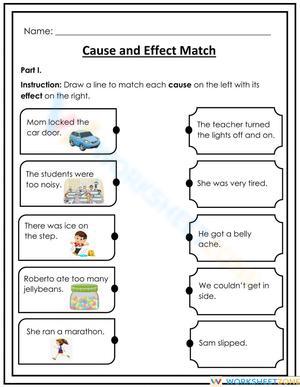
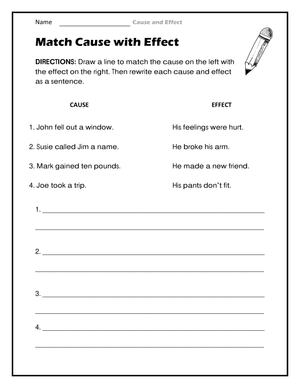
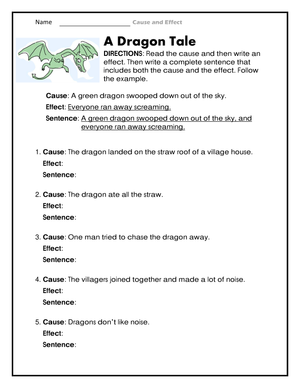
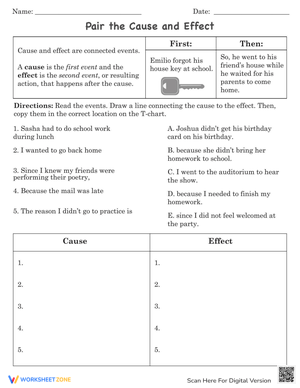
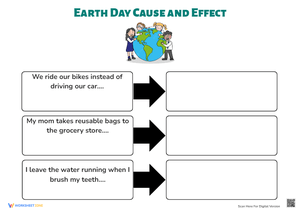
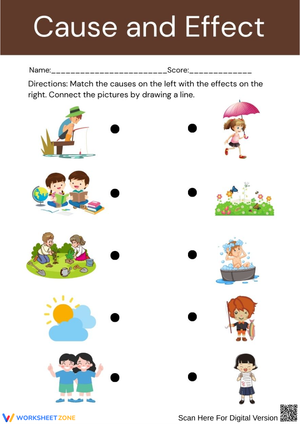
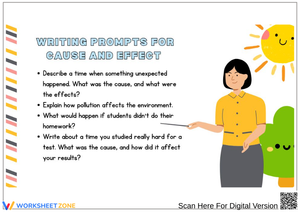
The set also includes matching tasks — students draw lines connecting a list of causes to their logical outcomes — and open-ended prompts where students receive only the cause and write a plausible effect, or receive only the effect and reconstruct a likely cause. The open-response tasks are where teachers see most clearly who genuinely understands the relationship and who is still pattern-matching on signal word placement alone.
Where Students Go Wrong and What to Watch For
The most consistent error at this grade level is treating "then" as "because." A student who reads "The storm hit. Then the lights went out." will often circle the storm as the cause without being able to explain the mechanism connecting the two events — they see sequential order and call it causation. Several worksheets in the set include passages with consecutive events where only some pairs are actually causal. Students tracking time order rather than logical connection will mark every pair; students who understand causation will correctly skip the non-causal ones.
The second pattern worth catching is directional reversal. Students who identify both elements correctly will still sometimes place the effect in the cause box and the cause in the effect box. This happens most often with sentences structured so the effect appears first, as in "The flowers bloomed early because the winter had been unusually warm." Students encounter "bloomed" before they reach the causal clause, and under time pressure many record what they read first as the cause. The worksheets deliberately include several sentences in that reversed-order structure so students encounter the pattern repeatedly before it shows up on an assessment.
How to Work This Set Into Your Weekly Routine
These worksheets fit cleanly as the independent-practice stage of a gradual release lesson — whole-class think-aloud with the read-aloud first, then partner talk with a second passage, then 12 minutes of solo work with one worksheet before transition. They also hold up as literacy center rotations when you want students practicing a skill without pulling a small group for re-teaching, since the task directions are self-contained and the answers are defensible or they aren't. No floating around to re-explain the instructions mid-rotation.
For science and social studies, pull the informational-text worksheets from the 3rd grade cause and effect worksheets when your class is mid-unit on weather, animal behavior, or community history. The passages are short enough to drop into the last 8 minutes of a content block as a reading-skill reinforcement that uses material students just encountered. Cross-curricular repetition like that builds retention faster than keeping cause-and-effect practice confined to the ELA block alone, and it signals to students that reading strategies apply everywhere, not just during reading group.
Standard Alignment
This set aligns to CCSS.ELA-LITERACY.RI.3.3, which asks students to describe relationships between events, concepts, or procedural steps using time, sequence, and cause-and-effect language. In classroom terms, that standard lives at the intersection of reading comprehension and content-area literacy — students are expected to apply this skill when they encounter informational text in science and social studies, not only during dedicated ELA time. The worksheets reflect that expectation by mixing literary and expository passages rather than drilling the skill exclusively in one genre.
RI.3.3 also lays the groundwork for 4th-grade standards requiring students to explain historical events, scientific procedures, and text comparisons, so students who leave 3rd grade with a firm grip on cause-and-effect reasoning start the next year with a real advantage. Using a 3rd grade cause and effect worksheets during the second semester gives teachers a formative record — written, not just verbal — of which students can apply the skill independently and which still need guided reading support before the standard gets more complex.
Adjusting the Resources for a Range of Learners
For students reading below grade level, the most useful starting point is the T-chart worksheets rather than the open-ended ones. The two-column format is a concrete support structure: it tells students exactly what type of information belongs where, so cognitive effort stays on the logical relationship rather than figuring out what the task is asking. A signal-word reference strip at the student's desk — a small card listing because, so, since, therefore, as a result — removes one more retrieval demand so working memory can stay on comprehension.
Advanced readers get more from this set when you add one unwritten question after they finish: "Write a second effect that could logically follow from the same cause," or "Why is the stated effect more likely than an alternative you could imagine?" That extension costs nothing in prep time and pushes students toward probabilistic reasoning — the kind of analytical thinking that separates strong comprehension from simple identification.
One practical limitation: the matching format, which works for most students, occasionally stops students cold who need a text passage to anchor before they can sort causes and effects. For those students, pointing them back to the passage first — highlight the signal word, then fill in the chart — keeps the worksheet productive instead of defeating.
Frequently Asked Questions
Which signal words should I introduce before students use these worksheets independently?
Start with because and so. These appear most often in both speech and early reading, and understanding them gives students a way into every worksheet in the set. Once those two are solid — meaning students use them naturally in their own oral sentences — move to since, therefore, and as a result. Most classes need about a week of explicit instruction before those terms stay stable enough that students can apply them during independent practice without stopping to ask what a word means.
How do I use these worksheets for formative assessment versus end-of-unit evaluation?
Both uses work. During a unit, any worksheet functions as a quick formative check — scan them during transition time and flag students who are reversing the relationship or marking non-causal pairs. For a summative use, hold back two or three worksheets from the set and administer them without prior instruction at the end of the unit. The open-response worksheets are most useful here because the written answers give you evidence of the student's reasoning process, not just a circled response, which makes planning reteach groups far more precise.
Are the passages fiction or informational?
Both. The set splits roughly evenly between literary and informational texts. Informational passages draw from topics common to 3rd-grade science and social studies — weather events, plant and animal behavior, community changes — so they reinforce content knowledge at the same time. Literary passages use clear plots with direct character actions and consequences, which makes the cause-and-effect relationship easier to isolate than it would be in a more layered chapter-book excerpt.
What reading level range does the set cover?
Passages range from approximately 2nd-grade to high 3rd-grade readability. That range is intentional — the same 3rd grade cause and effect worksheets serves on-level readers for standard independent practice while giving below-grade readers an accessible entry point without pulling them out of the class-wide skill focus. The more demanding passages appear in the chain-reaction and open-ended worksheets, which naturally tend to go to students who finish the core tasks with time remaining.












 Interactive Worksheet Maker
 Quiz Maker
 Word Search Maker
 Crossword Puzzle Maker
 Word Scramble Generator
 Sentence Scramble Generator
 Handwriting Worksheet Generator
 Name Tracing Generator
 Fill In The Blank Generator